Chef Knife Feels Slippery? Causes, Safe Fixes, and Better Grip Tips
Quick Answer
If your chef knife feels slippery, stop cutting immediately and place it safely on the cutting board. Greasy hands, moisture, food residue, a worn handle, or an unsuitable grip can reduce control. Wash and dry your hands and knife, inspect the handle, and resume only when you can hold the knife securely. If the handle remains slippery or feels damaged, consider a replacement with a grip that suits your hand.
Common signs to check
- Greasy handle: Cooking oils or food residue make the handle difficult to hold.
- Wet hands: Water or condensation reduces your ability to maintain a reliable grip.
- Smooth surface: The handle material or finish may not suit your hands.
- Loose handle: Movement, cracks, or loose rivets can make the knife unsafe.
- Uncontrolled cutting: A dull edge can require excessive force and increase the chance of slipping.
How to confirm the cause
- Clean and dry the knife and your hands, then inspect the handle without cutting.
- If the grip still feels insecure, keep the knife out of use until you resolve the problem.
A chef knife should feel controlled and comfortable, not as though it might slide out of your hand. Even a familiar knife can become difficult to manage when your hands are wet or the handle collects cooking grease.
In this guide, I’ll explain how to identify the source of the problem, what you can safely do about it, and when a different handle or knife makes more sense. The goal is simple: restore reliable control without introducing another safety risk.
What Does It Mean When a Chef Knife Feels Slippery?
 Save
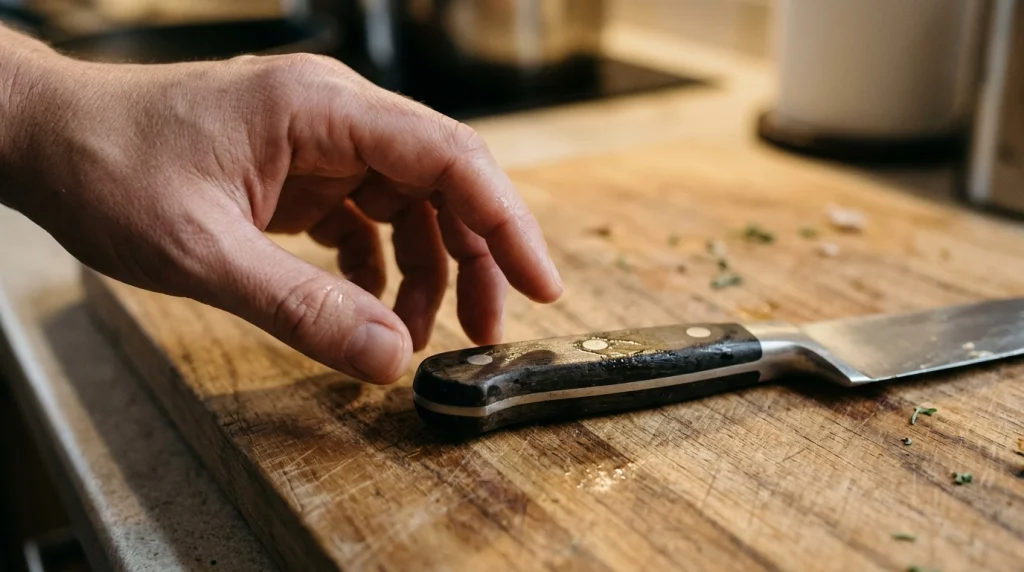
A slippery chef knife is a knife whose handle or blade feels difficult to control because of moisture, grease, residue, unsuitable ergonomics, or another physical problem. The first step is to determine whether the handle slips in your hand or the blade slides unpredictably through food.
These are different problems. A greasy handle affects your grip directly, while a blade that slides across a tomato or onion may indicate a dull edge, a rounded cutting surface, or an unstable ingredient.
Before diagnosing either issue, stop cutting. Put the knife down on a stable surface with its cutting edge facing away from your fingers.
- Handle slipping: Check for water, oil, soap residue, a smooth finish, or damage.
- Blade slipping on food: Check the sharpness of the edge and whether the food rests securely on the board.
- Knife shifting in your hand: Check the handle size, shape, balance, and condition.
For a broader understanding of knife construction, see this guide to chef knife parts and design.
Why Does My Chef Knife Handle Feel Slippery?
The handle is the first place to investigate when a knife moves inside your hand. Several everyday conditions can make a previously comfortable knife feel unreliable.
1. Grease and food residue
Cooking oil, butter, meat fat, and sticky food residue can coat a knife handle during meal preparation. Even a thin film can make the surface feel different from when it was clean.
This often happens when you switch between handling ingredients and cutting without cleaning your hands. The problem can persist even when the handle looks clean.
2. Wet hands or a wet handle
Water can make a handle harder to control, particularly when the handle material becomes slick when wet. Washing vegetables, rinsing dishes, or handling frozen ingredients can leave moisture on your fingers.
Do not try to solve this by gripping harder. Excessive squeezing can create hand fatigue without correcting the slippery surface.
3. A smooth or worn handle
Some knife handles have relatively smooth finishes that feel comfortable when dry but provide less confidence for certain users. Repeated use, surface wear, or damage may also change how a handle feels.
A smooth handle is not automatically defective. The important question is whether you can maintain secure control during ordinary, careful use.
4. A handle that does not fit your hand
A handle may feel slippery even when it is clean and dry because its diameter, shape, or length does not suit your hand. Small handles can feel cramped, while oversized handles can make it difficult to maintain a natural grip.
Balance matters, too. A knife that feels unusually heavy toward the blade may require more effort to control, especially during extended preparation.
5. A loose or damaged handle
Cracks, loose rivets, gaps, and movement between the handle and blade are warning signs. These problems can compromise control and may worsen with continued use.
Do not attempt to compensate by wrapping the handle with tape or tightening your grip. Remove the knife from service and contact the manufacturer or a qualified knife repair professional.
Safety tip
If you notice movement, cracks, or a handle that remains slippery after cleaning, do not use the knife for cutting. A damaged handle needs proper repair or replacement, not a temporary grip workaround.
How Do You Fix a Slippery Chef Knife Safely?
The safest fix depends on what causes the problem. Start with cleaning and drying, then inspect the handle and assess whether its shape and condition suit your hand.
- Stop cutting. Put the knife down securely before attempting to clean it.
- Clean your hands. Wash away grease and food residue with soap and water, then dry your hands completely.
- Wash the knife. Follow the manufacturer’s cleaning instructions and use mild dish soap when appropriate.
- Dry it completely. Use a clean towel, keeping your fingers away from the cutting edge.
- Inspect the handle. Look for cracks, looseness, damaged material, and residue around rivets or seams.
- Check the fit. Once the knife is clean and dry, assess whether its handle shape feels comfortable without cutting anything.
- Decide whether it is safe. If you cannot maintain a secure grip, stop using the knife until the issue is resolved.
Never test a questionable grip by chopping quickly or attempting to cut slippery food. You do not need to perform a cutting test to recognize a handle that feels unsafe.
How Should You Clean a Slippery Knife Handle?
Cleaning removes grease and residue that may interfere with your grip. The correct method depends on whether the handle is made from plastic, wood, composite material, or another substance.
For plastic or synthetic handles
Use warm water, mild dish soap, and a soft sponge when the manufacturer’s care instructions allow it. Clean the handle thoroughly, rinse away the soap, and dry it before assessing the grip again.
For wooden handles
Wash the handle gently and avoid soaking it. Prolonged moisture can cause some wooden handles to swell, crack, or deteriorate.
Dry the handle promptly and follow the manufacturer’s instructions for any recommended wood treatment. Do not apply an arbitrary coating in an attempt to make the surface grippier.
For composite or textured handles
Use a soft brush or cloth to remove residue from grooves and textured areas. Avoid harsh abrasives, strong solvents, or aggressive scrubbing unless the manufacturer specifically permits them.
Once the knife is clean, check whether the handle feels secure while dry. If the problem remains, the material, shape, or condition may be the underlying issue.
For more maintenance guidance, read how to clean, sharpen, and maintain kitchen knives.
Can a Dull Chef Knife Feel Slippery?
Yes, a dull chef knife can feel as though it slips across food instead of cutting cleanly. The edge may struggle to penetrate a tomato’s skin or the smooth surface of an onion, encouraging you to apply more pressure.
That does not necessarily mean the handle itself is slippery. The distinction matters because cleaning the handle will not restore a dull cutting edge.
After addressing any handle problem, consider these signs of a dull blade:
- Food resists the first cut: The edge struggles to start a slice.
- Ingredients crush: Soft vegetables become compressed instead of cutting cleanly.
- You apply extra force: The knife requires more pressure than usual.
- Cutting feels unpredictable: The edge catches or moves across the ingredient’s surface.
If the edge seems dull, use a suitable sharpening method or a qualified sharpening service. Follow the knife maker’s guidance because different blade steels and edge designs may require different care.
For additional information, consult Consumer Reports’ guide to chef knife use and care.
Slippery Handle vs. Slippery Blade: What Is the Difference?
Separating these problems helps you choose the right solution. The table below compares common symptoms and the safest next step.
| Problem | Likely cause | Recommended response |
|---|---|---|
| Handle slides in your palm | Grease, moisture, or unsuitable handle material | Clean, dry, and inspect the handle. |
| Blade slides over tomato skin | Dull or poorly maintained cutting edge | Assess sharpness and arrange suitable sharpening. |
| Handle shifts or rattles | Loose fasteners or structural damage | Stop using the knife and arrange repair or replacement. |
| Grip feels awkward when dry | Poor fit, uncomfortable shape, or balance | Try a better-fitting handle before purchasing a replacement. |
| Food slides on the cutting board | Unstable ingredient or moving board | Secure the board and create a stable cutting surface. |
What Should You Avoid When Fixing a Slippery Chef Knife?
A quick workaround can introduce new risks. Avoid modifications that make the handle harder to clean or change its shape unpredictably.
- Do not wrap the handle in ordinary tape. Adhesive can collect grease, loosen during washing, and create an uneven grip.
- Do not coat the handle with random chemicals. Household coatings may damage the material or create food-contact concerns.
- Do not use loose rubber bands. They can move unexpectedly and make the handle less predictable.
- Do not continue with a damaged handle. Loose rivets and cracks require proper attention.
- Do not compensate by squeezing harder. A stronger grip cannot reliably correct a slippery or defective surface.
- Do not cut faster to test control. Restore a secure grip before returning to normal preparation.
For a knife with a loose or cracked handle, see how chef knife rivets and handles should be inspected.
How Can You Hold a Chef Knife More Securely?
 Save
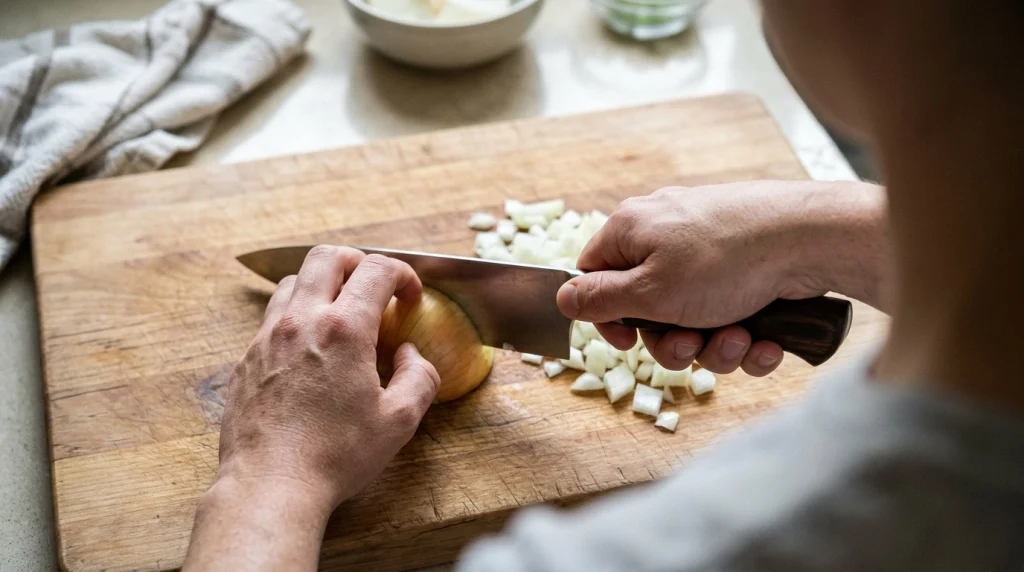
A comfortable, controlled grip helps you guide the blade without unnecessary hand tension. Start with a clean, dry knife and a stable cutting board.
Use a suitable grip
Many cooks use a pinch grip, placing the thumb and index finger on opposite sides of the blade near the handle while the remaining fingers wrap around the handle. This position can improve control, but it should feel natural and remain clear of the cutting edge.
If the pinch grip feels uncomfortable, a conventional handle grip may suit you better. Do not force your hand into a position that feels unstable.
Keep the cutting surface stable
A moving cutting board can make the entire cutting process less predictable. Place the board on a stable countertop and use a suitable nonslip mat underneath if necessary.
Keep the food stable, too. For round vegetables, create a flat side first using a controlled cut, then place that flat side against the board before continuing.
Use a controlled cutting pace
Speed is not the goal when you are dealing with an uncertain grip. Make deliberate cuts, keep your fingertips curled away from the blade, and stop if the knife begins to move unpredictably.
For additional safety advice, see the American Knife and Tool Institute’s knife safety guidance.
When Should You Replace a Slippery Chef Knife?
Replacement makes sense when cleaning and appropriate maintenance cannot restore a secure, comfortable grip. It is also the sensible choice when the handle has structural damage that a qualified repairer cannot reasonably fix.
Before buying another knife, compare these features:
- Handle texture: Look for a finish intended to support a secure grip.
- Handle shape: Choose a design that fits your hand without uncomfortable pressure points.
- Size: A shorter blade or smaller handle may feel easier to control.
- Balance: Consider how the knife feels in your hand rather than judging it by weight alone.
- Care requirements: Choose a handle material that suits your cleaning habits.
For a wider look at choosing kitchen knives, explore the knives commonly used by chefs.
Chef Knife Options to Consider for a More Secure Grip
If your current knife remains uncomfortable after cleaning and inspection, these established models offer different handle designs to investigate. Their inclusion is based on their published designs, not personal hands-on testing or a guarantee that either will suit every user.
GRIP-FOCUSED OPTION
Victorinox Fibrox Pro Chef’s Knife
The Fibrox line features a textured synthetic handle designed for a secure grip. Consider it if your current knife has a smooth handle, but check the dimensions and fit for your own hand.
TEXTURED HANDLE ALTERNATIVE
Mercer Culinary Millennia Chef’s Knife
The Millennia range uses a textured handle design with a combination of handle materials. Compare the handle shape and size with your current knife before deciding whether it is a better fit.
CUTTING BOARD STABILITY
Kitchen Cutting Board Non-Slip Mat
A food-safe, washable nonslip mat designed for cutting boards can help keep the board from shifting. It will not fix a slippery handle, so treat it as a separate safety improvement.
When comparing knives, prioritize a secure fit and a comfortable grip over appearance or price alone. If possible, handle the knife in person before purchasing it.
Frequently Asked Questions
Why does my chef knife feel slippery even when it is clean?
A clean knife can still feel slippery if its handle material is naturally smooth, its shape does not fit your hand, or its surface has worn down. Dry your hands and inspect the handle carefully. If the grip still feels insecure, stop using the knife and consider a better-fitting model.
Can cooking oil make a chef knife handle slippery?
Yes. Cooking oil and fatty food residue can coat a knife handle and reduce your control. Stop cutting, wash your hands, clean the knife according to its care instructions, and dry both completely. Do not resume cutting until the handle feels secure.
Should I put rubber or tape around a slippery knife handle?
Ordinary tape, loose rubber bands, and improvised coatings are not reliable fixes for a slippery chef knife. They may shift, trap residue, or interfere with cleaning. If the original handle remains unsafe, ask the manufacturer about an approved repair or choose a knife with a more suitable handle.
Can a dull knife cause slipping?
Yes. A dull edge may slide across food instead of cutting cleanly, encouraging you to apply extra pressure. Once the handle is secure, assess the blade’s sharpness and arrange suitable sharpening if needed. A dull edge and a slippery handle are separate problems that may occur together.
Is a textured chef knife handle always safer?
Not necessarily. Texture can help some users maintain control, but handle shape, size, material, cleanliness, and hand fit also matter. Choose a knife that feels secure in your hand and follow its maintenance instructions. No handle design can guarantee a safe grip under every condition.
Final Takeaway: Restore Grip Before You Cut Again
When your chef knife feels slippery, stop and identify the cause before returning to food preparation. Clean and dry your hands and knife, inspect the handle for damage, and check whether the handle design suits your hand.
If the problem comes from a dull edge, arrange appropriate sharpening after resolving any grip concerns. If the handle remains insecure or damaged, repair or replace the knife rather than relying on a temporary workaround.
A clean knife, a comfortable handle, a stable cutting board, and controlled technique are the foundations of safer food preparation.

