How to Get Rust Off a Chef Knife: Safe, Simple Methods
Quick Answer
To get rust off a chef knife, wash away food residue, dry the blade, and gently rub light rust with a soft cloth or a rust eraser designed for knives. For stubborn surface rust, use a knife-compatible cleaner or a brief white-vinegar treatment if the manufacturer permits it. Rinse thoroughly, dry immediately, and inspect the blade before using it to prepare food. If rust has created deep pits or damaged the cutting edge, seek professional assessment.
Quick steps to remove rust
- Check the blade: Identify whether the marks are light surface rust, discoloration, or deep corrosion.
- Clean gently: Wash by hand with mild dish soap and water.
- Remove rust: Use a suitable rust eraser or soft cloth with gentle pressure.
- Rinse and dry: Remove all cleaning residue and dry the blade completely.
- Inspect before use: Check for remaining rust, pits, rough patches, or edge damage.
Prevent rust from returning
- Hand-wash the knife promptly after cutting salty or acidic foods.
- Dry the blade before storing it in a clean, dry location.
Finding orange-brown spots on a favorite chef knife can be frustrating, especially when you thought stainless steel was supposed to resist rust. The good news is that many small rust spots can be removed without replacing the knife.
In this guide, I’ll explain how to choose the right removal method, recognize corrosion that needs more attention, and protect your blade afterward. You can also learn more about why chef knife steel rusts if you want to understand what caused the problem.
What Is Rust on a Chef Knife?
Rust is iron oxide, a corrosion product that forms when iron in steel reacts with oxygen and moisture. It often appears as orange, reddish-brown, or dark brown spots on a knife blade.
Stainless steel resists rust because chromium helps form a thin protective surface layer. However, that protection can be compromised by moisture, salt, acidic food residue, harsh cleaners, or damage to the surface.
Carbon steel chef knives generally need more careful drying and maintenance than stainless steel knives. Both types can develop corrosion when their care requirements are ignored.
How to recognize the different types of blade marks
- Light surface rust: Small orange or reddish-brown spots that sit on the surface and may wipe away with gentle cleaning.
- Rust film: A thin brownish coating or scattered marks that may develop after exposure to moisture or contact with rusty utensils.
- Patina: A gray, blue, or darkened surface that can develop naturally on carbon steel. Patina is not automatically rust.
- Pitting corrosion: Small holes, craters, or rough depressions in the steel. These indicate that corrosion has damaged the surface rather than merely staining it.
Color alone cannot establish the condition of the steel. Clean the blade gently and inspect its surface under good lighting before deciding whether more aggressive treatment is appropriate.
How Do You Get Light Rust Off a Chef Knife?
 Save
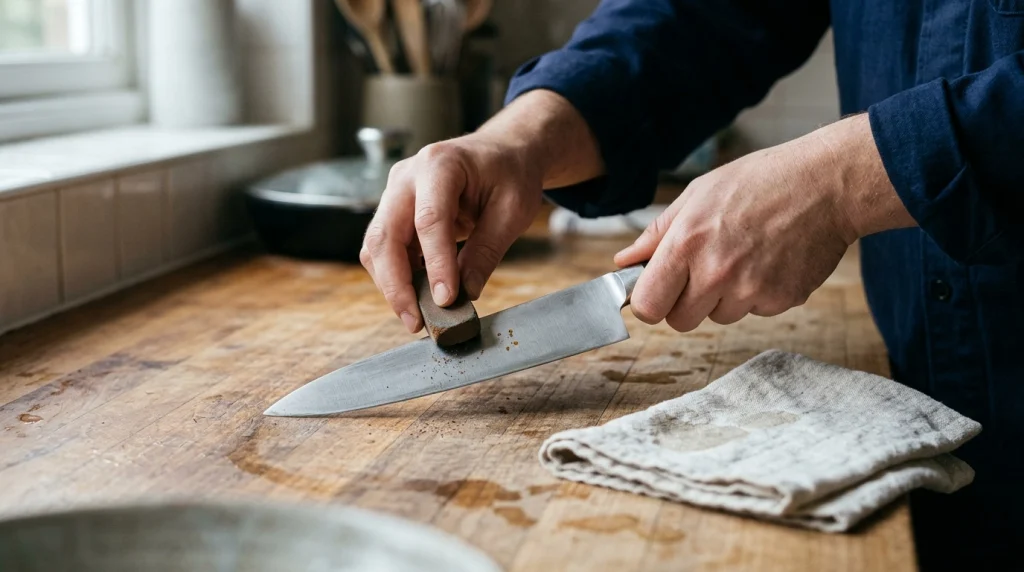
For a few small rust spots, start with the least abrasive method. A soft cloth and a rust eraser made for knife blades can often remove surface corrosion without unnecessary metal removal.
What you’ll need
- Mild dish soap and clean water
- A soft sponge or nonabrasive cloth
- A knife-compatible rust eraser, if needed
- A clean, dry towel
Step-by-step removal method
- Prepare the workspace. Place the knife on a stable surface away from the sink’s edge. Keep the cutting edge pointed away from your hands.
- Wash the blade. Remove food residue with mild dish soap and water. Avoid leaving the knife soaking in the sink.
- Dry the surface. Use a clean towel to remove visible moisture so you can examine the spots clearly.
- Rub the affected area gently. Follow the rust eraser’s instructions and use light, controlled strokes. Avoid pressing hard against the blade or working carelessly near the cutting edge.
- Rinse and inspect. Remove loosened residue and examine the area. Repeat only if the manufacturer’s instructions permit it and the surface remains intact.
- Dry completely. Wipe the blade, including the area near the handle, before storing it.
Do not try to remove every mark by force. Excessive abrasion can scratch the finish, remove metal, or damage a thin cutting edge.
For a valuable Japanese knife, a coated blade, or a knife with a special finish, check the manufacturer’s maintenance guidance before using an abrasive product.
Can You Use White Vinegar to Remove Rust From a Chef Knife?
White vinegar can help loosen light surface rust because its acetic acid reacts with rust deposits. However, prolonged acid exposure can damage some knife finishes and encourage further corrosion, so use this method cautiously.
Some manufacturers recommend a short vinegar treatment for their knives, while others prefer a dedicated cleaner or rust eraser. Follow the instructions for your specific blade whenever they are available.
How to use vinegar carefully
- Check compatibility. Confirm that the manufacturer allows vinegar on the blade and its finish.
- Apply it briefly. Dampen a soft cloth with white vinegar and treat the affected spot, or follow the manufacturer’s specified method and contact time.
- Check the result. Gently wipe the area and stop if the finish changes or the blade develops unusual discoloration.
- Rinse thoroughly. Remove all vinegar and loosened residue with clean water.
- Dry immediately. Use a clean towel and make sure no moisture remains around the blade or handle joint.
A short treatment is preferable to leaving a knife submerged for hours without guidance. Do not mix vinegar with bleach or other cleaning chemicals.
If a rust eraser removes the spots without acid, that may be the simpler option for a compatible blade. Choose the method that matches the knife’s material and condition.
How Do You Remove Stubborn Rust From a Chef Knife?
Stubborn rust may need a purpose-made rust remover, a suitable abrasive cleaner, or professional blade maintenance. The right choice depends on the steel, blade finish, location of the corrosion, and depth of the damage.
Manufacturer guidance from GLOBAL’s knife care instructions recommends addressing rust early and using appropriate removal methods rather than allowing corrosion to progress.
Choose the method based on the damage
- Rust that remains on the surface: Try a compatible rust eraser or a cleaner specifically approved for the knife’s steel.
- Rust near the cutting edge: Use extra caution. If the edge feels rough, has visible pits, or no longer cuts properly, ask a qualified knife sharpener to inspect it.
- Rust around the handle joint: Clean only accessible areas carefully. Corrosion that extends into a joint, loose handle, or internal structure may require professional attention.
- Deep pits or flaking metal: Stop aggressive home cleaning and have the knife assessed before returning it to food preparation.
Fine abrasives can remove stubborn corrosion, but they also remove steel. Do not assume that steel wool, coarse sandpaper, or a metal scouring pad is suitable for every chef knife.
A thin Japanese blade, a polished finish, and a soft stainless blade may respond differently to the same abrasive. When the knife has sentimental or financial value, professional restoration may be safer than experimenting.
Which Rust Removal Method Is Best for a Chef Knife?
There is no single best method for every knife. A soft cloth is the gentlest starting point, a rust eraser offers more targeted abrasion, and vinegar may help with certain compatible blades.
| Method | Best suited for | Main caution |
|---|---|---|
| Soft cloth and mild soap | Loose residue and very light surface marks | May not remove established rust |
| Knife rust eraser | Small, visible rust spots | Can scratch finishes if misused |
| White vinegar | Light rust on compatible blades | Acid can affect finishes and steel |
| Knife-compatible rust cleaner | Surface rust that resists gentle cleaning | Must be suitable for food-contact equipment and used as directed |
| Professional restoration | Deep corrosion, edge damage, or valuable knives | May involve metal removal or refinishing |
For most small rust spots, begin with a compatible rust eraser or soft cloth rather than a harsh chemical. Escalate only when the marks persist and the blade’s manufacturer permits the next method.
What Should You Avoid When Removing Rust From a Chef Knife?
Some popular household cleaning tricks can make corrosion worse or leave the blade scratched. Avoid harsh treatment that is not appropriate for your knife’s material.
- Don’t leave the knife soaking. Prolonged contact with water can promote additional rust, especially on carbon steel.
- Don’t put the knife in the dishwasher. Heat, moisture, detergent, and contact with other utensils can damage the blade or encourage corrosion.
- Don’t use bleach. Chlorine-containing cleaners can damage steel and increase corrosion risk.
- Don’t scrub aggressively. Coarse abrasives can scratch the blade, alter its finish, or damage the cutting edge.
- Don’t apply automotive or general-purpose machine oils. Use only a suitable food-grade product when blade oiling is appropriate.
- Don’t ignore deep pitting. A blade that has lost metal or developed significant surface damage needs closer inspection.
Also avoid combining household cleaning chemicals. Use one compatible method at a time, rinse thoroughly, and follow the product label.
Is a Rusty Chef Knife Safe to Use for Food?
Do not use a visibly rusty chef knife to prepare food until you have removed the rust and cleaned the blade thoroughly. The USDA’s guidance on rusty utensils advises removing rust before using an affected knife or other utensil.
After cleaning, check the entire blade under good light. Look for remaining rust, rough pits, flaking material, cracks, or damage that could affect cleaning and safe handling.
Surface rust that comes away completely is different from deep corrosion that has eaten into the steel. If the blade remains pitted, difficult to clean, or structurally damaged, have it professionally assessed instead of assuming that wiping away the color has restored it.
Before returning the knife to service:
- Wash it with dish soap and clean water.
- Rinse away all rust and cleaning-product residue.
- Dry the blade completely.
- Check the cutting edge and handle for damage.
- Store the knife in a clean, dry place.
If rust has transferred onto food, discard food that is visibly contaminated with rust particles. Do not rely on cooking to make a contaminated utensil safe.
How Can You Prevent Rust From Returning?
Consistent care is more effective than repeatedly removing corrosion. Wash and dry your chef knife promptly after use, especially after cutting acidic ingredients, salty foods, or anything that leaves residue on the blade.
Build these habits into your kitchen routine
- Wash promptly. Use mild dish soap and water rather than leaving the knife in a sink full of dirty dishes.
- Dry immediately. Wipe both sides of the blade and the area near the handle.
- Store it properly. Use a dry knife block, suitable blade guard, or magnetic rack installed in a dry location.
- Keep it separate from rusty tools. Rust residue from other metal utensils can transfer onto a blade’s surface.
- Follow steel-specific care instructions. Carbon steel often needs more frequent maintenance than stainless steel.
- Use appropriate oil when needed. For carbon steel or long-term storage, apply a very thin layer of food-grade knife oil if the manufacturer recommends it.
Humidity also matters. In a damp kitchen, dry the blade carefully and choose storage that allows moisture to escape rather than trapping it against the steel.
For more detail, read this guide to the causes of chef knife rust and learn why even corrosion-resistant blades need regular care.
Recommended Tools for Removing and Preventing Knife Rust
 Save
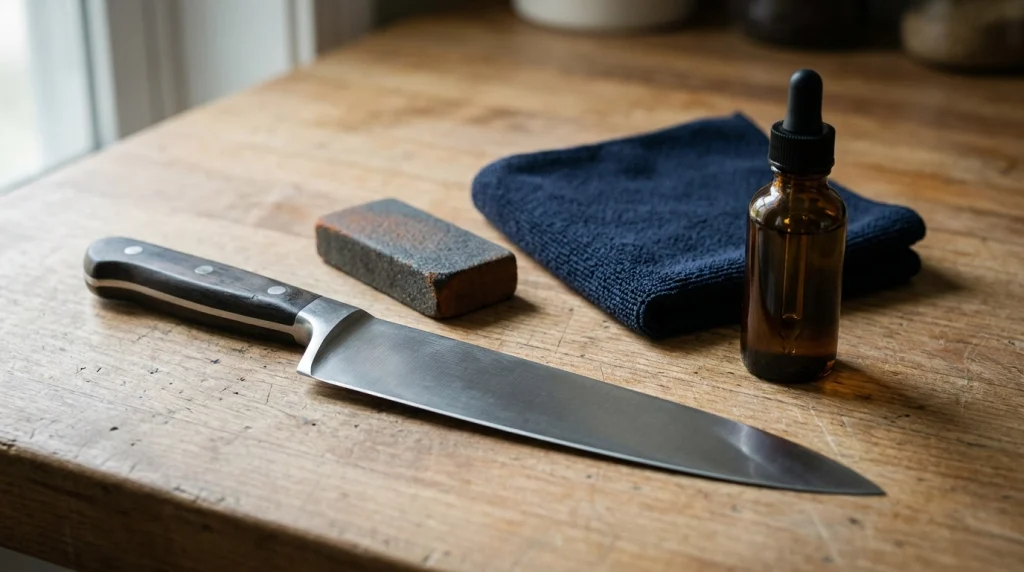
You don’t need an expensive restoration kit for a few small spots. A purpose-made rust eraser, a soft cleaning cloth, and an appropriate maintenance product cover many routine care needs.
Best for surface rust
Sabitoru Rust Eraser
A purpose-made abrasive eraser intended for rust removal on compatible metal surfaces. Use gentle pressure and confirm that its grade suits your knife’s steel and finish.
Best for everyday cleaning
Microfiber Cleaning Cloth
A clean, soft microfiber cloth helps remove moisture and loose residue after hand-washing. It is a practical maintenance essential, although it may not remove established rust by itself.
Best for suitable steel care
Food-Grade Knife Maintenance Oil
A suitable food-grade oil can help protect compatible carbon steel blades during storage. Apply only a thin film after cleaning and drying, and follow the knife maker’s care instructions.
These are tool suggestions, not claims of hands-on testing or verified current ratings. Before purchasing, check the product’s intended use, instructions, and suitability for your particular knife.
Frequently Asked Questions
Can you remove rust from a stainless steel chef knife?
Yes. Stainless steel resists corrosion but is not completely rustproof. Light rust can often be removed with a suitable rust eraser or compatible cleaner. Rinse and dry the blade thoroughly, then inspect it for pits or damage before using it for food preparation.
Does baking soda remove rust from a chef knife?
A baking soda paste may help with some surface stains, but its abrasive action can scratch certain blade finishes. A knife-specific rust eraser is often a more targeted option. Check the manufacturer’s instructions before applying household abrasives, particularly to polished or coated blades.
How long should you leave a rusty knife in vinegar?
There is no universal safe soaking time for every chef knife. Some manufacturers specify a short treatment, while other blades may be damaged by acid exposure. Check the manufacturer’s instructions and use the shortest approved treatment. Rinse and dry the knife immediately afterward.
Can a rusty chef knife be saved?
Many knives with light surface rust can be restored through careful cleaning. Deep pits, significant metal loss, damaged cutting edges, or corrosion around a loose handle require professional assessment. The knife’s material, condition, and remaining structural integrity determine whether restoration is worthwhile.
Why does my chef knife rust after washing?
Rust can develop when moisture remains on the blade, particularly in humid conditions or around salty and acidic food residue. Dishwashers and harsh detergents can also contribute. Hand-wash the knife, dry it immediately, and store it in a clean, dry location.
Final Takeaway: Remove Rust Gently and Keep Your Chef Knife Dry
The safest approach to getting rust off a chef knife is to start with gentle cleaning and increase the treatment only when necessary. For light surface spots, use a compatible rust eraser or another manufacturer-approved method, then rinse, dry, and inspect the blade carefully.
Deep pitting or damage deserves professional attention rather than aggressive scrubbing. With prompt cleaning, thorough drying, and suitable storage, you can reduce the chance of rust returning and help your chef knife remain useful for years.

