Why Is My Chef Knife Rusting? Causes and Prevention
Quick Answer
A chef knife rusts when iron in the blade stays in contact with water and oxygen long enough for corrosion to start. Stainless steel resists this better than carbon steel, but it is not rust-proof, especially after dishwasher cycles, long soaking, or contact with salt and acidic foods. Dry the blade promptly, store it dry, and remove light rust early.
Orange spots on a good knife can feel like a fault in the steel. In most kitchens, they point to a routine problem instead: water left on the blade, damp storage, or a habit that damages the blade’s protective surface.
Why a Chef Knife Rusts in the First Place
Rust is iron oxide. It forms when iron in steel reacts with moisture and oxygen. That simple reaction explains why a knife can look fine after dinner and show spots the next morning if it was left wet in the sink or on a damp board.
Time matters as much as water itself. A quick rinse followed by thorough drying gives corrosion little chance to start. A blade left soaking or stored damp stays in exactly the conditions rust needs. Salt and acids speed the process, so tomato, citrus, onion juice, and vinegar residue left to dry on the steel make spots more likely.
Why Stainless Steel Can Still Rust
 Save
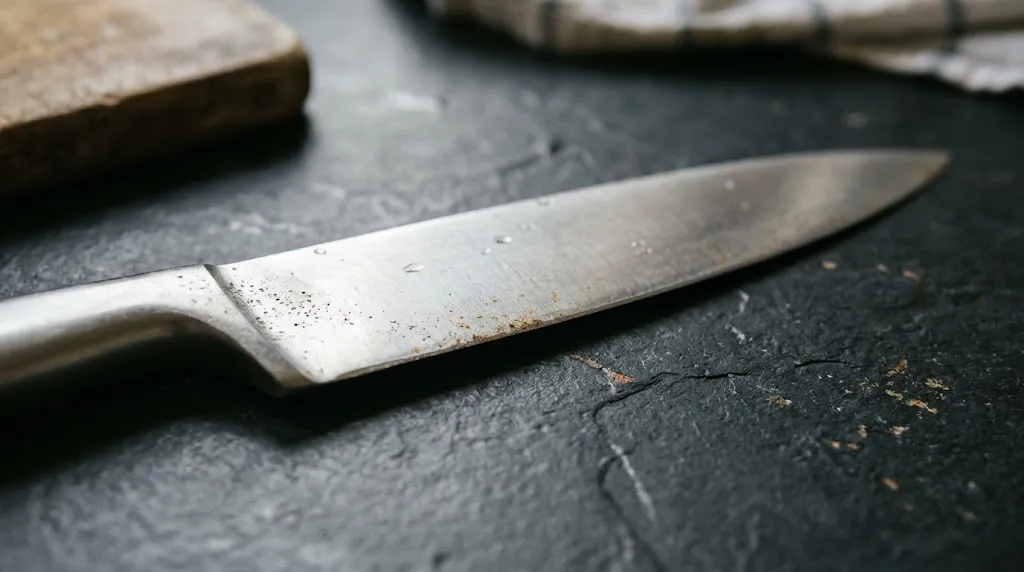
Stainless steel contains chromium, which forms a thin protective oxide layer on the surface. Steels generally called stainless contain at least about 10.5% chromium. That layer is the reason stainless knives need less day-to-day care than carbon steel knives.
The layer can be damaged, however. Harsh dishwasher detergent, prolonged heat and moisture, abrasive scouring, and scratches can weaken it, letting moisture reach the iron underneath. Spots often appear near the edge, the bolster, or where the blade meets the handle. Rust particles from other items can also settle on a blade in a dishwasher, leaving brown spots behind. A rust spot therefore does not prove the knife is cheap or fake. It usually points to too much time wet, too much heat and detergent, or a damaged surface.
Why Carbon Steel Rusts Faster
Carbon steel has little or no chromium protection. It can take a very sharp edge and hold it well, which is why many cooks value it, but it reacts with water and acids much more readily than stainless steel.
For carbon steel, drying is not a job for later. Wipe the blade after acidic or salty foods, wash promptly, and dry fully before storage. A thin coat of food-safe oil after drying adds a moisture barrier. Our guide to maintaining a carbon steel chef knife covers that routine in more detail.
Carbon steel also develops patina, which is not rust. Patina is smooth, grey, blue, or dark discoloration from contact with foods, and it can slow further corrosion. Rust, by contrast, is rough, flaky, and orange or reddish-brown.
| Change on the blade | What it looks like | What to do |
|---|---|---|
| Patina | Smooth, grey, blue, or dark shading | Usually leave it alone and keep drying the blade |
| Surface rust | Small orange spots, slightly rough | Remove gently, then wash, dry, and protect the blade |
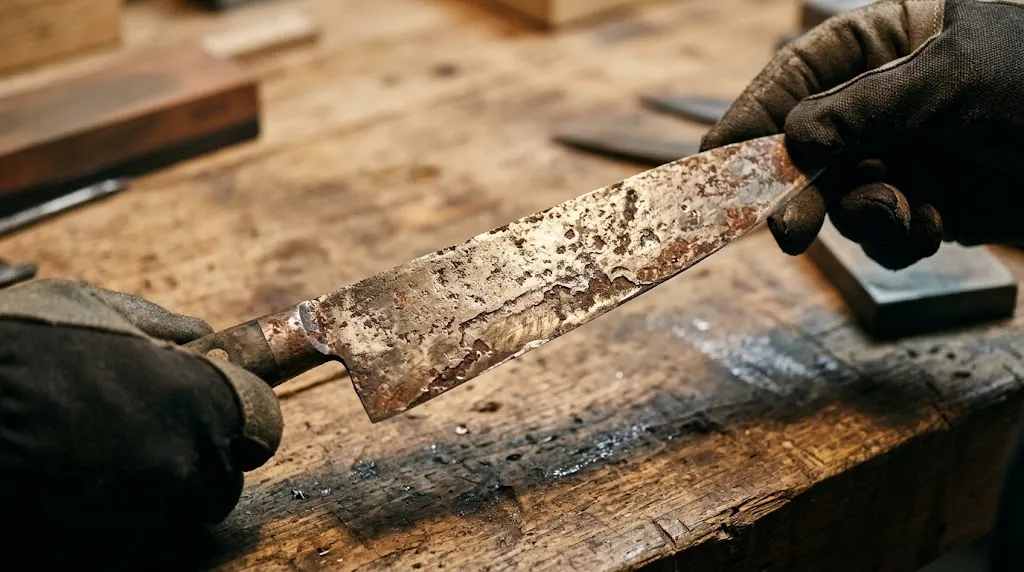
| Deep corrosion | Pits, flaking, or a crumbling edge | Stop using it for food until you have read the retirement checks below |
If unsure, run a fingertip lightly across the area, away from the edge. Patina feels smooth; rust feels rough or raised. See what patina on a knife is for more background.
The Habits That Cause Most Rust
One of these habits is usually involved, and fixing it does more than any rust remover can.
- Soaking in the sink. A knife left under water stays wet far longer than one washed straight away.
- Dishwasher cycles. Heat, detergent, moisture, and contact with other utensils damage the surface and dull the edge.
- Air-drying in a block or drawer. A blade put away damp can stay damp, especially inside a closed block.
- Acid or salt left on the blade. Leaving a knife unwashed after lemons, tomatoes, or salty foods gives corrosion a head start.
- Trapped moisture at the handle. Water can linger where the blade meets the bolster or handle.
- Steel wool on stainless steel. Coarse abrasives can scratch the protective layer and leave tiny steel particles that rust.
In a humid kitchen, a blade that is only mostly dry may still rust, so towel-drying is the safer default.
Tip
Dry from the spine toward the edge, never with a stroke that runs along the sharp edge toward your hand. Check the bolster and handle junction last, because that is where water hides.
Is a Rusty Chef Knife Safe to Use?
Do not use a visibly rusty knife to prepare food. Rust flakes can come off into food, and a rough, corroded surface is harder to clean properly than smooth steel.
That does not mean the knife is ruined. Light surface rust can usually be removed, and once the blade is smooth, clean, and fully dry, it can return to normal use. The key distinction is depth: a flat spot that cleans away is very different from pitted or weakened metal. Check the edge after cleaning too. If it crumbles or will not hold a smooth line, the damage may be deeper than a surface spot.
Warning
Never use harsh chemical rust removers, oven cleaner, or industrial solvents on a food knife. They can damage the finish and leave residues that do not belong near food. Stick to food-safe methods and rinse thoroughly.
How to Remove Light Rust Without Ruining the Edge
Start with the gentlest method that works. For more detail, see removing rust from kitchen knives.
- Clean first. Wash the blade with warm water and mild dish soap, then dry it so you can see the rust clearly.
- Try a baking soda paste. Mix baking soda with a little water, spread it on the spots, and rub gently with a soft cloth or cork along the blade.
- Use a short vinegar step only if needed. A brief application of white vinegar can loosen stubborn spots. Rinse well, then wipe with a baking soda solution to neutralise remaining acid.
- Try a fine rust eraser for stubborn marks. A fine eraser gives more control than coarse steel wool and is less likely to gouge a polished or patterned finish.
- Dry immediately and protect the blade. Towel-dry the blade, let it air briefly in a dry spot if needed, then apply a very thin coat of food-safe oil to carbon steel.
Stop if a spot will not move with gentle methods. Pressing harder with a coarse abrasive can scratch the blade, thin the edge, and damage a Damascus or clad finish.
How to Stop Rust Coming Back
Prevention is a short routine. It works for stainless steel, and the oiling step is essential for carbon steel.
- Wash promptly by hand. Use warm water and mild soap after use, especially after acidic or salty foods. See cleaning a chef knife.
- Dry immediately. Towel-dry the blade, handle, and bolster junction. See how to dry a chef knife.
- Store it dry, with airflow. A dry block, magnetic strip, sheath, or drawer insert keeps the blade protected. Avoid a loose drawer where it can sit against damp items.
- Oil carbon steel lightly. After drying, wipe a few drops of food-safe mineral oil over the blade with a soft cloth. Wipe off excess so the blade is protected, not greasy.
- Check it regularly. A quick weekly look catches a small spot before it spreads.
If a knife will sit unused for weeks, clean and dry it thoroughly first. Long, damp storage is an easy way for spots to develop unnoticed.
When Rust Means the Knife Should Be Retired
 Save
Most surface rust is recoverable. Retire the knife, or have it assessed by a professional sharpener, when any of these are true after cleaning:
- The surface is deeply pitted and cannot be made smooth again.
- Metal is flaking, cracking, or crumbling at the edge.
- The blade feels weakened, bent, or loose at the handle.
- Rust returns quickly in the same pitted area even with careful drying.
Southern Living’s guidance on rusty kitchen utensils makes the same distinction: surface rust may come off with gentle cleaning, but deep pits or extensive corrosion are reasons to replace the utensil. If you retire a knife, wrap the blade securely before disposal.
Common Mistakes That Make Rust Worse
- Putting a good knife in the dishwasher because it is labelled dishwasher-safe. That usually means it will survive, not stay in good condition.
- Leaving a knife in the sink to soak while other dishes pile on top of it.
- Scrubbing a patterned blade with coarse steel wool.
- Using a rusty knife for food first and planning to clean it later.
- Oiling a wet blade. Oil over moisture traps water against the steel instead of keeping it out.
Related Product
Rust Eraser for Kitchen Knives
A fine rust eraser helps lift light surface spots with more control than coarse steel wool, before you wash, dry, and protect the blade again.
As an Amazon Associate, we earn from qualifying purchases.
Frequently Asked Questions
Why is my stainless steel chef knife rusting if it is stainless?
Stainless means stain-resistant, not stain-proof. Its chromium layer protects the steel, but long soaking, dishwasher heat and detergent, salt, acids, and scratches can damage that layer and let rust start on the iron underneath.
Can I remove rust with vinegar without damaging the blade?
For light to moderate spots, a brief vinegar application can help, but rinse thoroughly, neutralise with a baking soda wipe, and dry immediately. Do not soak a blade for hours, and try the gentlest method first on a patterned finish.
Is patina the same as rust?
No. Patina on carbon steel is usually smooth and grey, blue, or dark, and it can slow further corrosion. Rust is rough, flaky, and orange or reddish-brown, and it should be removed rather than left in place.
Should I oil a stainless steel chef knife?
Usually not. Clean stainless steel that is dried and stored dry does not need oil. Save the thin food-safe oil step for carbon steel, or for a knife that will be stored unused for a long time in a humid kitchen.
Can I put a rusty knife in the dishwasher to clean it?
No. The dishwasher will not reliably remove rust, and its heat, detergent, and contact with other items can damage the blade further and dull the edge. Clean rust by hand with a gentle method, then dry the blade immediately.
How do I know if rust is too deep to save?
After gentle cleaning, look for deep pits, flaking metal, a crumbling edge, or a loose handle. If the surface cannot be made smooth again, or rust keeps returning in the same pitted spot despite careful drying, replacement is the safer choice.
Conclusion
Chef knife rusting is usually a moisture problem, not a verdict on the knife. Stainless steel resists rust until soaking, dishwasher cycles, salt, or acids damage its protective layer, while carbon steel needs prompt drying and light oiling. Remove light rust gently, dry fully, and store dry. If pitting or flaking remains, retire the knife.

