How to Dry a Chef Knife Properly to Prevent Rust and Damage
Quick Answer
To dry a chef knife properly, immediately wash it by hand with warm water and mild dish soap, then dry it thoroughly from spine to edge using a clean, lint-free dish towel. Never air-dry a chef knife or leave it in a dish rack, as residual moisture can cause water spots, staining, or corrosion—especially on high-carbon steel blades.
Why Immediate and Thorough Drying Matters
Water is one of the primary enemies of kitchen cutlery. Whether your chef knife is forged from high-carbon steel or stain-resistant stainless steel, prolonged exposure to moisture triggers oxidation. While stainless steel resists rust significantly better than carbon steel, it is not completely stain-proof. Leaving moisture on the metal surface leads to mineral deposits, pitting, and discoloration.
Beyond protecting the blade metal, proper drying preserves the integrity of the knife handle. Moisture seeping into wooden scales, riveted handles, or the tang can cause wood to swell, crack, or warp over time. It can also weaken adhesives and loosen the pins holding the handle together, shortening the lifespan of an investment-grade kitchen tool.
Step-by-Step Guide to Washing and Drying a Chef Knife
 Save
Drying begins the moment washing finishes. Establishing a consistent post-cooking routine ensures your knife stays pristine through years of meal preparation.
- Wash by hand immediately: Wash the knife under warm running water using a small amount of mild dish soap and a soft sponge. Never place a chef knife in an automatic dishwasher, as the harsh detergents, high heat, and jostling against other utensils will dull the edge and ruin the handle.
- Position the blade safely: When rinsing and washing, always keep the sharp edge pointed away from your body and hands. Keep your eyes on the blade rather than hiding it in soapy sink water.
- Grab a clean, dry towel: Use a dedicated, clean, lint-free kitchen towel or microfiber cloth. Avoid damp or dirty towels that might transfer food particles or moisture back onto the cleaned steel.
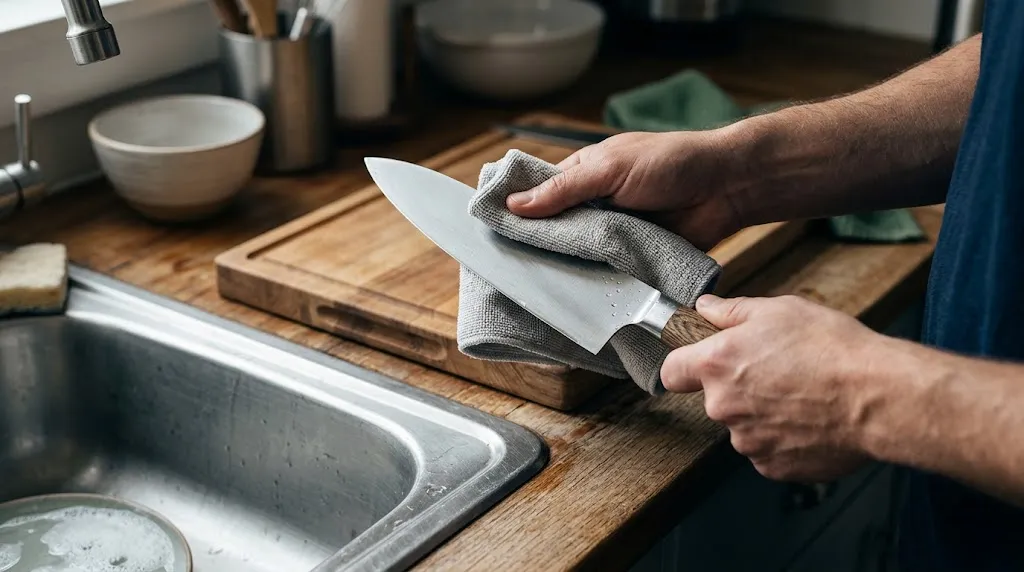
- Wipe from spine to edge: Hold the knife with the spine (the thick, unsharpened top edge) facing your palm or resting gently against a stable surface. Place the towel flat against the spine and wipe downward toward the cutting edge, moving from the heel near the bolster to the tip. This technique keeps your fingers safely away from the sharp edge.
- Inspect the entire knife: Check the ricasso, bolster, handle pins, and spine for any lingering water droplets. Pay special attention to where the blade meets the handle, as water tends to pool in these crevices.
- Store properly: Once completely dry, store the knife in a wooden block, on a magnetic strip, or inside a protective edge guard. Avoid tossing a bare knife into a cluttered drawer where moisture can linger or the edge can nick.
Common Mistakes to Avoid When Drying Knives
Even home cooks who wash their knives by hand often make small errors during the drying process that compromise blade longevity.
- Air-drying in a rack: Allowing a knife to sit wet in a crowded dish drainer exposes it to stagnant moisture for too long and risks accidental impact with other hard dishes.
- Wiping toward the edge: Dragging a towel parallel along the cutting edge or wiping from edge to spine risks slicing the cloth—and potentially your fingers. Always wipe parallel or from spine to edge.
- Using damp cloths: Using a towel that already absorbed moisture from drying plates leaves a thin, invisible film of water on the blade, defeating the purpose of drying.
- Ignoring the handle: Focusing solely on the steel while leaving a wooden handle wet invites wood rot, splintering, and loose scales.
Warning
Never store a chef knife while it is even slightly damp. Trapped moisture inside a knife block or sheath creates an enclosed, humid microclimate that accelerates rust formation within hours.
Special Care for High-Carbon Steel Chef Knives
High-carbon steel blades offer exceptional edge retention and sharpness, but they react rapidly with moisture and food acids. If you use a carbon steel chef knife, drying requires an extra protective step.
After wiping the blade completely dry with a towel, apply a thin coat of food-grade mineral oil or camellia oil to the steel. Use a clean paper towel to spread a microscopic layer across both sides of the blade. This oil barrier blocks oxygen and ambient humidity from contacting the metal, preventing rust and the formation of unwanted patina spots during storage.
Tip
Keep a small bottle of food-grade mineral oil near your knife storage area so oiling carbon steel after drying becomes a seamless, effortless habit.
Preventing Water Spots and Surface Corrosion
 Save
If your water supply has high mineral content (hard water), letting a knife air-dry—even partially—leaves cloudy white mineral spots on the polished steel surface. These spots are not rust, but they indicate mineral buildup that can trap moisture underneath.
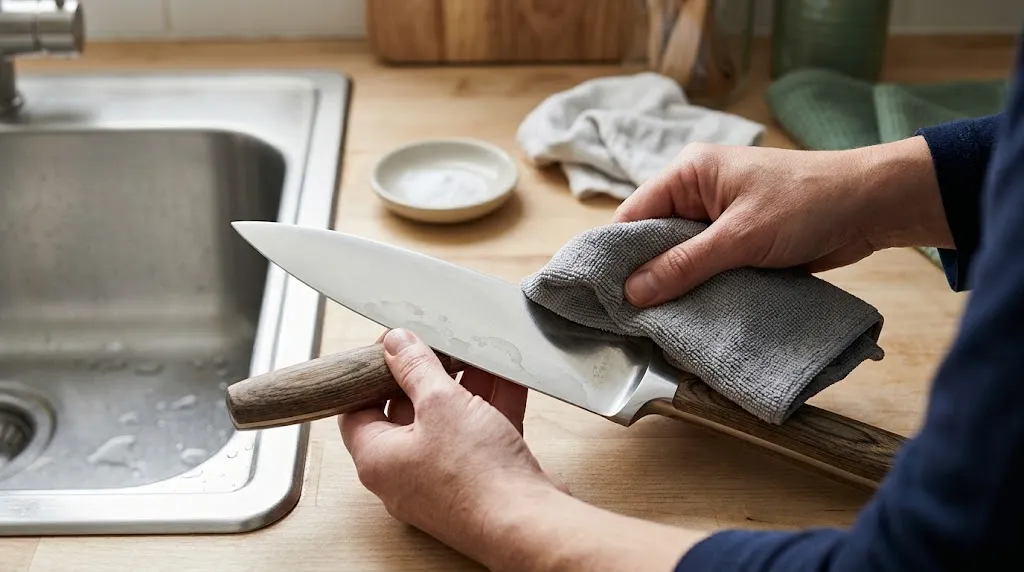
To eliminate water spots, always dry your knife immediately using a clean microfiber cloth, which polishes the steel while absorbing every trace of moisture. If mineral spots do appear, gently buff them out using a damp cloth with a tiny dab of baking soda or a specialized non-abrasive metal cleaner, then rinse and dry thoroughly.
Related Product
Kitchen Knife Sharpening Stones and Maintenance Kits
Keep your chef knife performing at its best with a quality whetstone and protective food-grade maintenance oil.
As an Amazon Associate, we earn from qualifying purchases.
Frequently Asked Questions
Is it safe to let a chef knife air-dry if I am in a rush?
No. Air-drying allows water to pool near the bolster, handle pins, and microscopic edge imperfections, significantly increasing the risk of rust and handle degradation. Always take thirty seconds to hand-dry your knife with a towel.
Can I use paper towels instead of a cloth towel to dry my knife?
Yes, clean paper towels work well for drying chef knives and prevent the buildup of kitchen odors on fabric towels. However, ensure the paper towel is sturdy enough not to tear or leave paper lint clinging to the blade edge.
What should I do if my chef knife develops rust spots?
Minor surface rust can usually be removed by applying a small amount of mineral oil or baking soda paste and gently scrubbing with a non-abrasive nylon pad. Avoid steel wool or harsh scouring powders, as they will deeply scratch the blade finish.
Do stainless steel chef knives need to be dried immediately?
Yes. While stainless steel contains chromium to resist corrosion, prolonged contact with water, salt, and food acids will still cause pitting and staining over time. Prompt drying protects the finish and maintains the factory polish.
How does improper drying affect wooden knife handles?
When moisture penetrates wooden scales, the wood fibers expand and contract unevenly as they dry. This causes warping, cracking, gap formation around the tang rivets, and a dull, faded handle appearance.
What is the safest way to wipe a sharp chef knife without cutting the towel?
Always hold the blade with the spine resting against your stabilizing hand or a flat surface, and wipe in a direction moving away from the sharp edge (from spine down to edge). Never run your bare fingers along the edge while holding a towel.
Conclusion
Properly drying a chef knife is a simple yet vital habit that protects both the steel blade and the handle from premature wear, corrosion, and water damage. By washing by hand, wiping carefully from spine to edge with a clean towel, and ensuring zero residual moisture before storage, you extend the working life of your cutlery and keep your kitchen tools performing reliably for every meal.

