Powder Steel Chef Knife: What It Is and Why It Matters
Quick Answer A powder steel chef knife is made from steel produced through powder metallurgy rather than traditional melting and…


Quick Answer A powder steel chef knife is made from steel produced through powder metallurgy rather than traditional melting and…

Quick Answer A Damascus steel chef knife is a kitchen knife made from layered, pattern-welded steel that produces a distinctive…

Quick Answer A stainless steel chef knife is a general-purpose kitchen knife made from steel with enough chromium to resist…

Quick Answer Chef knife HRC refers to the blade’s hardness on the Rockwell C scale. Most chef knives fall between…
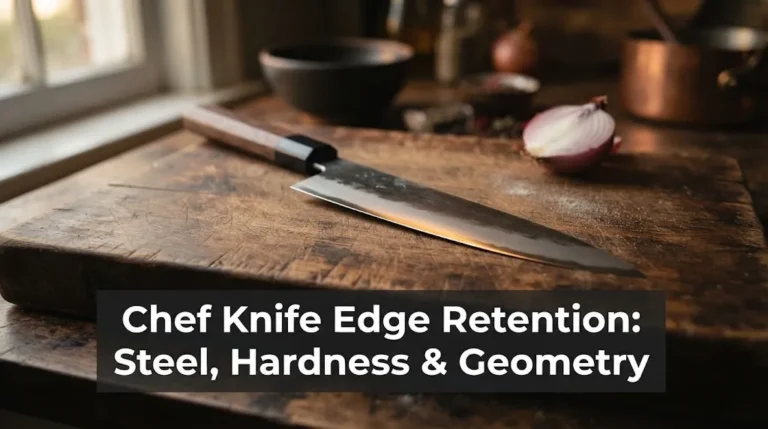
Quick Answer Chef knife edge retention is mainly determined by steel hardness, edge geometry, and how you use and maintain…

Quick Answer Chef knife toughness refers to a blade’s ability to absorb impact and resist chipping, cracking, or snapping under…
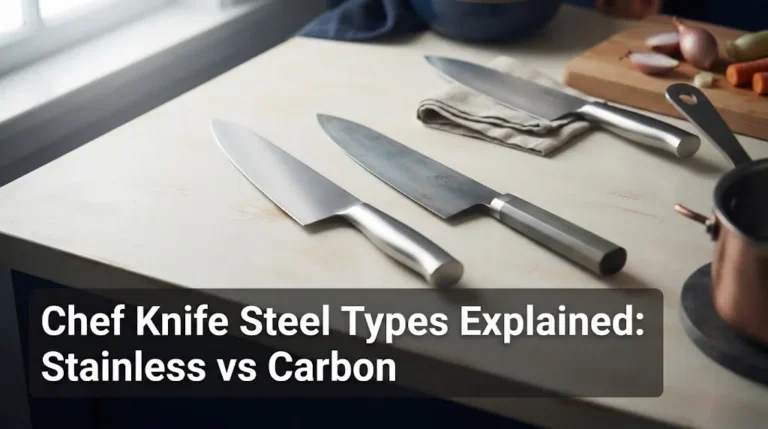
Quick Answer Chef knife steels are broadly categorized into stainless steels (corrosion-resistant, low maintenance), high-carbon steels (exceptional edge retention and…

Quick Answer A chef knife is balanced properly when the center of gravity aligns precisely where the blade meets the…
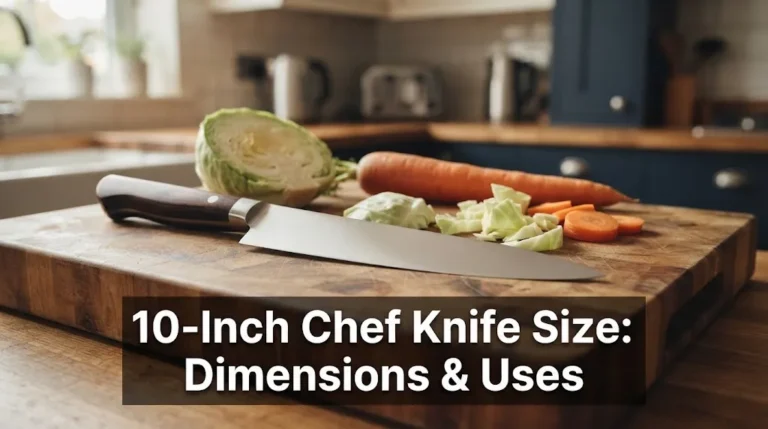
Quick Answer A 10-inch chef knife has a blade nominally 10 inches long, equivalent to 25.4 cm, measured separately from…
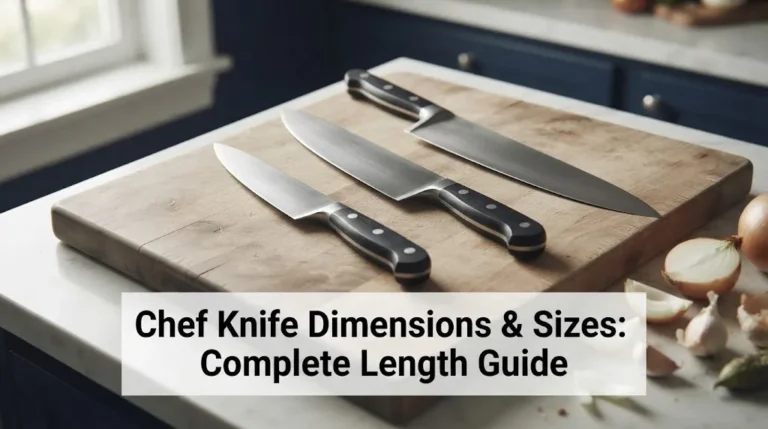
Quick Answer Standard chef’s knives typically feature blade lengths between 8 inches (20 cm) and 10 inches (25 cm), with…

Quick Answer A standard chef’s knife typically weighs between 7 and 10 ounces (approx. 200 to 280 grams). Weight varies…
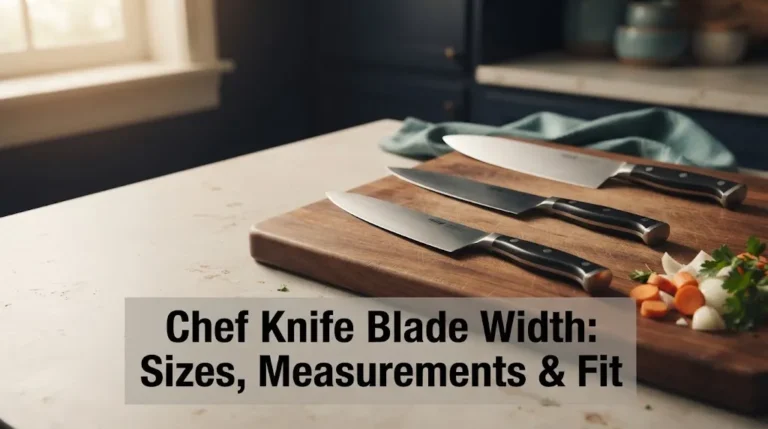
Quick Answer A chef knife’s blade height, often called blade width, commonly falls around 40–55 mm (1.6–2.2 inches) near the…
Quick Answer The chef knife tang is the part of the blade’s steel that extends into the handle. It connects…
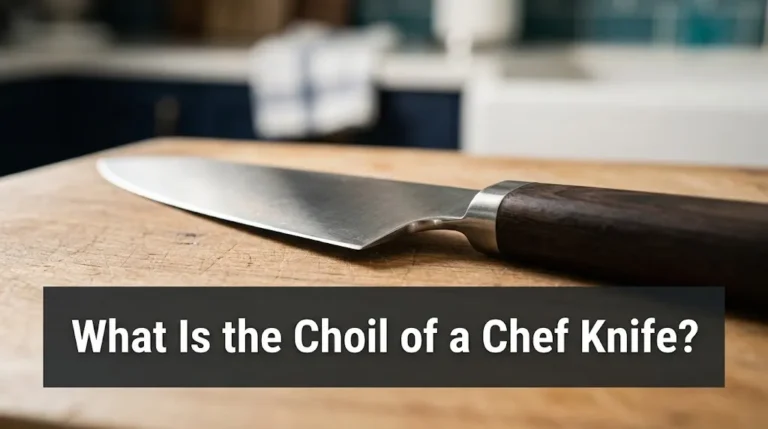
Quick Answer A chef knife choil is the small unsharpened recess or curved transition at the back of the blade,…

Quick Answer A chef knife bolster is the thickened metal area where the blade meets the handle. It can add…
