Powder Steel Chef Knife: What It Is and Why It Matters
Quick Answer
A powder steel chef knife is made from steel produced through powder metallurgy rather than traditional melting and casting. This process creates a finer, more uniform grain structure with evenly distributed carbides, which typically allows the blade to hold a very sharp edge for longer. The tradeoff is that these knives are often harder to sharpen and more brittle than softer conventional steels, so they reward careful use and hand washing.
Most chef knives look similar on a rack. A powder steel blade looks the same as any other stainless blade until you examine the steel itself. The difference is not a coating or a finish. It is how the steel was made before the blade was ever ground.
What “Powder Steel” Actually Means
 Save
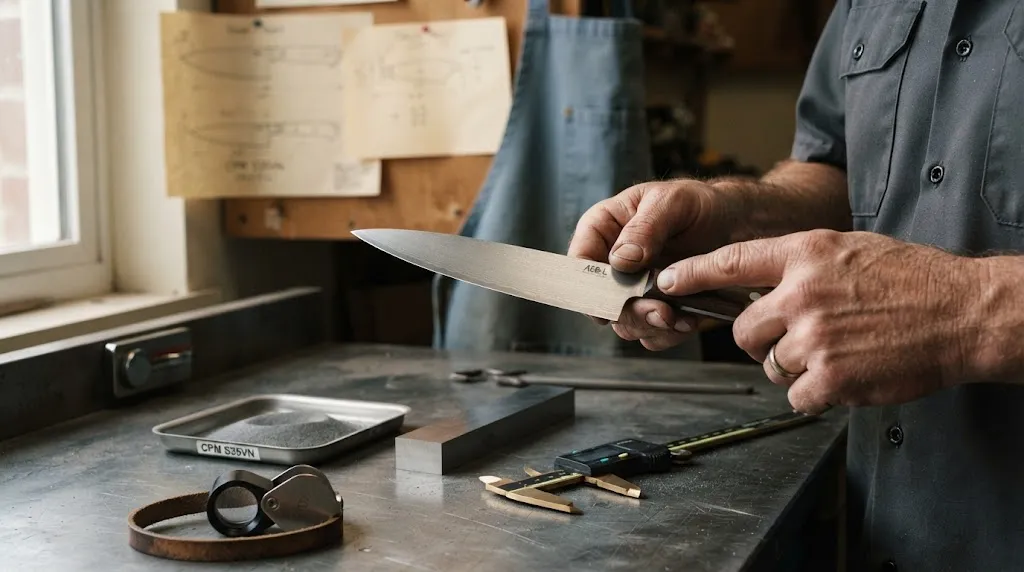
Powder steel is not a specific type of steel. It is a manufacturing method. The correct term is powder metallurgy steel, or PM steel. Instead of melting alloying elements together and casting them into ingots, the steel is atomized into fine powder, blended precisely, then consolidated under heat and pressure into a solid billet.
The practical result is a blade with a very fine, uniform microstructure. Carbides—the hard particles that give steel its wear resistance—are distributed evenly rather than clumping together in large, brittle clusters. This is why powder steels can reach high hardness levels without becoming as fragile as conventional high-carbon steels at the same hardness.
Japanese knife makers were early adopters of this process. Steels like SG2 (also called R2) and SRS13 are common powder metallurgy grades used in kitchen knives, hardened to around 63 HRC in many production models. Higher-end powder steels like ZDP-189 can reach 65–67 HRC, though these sit at the extreme end of kitchen knife hardness.
Why Powder Steel Blades Hold an Edge Differently
The edge-holding advantage comes from two things: hardness and carbide uniformity. A harder steel resists deformation at the edge better, so a thin, acute edge lasts longer before it rolls or dulls. Uniform carbides mean there are fewer weak spots where the edge might chip or wear unevenly.
In practice, a powder steel chef knife can be ground thinner behind the edge than a softer steel without losing stability during normal slicing. That translates to less resistance when cutting dense vegetables like carrots or sweet potatoes. The blade passes through rather than wedging apart.
This is also why many powder steel knives feel sharper out of the box. The steel supports a more refined edge geometry. But the difference is not magic. A well-treated conventional steel at 60–61 HRC from a reputable maker can feel similarly sharp. The powder steel advantage is most noticeable in how long that sharpness lasts under regular use.
Key Insight
The benefit of powder steel is not simply “harder is better.” It is that the steel can be both hard and relatively uniform, which lets the blade support a very thin edge without the weak carbide clusters that would make a conventional steel brittle at the same hardness.
The Real Tradeoffs You Should Know Before Buying
Hardness has a cost. A powder steel chef knife in the 63–66 HRC range is less forgiving than a softer German-style knife at 56–58 HRC. The edge can chip if it contacts bone, frozen food, or a hard cutting board at an angle. It should not be used for cleaving or any task that involves twisting or prying.
Sharpening is the other practical issue. High-hardness powder steels respond slowly to standard whetstones. Diamond abrasives or ceramic stones are usually recommended for efficient sharpening, especially for grades like ZDP-189. A home cook who sharpens once or twice a year on a basic stone may find the experience frustrating. A professional sharpening service or a diamond stone is a more realistic approach for many owners.
Corrosion resistance varies by grade. Many powder stainless steels resist rust well, but some high-carbon powder steels like ZDP-189 have so much chromium tied up in carbides that less is available to form a passive oxide layer. These knives still need prompt cleaning and drying after use, especially after contact with acidic foods. They are not “leave it wet in the sink” knives.
How to Tell If a Powder Steel Knife Suits Your Kitchen
A powder steel chef knife makes sense if you already have good knife habits: you hand wash and dry your knives, you use a wood or soft plastic board, and you are willing to either learn to sharpen on appropriate abrasives or pay someone who can.
It makes less sense as a first “good” chef knife if you are still building those habits. A softer stainless knife at a lower price will tolerate more abuse and be easier to maintain while you learn. The powder steel advantage—long edge life with a refined geometry—only pays off when the knife is used and maintained in a way that preserves that edge.
If you already own a decent knife and want to understand what the next tier of performance feels like, a powder steel knife from a reputable Japanese maker is a reasonable step. Look for a clearly stated steel grade (SG2/R2, SRS13, or a named powder steel) and a stated hardness. A vague “powder steel” label without a grade tells you the construction method but not what you are actually buying.
Tip
If you are comparing two powder steel knives and one lists a specific grade like SG2 or SRS13 while the other only says “powder steel,” treat the specific grade as a sign of transparency. The grade tells you the steel’s composition and expected hardness range; the generic label does not.
Care Rules That Matter More Than Brand
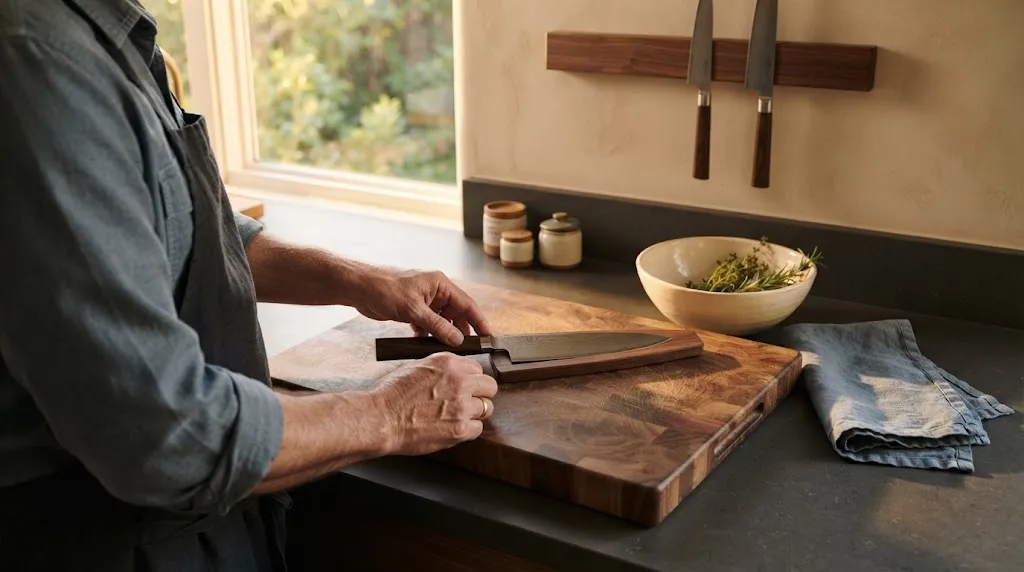
Hand wash only. Dishwasher heat and detergent attack the edge and the handle material, and the prolonged moisture exposure is exactly what high-hardness steels do not need. Dry immediately with a towel.
 Save
Use a wood or end-grain board. Bamboo and glass are harder on edges than they appear. A powder steel edge is thin and hard; repeated contact with a hard surface accelerates micro-chipping. Wood gives enough to protect the edge without dulling it quickly.
Do not chop frozen food or bone. This is not a cleaver. The same hardness that gives long edge life makes the edge vulnerable to lateral stress and impact. If you need to break down a chicken or chop through a squash stem, reach for a softer, thicker knife.
Store it dry and protected. A magnetic strip or a blade guard is fine. A loose drawer with other metal tools is not. The edge is the part you are paying for; protect it when it is not in use.
Frequently Asked Questions
Is powder steel better than VG10?
Neither is universally better. SG2 and other powder steels typically achieve higher hardness and more uniform carbide distribution than VG10, which can mean longer edge retention with a thinner edge. VG10 is still a capable stainless steel and is often easier to sharpen. The better choice depends on whether you prioritize edge life or ease of maintenance.
Do powder steel knives chip easily?
They are more prone to chipping than softer steels when subjected to lateral stress, impact, or use on hard surfaces. Under normal slicing on a wood board, a well-made powder steel knife is not fragile. The risk comes from twisting, prying, or chopping through hard items.
Can I sharpen a powder steel chef knife at home?
Yes, but it requires appropriate abrasives. Diamond plates or high-quality ceramic stones cut these hard steels more effectively than soft water stones. Expect the process to take longer than sharpening a conventional stainless knife. If you are not comfortable sharpening, a professional service is the safer option.
What does HRC mean for a kitchen knife?
HRC is the Rockwell C hardness scale. A higher number means a harder steel. Most quality kitchen knives fall between 56 and 62 HRC. Powder steel knives often sit at 63–66 HRC. Higher hardness generally supports better edge retention but reduces toughness and forgiveness.
Are powder steel knives worth the price?
They can be, if you value long edge retention with a refined cutting geometry and are prepared to care for the knife properly. If you prefer easy maintenance and a forgiving edge, a softer steel at a lower price may serve you better. The price premium buys a specific set of performance characteristics, not a universally superior tool.
Does powder steel rust?
It depends on the grade. Many powder stainless steels resist rust well, but some high-carbon powder steels are less stainless than their chromium content suggests because much of the chromium is bound in carbides. All powder steel knives benefit from prompt cleaning and drying after use.
Conclusion
A powder steel chef knife is a specific tool for a specific kind of cook. It rewards good habits with long edge life and a refined cutting feel. It punishes neglect and rough handling more than a softer knife would. If you understand that tradeoff and are willing to meet it, the steel delivers what it promises. If you want a knife that tolerates being left wet or used on a glass board without complaint, conventional steel is the more honest choice.

