Chef Knife Balance Guide: How Weight & Design Affect Cutting
Quick Answer
A chef knife is balanced properly when the center of gravity aligns precisely where the blade meets the handle (the bolster or pinch grip zone). This balance point allows the knife to feel like a natural extension of your hand, reducing fatigue and granting maximum control during repetitive cutting tasks.
Achieving and understanding proper knife balance is essential for efficient, precise kitchen work. When a chef knife is well-balanced, the weight is distributed harmoniously between the steel blade and the handle material. This equilibrium directly influences how much physical effort you need to exert during long food preparation sessions.
Poorly balanced knives can cause hand cramps, wrist fatigue, and less accurate cuts because your muscles must constantly compensate for a blade-heavy or handle-heavy tool. Evaluating your knife’s balance helps you choose the right instrument and use it safely.
How to Test Chef Knife Balance
 Save
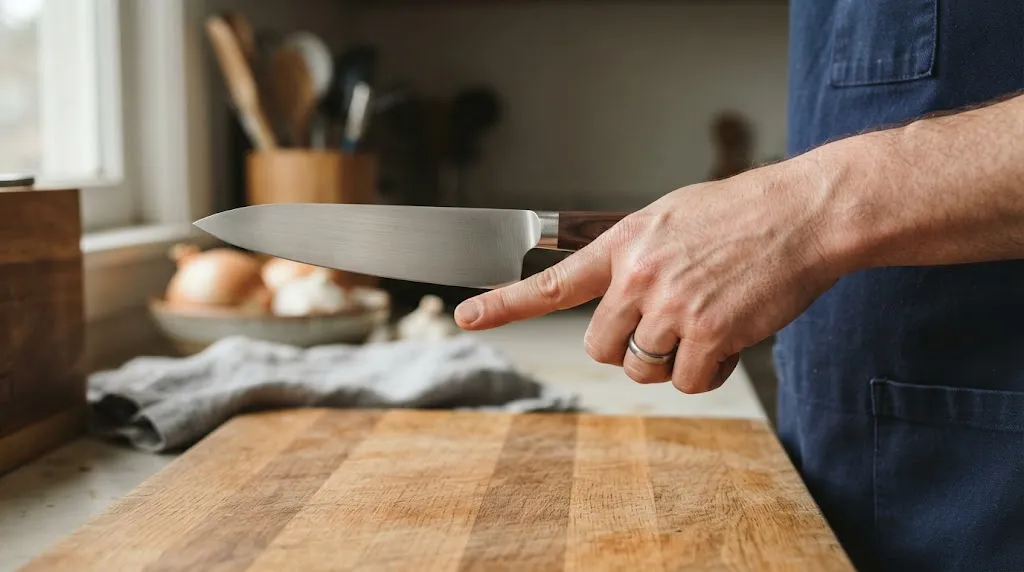
SaveTesting a knife’s balance takes only a few seconds and requires no special tools. You can perform a reliable physical balance check using a simple pinch technique or your index finger.
To test the balance:
- Hold your hand out with your index finger extended horizontally.
- Place the bolster or the very beginning of the blade edge right over your finger, just ahead of the handle scales.
- Observe whether the knife tips forward toward the blade, tilts backward toward the handle, or balances steadily.
If the knife rests flat and stable across your finger without tipping significantly in either direction, it possesses neutral balance. Neutral balance is generally preferred by professional chefs because it supports versatile cutting styles.
Key Insight
The ideal balance point changes slightly depending on your preferred cutting grip. Cooks who use a traditional pinch grip—pinching the blade right in front of the bolster with thumb and forefinger—often benefit from a knife balanced slightly further forward into the blade.
Blade-Heavy vs. Handle-Heavy Knives
Knives generally fall into one of three balance categories. Each style influences chopping mechanics, cutting speed, and user comfort differently.
| Balance Type | Characteristics | Best Suited For |
|---|---|---|
| Neutral Balance | Center of gravity sits directly at the bolster or pinch point. | All-purpose chopping, rocking cuts, and general kitchen tasks. |
| Blade-Heavy | Weight pulls forward toward the tip; common in Japanese blades or cleavers. | Effortless downward pushing through dense root vegetables. |
| Handle-Heavy | Weight feels concentrated in the handle; common in stamped, lightweight knives. | Quick slicing work, though can cause forearm fatigue over time. |
Understanding these categories helps you anticipate how a knife will perform before you make your first cut. A blade-heavy knife uses gravity to do more of the work when chopping, whereas a handle-heavy knife feels lighter at the tip but requires more muscular control to drive downward.
Why Knife Balance Matters for Cooking Efficiency
A properly balanced chef knife transforms your prep work by maximizing leverage and minimizing physical strain. When a knife is out of balance, your hand fights the tool.
Consider the mechanical implications during food preparation:
- Reduced Fatigue: Balanced weight distribution prevents your wrist from working overtime to keep the blade stable.
- Enhanced Precision: Better control over the center of gravity leads to more uniform cuts, whether dicing onions or mincing herbs.
- Improved Safety: Knives that feel unwieldy or slip out of balance increase the risk of accidental slips and cuts.
Warning
Never attempt to modify a knife’s balance by grinding down the steel or altering the handle unless you have specialized cutlery maintenance experience, as structural modifications can weaken the blade or ruin its temper.
Forged vs. Stamped Construction and Balance
The manufacturing method of a chef knife heavily dictates its balance profile. Knowing how a knife is built explains why it feels the way it does in your hand.
Forged knives are crafted from a single hot bar of steel, often featuring an integrated bolster—a thick collar of metal where the blade meets the handle. This bolster adds significant weight near the center, naturally pulling the balance point backward toward the hand and creating a solid, stable feel.
Stamped knives are cut from a flat sheet of steel and laser-sharpened. Because they lack a heavy forged bolster, they tend to be lighter overall and often feel more blade-heavy unless the manufacturer adds internal weights or dense handle scales to compensate.
How Handle Materials Affect Weight Distribution
 Save
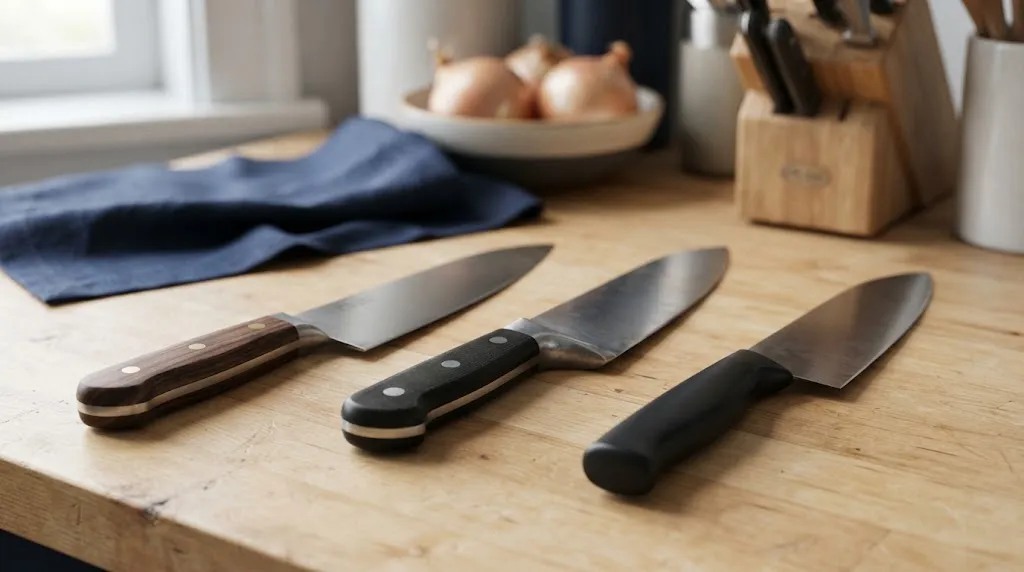
SaveThe handle is just as important as the steel when establishing balance. Manufacturers use a wide array of materials that shift the center of gravity significantly.
Dense hardwoods, full tang steel constructions with heavy riveted scales, and brass or stainless steel bolsters add substantial weight to the rear of the knife. Conversely, synthetic handles made from lightweight polymers, polypropylene, or hollow handles reduce rear weight, making the blade feel more prominent.
When selecting a knife, match the handle material weight to your cutting style. If you prefer a nimble, fast-moving blade for delicate slicing, a lighter handle paired with a responsive profile works best. If you prefer heavy-duty rocking chops, a weightier handle paired with a forged German steel blade provides stable momentum.
Related Product
Chef Knife Sharpening Stone Set
Regular sharpening maintains your knife’s edge geometry, ensuring your balanced blade cuts smoothly without requiring extra downward force.
As an Amazon Associate, we earn from qualifying purchases.
Frequently Asked Questions
What is the ideal balance point on a chef knife?
The ideal balance point sits right at the bolster where the blade transitions into the handle, or slightly forward into the blade if you prefer a pinch grip.
Do Japanese and Western knives have different balance points?
Yes. Western chef knives tend to be heavier with a centralized balance at the bolster designed for rocking motions. Japanese chef knives are typically lighter, thinner, and often balance slightly further forward for precise push-cuts.
Can a poorly balanced knife be fixed?
Generally, no. Because balance is determined by the permanent construction, tang style, and handle materials forged into the knife during production, physical balance cannot easily be adjusted at home.
Does handle weight matter more than blade weight?
Neither matters more than the other on its own; what matters is the ratio between them. A harmonious ratio creates a neutral balance that reduces hand fatigue.
How does grip style change how knife balance feels?
Using a pinch grip shifts your hand control point forward onto the blade itself. This makes a slightly blade-heavy knife feel more balanced in actual use than it would when held entirely by the handle.
Are expensive knives always better balanced?
Not necessarily. While higher-end knives invest more engineering into ergonomics and weight distribution, some budget stamped knives are exceptionally well-balanced for lightweight, nimble tasks.
Conclusion
Chef knife balance determines how comfortably and efficiently you prepare food. By understanding how the center of gravity interacts with your grip style, handle materials, and blade construction, you can select and handle kitchen knives with greater confidence, reducing fatigue and improving your culinary precision.

