Stainless Steel Chef Knife: Performance, Care & Buying Guide
Quick Answer
A stainless steel chef knife is a general-purpose kitchen knife made from steel with enough chromium to resist rust and staining. It is the most practical choice for most home cooks because it tolerates everyday use and simple care better than carbon steel, though it usually gives up some edge retention and sharpness in exchange. The right one for you depends on how often you cook, how you maintain your knives, and whether you prefer a lighter stamped blade or a heavier forged one.
What Makes a Chef Knife “Stainless”
 Save
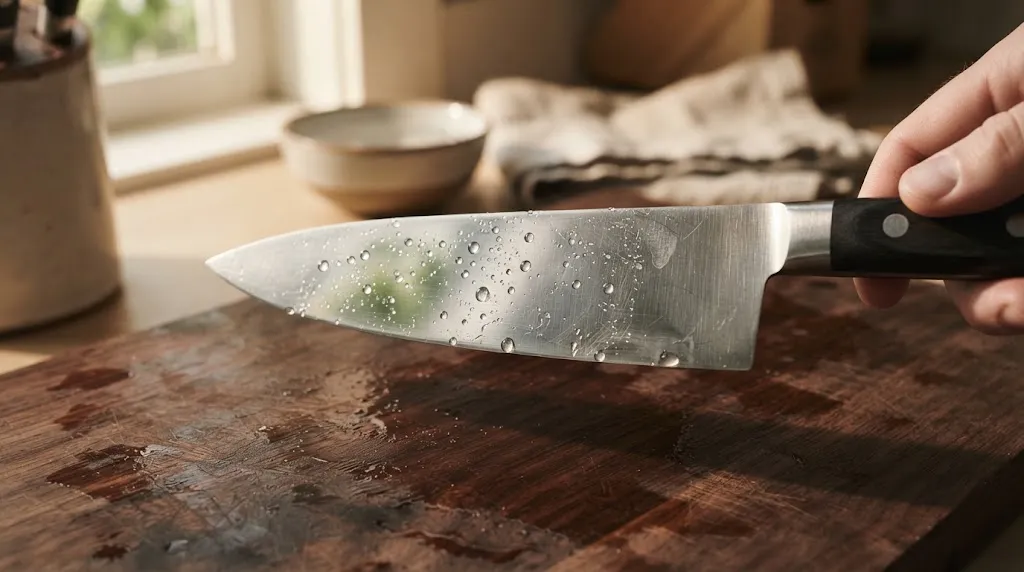
Stainless steel is not a single material. It is a family of steel alloys that contain chromium, typically at least 13 percent, which forms a passive layer that resists rust and corrosion. That chromium content is what separates stainless from carbon steel, and it is the main reason stainless knives tolerate humid kitchens, wet cutting boards, and the occasional forgotten rinse.
Most chef knives sold today use some form of high-carbon stainless steel. This means the alloy includes enough carbon to take a useful edge, plus enough chromium to resist staining. German-style stainless steels such as X50CrMoV15 are common in European knives, while Japanese stainless steels like VG10 appear in harder, thinner blades.
The practical point is simple: “stainless” on a label tells you the blade will resist rust. It does not tell you how hard the steel is, how long the edge will last, or whether the knife is forged or stamped. Those details matter more than the word itself.
How Stainless Steel Behaves in a Chef Knife
A stainless steel chef knife sits in a useful middle ground. It is not as hard as carbon steel, so it will not hold a razor edge as long under heavy use. But it is also less brittle, which means it is less likely to chip if it hits a bone or slips off the board.
That tradeoff shapes what the knife feels like in daily cooking. A stainless blade typically takes a slightly wider edge angle than carbon steel, often around 20 degrees per side on Western-style knives. A wider angle is more durable and forgiving. It also means the knife may crush delicate herbs slightly more than a thinner carbon blade would.
For most home cooks, that is a reasonable exchange. You give up a small amount of peak sharpness and edge longevity in return for a knife that does not demand immediate drying, oiling, or careful storage after every use.
Key Insight
“Stainless” describes corrosion resistance, not edge quality. A cheap stainless knife and a high-carbon stainless knife are both stainless, but they can behave very differently on the board.
Stamped vs. Forged: Why Construction Changes the Knife
Two stainless steel chef knives can look similar and feel completely different because of how they are made. Stamped blades are cut from a sheet of steel, then ground and finished. Forged blades are shaped from a heated bar of steel under pressure, usually with a bolster where the blade meets the handle.
Stamped knives tend to be thinner, lighter, and less expensive. A well-made stamped knife can still perform very well, especially for lighter prep work like slicing vegetables or mincing shallots. Forged knives are heavier and often feel more balanced in the hand, which some cooks prefer for dense ingredients like winter squash or root vegetables.
Neither construction is automatically better. A poorly made forged knife can feel clumsy, and a well-made stamped knife can be a genuine workhorse. The more useful question is how the knife feels during the cutting motion you actually use.
What to Check Before Choosing One
Blade length is the first practical decision. An 8-inch chef knife is the most common all-purpose size for home cooks, long enough for most vegetables and proteins without feeling unwieldy on a small cutting board. A 6-inch blade gives more control in tight spaces, while a 9- or 10-inch blade suits cooks who process large volumes and have the board space to match.
Handle material matters more than many buyers expect. Plastic and composite handles are durable, easy to clean, and resist moisture well. Wood handles can feel warmer and more comfortable over long sessions, but they need more attention and should never be left wet. A handle that feels too thick or too slim will become tiring during a long prep session, regardless of how good the steel is.
Balance is the least measurable quality and one of the most important. A well-balanced knife feels stable when you hold it, with the weight sitting where your hand naturally controls the blade. If you can hold the knife before buying, do it. If you are shopping online, look for descriptions of weight and balance rather than relying on photos alone.
How to Care for a Stainless Steel Chef Knife
 Save
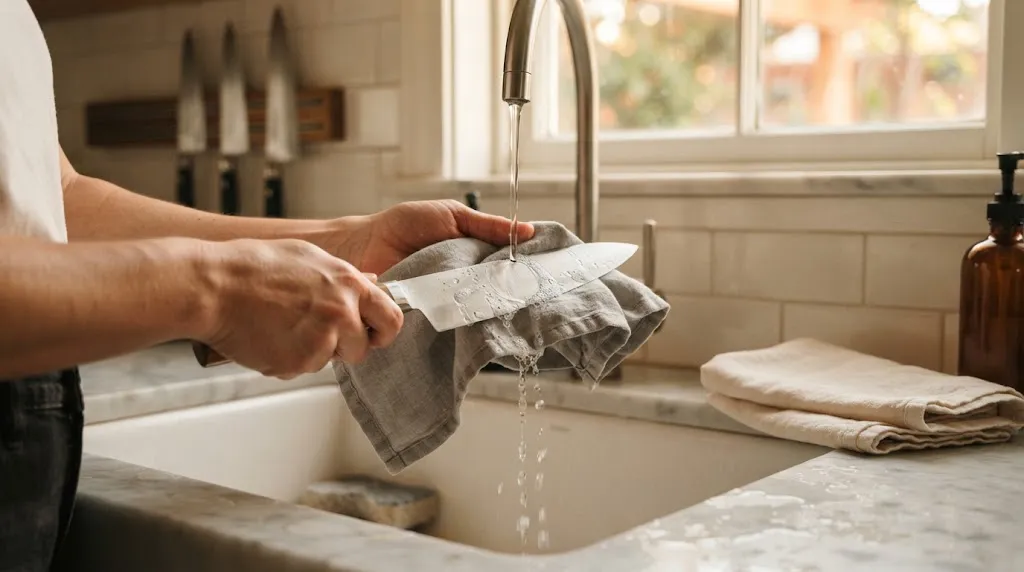
Stainless steel is forgiving, but it is not indestructible. The chromium layer that resists rust can still be stressed by prolonged moisture, harsh detergents, and high heat. Hand washing is the safest routine: wash with warm water and mild soap, rinse, and dry immediately.
Dishwashers are a common point of confusion. Some manufacturers say their stainless knives are dishwasher safe, but even those usually recommend hand washing for longevity. The combination of heat, detergent, and knives knocking against other items can dull the edge and degrade handle materials faster than hand washing.
Storage matters too. A magnetic strip, a knife block, or a blade guard protects the edge from contacting other metal. Tossing a chef knife into a drawer without protection is one of the fastest ways to roll or chip an edge, even on a tough stainless blade.
Tip
Hone your stainless chef knife regularly with a honing steel to realign the edge, and sharpen it when honing no longer restores a clean cut. Frequent light honing is gentler on the blade than waiting until it is completely dull.
When Stainless Steel Might Not Be the Best Choice
Stainless steel is the practical default, but it is not the only option. Cooks who prioritize maximum sharpness and are willing to dry and oil their knife after every use may prefer carbon steel. Carbon steel can take a finer edge and is easier to sharpen, but it will rust if left wet and can develop a patina over time.
There is also a middle category: high-carbon stainless steel. These alloys try to combine the edge-taking ability of carbon steel with the corrosion resistance of stainless. They are not identical to either extreme, but they can be a sensible choice for cooks who want more performance than a basic stainless blade without the maintenance demands of pure carbon steel.
For anyone who cooks a few times a week, rinses and dries their knife after use, and does not want to think about rust, stainless remains the most straightforward choice. The key is to choose a specific knife with a known steel and construction, rather than treating “stainless” as a guarantee of quality.
Frequently Asked Questions
Is a stainless steel chef knife good for everyday cooking?
Yes. Stainless steel resists rust and staining, which makes it well suited to daily use and simple care. It may not hold an edge as long as carbon steel, but it is more forgiving of imperfect maintenance.
Does stainless steel mean the knife will never rust?
No. Stainless steel is rust-resistant, not rust-proof. Prolonged exposure to moisture, harsh chemicals, or dishwasher heat can still cause staining or corrosion, especially on lower-quality alloys.
Can I sharpen a stainless steel chef knife at home?
Yes. Most stainless chef knives can be maintained with a honing steel and periodic sharpening using a whetstone or a guided sharpener. The wider edge angle on many Western stainless knives makes them relatively approachable for home sharpening.
Is forged better than stamped for a stainless chef knife?
Not automatically. Forged knives are usually heavier and may feel more balanced, while stamped knives are lighter and often less expensive. A well-made stamped knife can perform very well, and the better choice depends on your cutting style and preferences.
What blade length should I choose for a stainless chef knife?
An 8-inch blade is the most common all-purpose length for home cooks. Shorter blades offer more control in small spaces, while longer blades suit large volumes of prep and larger cutting boards.
Do stainless steel chef knives need special care?
They need less care than carbon steel, but hand washing and immediate drying are still recommended. Avoid leaving the knife wet, use a cutting board rather than hard surfaces, and store it protected from other metal objects.
Conclusion
A stainless steel chef knife is the most practical starting point for most kitchens. It resists rust, tolerates everyday handling, and does not demand the fuss of carbon steel. The tradeoff is real: you may need to hone or sharpen a little more often, and a basic stainless blade will not match the peak sharpness of a high-carbon knife.
Choose based on how you actually cook. If you want a dependable knife that survives a busy week without special attention, stainless is the sensible choice. If you are willing to dry and care for the blade after every use, carbon steel may reward you with a finer edge. Either way, the steel label is only the beginning. Construction, balance, handle comfort, and blade length will shape your daily experience far more than the word “stainless” on the box.

