Chef Knife Dimensions & Sizes: Complete Length Guide
Quick Answer
Standard chef’s knives typically feature blade lengths between 8 inches (20 cm) and 10 inches (25 cm), with the 8-inch model being the most popular choice for home kitchens. Total overall length usually ranges from 13 to 15 inches including the handle, while blade thickness generally tapers from about 2.5 mm near the spine down to a fine edge.
Choosing or understanding kitchen cutlery requires more than just knowing a single measurement. Blade geometry, handle proportions, and weight distribution all affect how a knife feels and performs during everyday food preparation. Whether you are replacing an old tool, upgrading your kitchen setup, or trying to understand industry sizing standards, knowing the exact dimensions helps you match a knife to your cutting style and hand size.
Standard Chef Knife Blade Lengths
 Save
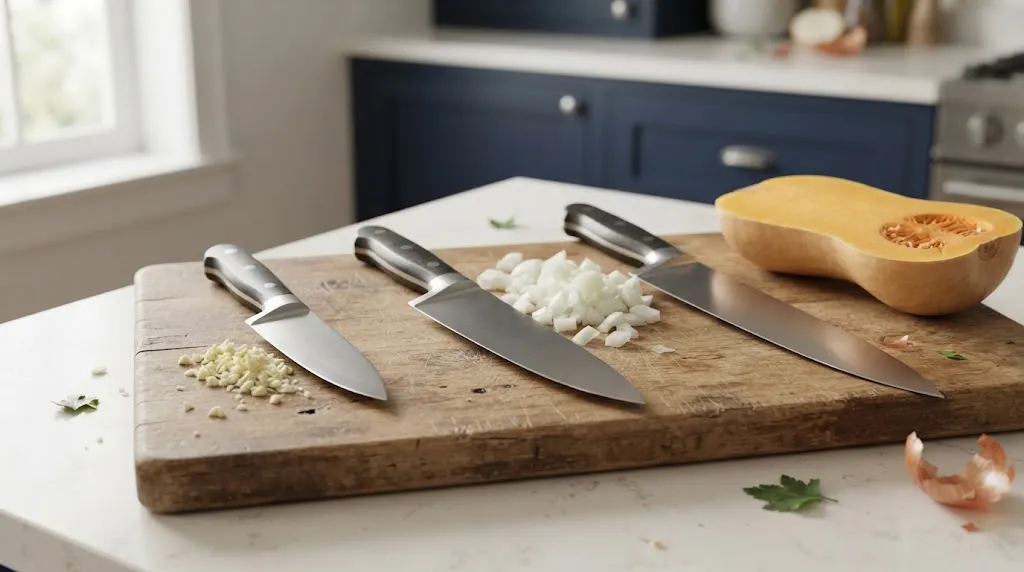
SaveBlade length is the primary measurement used to categorize chef’s knives. It is measured from the tip of the blade to the point where the blade meets the handle, known as the heel. Manufacturers usually offer chef’s knives in several distinct size classes to accommodate different cutting tasks and physical preferences.
The 8-Inch Chef Knife (The Standard)
The 8-inch blade is considered the industry standard and the most versatile option for general cooking tasks. It provides enough length to slice large vegetables like squash or watermelons while maintaining the agility needed for mincing garlic or dicing onions. For most home cooks, an 8-inch blade offers the ideal balance between control and cutting capacity.
The 6-Inch to 7-Inch Chef Knife (Compact Option)
Shorter chef’s knives, often called utility chef knives or santoku-style variations, are popular among cooks with smaller hands or those who prefer a lighter, more nimble tool. These sizes excel at precise, repetitive board work and smaller ingredients where a full 8-inch blade might feel cumbersome.
The 10-Inch and Larger Chef Knife (Professional Grade)
Knives measuring 10 inches or longer are typically found in professional kitchens or used by cooks who regularly process large volumes of meat, poultry, or large produce. The extra length allows for longer, sweeping cuts in a single motion, though it requires more cutting board space and greater knife control.
Overall Length and Handle Proportions
While the blade length defines the cutting edge, the overall length determines how the knife balances in your hand. A standard 8-inch chef’s knife usually has a handle length between 4.5 and 5.5 inches, bringing the total length of the tool to roughly 13 to 14 inches.
Handle proportions matter significantly for safety and comfort. A handle that is too short can cause hand fatigue, while an overly long handle can make the knife feel blade-heavy or awkward to maneuver. The handle should comfortably span your palm, allowing your fingers to wrap securely around the grip without crowding.
Key Insight
Blade length is measured along the straight-line distance from the tip to the heel, not following the curved belly of the edge. This means a knife with a pronounced curve may have slightly more actual cutting edge than its nominal size suggests.
Blade Thickness, Height, and Weight Profiles
Dimensions go beyond length. The spine thickness, blade height (width from spine to edge), and total weight dictate how a knife handles different food textures.
- Spine Thickness: Usually measures around 2.5 mm to 3 mm near the handle, tapering down toward the tip to reduce weight and improve cutting precision.
- Blade Height: Typically ranges from 1.5 to 2 inches at the heel. A taller blade provides ample knuckle clearance above the cutting board, preventing your fingers from scraping the surface as you chop.
- Weight: Western-style chef’s knives are heavier and feature thicker spines, while Japanese-style gyutos are generally lighter, thinner, and hardened to a higher degree for fine, razor-like slicing.
How to Choose the Right Size for Your Needs
 Save
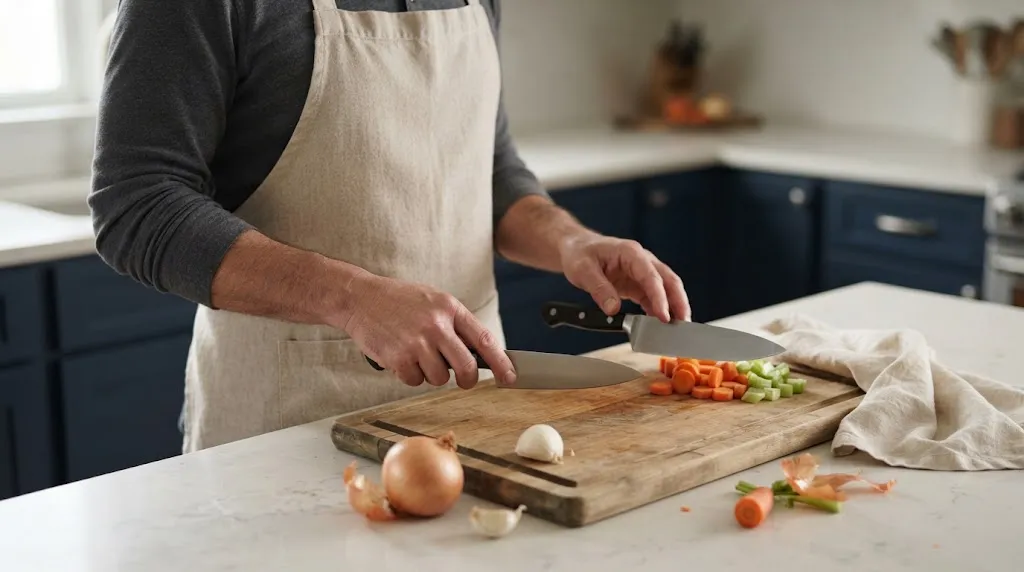
SaveSelecting the correct chef knife dimensions depends primarily on your physical workspace, hand size, and cooking habits. Evaluating these factors prevents buying a tool that feels uncomfortable or impractical.
| Blade Size | Best Suited For | Ideal User Profile |
|---|---|---|
| 6 Inches | Detailed prep, smaller vegetables, tight workspaces | Smaller hands, minimal counter space |
| 8 Inches | All-purpose chopping, dicing, slicing, and mincing | Most home cooks and general kitchen tasks |
| 10 Inches | Large produce, high-volume prep, bulk slicing | Professional chefs, large hands, spacious kitchens |
If you have average-sized hands and a standard cutting board, an 8-inch chef knife serves as the safest starting point. If you primarily cook for one or two people and handle smaller ingredients, a 6-inch blade often provides superior maneuverability.
Related Product
Kitchen Knife Sharpening Stones and Guides
Maintain your chef knife’s precision cutting edge and optimal geometry with a reliable whetstone sharpening kit.
As an Amazon Associate, we earn from qualifying purchases.
Frequently Asked Questions
Is an 8-inch chef knife too big for everyday cooking?
For most adults, an 8-inch chef knife is not too big. While it may feel large initially if you are used to smaller pairing knives, the extra length actually reduces the effort needed to cut through large items like onions, potatoes, and meats by utilizing the entire length of the blade.
How is knife blade length measured?
Blade length is measured from the tip of the blade down to the heel, which is the point where the sharpened edge ends near the bolster or handle. The tang and handle length are measured separately.
Do Japanese and Western chef knives have different dimensions?
Yes. Western chef knives (such as German styles) generally feature thicker blades, heavier weights, and a more curved belly designed for a rocking motion. Japanese chef knives (like the Gyuto) are typically thinner, lighter, flatter along the edge, and feature harder steel for precise push-cuts.
What blade height is best for knuckle clearance?
A blade height of at least 1.5 inches at the heel is recommended to ensure your knuckles do not strike the cutting board while you chop ingredients. Taller blades offer even more hand clearance.
Should beginners start with a shorter chef knife?
Beginners often feel more comfortable starting with a 6-inch or 7-inch chef knife because it feels easier to control. However, transitioning to an 8-inch knife is recommended once basic cutting techniques are established for maximum versatility.
How does blade thickness affect cutting performance?
Thinner blades slice through dense ingredients with less resistance because they displace less food material. However, thicker blades offer greater durability and resistance to twisting or chipping when dealing with tougher items.
Conclusion
Understanding chef knife dimensions ensures you select a tool that matches your physical comfort and kitchen workflow. While the standard 8-inch blade remains the most adaptable choice for general food preparation, shorter and longer variations offer distinct advantages depending on your hand size and cutting style. By focusing on blade length, height, and overall balance, you can choose a knife that performs efficiently across a wide variety of culinary tasks.

