Chef Knife Claw Grip: How to Chop Safely Like a Pro
Quick Answer The chef knife claw grip is a fundamental culinary technique where you tuck the fingertips of your non-dominant…
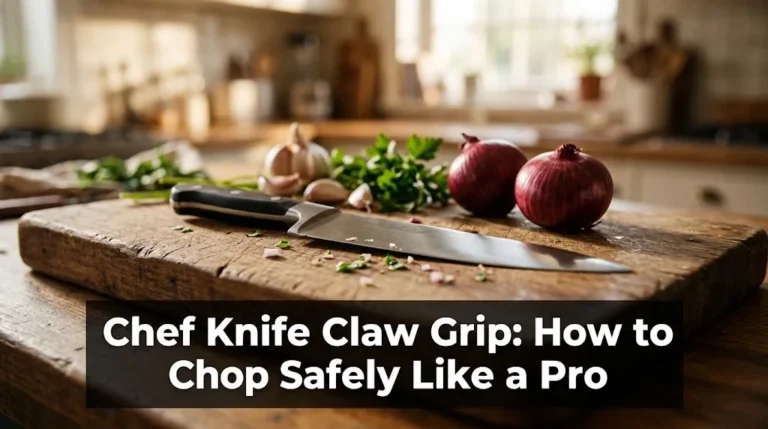
Quick Answer The chef knife claw grip is a fundamental culinary technique where you tuck the fingertips of your non-dominant…
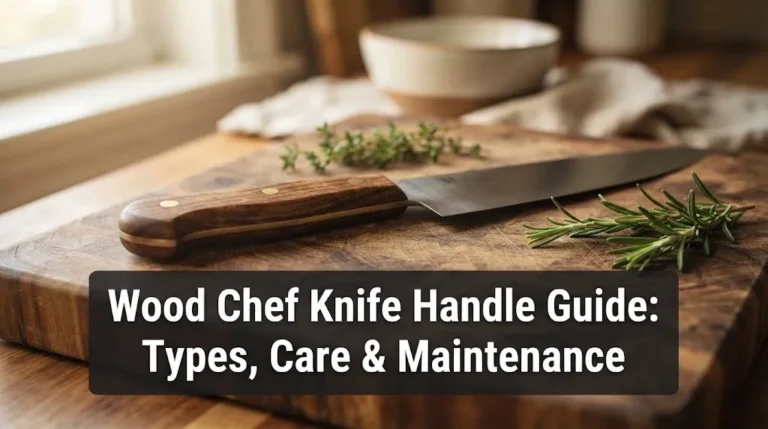
Quick Answer A wood chef knife handle offers superior ergonomics, a comfortable grip, and timeless visual appeal, but it requires…
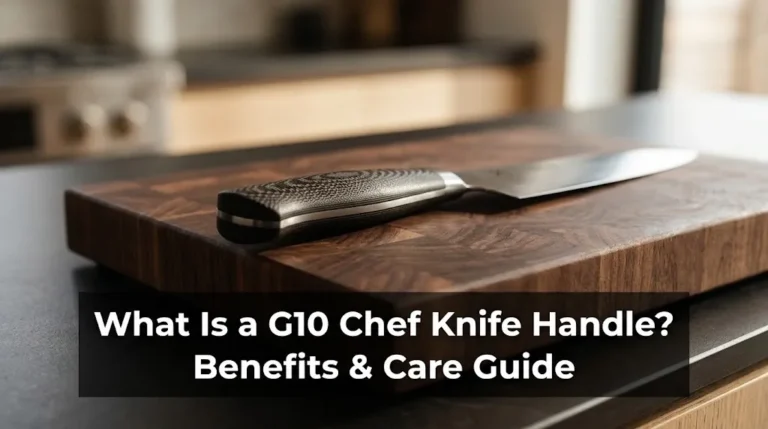
Quick Answer A G10 chef knife handle is a high-performance knife handle crafted from G10, a durable composite material made…
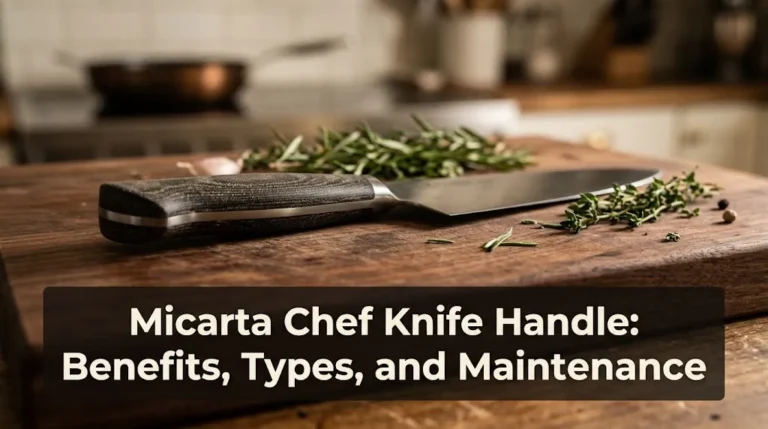
Quick Answer Micarta chef knife handles are premium custom handles made from layers of cloth, paper, or canvas soaked in…
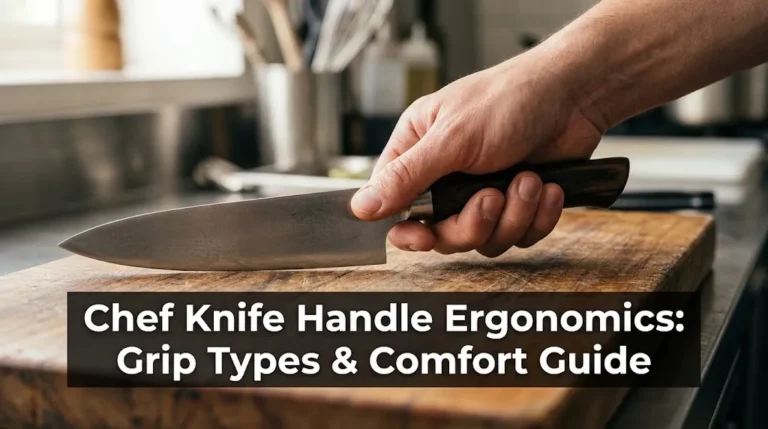
Quick Answer Chef knife handle ergonomics determine how comfortably, securely, and efficiently a knife fits into your hand during prolonged…
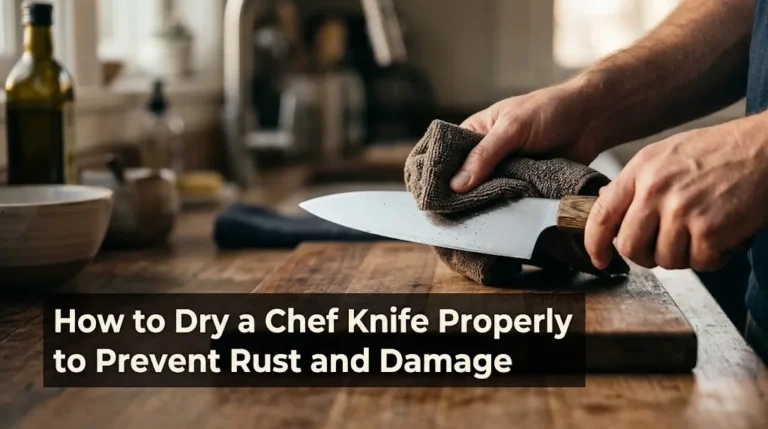
Quick Answer To dry a chef knife properly, immediately wash it by hand with warm water and mild dish soap,…
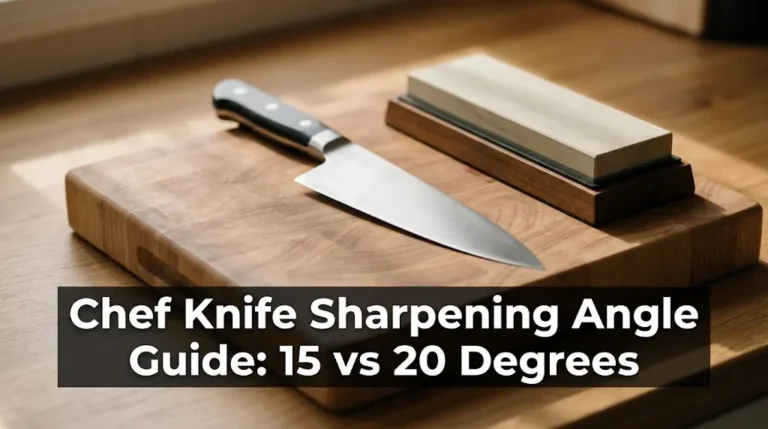
Quick Answer Most Western chef knives are sharpened at a 20-degree angle per side, while Japanese and high-performance chef knives…
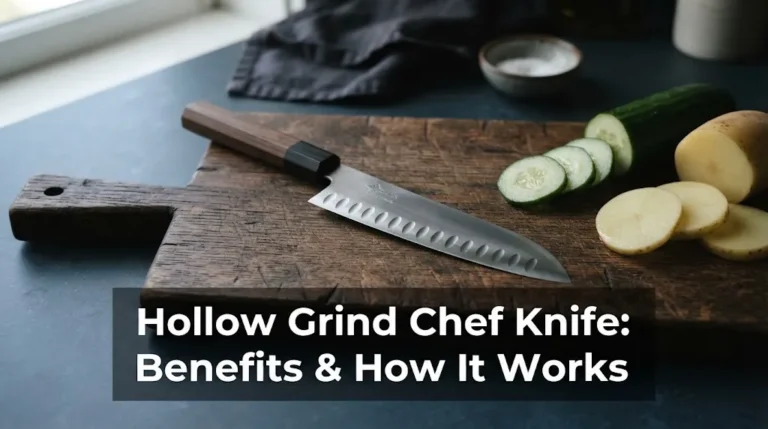
Quick Answer A hollow grind chef’s knife features a blade with concave depressions (known as granton edges or hollows) ground…
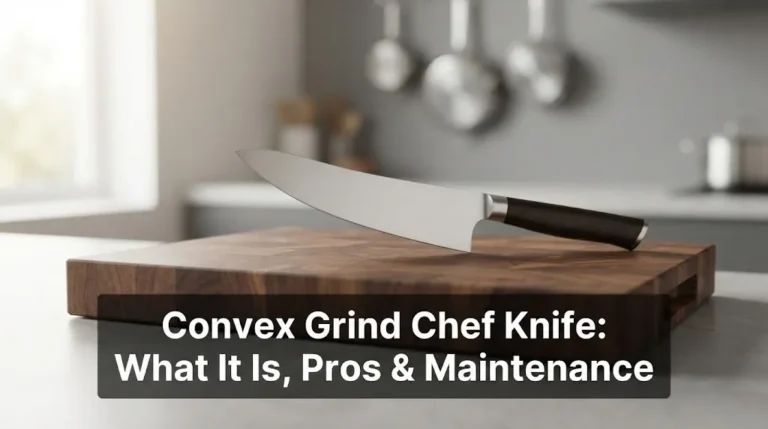
Quick Answer A convex grind chef knife features a blade profile that curves smoothly outward from the spine to the…
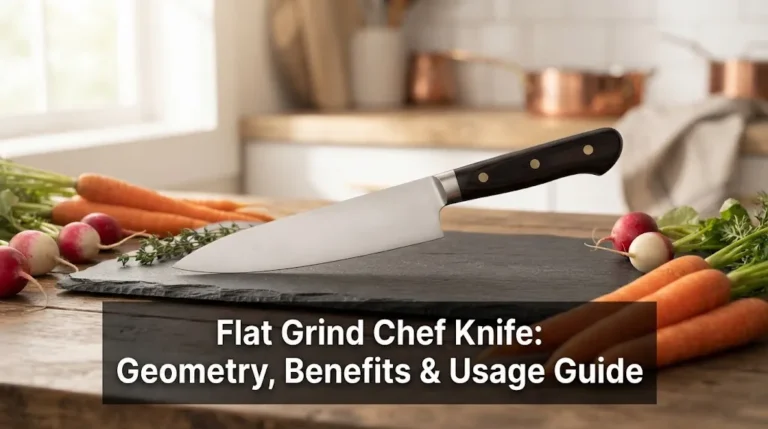
Quick Answer A flat grind chef knife features a blade with a primary bevel that tapers smoothly and flatly from…
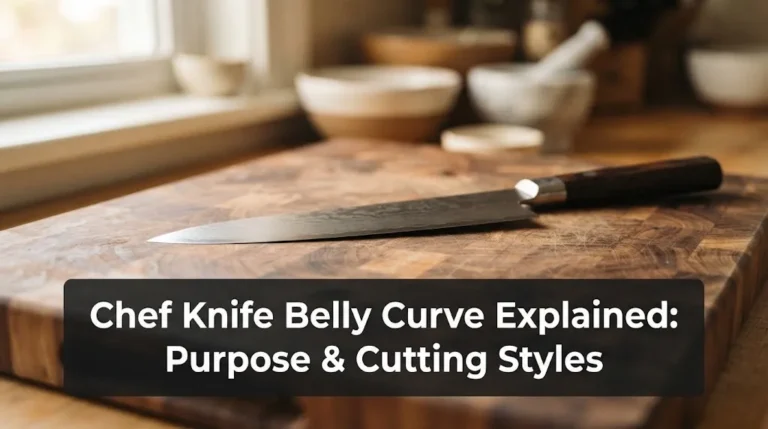
Quick Answer The “belly” of a chef knife is the upward curve of the cutting edge as it approaches the…
Quick Answer Forged chef knives are crafted from a single solid bar of steel heated and hammered into shape, offering…
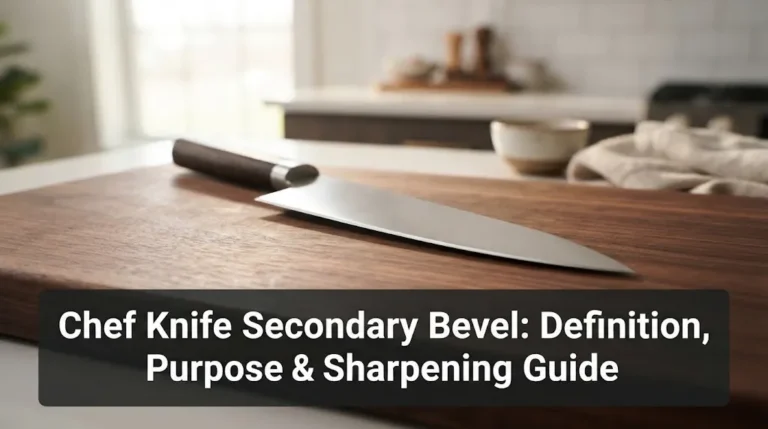
Quick Answer A secondary bevel on a chef’s knife is a small, distinct angle ground at the very edge of…
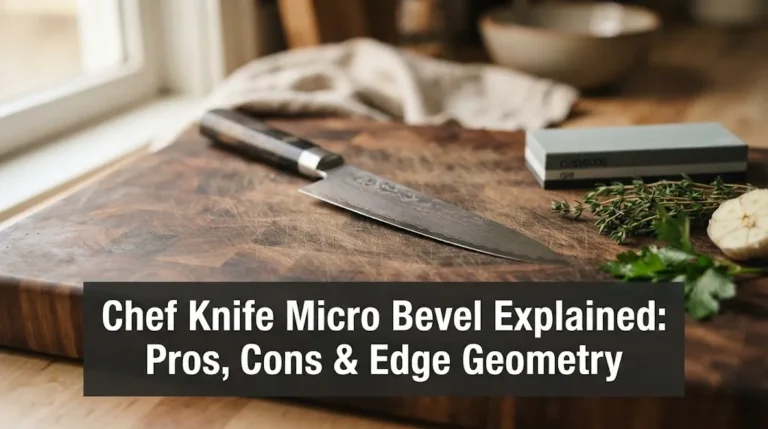
Quick Answer A chef knife micro bevel is a secondary, highly obtuse microscopic edge applied to the very apex of…
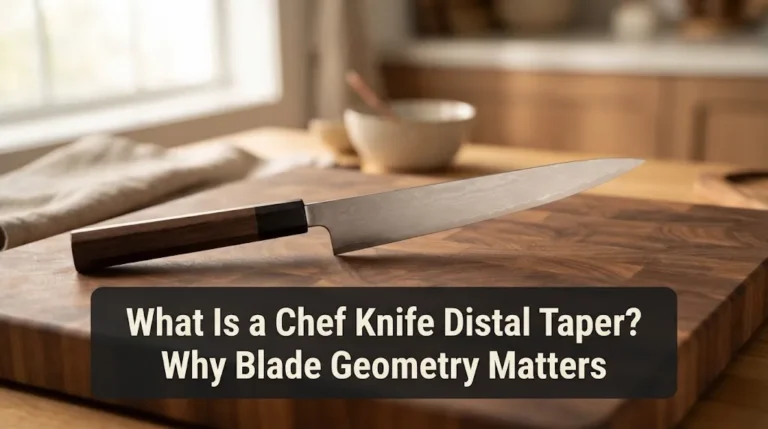
Quick Answer A chef knife distal taper is the gradual thinning of the knife blade’s thickness from the handle (the…
