Chef Knife Belly Curve Explained: Purpose & Cutting Styles
Quick Answer
The “belly” of a chef knife is the upward curve of the cutting edge as it approaches the tip. A pronounced belly curve allows you to use a smooth rocking motion for rapid chopping and mincing, while a flatter edge profile is optimized for straight push-cuts and precise slicing.
What Is the Belly on a Chef Knife?
When looking at a kitchen knife profile, the blade is rarely a straight line. The cutting edge features a gentle or pronounced upward sweep near the front third of the blade, leading up to the point. This curved section is known as the belly.
The amount of curvature varies significantly depending on the knife’s cultural design and intended purpose. Western-style chef knives typically feature a deep, continuous curve from heel to tip, whereas traditional Japanese blades like the Gyuto or Santoku maintain a much flatter edge profile. Understanding this geometry helps explain why different knives feel completely different on a cutting board.
How the Belly Curve Dictates Your Cutting Motion
 Save
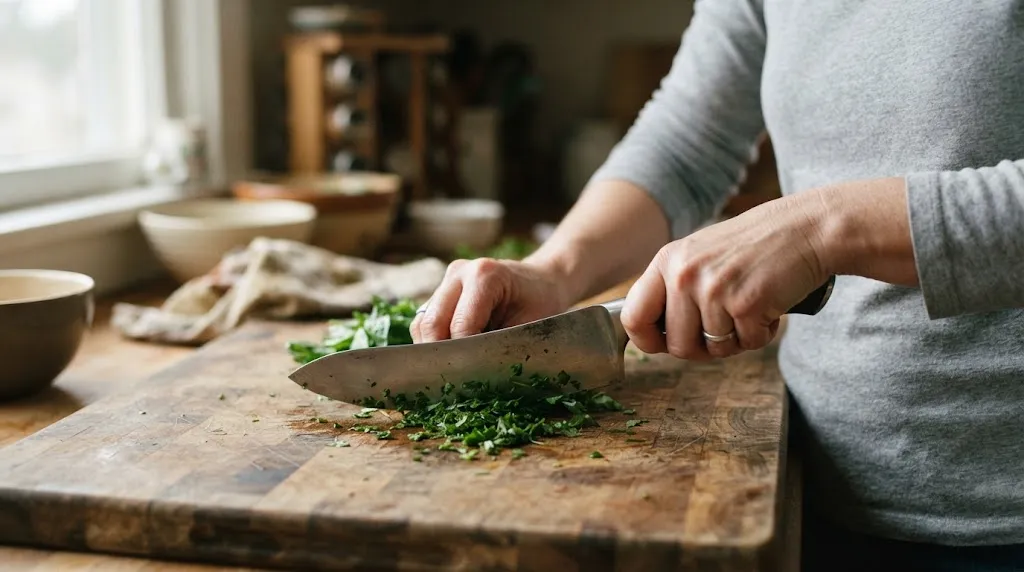
The shape of the edge directly determines how the blade moves through food. Knives generally utilize one of three primary cutting motions: rocking, push-cutting, or pull-slicing. The belly curve dictates which of these motions feels natural.
The Rocking Motion (Deep Belly)
A knife with a generous belly curve excels at rock-chopping. When you anchor the tip of the blade lightly on the cutting board and roll the handle up and down, the curved edge maintains continuous contact with the board. This motion allows you to rapidly mince herbs, garlic, and onions without lifting the tip off the surface.
Key Insight
Deep belly curves trade absolute precision for high-volume speed. Because the contact point changes as you roll the blade, single-stroke straight slices require a deliberate, conscious adjustment.
The Push-Cut (Flat Edge or Minimal Belly)
Knives with minimal belly curvature have a longer flat section along the edge. Instead of rolling, these blades are pushed straight down and slightly forward through the food. Because the entire flat portion of the edge meets the board simultaneously, you get clean, uniform cuts without crushing delicate cell walls.
Western vs. Eastern Profiles: Comparing Belly Styles
| Feature | Western Chef Knife (Deep Belly) | Japanese Gyuto / Santoku (Flat/Low Belly) |
|---|---|---|
| Primary Motion | Rock-chopping and rolling | Push-cutting and slice-pulling |
| Board Contact | Pivoting point changes along the curve | Longer flat section contacts board at once |
| Best Suited For | General utility, high-volume vegetable prep | Precision slicing, fine vegetable brunoise |
Choosing between these styles depends entirely on your cooking habits. If you prefer a fast, fluid rocking motion, a prominent belly is essential. If you value clean, vertical push-cuts for precision prep, a flatter profile performs better.
How Sharpening Changes the Belly Over Time
 Save
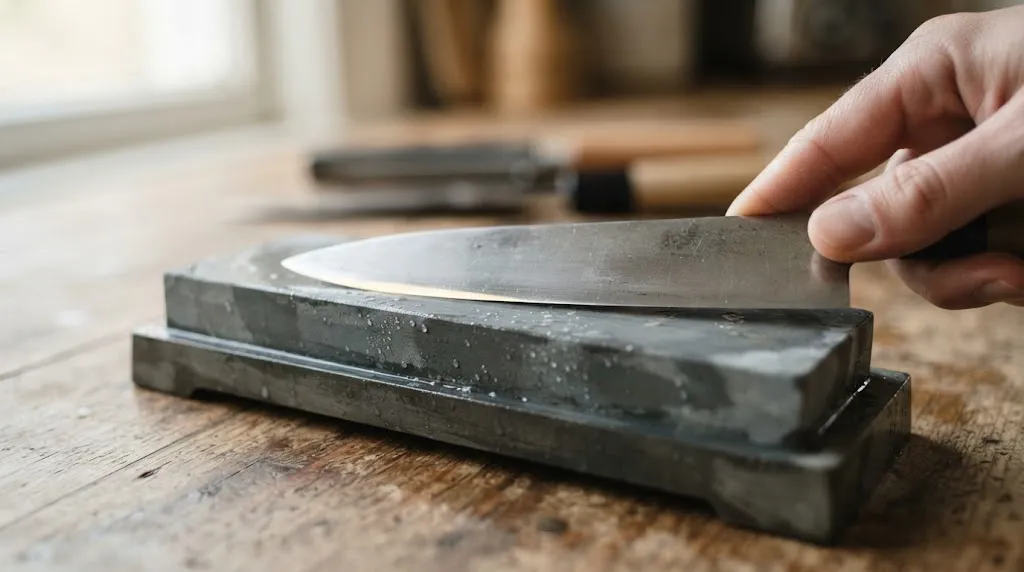
A factor often overlooked by home cooks is how regular maintenance alters the belly profile. Every time a knife is sharpened on stones, metal is removed from the edge.
If sharpening is uneven—particularly if too much pressure is applied near the heel or tip—the original geometry of the belly can flatten out or distort over years of use. Maintaining a consistent angle across the entire sweep of the blade ensures that the factory belly profile remains functional throughout the knife’s lifespan.
Warning
Avoid over-sharpening the middle section of a western chef knife while ignoring the tip and heel. Doing so creates an unwanted recurve or dips in the blade, ruining the smooth rocking curve.
Choosing the Right Curve for Your Kitchen Style
When evaluating kitchen cutlery, match the blade geometry to your actual food preparation routine rather than generic feature lists. Cooks who handle large volumes of bulky vegetables, herbs, and garlic benefit immensely from a pronounced belly curve that supports natural hand pivoting. Conversely, if your prep work emphasizes uniform slices of meat, fish, and delicate produce, a flatter profile minimizes wrist fatigue and maximizes precision.
Related Product
Sharpening Stones & Knife Sharpeners
Maintain your chef knife’s precise belly curve and razor edge with a quality whetstone set designed for proper angle control.
As an Amazon Associate, we earn from qualifying purchases.
Frequently Asked Questions
What is the main purpose of a chef knife belly?
The belly provides a curved cutting surface that allows for smooth rocking motions when chopping or mincing ingredients like garlic, herbs, and onions.
Do all chef knives have a belly curve?
Most Western chef knives feature a prominent belly curve, but many traditional Japanese styles—such as the Santoku and Nakiri—utilize a much flatter profile designed for push-cutting.
Can a knife belly be restored if it flattens out?
Yes, but reshaping a distorted edge profile requires significant metal removal on coarse sharpening stones to recontour the upward sweep near the tip.
How does a curved belly affect slicing meat?
A deep curve means less straight edge touches the board at once, which can make pulling long, continuous slices through large roasts more challenging compared to a dedicated slicing knife.
Is a curved belly better for beginners?
Many home cooks find a curved belly forgiving because the rocking motion feels intuitive, though it requires proper technique to ensure complete cuts through dense foods.
How do I test a knife’s belly profile before buying?
Place the knife flat on a surface or board. Look at how the edge meets the surface; a deep curve will rock freely on a central pivot point, while a flat profile will touch across a wider span.
Conclusion
The belly curve of a chef knife is far more than an aesthetic design choice; it dictates how the blade interacts with your cutting board and influences your entire cooking technique. Whether you prefer the rapid, fluid rock-chop of a traditional Western blade or the precise push-cuts of a flat-edged profile, matching your knife geometry to your culinary style ensures better results and less hand fatigue during food preparation.

