Chef Knife Handle Ergonomics: Grip Types & Comfort Guide
Quick Answer
Chef knife handle ergonomics determine how comfortably, securely, and efficiently a knife fits into your hand during prolonged prep work. Good ergonomics reduce hand fatigue and slippage by matching the handle shape, weight distribution, and texture to natural grip mechanics rather than relying purely on aesthetic design.
Why Handle Ergonomics Matter in Food Preparation
When preparing meals, your hand acts as the direct engine driving the blade. Poor handle design creates pressure points, forces awkward wrist angles, and accelerates hand fatigue during repetitive chopping tasks.
Ergonomics in cutlery is not merely about a soft grip. It involves the geometry of the handle, how it transitions into the blade, and how the entire tool balances in your palm. A well-designed handle allows you to apply force efficiently while maintaining precise control over the cutting edge.
Understanding how handle shape and materials interact with different grip styles helps prevent discomfort and improves cutting accuracy.
Common Chef Knife Grip Styles and Handle Interaction
 Save
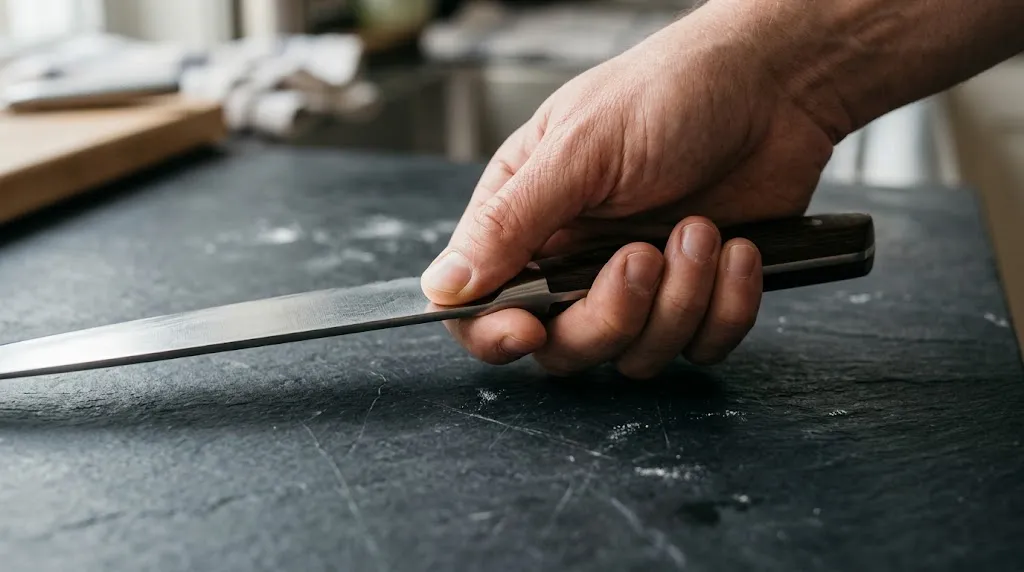
How you hold a chef knife significantly influences which handle shapes feel natural and secure. Most cooks utilize one of two primary grips.
The Pinch Grip
Professional and experienced home cooks frequently use the pinch grip. In this technique, your thumb and index finger pinch the blade just ahead of the bolster, while your remaining fingers wrap loosely around the handle.
When using a pinch grip, the handle serves primarily as a counterweight and stabilizer rather than something you squeeze tightly. Handles with a smooth taper near the bolster and a rounded spine accommodate this grip comfortably without biting into the index finger.
The Handle Grip
The traditional handle grip involves wrapping your entire hand around the handle itself. This style relies heavily on the handle’s contours, circumference, and texture to maintain control.
Cooks with smaller or larger hands often find that standard handle circumferences create distinct challenges. A handle that is too thick reduces maneuverability, while one that is too thin causes hand cramping from over-gripping.
Key Insight
The best handle design depends largely on your preferred grip style. Pinch-grip users benefit from a smooth transition at the bolster, whereas full-handle users require contoured grips that fill the palm naturally.
Key Structural Elements of Knife Handle Ergonomics
Several physical characteristics dictate how a chef knife handle performs over time.
- Contouring: Slight swelling in the middle of the handle or subtle finger grooves can improve retention, though overly aggressive grooves often restrict hand placement.
- Weight Distribution: A handle must balance the weight of the blade. A blade-heavy knife pulls downward, straining the wrist, while a handle-heavy knife feels sluggish.
- Transition Areas: Sharp edges around the bolster, heel, or spine can cause blisters during extended prep sessions. Rounded, polished transitions prevent chafing.
- Circumference and Length: The handle should allow your fingers to wrap around comfortably without overlapping into your palm or leaving large gaps.
Handle Materials and Their Impact on Grip and Comfort
The material used for the handle affects tactile feedback, durability, maintenance requirements, and how secure the knife feels when your hands are wet or oily.
| Material Type | Texture & Feel | Maintenance | Best Suited For |
|---|---|---|---|
| Wood (Hardwoods / Pakkawood) | Warm, organic grip; can become slick if heavily polished. | Requires hand washing; occasional oiling. | Traditional aesthetics and comfortable warmth. |
| Composite / Micarta | Slightly grippy texture that improves when wet. | Low maintenance; highly durable. | All-around kitchen use and high moisture environments. |
| Synthetic (Polypropylene / POM) | Smooth, hygienic, molded for consistent shape. | Dishwasher safe (though hand washing is preferred). | Heavy-duty utility and commercial kitchens. |
| Stainless Steel | Sleek, heavier, can become slippery with moisture. | Very easy to clean and sanitize. | Unified modern design and seamless hygiene. |
Choosing the right material ensures that the handle remains secure even when working with slippery ingredients like oils, meat juices, or water.
Common Ergonomic Mistakes to Avoid
Overlooking handle ergonomics during selection often leads to long-term kitchen fatigue. Keep these common pitfalls in mind:
- Prioritizing looks over feel: Highly ornate or blocky handles often look striking on display but create painful hot spots during extended chopping sessions.
- Ignoring hand size compatibility: A handle designed for a large hand will strain a smaller hand, forcing an insecure, tight grip.
- Relying solely on rubberized coatings that degrade, chip, or trap moisture over time.
- Ignoring balance in favor of an ultra-light handle, which causes the knife to feel tip-heavy and strains the wrist.
Warning
Avoid handles with deep, rigid finger grooves unless you are certain your fingers match the exact spacing. Fixed grooves can force your hand into an unnatural position, causing soreness during varied cutting tasks.
How to Evaluate a Knife’s Ergonomics Before Buying
 Save
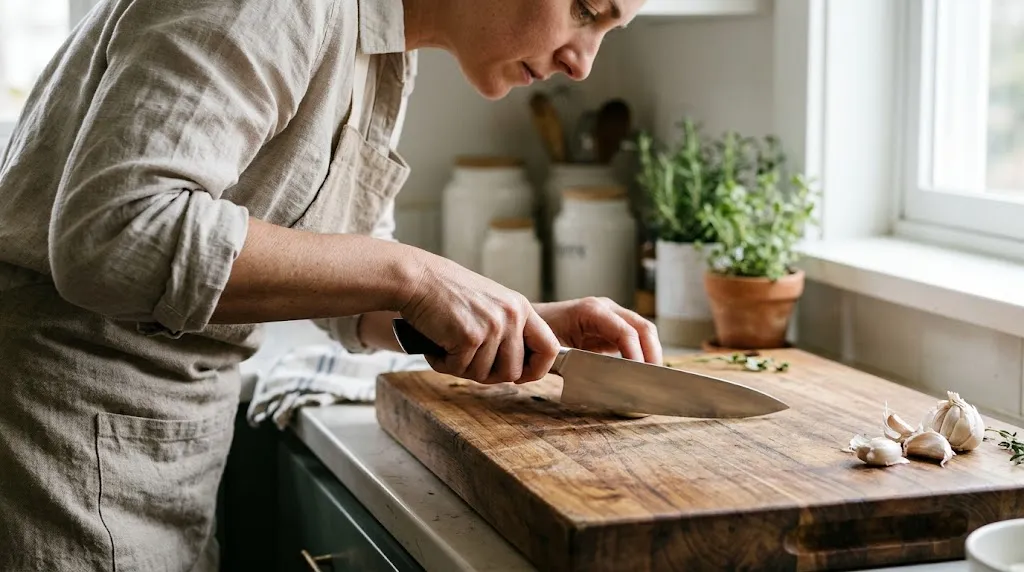
When shopping for a chef knife, testing how it rests in your hand prevents buyer remorse. If you are purchasing in person, hold the knife using your standard cutting grip. Check whether your knuckles clear the cutting board when your fingers wrap around the handle.
Examine the spine and heel for sharp burrs or rough seams. A quality manufacturer rounds and polishes these transition areas to eliminate friction against your thumb and index finger.
Related Product
Kitchen Knife Sharpening Stones & Maintenance Kits
Maintaining a sharp edge ensures your ergonomically sound knife cuts smoothly with minimal downward pressure.
As an Amazon Associate, we earn from qualifying purchases.
Frequently Asked Questions
Do traditional Japanese handles offer better ergonomics than Western handles?
Neither style is universally superior; they serve different design philosophies. Traditional Japanese handles (like octagonal or D-shaped wa-handles) are typically lighter and favor pinch grips, while Western handles are heavier, fully contoured, and designed to fill the entire palm.
Why do some knife handles cause blisters?
Blisters usually result from rough seams, exposed rivets, sharp bolster transitions, or excessive friction caused by gripping a handle that is either too thin or too slick for your hand size.
Does handle weight matter as much as blade weight?
Yes. The handle acts as a counterweight. If a handle is too light, the knife feels fatiguing and blade-heavy. If it is too heavy, the knife feels sluggish and difficult to maneuver quickly.
Are ergonomic handles better for arthritis or hand pain?
Handles with a slightly wider circumference, textured composite materials, and a balanced weight distribution often help reduce hand strain for cooks with arthritis by requiring less gripping force.
How do I clean wooden knife handles without ruining the grip?
Always wash wooden handles by hand in warm, soapy water and dry them immediately. Avoid soaking them in water or putting them in the dishwasher, as moisture causes wood to swell, crack, and lose its comfortable texture.
Is a textured handle safer than a smooth handle?
Textured handles generally provide better traction when your hands are wet or oily. However, overly aggressive textures can abrade your skin during extended food prep sessions.
Conclusion
Chef knife handle ergonomics play a vital role in cutting comfort, control, and long-term hand health. By evaluating handle shapes, weight balance, and grip compatibility with your natural cooking style, you can select a knife that feels like an extension of your hand. Prioritizing proper fit over aesthetic trends ensures efficient, fatigue-free meal preparation every time you step into the kitchen.

