Chef Knife Micro Bevel Explained: Pros, Cons & Edge Geometry
Quick Answer
A chef knife micro bevel is a secondary, highly obtuse microscopic edge applied to the very apex of a primary bevel. It trades a microscopic amount of initial slicing aggression for significantly increased edge durability and chipping resistance, making it popular on high-end Western and Japanese kitchen knives.
What Is a Chef Knife Micro Bevel?
When sharpening a kitchen knife, the goal is typically to create a clean, acute apex where two primary bevels meet. However, some knife makers and sharpeners intentionally apply a second, tiny angle right at the very edge. This is known as a micro bevel.
Think of it as a microscopic structural reinforcement. While the primary bevel of a high-performance chef knife might taper down at a fine 12 to 15 degrees per side, the micro bevel adds a slightly wider angle—often around 20 degrees per side—strictly confined to the final fraction of a millimeter at the edge. To the naked eye, the edge looks completely normal, but under magnification, the secondary facet is clearly visible.
Why Do Knife Makers and Sharpeners Use Micro Bevels?
 Save
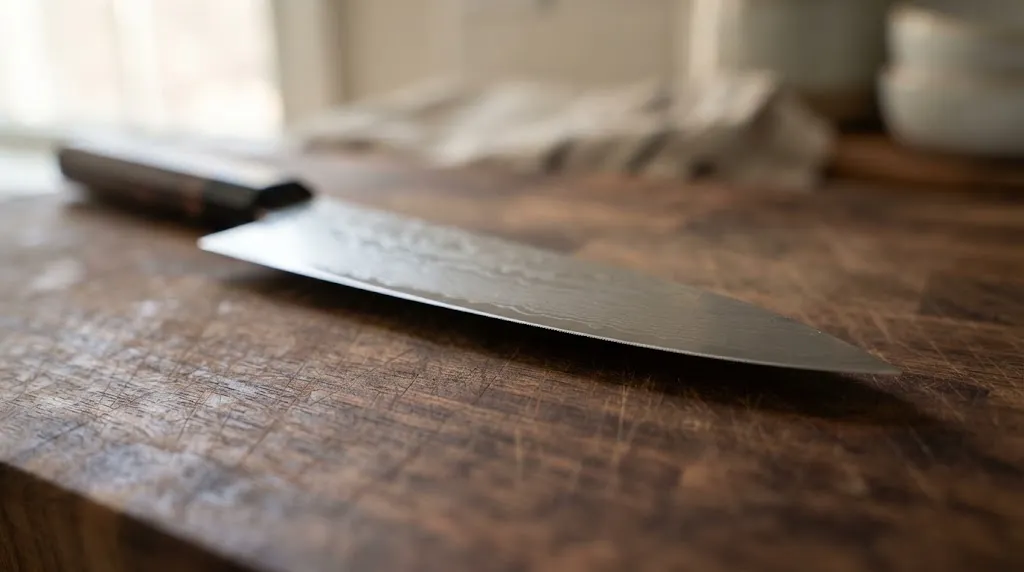
Ultra-thin knife edges cut exceptionally well through soft ingredients like tomatoes and herbs, but they are fragile. When a razor-thin edge strikes a hard cutting board, bone, or dense root vegetable, microscopic areas can roll, fold, or chip.
A micro bevel solves this vulnerability by strengthening the apex:
- Increased Durability: The thicker steel angle behind the apex distributes impact stress, preventing micro-chipping.
- Faster Sharpening: Future touch-ups become much quicker because you only need to form a new micro bevel rather than grinding down the entire primary bevel.
- Maintained Geometry: It preserves the thin, high-performance geometry of the main blade while protecting the most vulnerable part of the edge.
The Trade-Offs in Cutting Performance
While micro bevels offer practical benefits, they do introduce a minor compromise. Because the very tip of the edge is slightly thicker, the knife may encounter marginally more resistance when pushing through extremely hard or dense foods like winter squash or hard cheeses.
However, for a general-purpose chef knife used in a busy kitchen, this difference is usually imperceptible during everyday food preparation. The gain in edge longevity far outweighs the negligible loss in initial slicing aggression.
How a Micro Bevel Affects Edge Retention
Edge retention is not just about steel hardness; it is also about structural stability. A zero-grind edge (where the primary bevels meet directly without a secondary angle) is prone to rolling over under lateral stress. Once an edge rolls, it stops cutting effectively, even though steel is technically still there.
A micro bevel resists rolling because the wider angle provides mechanical support against sideways twisting forces. As a result, knives with micro bevels tend to maintain a usable working edge longer between sharpenings, especially when used on busy commercial line prep or home kitchens with multiple users.
Key Insight
A micro bevel does not make a dull knife sharp; rather, it locks in a sharp edge and prevents it from degrading prematurely under normal kitchen impacts.
How to Apply or Maintain a Micro Bevel When Sharpening
 Save
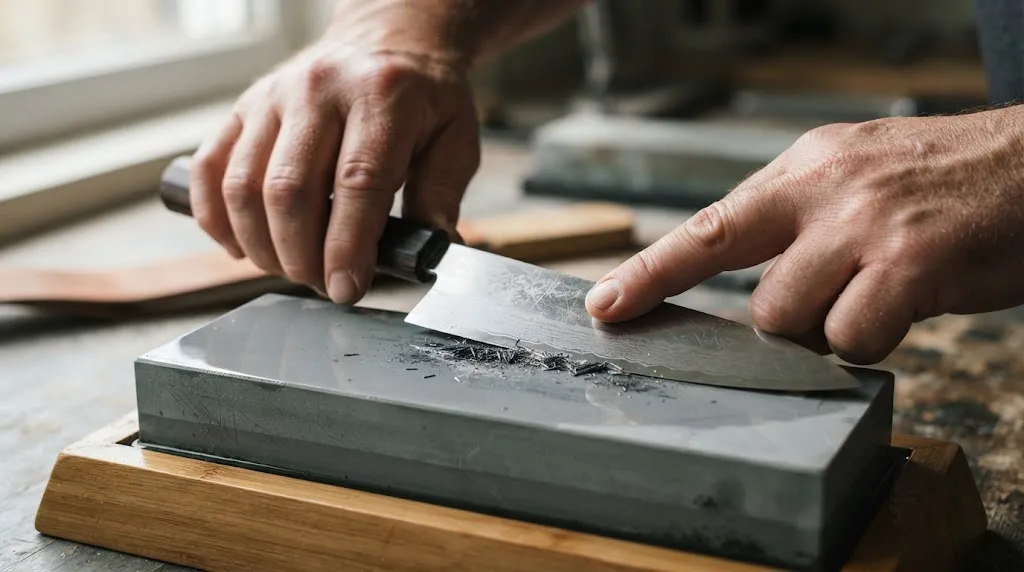
Applying a micro bevel on waterstones or a guided sharpening system is straightforward. You do not need specialized equipment—just slight technique adjustments.
- Sharpening the Primary Bevel: First, thin and sharpen your chef knife along its primary bevel angle until a clean burr forms along the entire edge.
- Raising the Angle: Raise the spine of the knife by just 2 to 5 degrees (for example, moving from a 15-degree angle to roughly 18 or 20 degrees).
- Light Passes: Take just one or two extremely light passes per side on a fine or polishing stone. This forms the micro bevel and removes any lingering burr without disturbing the main body of the bevel.
Tip
When maintaining a micro bevel, keep your pressure feather-light. Applying too much force will quickly widen the micro bevel into a full secondary bevel, negating its performance benefits.
Should Your Chef Knife Have a Micro Bevel?
| Knife / Use Case | Micro Bevel Suitability | Why |
|---|---|---|
| High-alloy Western chef knives (X50CrMoV15) | Highly Recommended | Softer steels benefit greatly from the mechanical reinforcement against rolling. |
| Hard Japanese carbon steels (SG2, ZDP-189) | Optional / Situational | Harder steels resist rolling naturally, but brittle edges can still benefit from chipping protection. |
| Laser-thin Gyuto used for precision slicing | Not Recommended | Users prioritizing absolute minimum friction often prefer zero-grind geometry. |
If you find that your chef knife loses its crisp edge too quickly or develops tiny chips after normal use, introducing a deliberate micro bevel during your next sharpening session is one of the most effective ways to stabilize the edge.
Related Product
Knife Sharpening Stones and Guides
A quality whetstone set with an angle guide helps you precisely replicate and maintain consistent micro bevel angles on your kitchen knives.
As an Amazon Associate, we earn from qualifying purchases.
Frequently Asked Questions
Is a micro bevel the same thing as a double bevel?
No. A double bevel simply means both sides of the blade are ground to an edge, unlike a traditional single-bevel Japanese knife. A micro bevel refers specifically to the tiny secondary angle applied at the very apex of an already beveled edge.
Can I remove a micro bevel if I don’t want it?
Yes. You can remove a micro bevel by thinning the entire primary bevel flat against your sharpening stone until the secondary facet is completely ground away. However, doing this requires removing significantly more steel.
Will a micro bevel make my knife feel dull?
For almost all everyday kitchen tasks, a properly applied micro bevel will feel just as sharp as a zero-grind edge because the cutting apex is still exceptionally thin. Only extreme precision slicing of fibrous foods will reveal any noticeable difference.
Do factory chef knives come with micro bevels?
Many mass-market Western knives and factory-produced kitchen blades feature micro bevels applied by automated grinding belts. This helps manufacturers ensure edge durability and consistent quality control before the knife reaches the consumer.
How often should a micro bevel be refreshed?
You can usually maintain a micro bevel for several sharpening cycles simply by giving the edge a few light strokes on a fine stone or ceramic honing rod at the slightly elevated micro bevel angle before needing to reset the primary bevel.
Does honing on a steel ruin a micro bevel?
Using a smooth steel rod gently can realign a micro bevel, but using an aggressive ribbed or diamond honing steel at the wrong angle can round over or damage the delicate secondary apex over time.
Conclusion
Understanding the role of a chef knife micro bevel helps you take better control of your knife maintenance and sharpening routine. By adding a fraction of durability right at the cutting apex, a micro bevel protects high-performance blades from chipping and rolling without sacrificing everyday cutting efficiency. Whether you choose to incorporate one into your sharpening process depends on your blade steel and how much you value edge longevity over ultra-thin slicing perfection.

