What Is Knife Steel Patina? How It Forms & Protects Blades
Quick Answer
Knife steel patina is a stable, dark oxidation layer that naturally develops on carbon steel blades over time. Unlike red rust, which actively degrades and pits the metal, a patina forms a protective barrier that shields the underlying steel from moisture, reduces future corrosion, and gives the blade a unique, seasoned appearance.
What Is Knife Steel Patina?
When you use a carbon steel knife for food preparation, you may notice the shiny metal gradually changing color. This transformation is known as a patina. Rather than being a defect or a sign of poor maintenance, a patina is a chemical reaction between the reactive elements in the steel—primarily iron—and the acids, moisture, and oxygen found in food and air.
Unlike stainless steel, which contains enough chromium to resist surface oxidation, carbon steel lacks this protective alloy. When exposed to organic acids from onions, citrus, meats, and other ingredients, the surface oxidizes in a controlled manner. This creates a thin, dark film that ranges in color from light gray and blue to deep purple, brown, or black.
Understanding this process helps knife owners embrace the natural aging of high-performance blades. A well-developed patina is considered a badge of honor among culinary enthusiasts, indicating that a knife has been actively used and properly cared for.
Patina vs. Rust: How to Tell the Difference
 Save
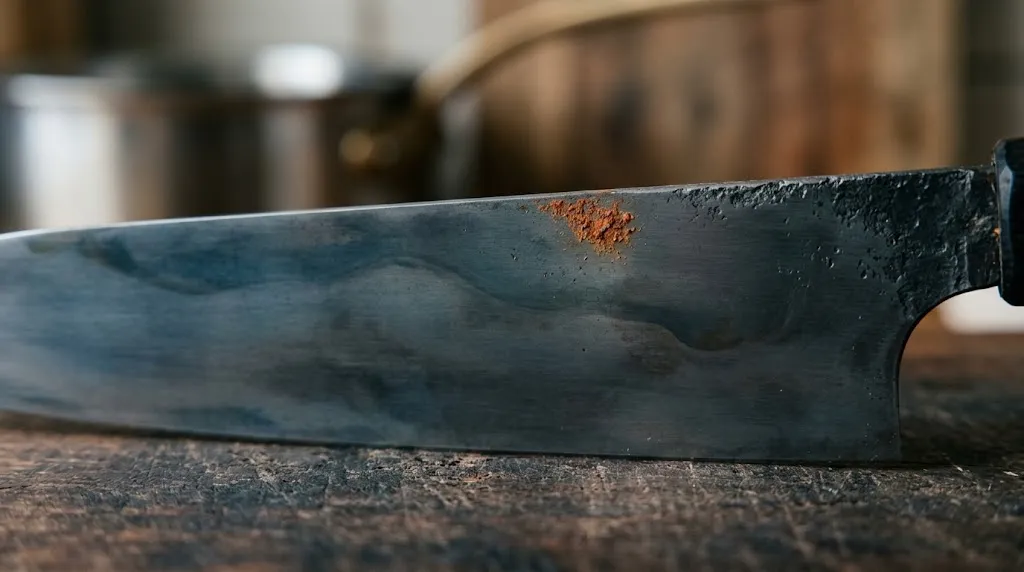
It is easy to confuse a healthy patina with destructive red rust, but the two phenomena are structurally and chemically distinct. Knowing how to differentiate them is crucial for maintaining the longevity of your cutlery.
| Feature | Patina | Rust |
|---|---|---|
| Color | Gray, dark blue, purple, dark brown, or black | Orange, reddish-brown, or bright orange |
| Texture | Completely smooth, flat, and flush with the steel surface | Fuzzy, textured, flaky, or raised |
| Effect on Steel | Passivates and protects the metal from further decay | Eats away at the metal, causing pitting and structural damage |
| Removal | Permanent bond; requires heavy abrasives to strip off | Wipes or scrubs away easily, often leaving a pit behind |
If the discoloration on your blade is dark, flat, and feels completely smooth under your thumb, it is a healthy patina. If the spot is orange, textured, or powdery, it is active red rust that requires immediate intervention.
Why Patina Acts as a Protective Shield
The primary benefit of a patina is passivation. When iron oxidizes into rust, the resulting compound expands and flakes off, exposing fresh metal underneath to continuous corrosion. Conversely, the stable oxides and compounds that make up a patina bind tightly to the surface of carbon steel.
This tight molecular layer seals the microscopic pores of the metal. It acts as a physical barrier that prevents moisture and oxygen from reaching the reactive iron beneath, significantly slowing down the formation of harmful red rust during normal kitchen use.
How and Why a Patina Forms on Blades
The formation of a patina is entirely dependent on the chemical composition of the knife steel and the substances it contacts. High-carbon steels—such as 1095, A2, O1, and white or blue paper steels—lack high levels of chromium, making them prime candidates for rapid oxidation.
When you slice acidic foods like lemons, tomatoes, onions, or meats, the organic acids break down the microscopic passive layer on the steel surface. This allows oxygen to react directly with the exposed iron molecules. As different foods interact with the alloy at varying rates, the blade develops a multicolored, mottled appearance.
Tip
Cutting high-acid ingredients like citrus fruits or hot chili peppers will accelerate the patination process, often resulting in bright blue or purple hues on new carbon steel blades.
Can You Force a Patina?
 Save
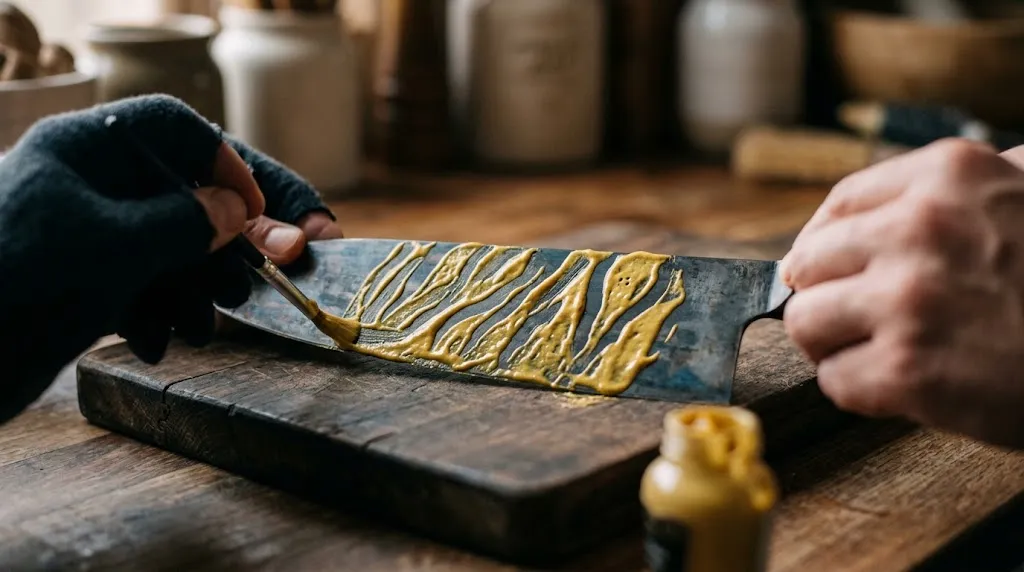
While natural patinas develop over months of regular cooking, many knife enthusiasts choose to “force” a patina. Forcing a patina creates an immediate, controlled oxidation layer over the entire blade surface, protecting the knife from irregular staining and immediate rust vulnerability.
Common household methods used to force a patina include:
- The Vinegar Bath: Submerging or wiping the clean blade with warm white or apple cider vinegar for a few minutes to create an even gray finish.
- Mustard Slathering: Applying patterns of yellow or Dijon mustard to create unique, mottled tiger-stripe or cloudy aesthetic effects.
- Citrus Exposure: Pushing the blade repeatedly through dense citrus fruits like lemons or limes.
- Hot Coffee Immersion: Soaking the degreased steel in a bath of strong, hot black coffee for an extended period to achieve a dark charcoal finish.
Warning
Before forcing any patina, you must completely degrease the blade using dish soap or acetone. Any residual oils or fingerprints will block the acid from reacting evenly, resulting in patchy, unsightly splotches rather than a uniform finish.
How to Care for Patinated Carbon Steel Knives
Even though a patina offers protective qualities, carbon steel knives still require diligent maintenance to prevent red rust and maintain optimal performance.
- Wash and Dry Immediately: Never leave a carbon steel knife sitting wet in the sink or drying rack. Wash it by hand immediately after use with mild soap and warm water, then dry it thoroughly with a clean towel.
- Apply Food-Safe Oil: After thorough drying, apply a thin coat of food-safe mineral oil, camellia oil, or beeswax to seal out ambient humidity.
- Avoid the Dishwasher: High heat, harsh detergents, and prolonged moisture in an automatic dishwasher will destroy both the patina and the blade structure, causing severe rust and handle damage.
- Store Properly: Store your knives in a dry environment, such as a wooden knife block, a magnetic strip, or a protective sheath, rather than a damp drawer.
Common Misconceptions About Patinas
Several myths surround knife steel patinas, often leading beginners to panic or improperly scrub their blades.
A frequent misconception is that a patina means the knife is dirty or contaminated. In reality, a well-formed patina is chemically stable and non-toxic. It will not transfer metallic flavors to food once the initial reactive stage has settled. Another common myth is that stainless steel can develop a true patina. While high-end stainless steels can stain or discolor under extreme chemical exposure, they do not form the stable, protective oxidation layer characteristic of high-carbon steels.
Finally, some users believe that once a patina is established, maintenance is no longer necessary. While the patina reduces the risk of casual surface rust, storing a wet blade away will still result in destructive red corrosion right through the protective layer.
Related Product
Food-Grade Mineral Oil for Knife Maintenance
Protect your carbon steel blades and preserve your patina by applying a clean, food-safe mineral oil barrier after every use.
As an Amazon Associate, we earn from qualifying purchases.
Frequently Asked Questions
Is a knife steel patina dangerous or toxic?
No, a patina is completely safe. It is a stable layer of oxidized iron that poses no health risks and does not contaminate food or alter flavors once established.
Can I remove a patina if I do not like the look of it?
Yes. You can remove a patina by using a mild metal polish, fine abrasive paste, or specialized rust eraser. However, exposing the bare carbon steel will cause the patination process to start over immediately upon next use.
Does stainless steel develop a patina?
True stainless steel contains chromium levels above 10.5%, which prevents the formation of a traditional carbon steel patina, though certain stainless alloys can still stain under harsh chemical exposure.
Will a patina stop my knife from rusting entirely?
No. While a patina provides a protective passivated barrier that slows down surface corrosion, it is not foolproof. Storing a wet or un-oiled blade can still result in destructive red rust.
Why does my patina look uneven or patchy?
An uneven patina is usually caused by oils, fingerprints, or food residues blocking uniform acid contact on the steel surface during formation. Cleaning and degreasing the blade thoroughly prevents this.
Do I need to oil my knife if it already has a strong patina?
Yes. Even with a thick patina, applying a light coat of food-safe oil is essential for long-term storage to prevent moisture from penetrating microscopic gaps and forming rust.
Conclusion
A knife steel patina is an organic and beneficial part of owning a high-carbon blade. By understanding the chemical differences between protective oxidation and destructive red rust, you can better maintain your cutlery for years of reliable use. Whether your patina develops naturally through daily cooking or is deliberately forced for aesthetic appeal, proper cleaning, drying, and oiling remain the foundational pillars of exceptional blade care.

