What Is a Chef Knife Distal Taper? Why Blade Geometry Matters
Quick Answer
A chef knife distal taper is the gradual thinning of the knife blade’s thickness from the handle (the ricasso or bolster) toward the tip. This intentional geometry shifts weight backward for better balance, keeps the spine rigid near the handle for heavy cuts, and thins out the tip for delicate, precise slicing work.
What Is a Distal Taper on a Chef Knife?
When looking at a high-quality kitchen knife, many home cooks focus entirely on the edge steel, the handle material, or the overall length. However, one of the most critical structural features is hidden right along the spine: the distal taper.
Simply put, a distal taper refers to how a knife blade gradually decreases in thickness from where it meets the handle all the way to the tip. Instead of maintaining a uniform thickness across the entire length of the spine, a properly tapered blade is thickest near the bolster or heel and tapers down to a much thinner profile at the point.
This design choice is not merely aesthetic. It fundamentally dictates how the knife handles, how much it weighs, and how efficiently it moves through food.
Why Knife Makers Use a Distal Taper
 Save
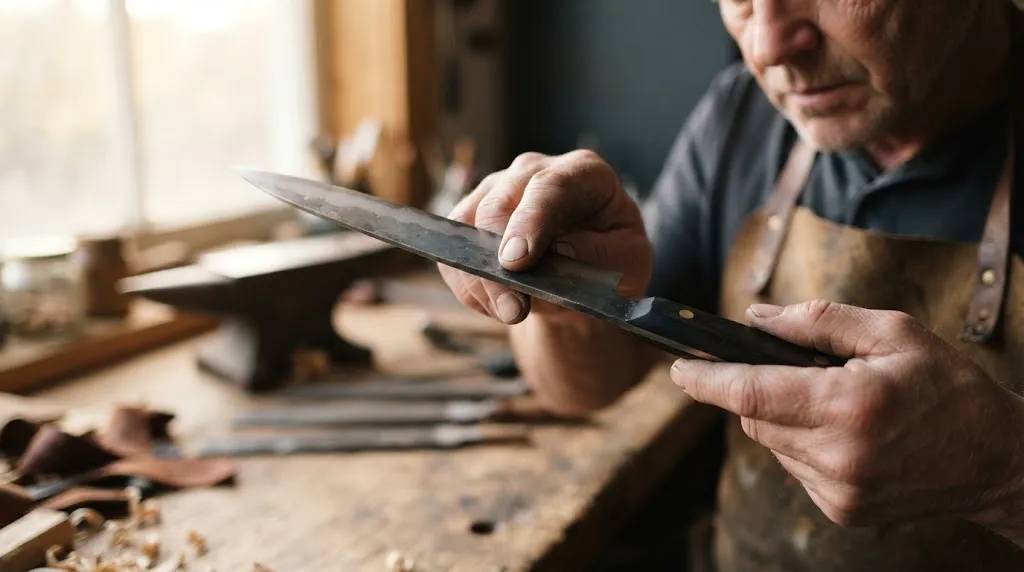
Forging or grinding a blade with a distal taper requires advanced skill and precision. Mass-produced, stamped kitchen knives often skip this step, leaving the spine the exact same thickness from heel to tip. This results in a blade that feels heavy, clumsy, and thick at the front.
Knifemakers incorporate a distal taper to solve several structural and ergonomic challenges simultaneously:
- Weight Distribution: Removing unnecessary metal toward the front lightens the blade, preventing hand fatigue during extended prep sessions.
- Structural Integrity: Keeping the spine thick near the handle provides maximum strength where leverage is highest.
- Cutting Efficiency: A thinner tip parts ingredients cleanly without wedging or splitting dense produce like carrots or potatoes.
Without a distal taper, a knife either feels too heavy and sluggish at the tip or too flimsy and flexible near the handle.
How Balance Is Affected
The balance point of a chef knife largely depends on its distal taper. By tapering the steel toward the front, the overall center of gravity shifts closer to the user’s pinch grip. This makes the knife feel like a natural extension of the hand rather than a heavy tool pulling forward.
Key Insight
A knife with a well-executed distal taper balances naturally right at the pinch grip just in front of the bolster, offering superior maneuverability and control.
The Anatomy of Thickness: Heel vs. Tip
To understand how a distal taper functions in daily food preparation, it helps to look at the specific zones of the blade and how their thickness changes.
Near the handle, the spine might measure a sturdy 3.5mm to 4mm. This thickness gives the heel structural rigidity to handle tough ingredients like winter squash or hard cheeses without flexing or twisting.
Moving toward the middle of the blade, the spine tapers down smoothly. This reduces drag as the blade moves deeper into an ingredient. By the time the spine reaches the final inch before the tip, it often slims down to under 1.5mm or even 1mm, creating a fine, nimble point ideal for mincing garlic, dicing onions, or making intricate cuts.
Tapered Blades vs. Uniform Thickness Blades
Comparing a tapered chef knife to a non-tapered stamped knife highlights why geometry matters so much in the kitchen. The table below outlines the core differences in performance and construction.
| Feature | With Distal Taper | Uniform Thickness (No Taper) |
|---|---|---|
| Tip Weight | Light, agile, responsive | Heavy, sluggish, clumsy |
| Food Wedging | Minimal; slices cleanly through dense produce | High; tends to split or crack thick items |
| Hand Fatigue | Lower during long prep sessions | Higher due to forward weight bias |
| Manufacturing | Requires manual forging or specialized grinding | Easily stamped out of flat steel sheets |
When evaluating kitchen cutlery, checking the spine thickness from handle to tip is one of the easiest ways to spot a thoughtfully crafted knife.
How the Distal Taper Influences Cutting Performance
The physical geometry of a tapered blade changes how the knife interacts with food at every stage of a cut. When performing a rock-chop or a push-cut, different parts of the blade engage the ingredient.
Because the spine and the overall cross-section thin out toward the tip, the blade creates less friction as it passes through food. A uniform blade pushes food apart forcefully, which can cause crisp items like apples or potatoes to snap rather than slice cleanly. A tapered blade parts the material smoothly with minimal resistance.
Furthermore, the lighter tip allows for rapid directional changes. Whether fine-mincing herbs or brunoising shallots, the reduced weight at the front of the knife makes micro-adjustments effortless.
Warning
Because a properly tapered knife features a very thin, delicate tip, avoid using the point for prying, twisting, or cutting through frozen foods, as this can easily bend or snap the steel.
Recognizing Quality Craftsmanship
 Save
Not all kitchen knives feature a true distal taper. As manufacturing shifted toward mass production and blank stamping, many budget-friendly brands abandoned the taper to save time and reduce production costs.
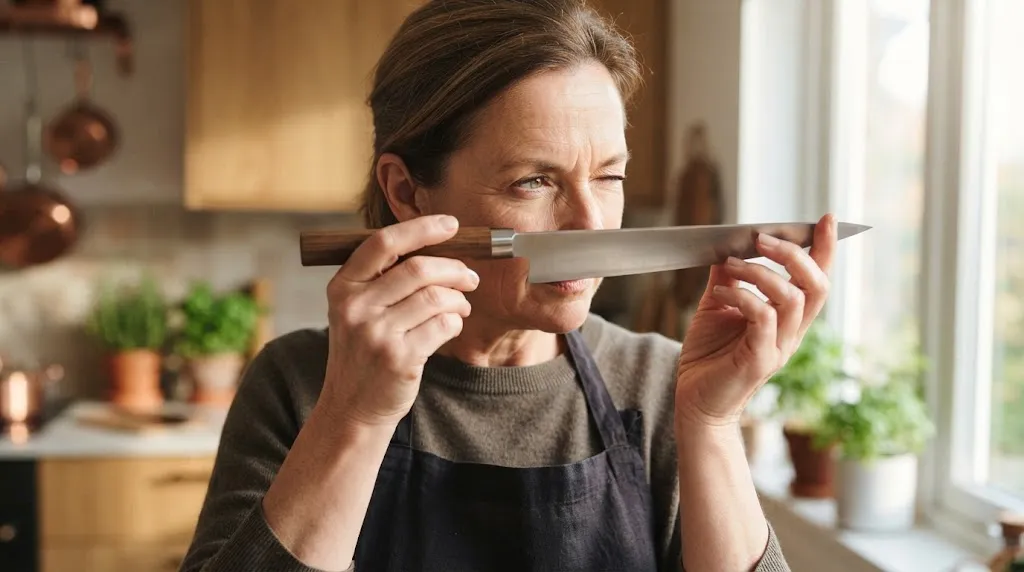
To inspect a knife for a distal taper, hold it at eye level and look down the spine from the handle toward the tip. On a quality blade, you will see a smooth, continuous reduction in thickness. If the spine remains uniform until the final curve of the tip, the blade lacks a proper distal taper.
Traditional Japanese blacksmiths and high-end Western knife makers often emphasize distal tapering as a hallmark of proper balance and superior cutting geometry.
Tip
When shopping for a new chef knife, check manufacturer specifications or ask retailers about the spine thickness profile to ensure the blade features a functional distal taper.
Related Product
Kitchen Knife Sharpening Stones
Maintain your chef knife’s precise cutting geometry and sharp edge with a quality whetstone set designed for kitchen cutlery.
As an Amazon Associate, we earn from qualifying purchases.
Frequently Asked Questions
What is a distal taper on a knife?
A distal taper is the gradual thinning of a knife’s blade spine from the handle to the tip. It reduces weight at the front while keeping the heel strong and thick.
Do all chef knives have a distal taper?
No. Hand-forged and high-end chef knives usually feature a distal taper, while cheaper stamped knives often maintain a uniform thickness across the entire spine.
How does a distal taper improve cutting performance?
By thinning out toward the tip, the blade creates less friction as it enters food, preventing wedging and allowing for smoother, more precise cuts.
Does a distal taper affect knife balance?
Yes. Removing excess steel toward the front shifts the center of gravity backward toward the handle, making the knife feel lighter and more agile in the hand.
Can you add a distal taper to an existing knife?
Modifying a spine’s thickness requires professional grinding equipment and metalworking skill. Doing it improperly can overheat the steel and ruin the blade’s temper.
Why do some thick knives cut better than thin ones?
A knife with a proper distal taper can have a sturdy, thick spine near the handle for heavy leverage while maintaining a fine, laser-like edge geometry behind the cutting edge.
Conclusion
The distal taper is a defining feature of exceptional kitchen knife design. By carefully tapering the blade’s spine from handle to tip, knifemakers achieve an ideal balance of strength, agility, and cutting efficiency. Understanding this geometric detail helps home cooks and culinary enthusiasts identify quality craftsmanship and select blades that deliver superior performance during everyday food preparation.

