
How to Treat an Acacia Wood Cutting Board: Complete Care Guide
Quick Answer
To treat an acacia wood cutting board, wash it with mild dish soap, dry it thoroughly, and apply a thin coat of food-grade mineral oil. Let the oil absorb for several hours or overnight, then wipe away the excess. Repeat when the surface looks dry, usually around once a month. For more detailed instructions, see my step-by-step wooden cutting board oiling guide.
5 Quick Treatment Steps
- Wash gently: Clean the board using warm water, mild dish soap, and a soft sponge.
- Dry completely: Towel-dry both sides and stand the board upright until fully dry.
- Apply food-safe oil: Spread a thin layer of food-grade mineral oil over all exposed wood.
- Allow absorption: Leave the board undisturbed for several hours or overnight.
- Buff and store: Remove excess oil and keep the board in a clean, ventilated location.
Important Care Reminder
- Never soak: Prolonged moisture can cause swelling, warping, or damaged glue joints.
- Avoid cooking oils: Olive and vegetable oils may become sticky or develop unpleasant odors.
- Check the finish: Follow the manufacturer’s instructions before treating a factory-coated board.
Acacia wood cutting boards look beautiful, but their rich grain needs proper care to stay in good condition. The good news is that maintaining one doesn’t require expensive supplies or complicated techniques.
I recommend a simple routine built around gentle cleaning, complete drying, and occasional conditioning. In this guide, I’ll explain how to treat acacia wood safely and handle the common problems that appear over time.
Why Does an Acacia Wood Cutting Board Need Treatment?
Acacia is a group of hardwoods valued for attractive grain patterns and durability. However, natural wood reacts to moisture and changes in its surrounding environment.
Regular treatment helps reduce excessive moisture absorption and keeps the surface from becoming overly dry. It also helps preserve the board’s smooth appearance.
What Makes Acacia Wood Different?
An acacia cutting board is a food-preparation surface made from wood sold commercially as acacia. Its exact hardness, grain, and moisture behavior depend on the species and construction.
Many acacia boards feature contrasting light and dark grain patterns. Proper conditioning can help maintain their appearance without applying a hard surface coating.
- Distinctive grain: Each board has its own natural wood pattern.
- Durable surface: Well-made acacia boards can handle ordinary kitchen chopping.
- Moisture sensitivity: Like other wooden boards, acacia can warp or crack after prolonged exposure to water.
- Conditioning needs: Periodic oiling helps maintain exposed wood fibers.
- Construction differences: Boards with glued strips or special coatings may require extra care.
Acacia’s hardness doesn’t make it waterproof. Good maintenance remains important even when the wood looks healthy.
For additional information about suitability and food contact, see my guide on whether acacia wood cutting boards are safe and good.
What Do You Need to Treat an Acacia Wood Cutting Board?
Most acacia board maintenance requires only a few household supplies. Choosing products made for food-contact surfaces is more important than buying a complicated kit.
Essential Supplies
- Food-grade mineral oil: A stable conditioning oil specifically labeled for food-contact cutting boards.
- Mild dish soap: Removes food residue without requiring harsh cleaners.
- Soft sponge: Cleans the surface without aggressive scratching.
- Lint-free cloth: Spreads conditioner and removes leftover oil.
- Drying rack: Allows air circulation around the board.
- Optional board conditioner: A food-safe mineral oil and beeswax blend for additional surface protection.
I prefer starting with plain food-grade mineral oil because it’s easy to apply and doesn’t require mixing ingredients. A wax-based conditioner is optional rather than essential.
Before applying anything, check whether your board has a factory-applied finish. Some coated surfaces require different treatment from unfinished or oil-finished wood.
How to Treat an Acacia Wood Cutting Board Step by Step
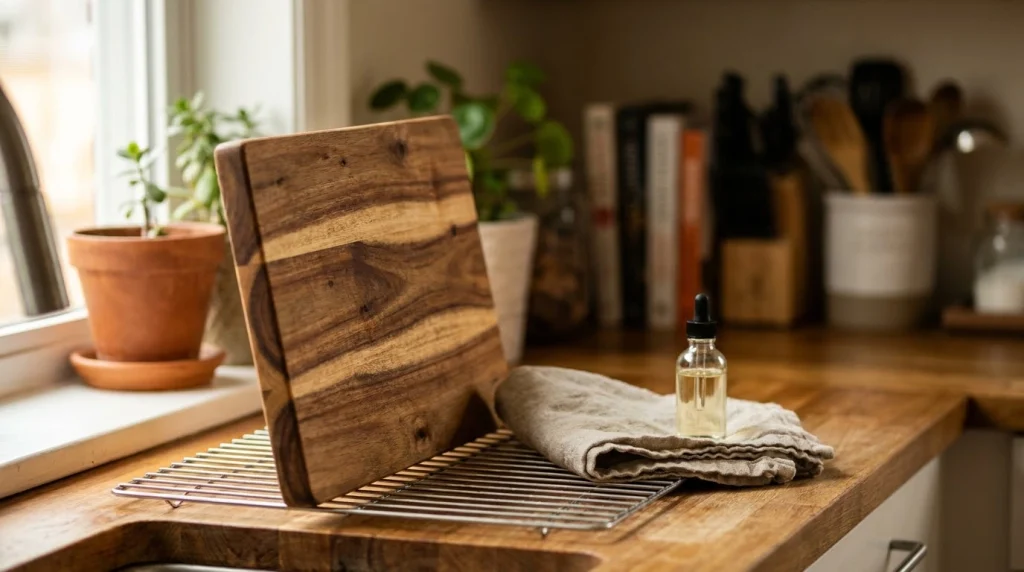
The safest approach is to clean the board, dry it completely, and apply a suitable conditioner. Treat every exposed wooden surface rather than concentrating only on the cutting area.
Step 1: Inspect the Cutting Board
Examine the board before starting. Look for cracks, loose wood fibers, separated joints, or areas that feel unusually rough.
Minor dryness usually responds well to conditioning. Deep structural cracks require a different approach because oil cannot repair damaged wood.
- Check the main cutting surface for deep grooves.
- Inspect both sides for changes in shape.
- Look along glued seams for separation.
- Check the edges for splinters or rough areas.
Step 2: Wash the Board Thoroughly
Remove loose crumbs and food scraps first. Then wash the cutting board with warm water and a small amount of mild dish soap.
Use a soft sponge or nonabrasive brush to clean the surface. Pay attention to grooves where food particles may collect.
- Wet the board briefly with warm water.
- Add mild dish soap to a clean sponge.
- Scrub the front, back, and edges.
- Rinse away all visible soap residue.
- Remove excess water with a clean towel.
Don’t leave the board submerged in the sink. Prolonged soaking allows moisture to enter the wood and can damage glued joints.
Step 3: Let the Acacia Wood Dry Completely
Drying is one of the most important parts of board treatment. Adding oil while the wood remains damp can interfere with conditioning.
After towel-drying, stand the board upright in a clean area with good air circulation. Keep it away from excessive heat.
- Place the board on its edge when possible.
- Allow both faces to receive airflow.
- Don’t stack damp boards together.
- Avoid direct heat from radiators or stoves.
- Check the underside before applying oil.
Drying time varies with humidity, thickness, and how wet the board became. The entire board should feel dry before treatment.
Step 4: Apply Food-Grade Mineral Oil
Pour a small amount of food-grade mineral oil onto a clean cloth. Spread it evenly across the board using gentle, overlapping strokes.
Cover the cutting surface, edges, and underside. This helps maintain all exposed wooden areas instead of treating only one face.
- Start with a small amount of oil.
- Rub it over the surface with a lint-free cloth.
- Apply more oil only where needed.
- Cover the edges and reverse side.
- Check for areas with excess pooled oil.
You don’t need to flood the board. A controlled application makes cleanup easier and avoids leaving the surface unnecessarily greasy.
Step 5: Allow the Oil to Absorb
Place the treated board somewhere clean and dry. Allow the oil to absorb for several hours or overnight, following the product instructions.
A longer absorption period can be useful for a board that looks particularly dry. However, leaving large puddles of oil offers no advantage.
As the oil conditions exposed fibers, the grain may appear darker and more pronounced. That temporary change in appearance is generally expected.
Step 6: Wipe Away Excess Oil
Once the oil has absorbed, buff the board using a fresh, dry cloth. Continue until the surface no longer feels slick or greasy.
The board should feel smooth and clean. There shouldn’t be visible pools or transferable oil on the surface.
- Wipe both cutting surfaces.
- Remove oil from the edges.
- Check corners and handle openings.
- Allow additional resting time if the product requires it.
Step 7: Add a Food-Safe Wax Conditioner if Needed
A compatible board conditioner can add a wax-based moisture-resistant layer after oiling. This step is optional for most acacia cutting boards.
Choose a product specifically intended for cutting boards. Apply it according to the manufacturer’s instructions and buff away the excess.
For a more detailed method, read my guide on how to wax a cutting board safely.
What Is the Best Oil for an Acacia Wood Cutting Board?
Food-grade mineral oil is one of the simplest choices for an oil-finished acacia cutting board. It’s stable, readily available, and intended for suitable food-contact uses.
Mineral oil and beeswax conditioners are another practical option. Ordinary cooking oils are less dependable because some can oxidize or become sticky.
Acacia Cutting Board Oil Comparison
| Oil or Finish | Suitability | Main Consideration |
|---|---|---|
| Food-grade mineral oil | Recommended | Stable, odorless conditioning for routine care. |
| Mineral oil and beeswax | Recommended | Adds a moisture-resistant wax layer. |
| Olive oil | Avoid | May oxidize and develop unwanted odors. |
| Ordinary vegetable oil | Avoid | May become sticky or rancid. |
| Unknown furniture oil | Do not use | May contain ingredients unsuitable for food contact. |
For general wooden cutting board care, the University of Maine Cooperative Extension recommends food-safe mineral oil or beeswax approximately once a month.
Always follow the label of the product you’re using. The correct treatment depends partly on the board’s original finish.
How Often Should You Oil an Acacia Cutting Board?
Most frequently used, oil-finished acacia boards benefit from a condition check every month. Apply oil sooner when the surface starts looking dry or feeling rough.
As of 2026, periodic food-safe mineral oil conditioning remains a standard approach to wooden cutting board maintenance. However, no single schedule suits every kitchen.
Signs Your Board Needs Oil
- Dry appearance: The wood looks dull or faded compared with its usual condition.
- Rough texture: Exposed wood fibers feel slightly raised.
- Frequent washing: Heavy kitchen use has reduced the surface’s conditioned appearance.
- Uneven absorption: Some areas look noticeably drier than others.
Color alone isn’t a perfect indicator because acacia naturally varies in shade. Consider the surface texture and maintenance history too.
Simple Acacia Cutting Board Care Schedule
| When | Maintenance Task |
|---|---|
| After every use | Wash, rinse, and dry thoroughly. |
| Every week | Check for moisture damage and surface wear. |
| About once a month | Check conditioning and apply food-safe oil if needed. |
| When roughness appears | Inspect for raised grain or repairable surface damage. |
I recommend using this schedule as a reminder rather than a strict rule. A board’s condition tells you more than the calendar.
How Do You Clean an Acacia Wood Cutting Board After Daily Use?
Wash your acacia cutting board after each use with warm water and mild dish soap. Rinse it promptly, towel-dry it, and allow it to air-dry completely.
Regular cleaning removes food residue before it accumulates in surface grooves. Oiling doesn’t replace washing or food-safe sanitation.
Should You Put Acacia Wood in the Dishwasher?
Generally, no. Most acacia cutting boards should be handwashed unless their manufacturer specifically approves dishwasher cleaning.
Dishwasher heat and prolonged water exposure may cause warping, cracking, or failed glued joints. Handwashing offers better control over moisture exposure.
How Do You Sanitize an Acacia Cutting Board?
Sanitize the board when additional food-safety precautions are needed, particularly after potential contamination. Always wash away visible food residue before applying a sanitizer.
The MedlinePlus food-safety guidance describes a solution of one tablespoon of unscented liquid chlorine bleach per gallon of water for cutting boards.
- Wash and rinse the board first.
- Prepare the sanitizer at the recommended dilution.
- Apply it according to the appropriate food-contact sanitation directions.
- Allow the recommended contact time.
- Rinse with clean water and dry thoroughly.
Use only plain, unscented bleach suitable for the procedure, and follow product-label directions. Never mix bleach with vinegar, ammonia, or other cleaners.
Sanitizing should never mean soaking the board for an extended period. Some factory finishes also require special care.
Should You Use a Separate Board for Raw Meat?
Using separate boards for raw meat and ready-to-eat foods helps reduce cross-contamination. A clearly designated board also makes kitchen cleanup easier.
The University of Illinois Extension provides additional guidance about cutting board food safety and sanitation.
How Do You Fix Common Acacia Cutting Board Problems?
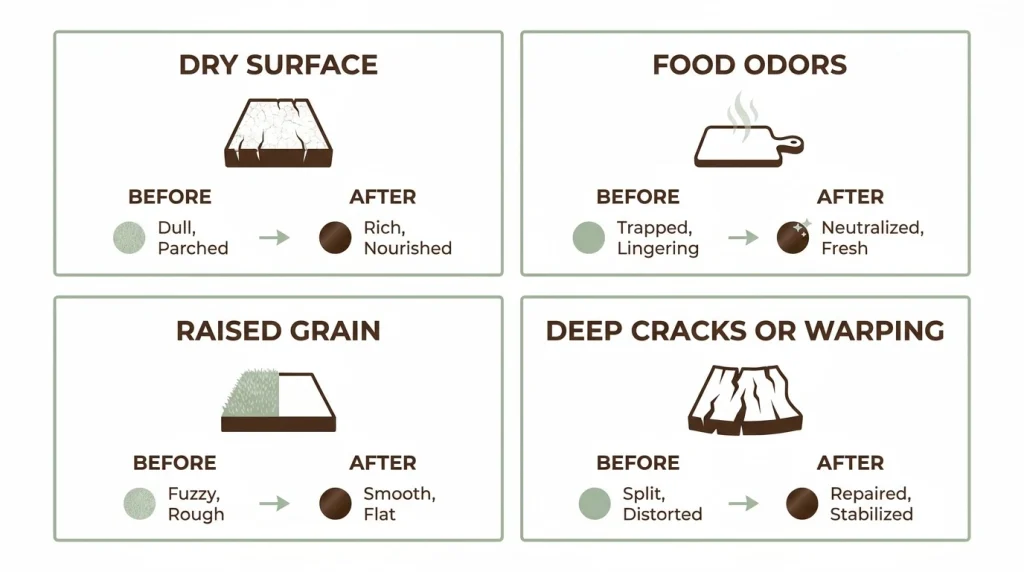
Not every surface problem means your cutting board needs replacing. Mild dryness and small raised fibers may be manageable, but serious cracks require caution.
How to Treat a Dry Acacia Cutting Board
A dry-looking acacia board may benefit from another application of food-grade mineral oil. Clean and completely dry it before conditioning.
- Check for cracks or structural damage.
- Wash away old residue.
- Let the board dry thoroughly.
- Apply food-grade mineral oil evenly.
- Allow absorption and buff away excess oil.
Don’t mistake every light-colored area for damage. Natural grain variation is common in acacia wood.
How to Remove Stains and Food Odors
Start by washing the board thoroughly with mild dish soap. For lingering food odors, a little coarse salt and fresh lemon may help with surface deodorizing.
Rub gently, rinse promptly, and dry the wood completely. Lemon and salt aren’t substitutes for proper food-contact sanitizing.
If the odor remains, investigate whether food residue is trapped in deep cuts. My guide on removing odors from a cutting board covers additional cleaning options.
How to Fix a Rough Acacia Wood Surface
Raised grain can make an otherwise usable board feel slightly fuzzy. Inspect the area to determine whether it’s mild surface roughness or actual splintering.
For an unfinished, solid, repairable board, careful sanding may restore a smooth cutting surface. Sanding is not appropriate for every factory-coated or laminated board.
- Clean and dry the board before assessing the damage.
- Follow the manufacturer’s refinishing recommendations.
- Sand lightly with the wood grain when appropriate.
- Remove sanding dust thoroughly.
- Recondition suitable exposed wood with food-safe oil.
For a complete repair process, see my article on how to refinish a cutting board.
Can You Repair a Cracked or Warped Board?
Mineral oil cannot close cracks, straighten severe warping, or repair separated glue joints. These problems require proper assessment rather than additional conditioning.
Deep cracks may collect food residue and moisture, making effective cleaning difficult. Replace a cutting board when damage prevents safe, thorough cleaning.
What Mistakes Should You Avoid When Treating Acacia Wood?
The biggest maintenance problems usually come from excessive moisture or unsuitable finishing products. Avoiding those mistakes can extend the useful life of your board.
- Soaking overnight: Extended water exposure may swell the wood and damage its construction.
- Using olive oil: Ordinary cooking oil can develop an unpleasant smell or sticky residue.
- Applying too much oil: Excess conditioner creates a greasy surface that requires additional wiping.
- Ignoring the underside: Uneven maintenance may leave one side noticeably drier.
- Using harsh abrasive tools: Aggressive scrubbing may damage the surface or existing finish.
- Storing while damp: Trapped moisture increases the risk of unpleasant odors and damage.
- Using unknown wood polish: Furniture products may contain ingredients unsuitable for direct food contact.
Another common mistake is treating mineral oil as a disinfectant. It conditions the wood but doesn’t replace cleaning or sanitation.
How Can You Make an Acacia Wood Cutting Board Last Longer?
A consistent cleaning and drying routine matters more than frequent heavy oiling. Store the board properly and inspect it for damage during regular use.
Daily Maintenance Habits
- Clean the board shortly after preparing food.
- Remove moisture from both faces.
- Allow airflow during drying.
- Keep it away from standing water.
- Use a separate preparation surface for raw meats when practical.
Long-Term Protection Tips
- Check the finish before using a new conditioner.
- Apply food-grade mineral oil when the surface needs it.
- Inspect glued seams and deep knife marks.
- Avoid prolonged direct sunlight and extreme heat.
- Replace boards that can no longer be cleaned effectively.
The John Boos cutting board care recommendations also emphasize periodic conditioning, cleaning, and proper maintenance.
My preferred approach is simple: keep the board clean, allow it to dry, and condition the surface when needed. Consistency makes the biggest difference.
Recommended Products for Treating Acacia Wood Cutting Boards
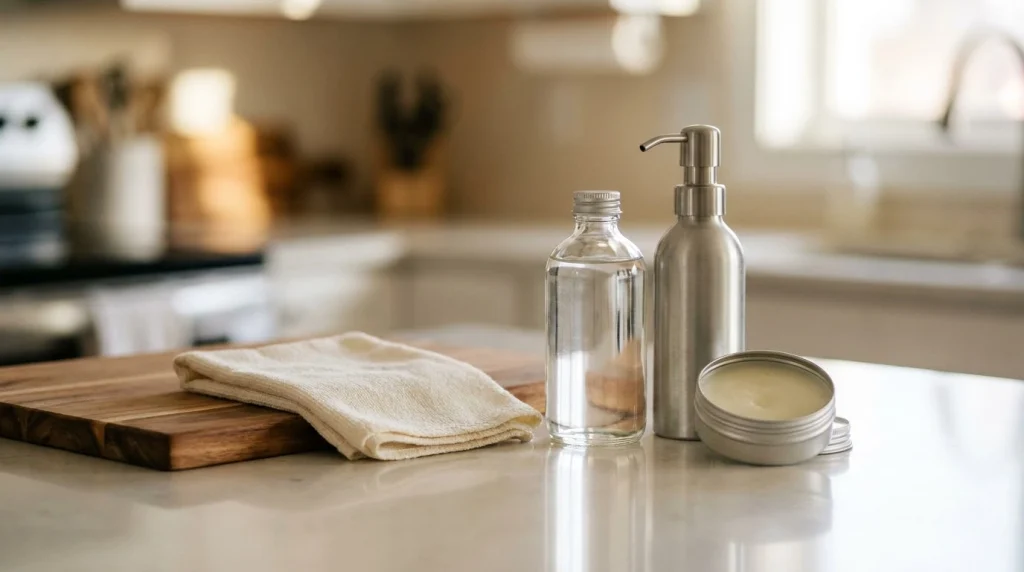
If your board needs conditioning, you don’t need a large collection of maintenance products. These established cutting board care options cover the most common treatment needs.
The ratings below represent editorial suitability for the described tasks, not verified customer-review scores or hands-on product test results.
🏆 Best for Simple Oiling
Howard Cutting Board Oil
★★★★★ 5/5 editorial suitability
Made from food-grade mineral oil, this product is designed for wooden cutting boards and butcher blocks. It’s my preferred type of product for straightforward routine conditioning because it doesn’t require a separate wax step.
🛡️ Best Wax-Based Conditioner
Howard Butcher Block Conditioner
★★★★☆ 4/5 editorial suitability
This conditioner combines food-grade mineral oil with beeswax and carnauba wax. I’d consider it for an oil-finished acacia board when extra wax-based surface protection is desirable.
🪵 Established Board-Care Brand
John Boos Mystery Oil
★★★★☆ 4/5 editorial suitability
John Boos Mystery Oil is a food-safe conditioning oil developed for wooden boards and butcher blocks. It’s another established option to consider when maintaining a compatible oil-finished surface.
Frequently Asked Questions
Can I Use Olive Oil on an Acacia Wood Cutting Board?
Olive oil isn’t recommended as a routine cutting board treatment because it can oxidize and develop unpleasant odors or sticky residue. Food-grade mineral oil is a more dependable choice for compatible oil-finished acacia boards. Always verify that the product is suitable for food-contact surfaces.
Do You Need to Oil a New Acacia Cutting Board?
Not necessarily. Some new acacia boards arrive preconditioned or have a factory-applied finish that needs different care. Read the manufacturer’s instructions before applying oil. If the board is unfinished or oil-finished and looks dry, a suitable food-grade conditioner may help.
Can I Use Coconut Oil to Treat Acacia Wood?
Ordinary coconut cooking oil isn’t my first choice because food-based oils can change with storage and use. A specially formulated, manufacturer-approved board conditioner may be suitable, but don’t assume every coconut oil product performs the same way. Food-grade mineral oil remains a simpler default.
How Long Should Mineral Oil Sit on an Acacia Cutting Board?
Allow the mineral oil to absorb for several hours or overnight, depending on the manufacturer’s directions and the board’s condition. Afterward, wipe away any remaining oil with a clean cloth. The finished board shouldn’t feel wet, slippery, or excessively greasy.
Can Acacia Wood Cutting Boards Grow Mold?
Yes. Like other wooden boards, acacia can develop mold when moisture remains trapped or storage conditions are poor. Wash and dry the board thoroughly after use. If mold or deep contamination cannot be removed safely, replace the board rather than covering the problem with oil.
Final Thoughts: Keep Your Acacia Cutting Board in Great Condition
Learning how to treat an acacia wood cutting board is straightforward once you understand the basics. Proper cleaning, thorough drying, and occasional food-safe conditioning do most of the work.
Start with a clean, completely dry board and apply only a suitable conditioner. Remember that oiling protects the wood’s condition but never replaces good kitchen hygiene.
Before your next cooking session, inspect your board for dryness, roughness, and damage. A few simple maintenance habits can help keep your acacia cutting board useful and attractive for years.

