How to Clean an Epicurean Cutting Board
Quick Answer
Wash your Epicurean board with hot soapy water after every use, rinse it well, and dry it upright. It is dishwasher safe, so you can also run it on a normal cycle when you want a deeper clean. Epicurean boards are nonporous, which means food and germs stay on the surface instead of soaking in.
Daily cleaning in 4 quick steps
- Scrape off scraps: Push food bits into the bin with a bench scraper or spatula.
- Wash with soap: Scrub both sides with hot water, dish soap, and a soft brush or sponge.
- Rinse it well: Run clean hot water over both sides until no soap stays behind.
- Dry it upright: Stand the board on its edge so air reaches both faces.
After raw meat or fish
- Sanitize with a diluted bleach rinse or run the board through the dishwasher on a hot cycle.
- Let it dry fully before you store it flat or lean it in a rack.
I’ve owned the same Epicurean board for years, and it still looks close to new. That surprised me at first, because I use it almost every day.
This guide covers the full routine I use now. You’ll get the daily wash, the dishwasher method, stain and odor fixes, and the mistakes that shorten a board’s life.
What Is an Epicurean Cutting Board?
An Epicurean cutting board is a thin, hard board made from wood fiber and a food-safe resin, pressed together under high heat. The result feels a bit like dense plastic, but it starts life as paper-based wood fiber.
That mix matters for cleaning. The surface is nonporous, so juices and oils sit on top instead of soaking deep into the board.
I noticed the difference the first week I owned mine. Beet juice wiped off with one pass, while my old wood board would have held a pink stain for days.
- Thin and light: Most Epicurean boards are about a quarter inch thick, so they store flat in a drawer.
- Knife friendly: The surface is hard, yet it gives just enough to protect a sharp edge.
- Heat safe to 350°F: You can set a hot pan on it briefly, though I still use a trivet for heavy pots.
- No oiling needed: Unlike wood, it never needs mineral oil or board wax to stay sealed.
Those traits make the board easy to keep clean. They also mean a few wood-board habits, like oiling and sanding, simply do not apply here.
Can You Put an Epicurean Cutting Board in the Dishwasher?
Yes, Epicurean boards are dishwasher safe. The maker designs them to handle normal dishwasher heat and detergent without warping.
I run mine through the dishwasher once or twice a week. It comes out dry, flat, and free of the garlic smell that hand washing sometimes leaves behind.
Place the board on the top or bottom rack with space around it. Keep it away from the heating element, and skip the heated dry cycle if your machine runs very hot.
One warning still applies. A board with deep knife grooves can trap water in those cuts, so check the grooves after the cycle and towel them dry if needed.
If you want to compare how other boards hold up in the machine, see which cutting boards are dishwasher safe before you load a mixed set.
How to Clean an Epicurean Cutting Board After Everyday Use
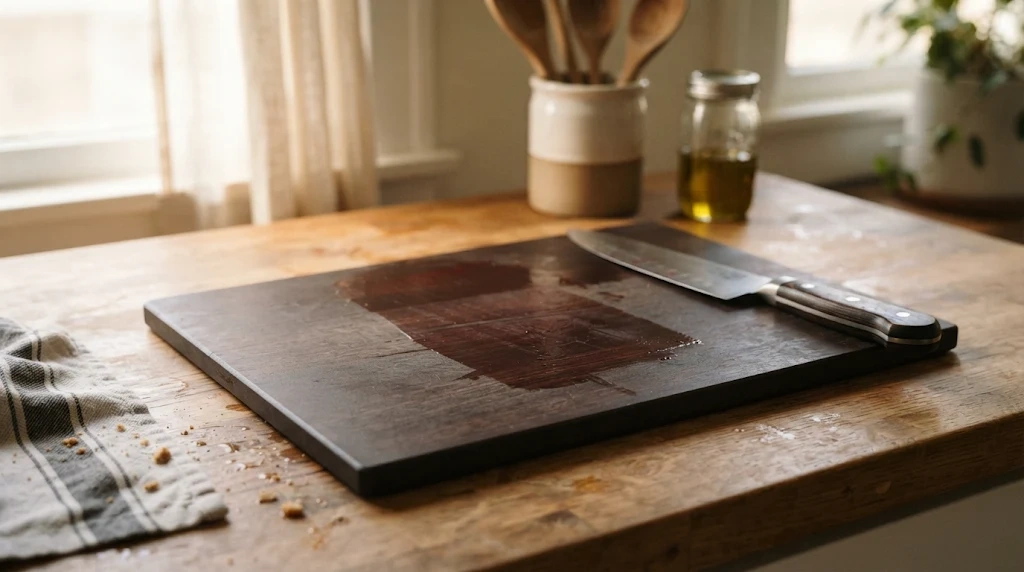
Daily cleaning takes about two minutes. The key is to wash the board right away, before juices dry into the knife marks.
Hot water does most of the work. Soap lifts the grease, and a short scrub clears the fine lines where food hides.
- Scrape: Push scraps into the bin or compost pail.
- Rinse: Run the board under hot tap water to loosen what is left.
- Scrub: Wash both sides and the edges with dish soap and a soft sponge or brush.
- Rinse again: Wash off all soap under hot running water.
- Dry: Towel it off, then stand it upright to air dry fully.
I keep a small brush by the sink just for boards. A brush reaches into knife grooves far better than a flat sponge, and it dries fast between uses.
Skip steel wool and harsh scouring pads. They roughen the smooth surface and create fresh grooves where food can lodge.
Should you clean both sides every time?
Yes, wash both sides after each use. Juice runs over the edge, and the underside picks up crumbs from the counter.
This habit takes ten extra seconds. It also stops a damp underside from picking up odors while the board sits in a rack.
How Do You Deep Clean and Sanitize an Epicurean Board?
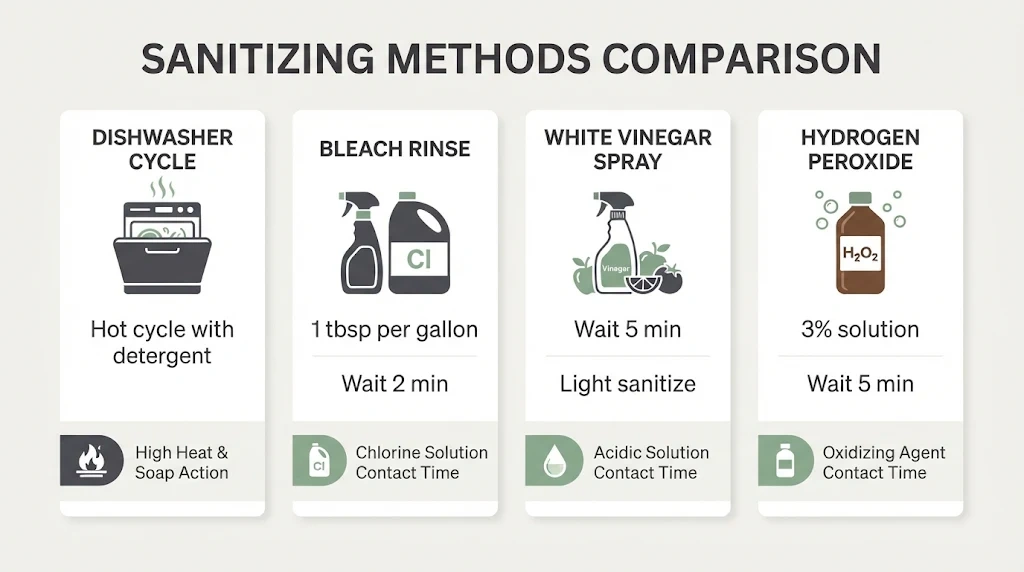
Deep clean your board after raw meat, poultry, or fish, and about once a week in normal use. Sanitizing kills germs that soap alone may leave behind in knife grooves.
The FoodSafety.gov site stresses clean surfaces as a basic step against foodborne illness. Your board is one of the surfaces that matters most.
Pick one method below. You do not need all four at once, and mixing cleaners can cause fumes or residue.
- Dishwasher cycle: Run a normal hot cycle with detergent. This is the simplest full sanitize.
- Bleach rinse: Mix one tablespoon of plain unscented bleach per gallon of water, wipe the board, wait two minutes, then rinse well.
- White vinegar spray: Spray undiluted white vinegar on the surface, wait five minutes, then rinse. Use this for light sanitizing, not after raw meat.
- Hydrogen peroxide: Wipe 3% hydrogen peroxide over the board, wait five minutes, then rinse and dry.
I use the dishwasher most weeks and the bleach rinse after chicken. That mix keeps the routine simple without buying special cleaners.
Never mix bleach with vinegar or ammonia cleaners. That mix creates harmful fumes, and it adds nothing to the cleaning power.
If you wonder about the materials themselves, read whether Epicurean cutting boards are non-toxic and how the resin surface is rated for food contact.
How Do You Remove Stains and Odors from an Epicurean Board?
Most stains lift with a baking soda paste. Odors respond best to lemon juice or vinegar, followed by a full wash and a good air dry.
I learned this the hard way after a batch of turmeric-spiced chicken. The board looked yellow for a day, then the paste below cleared it in one try.
- Make a paste: Mix three parts baking soda with one part water until it feels like thick toothpaste.
- Spread it on: Cover the stained area and rub gently with a soft cloth.
- Wait ten minutes: Let the paste sit so it can lift the stain.
- Rinse and dry: Wash with soap and hot water, then dry the board upright.
For stubborn marks, repeat the paste once more. Avoid bleach-based stain removers and oven cleaner, which can dull the finish.
For smells, rub half a lemon over the surface and let it sit for five minutes. Rinse well, then wash as usual with soap and hot water.
Sunlight helps too. I lean a smelly board near a sunny window for an hour, and the fresh air does the rest.
If odors keep coming back, the knife grooves may be the cause. My guide on how to remove odors from a cutting board covers the deeper fixes that work across board types.
What Should You Never Do to an Epicurean Cutting Board?
Never soak your Epicurean board for hours, and never use it as a trivet for a screaming-hot pan straight from the oven. Both habits stress the resin and can warp the board.
Short rinses are fine. Long soaks are not, because water can work into deep knife cuts and loosen the fiber layers over time.
- Do not oil it: Mineral oil and board wax sit on the surface and turn sticky, since the board cannot absorb them.
- Do not sand it: Sanding breaks the smooth sealed face and leaves a rough patch that stains fast.
- Do not bleach it neat: Undiluted bleach can dull the color and leave a chemical smell behind.
- Do not use abrasive pads: Steel wool and heavy scourers scratch the surface and deepen grooves.
- Do not leave it wet in a stack: Trapped moisture breeds odor between boards, so dry each one first.
I broke the soaking rule once with a board left in the sink overnight. It dried flat in the end, but the edges felt rough for a week.
Treat the board like a good knife. A quick clean now saves a long fix later, and the board will repay you for years.
Epicurean vs Wood vs Plastic: Which Is Easiest to Clean?
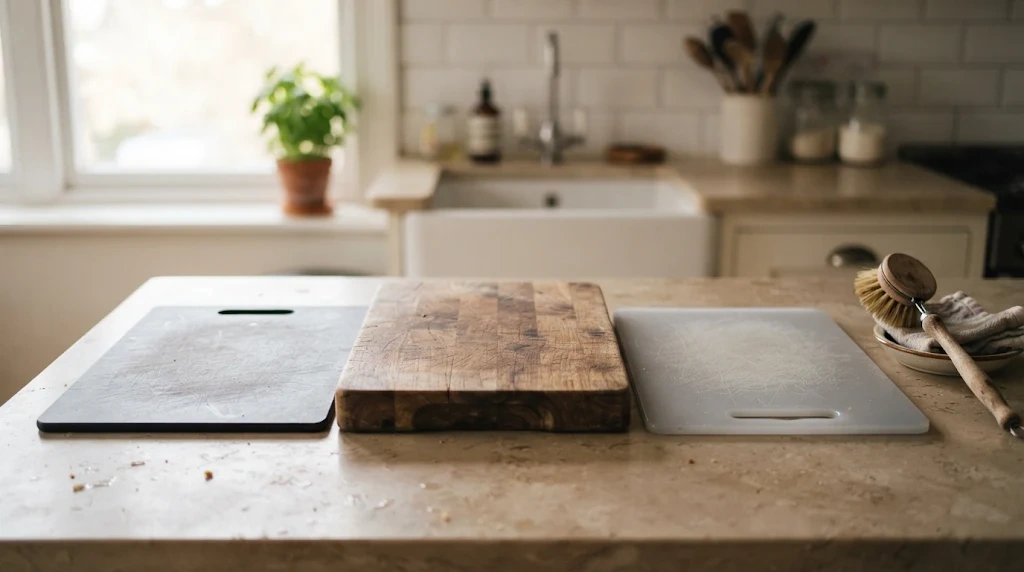
Epicurean boards sit between wood and plastic for care. They need less work than wood and hold up better than cheap plastic.
The table below sums up the daily reality. I have owned all three types, and the Epicurean board wins on the effort-to-result ratio.
| Cleaning factor | Epicurean | Wood | Plastic |
|---|---|---|---|
| Dishwasher safe | Yes | No, warps and cracks | Often yes |
| Daily wash time | About 2 minutes | About 3 minutes, plus drying care | About 2 minutes |
| Needs oiling | No | Yes, monthly | No |
| Stain resistance | High | Low to medium | Medium, fades with grooves |
| Odor retention | Low | Medium, holds garlic and onion | Medium to high in grooves |
| Deep groove risk | Low to medium | Medium, self-heals slightly | High, grooves trap food |
Plastic boards look easy at first. Their grooves deepen fast, though, and those grooves are hard to clean well.
Wood boards need oil and careful drying. They reward the effort with long life, but the routine is heavier than most cooks expect.
If you are weighing plastic as an option, check whether plastic cutting boards are safe and how groove wear changes the answer over time.
How Often Should You Clean and Replace an Epicurean Board?
Clean the board after every use, sanitize it weekly, and deep clean stains as soon as you see them. That rhythm keeps the surface safe without extra effort.
Replacement depends on wear, not age. A lightly used board can last many years, while a heavily scored one may need replacing sooner.
- After every use: Hot soapy wash, rinse, and upright drying.
- Weekly: Dishwasher cycle or a sanitizing rinse.
- Monthly: Check for deep grooves, warping, and stains that no longer lift.
- As needed: Baking soda paste for stains and lemon for odors.
Replace the board when deep grooves hold food after a full wash. Replace it too if the surface feels rough, the edges fray, or odors survive a sanitize cycle.
Food safety guidance from the Centers for Disease Control and Prevention and the U.S. Food and Drug Administration both point to the same habit: keep food-contact surfaces clean, dry, and free of deep damage.
Look for boards with third-party food safety checks when you shop for a replacement. The NSF site lists certified products and explains what its marks mean.
What Cleaning Supplies Do You Need?
You need very little gear for this board. A soft sponge, dish soap, and a brush cover daily cleaning, while baking soda and lemon handle stains and smells.
I keep my board kit in one small caddy by the sink. Everything stays in reach, so I never skip the wash because a tool is missing.
- Soft sponge or cloth: For the daily wash on both sides.
- Dish brush: For knife grooves and the board edges.
- Mild dish soap: Plain soap works best, with no added bleach or grit.
- Baking soda: For the stain paste and a light deodorizing scrub.
- White vinegar or lemon: For odor removal and light sanitizing.
- Clean towel or rack: For upright air drying after every wash.
Skip specialty board cleaners unless you like them. Plain soap and baking soda do the job for far less money, as of 2026.
If you’re ready to pick up a spare board or better cleaning tools, here’s what I’d actually recommend:
🏆 Best Overall
Epicurean Kitchen Series Cutting Board, 15″ x 11″
★★★★★
Thin, light, dishwasher safe, and heat resistant to 350°F. This is the size I use daily, and it still looks close to new after years of use.
🧽 Best for Grooves
OXO Good Grips Dish Brush
★★★★☆
Stiff nylon bristles reach into knife grooves without scratching the board surface. I keep one by the sink just for boards, and the grip stays comfortable even with soapy hands.
💰 Best Budget Cleaner
Dawn Platinum Powerwash Dish Spray
★★★★☆
Spray-on soap cuts grease fast and rinses clean with no grit or residue. I use a single spray per side, which keeps the bottle lasting for months.
Frequently Asked Questions
Can you use bleach on an Epicurean cutting board?
Yes, use a diluted bleach rinse of one tablespoon of plain unscented bleach per gallon of water. Wipe the board, wait two minutes, rinse well, and dry upright.
Never use undiluted bleach, and never mix bleach with vinegar.
Can you use vinegar on an Epicurean cutting board?
Yes, white vinegar works well for light sanitizing and odor removal. Spray it on, wait five minutes, rinse, and wash with soap.
Use the dishwasher or a bleach rinse after raw meat instead, since vinegar is gentler.
Do Epicurean cutting boards stain?
They resist stains far better than wood, but strong foods like turmeric, beets, and tomato paste can leave marks. A baking soda paste left on for ten minutes lifts most stains.
Wash right after use to stop marks from setting.
How do you get onion smell out of an Epicurean board?
Rub half a lemon over the surface, wait five minutes, then wash with hot soapy water and dry upright. A baking soda scrub works well too.
Air drying near a window helps clear any smell that stays behind.
Should you oil an Epicurean cutting board?
No, never oil an Epicurean board. The nonporous surface cannot absorb oil, so it sits on top and turns sticky.
Skip board wax too, and stick to soap, water, and the occasional sanitizing rinse.
The Bottom Line
Cleaning an Epicurean board is simple once the habit sticks. Wash it hot and soapy after every use, sanitize it weekly, and dry it upright.
That routine keeps the board safe, fresh, and flat for years. Start tonight, and your board will thank you at the next meal.