How Often to Sharpen a Chef Knife: Expert Maintenance Schedule
Quick Answer
Most home cooks should sharpen a chef’s knife every few months, typically two to four times a year, depending on frequency of use and the hardness of the steel. However, maintaining the edge with a honing steel before or after every few cooking sessions keeps the blade aligned and reduces how often full sharpening is required.
Understanding the Difference Between Honing and Sharpening
A common point of confusion for home cooks is the difference between honing and sharpening. While both maintenance steps improve cutting performance, they serve completely different functions.
Honing does not actually remove metal from the blade. Instead, it realigns microscopic teeth and bends along the knife edge that naturally drift out of alignment during normal chopping and slicing. Using a honing steel takes only seconds and should be done frequently to maintain daily performance.
Sharpening, on the other hand, removes microscopic amounts of steel to rebuild a completely fresh, blunt-free apex when the edge becomes dull. Knowing when to sharpen depends on how the knife feels on the cutting board rather than a strict calendar schedule.
Signs That Your Chef Knife Needs Sharpening
 Save
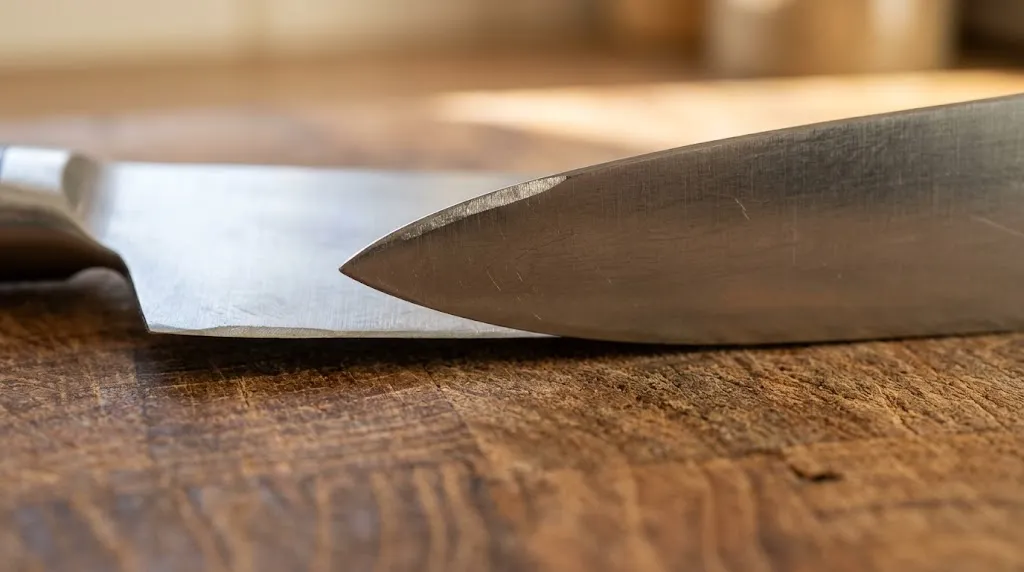
Relying on physical performance indicators is much more accurate than counting days or months. Several distinct signs reveal when a chef knife requires sharpening:
- Resistance on soft foods: If the blade crushes a ripe tomato or slides across the skin of an onion instead of biting in instantly, the edge has lost its micro-serrations.
- Slipping on food surfaces: A dull knife requires downward pressure to cut, which increases the risk of the blade slipping sideways off slippery items like carrots or bell peppers.
- Visible edge reflection: Looking directly down the cutting edge under bright light will reveal bright silver specks wherever light reflects off a flattened, dull apex. A truly sharp edge is so thin it will not reflect light.
- Fraying herbs or meats: If fresh basil leaves turn bruised and dark rather than cleanly sliced, or if meat fibers tear instead of separate smoothly, the edge needs attention.
Tip
The classic paper test provides a reliable benchmark: hold a standard sheet of printer paper by one edge and try to slice downward through it using a gentle drawing motion. A properly sharpened chef knife will glide through the paper cleanly without catching or tearing.
Key Factors That Influence Sharpening Frequency
Not every kitchen knife wears down at the same rate. Several variables determine whether a chef knife needs sharpening monthly or once a year.
Cooking Frequency and Meal Volume
A knife used to prepare three meals a day for a large family experiences significantly more friction than a blade used twice a week for light vegetable prep. High-volume home cooking accelerates edge wear and demands more frequent sharpening sessions.
Blade Steel Composition and Hardness
The alloy used to forge the chef knife plays a massive role in edge retention. High-carbon stainless steels and premium Japanese powdered steels maintain their edges much longer than soft, budget-friendly stainless steel knives. However, harder steels can be more time-consuming to resharpen when they finally do dull.
Cutting Surfaces and Prep Habits
The material of the cutting board directly impacts blade longevity. End-grain wood and soft plastic boards absorb the impact of the knife edge. Cutting on glass, ceramic, marble, or solid granite surfaces will flatten and dull a sharp chef knife within a matter of minutes.
How Proper Maintenance Extends Sharpening Intervals
Establishing good kitchen habits drastically reduces how often you need to remove metal from your chef knife on sharpening stones.
Honing regularly realigns the microscopic edge before it folds over completely. When a knife is honed frequently, the steel stays upright, meaning it cuts efficiently for months longer between sharpening sessions.
Proper cleaning and storage also prevent premature dulling. Hand washing chef knives immediately after use with mild dish soap and warm water prevents acidic food residues from degrading the steel. Storing knives in a wooden block, magnetic strip, or protective sheath keeps the edge from colliding with other utensils in a drawer, which causes microscopic chips.
Warning
Never put a quality chef knife in the dishwasher. The intense heat, harsh detergent granules, and bouncing motion against other items will warp handles, pit the steel, and instantly blunt the cutting edge.
Choosing the Right Sharpening Method
 Save
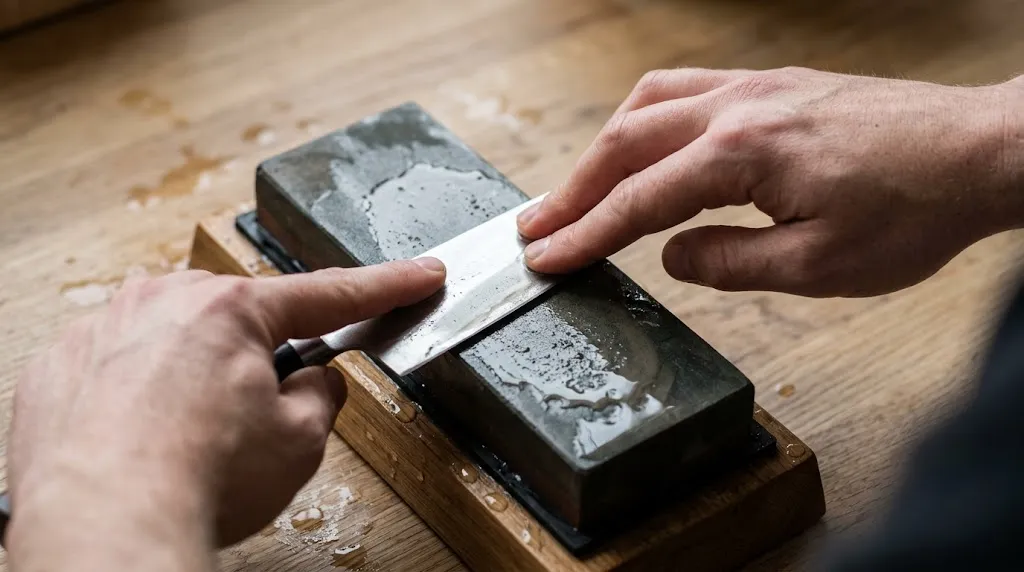
When the time comes to sharpen your chef knife, selecting the appropriate tool ensures optimal results without damaging the blade geometry.
Water stones or whetstones offer the highest level of control, allowing the user to maintain precise edge angles and polish the bevel to a razor finish. While using whetstones requires a short learning curve, it removes the minimum amount of steel necessary to restore performance.
Pull-through mechanical sharpeners provide convenience but often use aggressive carbide blades that strip away excessive steel and leave a jagged edge. If a pull-through sharpener must be used, ceramic wheel models are generally gentler on kitchen knives than tungsten carbide slots.
Professional sharpening services represent a great option for neglected knives with chipped edges or severe dullness, ensuring the factory bevel is restored correctly before home maintenance resumes.
Related Product
Knife Sharpening Stones and Honing Steels
A dual-grit whetstone and a smoothing steel help you maintain a razor-sharp edge safely at home.
As an Amazon Associate, we earn from qualifying purchases.
Frequently Asked Questions
How often should I hone my chef knife?
You should hone your chef knife every one to three uses, or whenever you notice a slight decrease in initial cutting bite. Honing takes only a few seconds and keeps the edge aligned between full sharpenings.
Can I sharpen a chef knife too often?
Yes. Every time you sharpen a knife, microscopic amounts of steel are abraded away. Sharpening too frequently with aggressive stones will prematurely wear down the blade width and alter its original geometry.
Do ceramic chef knives need to be sharpened?
Ceramic knives retain their factory edge for an exceptionally long time due to their extreme hardness. However, when they eventually dull, they cannot be sharpened with standard whetstones and usually require professional diamond-wheel service or replacement.
What angle should a chef knife be sharpened at?
Most Western chef knives are sharpened at a 20-degree angle per side, while Japanese chef knives often feature a steeper 15-degree angle for enhanced slicing precision. Maintaining the manufacturer’s recommended angle is essential for durability.
Is it normal for a newly sharpened knife to feel different?
A freshly sharpened knife requires significantly less downward force to cut through food. Cooks accustomed to pressing down hard with a dull blade should use a lighter touch initially to avoid accidental slips.
How can I test if my knife is sharp enough after sharpening?
Beyond cutting paper, a properly sharpened chef knife should cleanly slice through the skin of a ripe tomato or shave a thin slice from a carrot without requiring downward pressure or sawing motions.
Conclusion
Keeping a chef knife sharp is essential for kitchen efficiency, food quality, and safety. By monitoring how the blade performs on the cutting board rather than relying on a strict calendar, you can determine the ideal maintenance schedule for your cooking habits. Regular honing combined with periodic whetstone sharpening ensures your chef knife remains a reliable, high-performance tool for years to come.

