The Chef Knife Forging Process: Step-by-Step Guide
Quick Answer
The chef knife forging process involves heating a solid piece of high-carbon or alloy steel in a forge until malleable, hammering it into the primary shape and taper on an anvil, executing thermal cycles to refine grain structure, hardening via rapid quenching, and finishing with precision grinding and sharpening.
A high-performance kitchen knife is more than just a piece of sharpened metal; it is the result of precise metallurgical control and physical craftsmanship. While many commercial kitchen blades are cut straight from rolled steel sheets using a stamping process, traditional and premium artisan chef knives are forged. This shaping method uses intense heat and mechanical pressure to transform a raw bar of steel into a balanced, durable culinary tool. Understanding how this process unfolds reveals why forged blades possess distinct weight distribution, structural resilience, and edge longevity.
1. Material Selection and Preparation
The forging journey begins with selecting the appropriate steel bar stock. Bladesmiths typically choose high-carbon tool steels or specialized stainless alloys depending on the desired balance between edge retention, toughness, and corrosion resistance. High-carbon steels like 1095 or 52100 are favored in traditional forging because they respond predictably to heat and hammering, yielding an exceptionally sharp and durable cutting edge.
Once selected, the raw bar is measured and cut to length. For a standard chef knife, the smith often starts with a rectangular block or flat stock of steel, keeping in mind that the metal will stretch, thin, and redistribute during the hammering phases.
2. Heating the Steel in the Forge
 Save
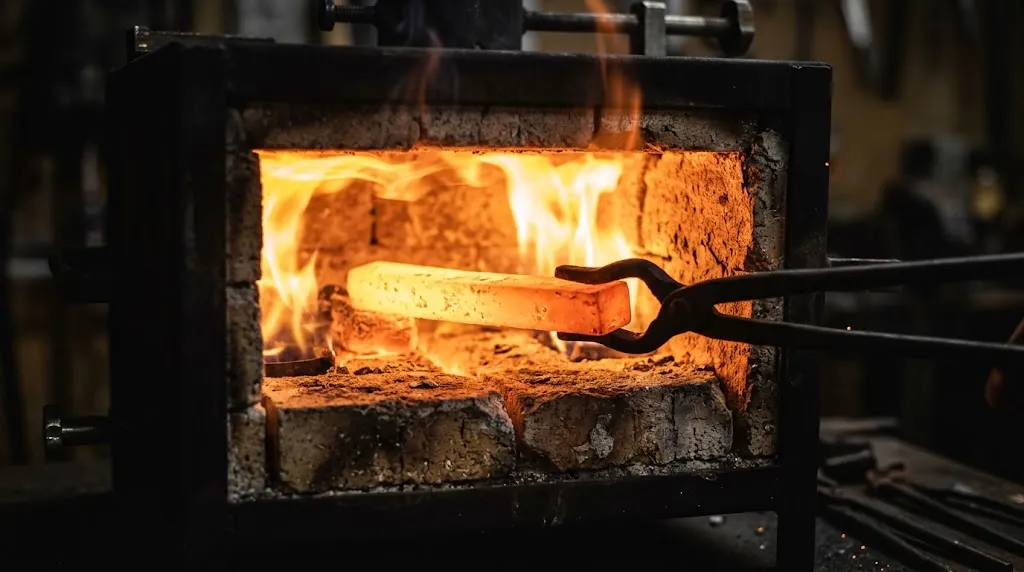
Steel cannot be shaped by hand while cold. The cutler places the metal stock into a gas or coal forge, bringing it up to forging temperature. For most knife steels, this requires heating the metal until it reaches a bright yellow-orange glow, typically between 1,900°F and 2,300°F (approx. 1,040°C to 1,260°C).
Temperature control during this stage is critical. If the steel is overheated, the crystal grain structure grows too large, rendering the metal brittle and weak. If it is worked at too low a temperature, the physical stress of the hammer can cause micro-fractures or tears in the blade.
3. Shaping and Hammering on the Anvil
Once the steel reaches the correct thermal state, the bladesmith uses heavy tongs to transfer the glowing metal to the anvil. This is where the primary physical transformation takes place, combining manual hammer strikes or mechanical press work to displace the mass.
- Establishing the Tip and Profile: The smith begins by hammering the corner of the bar stock to taper the point, setting the initial profile of the chef knife tip.
- Drawing Out the Tang: The handle section, or tang, is hammered and drawn out from the heel of the blade to ensure a secure, balanced foundation for the future handle.
- Forming the Bevels: Using the face and peen of the hammer, the smith works the edges to create the primary tapers, gradually widening the blade body from spine to edge.
Key Insight
Mechanical hammering does more than just push metal into shape. The physical force compresses and aligns the microstructural grain of the steel along the contour of the blade, enhancing overall impact resistance and structural integrity.
4. Thermal Cycling: Annealing and Normalizing
After the rough shape is hammered out, the steel undergoes internal stress and uneven grain growth. Thermal cycling is required to reset the internal structure before hardening.
Normalization involves heating the forged blade slightly above its critical temperature and allowing it to cool slowly in still air. This process refines the crystalline grain size, undoing the coarse structure caused by high forge heats. Annealing may also be performed to soften the steel temporarily, making it easier to drill pinholes and clean up profile lines on a grinder before the final hardening phase.
5. Quenching and Tempering
Heat treatment is the definitive phase that determines whether a chef knife will hold a sharp edge or bend under pressure. This stage transforms the steel’s microscopic matrix into martensite, the ultra-hard phase required for cutting.
- Quenching (Hardening): The shaped blade is reheated to precise critical temperatures and immediately plunged into a quenching medium—usually specialized oil, water, or air depending on the alloy. This rapid thermal shock locks the carbon structure into a rigid, glass-hard state. However, at this stage, the blade is dangerously brittle.
- Tempering: To relieve internal stress and restore a degree of toughness, the quenched blade is placed in a precision oven at lower temperatures (typically between 400°F and 464°F) for set cycles. Tempering trades a tiny fraction of absolute hardness for substantial gains in flexibility and impact resistance, ensuring the knife won’t snap during regular kitchen use.
Warning
A newly quenched blade is extremely fragile and can shatter like glass if dropped or flexed. Tempering must occur immediately after quenching to eliminate extreme internal stresses before any grinding or straightening takes place.
6. Grinding, Polishing, and Final Sharpening
 Save
Once heat treatment is complete, the forged blank possesses a dark, scale-covered surface known as forge scale. The blade is taken to belt grinders and files to refine its geometry, reduce thickness behind the edge, and create the desired cross-sectional grind.
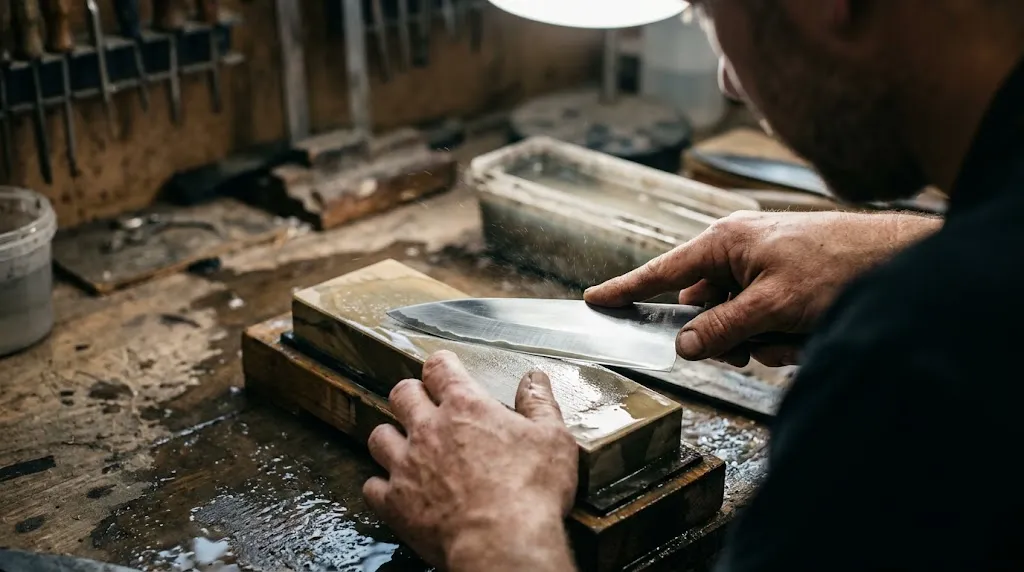
After the primary bevels and surface finishes are polished—ranging from rustic satin finishes to mirror polishes—the knife is ready for final sharpening. Using fine waterstones or specialized abrasive belts, the cutler establishes a razor-sharp edge geometry, typically set at a precise culinary angle between 15 and 20 degrees per side. The handle scales are then attached, shaped, and sealed, completing the journey from raw bar stock to a fully functional chef knife.
Related Product
Knife Sharpening Stones & Maintenance Kits
Keep your high-carbon or forged kitchen knives performing at their best with a dual-grit whetstone sharpening system.
As an Amazon Associate, we earn from qualifying purchases.
Frequently Asked Questions
How can you tell if a chef knife is truly forged?
True forged chef knives often feature a smooth, integrated bolster transitioning from the blade into the handle, a thicker spine that tapers toward the tip, and a heavier, more rigid hand-feel. Additionally, some artisan makers leave subtle hammer marks near the spine for an authentic aesthetic.
Are forged chef knives better than stamped knives?
Neither method automatically guarantees superior performance on its own. However, forging aligns the steel’s grain structure under pressure and permits complex thickness tapers, while stamped knives are cut from flat sheets. High-end forged blades generally offer enhanced durability and balance, whereas stamped knives tend to be lighter and more budget-friendly.
What type of steel is best for forging a chef knife?
High-carbon steels like 1095, 52100, or traditional Japanese high-carbon alloys (such as White and Blue Paper steel) are prized for forging because they develop exceptional edge sharpness. Modern stainless steels can also be forged, though they require strict temperature controls during heating.
Why is heat treatment necessary after forging?
Hammering shapes the metal, but heat treatment (quenching and tempering) locks the carbon atoms into a rigid matrix. Without quenching, the steel remains too soft to hold an edge; without tempering, it remains too brittle to use safely in a kitchen.
What is forge scale and how is it removed?
Forge scale is the dark, flaky layer of iron oxide that forms on the surface of steel when it reacts with oxygen at high forge temperatures. It is removed during the post-forging cleanup phase using belt grinders, files, and abrasive sanding.
Can a beginner learn to forge a chef knife?
Yes, many hobbyists and aspiring bladesmiths begin with basic carbon steel bar stock, a propane forge, a small anvil, and a hammer. However, mastering precise temperature control and clean bevel grinds requires considerable practice and metallurgical patience.
Conclusion
The chef knife forging process bridges ancient metallurgy with modern craftsmanship, converting raw blocks of steel into balanced, resilient culinary instruments. By combining controlled thermal energy, precise hammer work, structural heat treatment, and meticulous finishing, a finished blade gains the durability and cutting precision required in professional and home kitchens alike. Understanding these sequential stages highlights the complex engineering and labor embedded in every hand-forged kitchen knife.

