Can Birch Be Used as a Cutting Board? Safety, Pros, and Care
Quick Answer
Yes, birch can be used as a cutting board. Solid birch is a dense, fine-grained hardwood that provides a durable surface for everyday food preparation. When properly finished, cleaned, and dried, it is a practical choice for home kitchens. Wood Magazine’s cutting board guidance specifically recommends birch alongside maple and beech.
Why Birch Works for Cutting Boards
- Dense hardwood: Yellow birch offers good resistance to everyday dents and knife marks.
- Fine grain: Its relatively small pores create a smooth cutting surface.
- Knife compatibility: Birch balances reasonable hardness with a workable chopping surface.
- Attractive appearance: Its pale color fits many kitchen designs.
- Easy maintenance: Regular washing, prompt drying, and occasional oiling help preserve it.
Before Using Birch
- Choose solid wood: Avoid decorative plywood or unknown coatings.
- Inspect the surface: Reject boards with cracks, splinters, or loose joints.
- Control moisture: Never leave wooden boards soaking in water.
If you’re considering birch for a cutting board, the most important questions are durability, food safety, and maintenance. Birch performs well in several of these areas, but its construction matters.
In this guide, I’ll explain where birch works best, how it compares with maple, and what to check before buying or making a board.
Is Birch Wood Good for Cutting Boards?
Yes. Birch is a suitable cutting board material because it combines useful hardness, a fine grain, and a smooth working surface.
However, not every birch board offers the same performance. Wood species, grain orientation, drying quality, and construction all affect the finished product.
What Is Birch Wood?
Birch is a hardwood from trees in the Betula genus. Different birch species vary in hardness, color, and density.
Yellow birch is especially relevant for cutting boards because its strength and relatively tight grain support repeated chopping.
- Yellow birch: A dense hardwood with a Janka hardness of approximately 1,260 pounds-force.
- Sweet birch: A harder species, with a Janka rating around 1,470 pounds-force.
- Paper birch: A generally softer species than yellow or sweet birch.
The Janka test measures resistance to indentation. It helps compare wood hardness, but it does not directly measure food safety or knife wear.
Why Does Birch’s Grain Matter?
Birch has a relatively fine, close grain, which makes it appropriate for cutting boards. Its small pores are preferable to the large, open pores found in some other woods.
That doesn’t mean birch is bacteria-proof. A clean, smooth surface is still essential for safe food preparation.
What Are the Advantages and Disadvantages of Birch Cutting Boards?
 Save
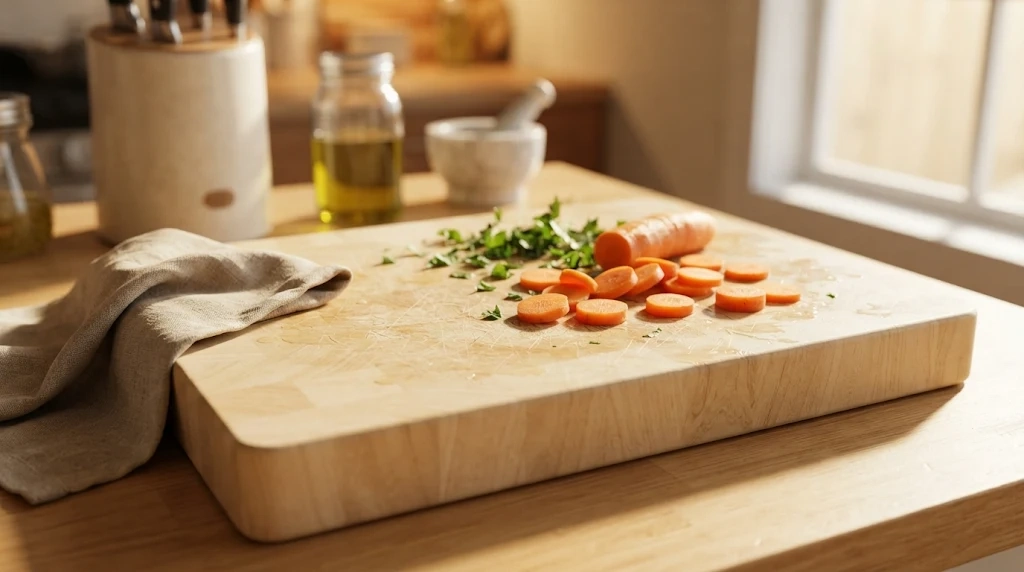
Birch offers several practical benefits, particularly for everyday vegetable preparation. Its main drawbacks involve moisture sensitivity and the maintenance required by natural wood.
Advantages of Birch Cutting Boards
- Durability: Dense birch withstands normal slicing and chopping when properly maintained.
- Fine texture: The smooth grain produces a comfortable cutting surface.
- Natural appearance: Light cream and pale brown tones complement kitchen countertops.
- Versatility: Birch works for vegetables, fruit, bread, herbs, and other common ingredients.
- Repair potential: Minor scratches in solid wood can sometimes be sanded away.
Disadvantages of Birch Cutting Boards
- Moisture sensitivity: Extended water exposure can encourage swelling or warping.
- Regular care: Wooden boards may need food-grade mineral oil to reduce drying.
- Surface damage: Knife marks accumulate with heavy use.
- Not dishwasher-friendly: High heat and prolonged water exposure can damage many wooden boards.
- Variable quality: Poorly dried lumber or weak glue joints can shorten a board’s life.
I would prioritize construction quality over appearance when choosing a birch board. A plain, well-made board is more useful than an attractive board with unstable joints.
Is Birch Wood Safe for Food Preparation?
Yes, clean, untreated solid birch is generally suitable for food-contact cutting surfaces. Food safety depends on more than the species alone.
A board needs a smooth surface, appropriate construction, and reliable cleaning practices. Deep cracks and poorly maintained grooves can make any cutting board harder to clean.
Can Birch Cutting Boards Harbor Bacteria?
Like other wooden boards, birch can become contaminated when it contacts raw ingredients. Proper cleaning and separation of foods are therefore essential.
The USDA Food Safety and Inspection Service recommends cleaning cutting boards thoroughly and replacing excessively worn surfaces.
Follow these basic food safety habits:
- Wash the cutting board after preparing each food item.
- Use hot, soapy water and rinse thoroughly.
- Use separate boards for raw meat and ready-to-eat foods when possible.
- Dry the board completely before storing it.
- Replace boards that develop deep, difficult-to-clean grooves.
Is Birch Plywood Safe for Cutting Boards?
Birch plywood should not be treated as equivalent to solid birch. Plywood contains multiple wood layers joined with adhesives.
Its exposed edges, bonding materials, and surface coatings may not be suitable for repeated direct food contact.
For a homemade cutting board, I recommend solid birch lumber instead of ordinary cabinet-grade plywood.
Does Birch Need a Food-Safe Finish?
A food-contact-appropriate finish can help protect birch from moisture. Food-grade mineral oil is a common option for wooden cutting boards.
Some board makers also use mineral oil and beeswax blends. Always confirm the product’s intended use and follow its application instructions.
Birch vs. Maple vs. Beech: Which Wood Is Better?
 Save
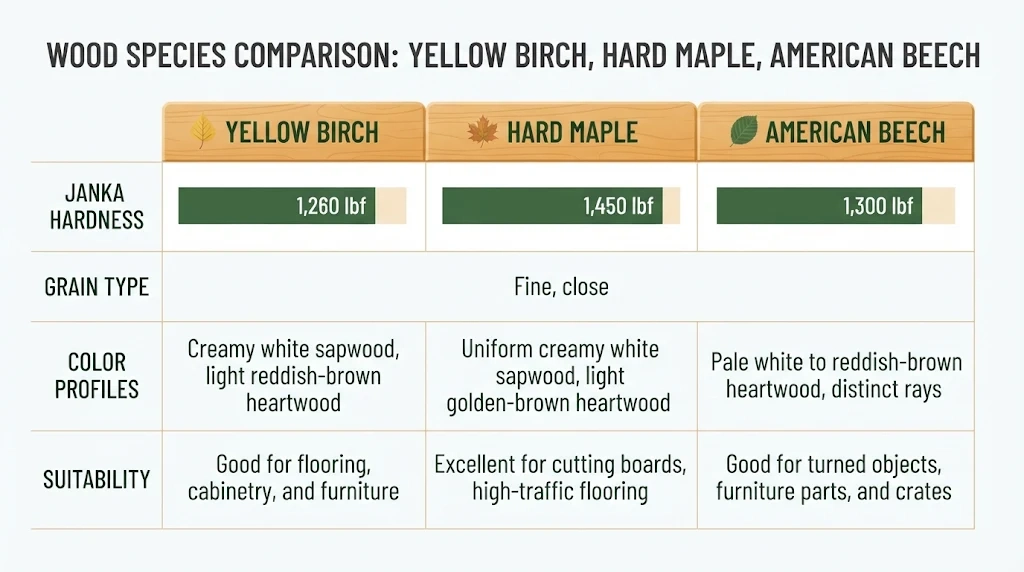
Birch, hard maple, and beech are all reasonable choices for wooden cutting boards. Their differences are more about durability, availability, appearance, and personal preference than a single universal winner.
Hard maple is often the standard comparison because it is dense, familiar, and widely available in commercial cutting boards.
| Property | Yellow Birch | Hard Maple | American Beech |
|---|---|---|---|
| Janka hardness | 1,260 lbf | 1,450 lbf | 1,300 lbf |
| Grain | Fine, close | Fine, close | Fine, close |
| Typical color | Pale cream to reddish brown | Cream to light brown | Pale cream to pinkish brown |
| Cutting board suitability | Good | Excellent | Good |
| Best reason to choose | Fine grain and balanced hardness | Established durability | Smooth texture and practical hardness |
Note: Hardness values are approximate species averages, not measurements of finished cutting boards. Suitability ratings are editorial assessments.
Is Birch Better Than Maple for Cutting Boards?
Hard maple is generally harder than yellow birch, but that doesn’t automatically make birch inferior. Both woods can provide reliable cutting surfaces.
Maple has an advantage in established commercial board options. Birch remains appealing when you can obtain quality lumber or prefer its appearance.
Is Birch Better Than Bamboo?
Birch is a natural hardwood, while bamboo is a grass commonly processed into laminated boards. Both can work for kitchen preparation.
Bamboo products vary in resin, manufacturing quality, and surface hardness. Birch may be preferable when you want a solid hardwood board with a simpler construction.
What Type of Birch Is Best for a Cutting Board?
Yellow birch is a strong candidate because of its balanced hardness and fine texture. Sweet birch is another possibility when suitable lumber is available.
More important than the name alone is whether the lumber is dry, clean, untreated, and free from structural defects.
What Should You Look for in Birch Lumber?
- Solid hardwood: Select genuine birch rather than decorative veneer or plywood.
- Proper drying: Choose kiln-dried or appropriately seasoned lumber.
- Clean grain: Avoid large knots, cracks, and unstable sections.
- Unknown treatments: Reject reclaimed wood with uncertain chemical exposure.
- Food-contact materials: Choose an appropriate adhesive if constructing a laminated board.
A finished cutting board should also have smooth edges. Splinters, gaps, and loose joints are warning signs.
How Do You Make a Birch Cutting Board?
You can make a birch cutting board with basic woodworking tools and properly dried solid lumber. Careful glue-up and finishing are essential.
For beginners, a simple edge-grain design is usually more approachable than an end-grain butcher block.
Materials and Tools
- Dry, untreated solid birch boards
- Food-contact-appropriate waterproof woodworking glue, if joining pieces
- Table saw or another suitable cutting tool
- Clamps and a flat work surface
- Sandpaper in progressively finer grits
- Food-grade mineral oil or a suitable board finish
- Clean, lint-free cloths
Step-by-Step Instructions
- Choose the wood: Inspect dry birch lumber for cracks, knots, and other defects.
- Cut the pieces: Prepare straight boards with clean, square mating edges.
- Arrange the grain: Plan a stable edge-grain layout with an even cutting surface.
- Glue and clamp: Apply the appropriate adhesive and follow its curing instructions.
- Flatten the surface: Remove uneven joints using suitable woodworking methods.
- Sand thoroughly: Progress through finer abrasives until the surface feels smooth.
- Clean the board: Remove sanding dust and prepare the surface for finishing.
- Apply the finish: Follow the food-safe finishing product’s directions.
- Inspect before use: Confirm that no cracks, splinters, or glue gaps remain.
A board around 3/4 to 1 1/4 inches thick is a practical starting point for many home designs. The ideal thickness depends on size and construction.
Is End Grain or Edge Grain Better for Birch?
End-grain boards expose the ends of the wood fibers to the knife. Edge-grain boards present the long edges of joined pieces.
Both constructions can work with birch. End grain usually requires more complex assembly, while edge grain is simpler for home woodworking projects.
| Feature | Edge Grain | End Grain |
|---|---|---|
| Construction | Long wood strips | Exposed fiber ends |
| Difficulty | Usually easier | More complex |
| Typical use | Everyday slicing | Frequent chopping |
| Maintenance | Regular cleaning and oiling | Regular cleaning and oiling |
How Do You Clean and Maintain a Birch Cutting Board?
 Save
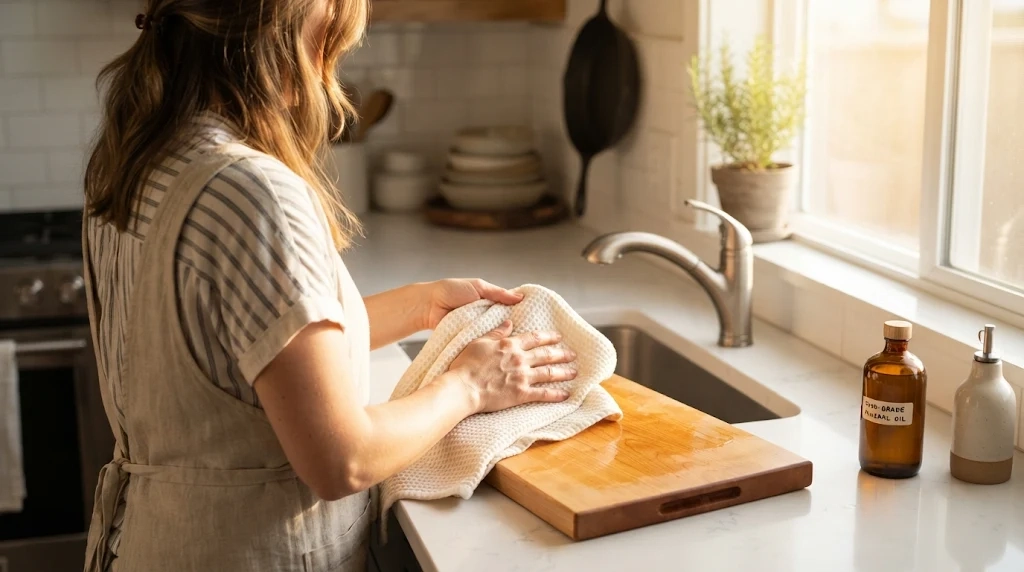
Wash birch cutting boards promptly, avoid prolonged soaking, and dry them thoroughly. Consistent care helps reduce moisture damage and surface deterioration.
Daily Cleaning
- Remove food scraps using a suitable scraper or utensil.
- Wash the board with warm water and dish soap.
- Gently scrub the entire cutting surface.
- Rinse with clean water.
- Dry immediately using a clean towel.
- Allow airflow around the board until completely dry.
Do not leave the board resting in a wet sink. Avoid putting a laminated wooden cutting board in the dishwasher.
When Should You Sanitize It?
Sanitizing is useful when a board has contacted raw animal products or other potentially contaminated foods. Cleaning should come first.
The U.S. Food and Drug Administration provides guidance on cleaning and sanitizing food-contact surfaces.
For a compatible board, USDA guidance describes a diluted solution of one tablespoon of unscented liquid chlorine bleach per gallon of water. Follow the applicable instructions and rinse and dry appropriately.
Never mix bleach with vinegar, ammonia, or other cleaning chemicals.
How Often Should You Oil Birch?
Oil the board when the surface begins to look dry or loses its conditioned appearance. There is no universal schedule for every kitchen.
Frequent washing may require more regular conditioning. Use food-grade mineral oil rather than cooking oils that can become rancid.
How Can You Prevent Warping?
- Keep both sides of the board reasonably dry.
- Store it where air can circulate.
- Avoid prolonged exposure to direct sunlight.
- Do not place it beside strong heat sources.
- Never soak it overnight.
- Condition the wood according to the finish manufacturer’s directions.
When Should You Replace a Birch Cutting Board?
Replace a birch board when damage prevents effective cleaning or creates a risk during food preparation. Normal shallow knife marks do not always require replacement.
Inspect the board for the following problems:
- Deep cracks that trap moisture or food particles
- Loose laminated joints
- Persistent odors after thorough cleaning
- Extensive, difficult-to-clean knife grooves
- Serious warping that makes cutting unstable
- Visible deterioration that sanding cannot safely repair
Minor surface scratches may be repairable on an otherwise sound solid-wood board. Deep structural cracks deserve a more cautious approach.
Recommended Cutting Boards to Consider
If you prefer a ready-made board, these products offer useful alternatives to custom birch. Each serves a different kitchen priority.
The ratings below are editorial suitability scores based on published product features, not customer review averages or personal testing.
🏆 Best Hardwood Alternative
John Boos Chop-N-Slice Maple Cutting Board
★★★★☆ 4.7/5 Editorial Score
This edge-grain hard maple board is available in several sizes and offers a reversible cutting surface. I would choose it when proven hardwood construction matters more than finding birch specifically.
💰 Best Easy-Care Option
OXO Good Grips Carving & Cutting Board
★★★★☆ 4.6/5 Editorial Score
This polypropylene board has non-slip feet and a double-sided design. I would consider it for households wanting dishwasher-safe convenience and a separate surface for raw meat preparation.
🌿 Best Lightweight Wood Option
Teakhaus Essential Cutting Board 405
★★★★☆ 4.5/5 Editorial Score
This FSC-certified teak board measures 16 by 11 inches and has a slim edge-grain construction with a juice canal. I would consider it for lighter everyday prep where easier handling matters.
Product note: These are alternatives, not birch cutting boards. Product availability, seller listings, and prices may change.
Frequently Asked Questions
Is birch too soft for a cutting board?
No. Yellow birch has a Janka hardness around 1,260 pounds-force, making it suitable for normal kitchen cutting tasks. It is somewhat softer than hard maple but still provides useful dent resistance. The quality of the board’s construction also affects durability.
Can I use birch for a butcher block?
Yes. Solid birch can be used to construct a butcher block when the wood is properly dried, assembled, and finished. End-grain and edge-grain designs are both possible. Choose appropriate food-contact materials and inspect the completed block for gaps or defects.
Is birch better than oak for cutting boards?
Birch is generally preferable to red oak for cutting boards because it has a finer, less open grain. Red oak’s larger pores can make cleaning more challenging. Yellow birch combines a smoother texture with sufficient hardness for ordinary kitchen preparation.
Can a birch cutting board go in the dishwasher?
Hand washing is the safer routine for most birch cutting boards, particularly laminated products. Dishwasher heat and extended moisture exposure may damage the wood or glue joints. Follow the manufacturer’s specific care instructions if you have a commercially produced board.
How long does a birch cutting board last?
A well-made birch cutting board can serve for years, but there is no guaranteed lifespan. Usage frequency, cleaning habits, construction quality, and storage all affect longevity. Replace the board when deep cracks, unstable joints, or hard-to-clean grooves make it unsuitable for food preparation.
Final Verdict: Should You Choose Birch for a Cutting Board?
Yes, birch is a practical cutting board material when you choose suitable solid wood and maintain it correctly. Its fine grain, balanced hardness, and natural appearance make it attractive for everyday cooking.
For a homemade board, I would consider properly dried yellow birch and a straightforward edge-grain construction. For a ready-made alternative, hard maple is an excellent option with established commercial choices.
The most important decision is choosing a board that is safe, stable, and easy to clean. Good care matters as much as the wood species.

