Are Boos Cutting Boards Worth It? An Honest 2026 Buying Guide
Quick Answer
Yes, Boos cutting boards are worth it for serious home cooks who want a substantial hardwood cutting surface and don’t mind regular maintenance. Their maple boards offer especially good value, while premium walnut and end-grain blocks cost considerably more. For anyone who regularly uses a quality everyday chef’s knife, a well-maintained Boos board can be a worthwhile long-term kitchen investment.
Why Boos boards are worth considering
- Quality hardwood: Maple, cherry, and walnut provide durable surfaces for daily kitchen work.
- Knife-friendly surface: Wood offers a more forgiving cutting surface than glass or stone.
- Long-term usefulness: Proper cleaning, drying, and oiling can help maintain the board for years.
- Multiple designs: Edge-grain, end-grain, and carving models fit different cooking styles.
- Premium appearance: Natural hardwood looks attractive on a kitchen countertop.
My buying recommendation
- Best overall value: John Boos Maple R-Board Series.
- Best for heavy chopping: John Boos Maple End-Grain Chopping Block.
- Best for occasional use: Consider a less expensive board if you prefer minimal maintenance.
I’ve always believed a cutting board deserves almost as much attention as the knife resting on it. A sharp blade feels less useful when the work surface slides, crowds ingredients, or requires constant replacement.
John Boos is one of the better-known names in premium wooden cutting boards. But recognizable branding doesn’t automatically mean the extra cost makes sense.
In this guide, I’ll examine the materials, construction, pricing, maintenance, and practical drawbacks. I’ll also explain which Boos boards offer the strongest value for different kitchens.
What Is a John Boos Cutting Board?
A John Boos cutting board is a hardwood food-preparation surface made by John Boos & Co., an American manufacturer founded in 1887. Its cutting board collections include maple, cherry, and walnut models.
The company produces everyday cutting boards alongside thicker butcher blocks and specialized carving surfaces. You can compare the available styles in the official John Boos cutting board collection.
What makes Boos boards different?
Boos boards stand out for their hardwood construction, substantial thickness, and variety of sizes. Many designs offer reversible surfaces and recessed finger grips.
The key differences include:
- Hardwood construction: Popular models use North American hard maple or American walnut.
- Thick profiles: Common models range from approximately 1 to 2.25 inches thick.
- Reversible designs: Many boards provide two usable cutting faces.
- Different grain patterns: Edge-grain and end-grain construction suit different priorities.
- Specialized options: Carving boards may include juice grooves or other food-preparation features.
These details matter more than the logo. The right combination of surface size, weight, and construction determines how useful the board becomes.
Are Boos Cutting Boards Really Worth the Money?
Boos boards justify their premium for cooks who value hardwood construction, a stable workspace, and traditional kitchen equipment. They offer less value to people who prioritize low cost, dishwasher cleaning, or lightweight storage.
I would judge the investment by how often someone cooks, not by the board’s appearance alone.
1. Hardwood creates a comfortable cutting surface
A quality wood board provides a solid surface for chopping vegetables, slicing fruit, and preparing ingredients. Unlike glass or stone, wood is relatively forgiving when a knife contacts it.
That distinction matters when using thin-edged chef’s knives. The board supports ordinary cutting motions without presenting the same extremely hard contact surface.
2. The thickness improves countertop stability
Boos offers many substantial boards that stay planted through ordinary food preparation. Extra mass can reduce movement, although a damp towel or nonslip mat may still be necessary.
Thickness also has a drawback. A heavy board becomes inconvenient when you need to carry it to the sink.
3. Good maintenance can extend useful life
Wooden cutting boards can remain useful for many years when owners clean and dry them correctly. Some surface scratches can also be sanded and refinished.
However, premium wood doesn’t eliminate the risk of cracking or warping. Long water exposure and uneven moisture remain important concerns.
4. The appearance adds some value
Maple offers a light, traditional look, while walnut provides darker tones. Cherry develops a warmer visual character.
For a board that stays on the counter, appearance may reasonably influence the purchase. I wouldn’t pay extra for decorative wood if it reduced my budget for a reliable knife.
How Much Do John Boos Cutting Boards Cost in 2026?
 Save
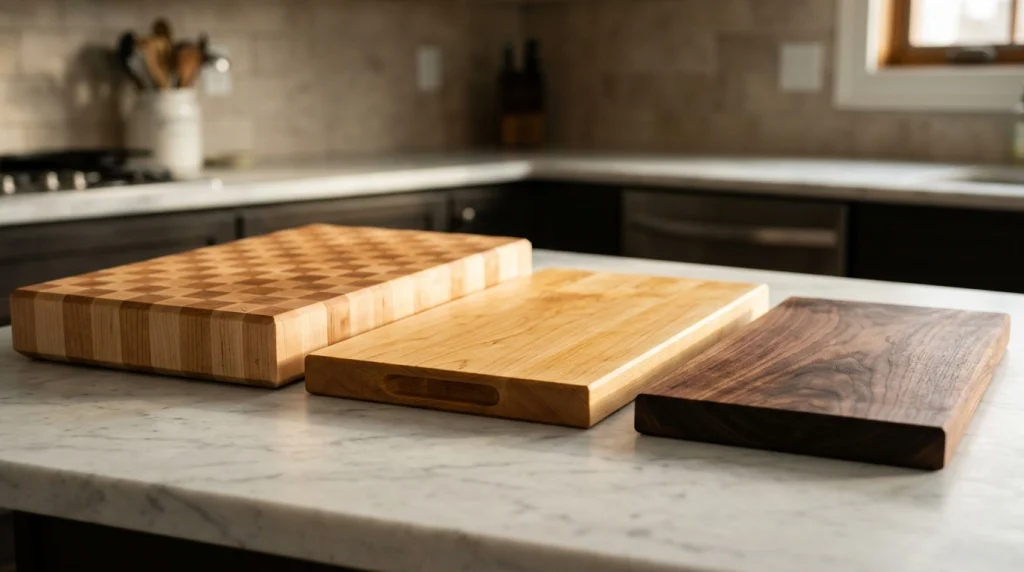
As of 2026, many premium Boos boards cost approximately $95 to $330, depending on material and configuration. Some smaller models cost less, while large specialty blocks cost more.
The following examples reflect published manufacturer pricing observed during research, not guaranteed current checkout prices.
| Boos model | Construction | Thickness | Listed price range | Best use |
|---|---|---|---|---|
| Maple R-Board | Maple, commonly edge grain | 1.5 inches | $94.95–$154.95 | Everyday food prep |
| Walnut R-Board | Walnut, commonly edge grain | 1.5 inches | $193.95–$326.95 | Premium countertop appearance |
| Walnut 4-Cooks | Walnut edge grain | 1 inch | $68.95–$138.95 | Lighter daily preparation |
| Maple CCB Chopping Block | Maple end grain | 2.25 inches | From about $235.95 | Dedicated heavy chopping |
Note: Prices and model configurations can change. Some manufacturer descriptions have inconsistent grain terminology, so verify the exact model before purchasing.
For my money, the maple R-Board occupies the most practical position in the lineup. It provides a substantial hardwood surface without the higher price of decorative walnut or thick end-grain blocks.
Is End Grain or Edge Grain Better for Chef’s Knives?
 Save
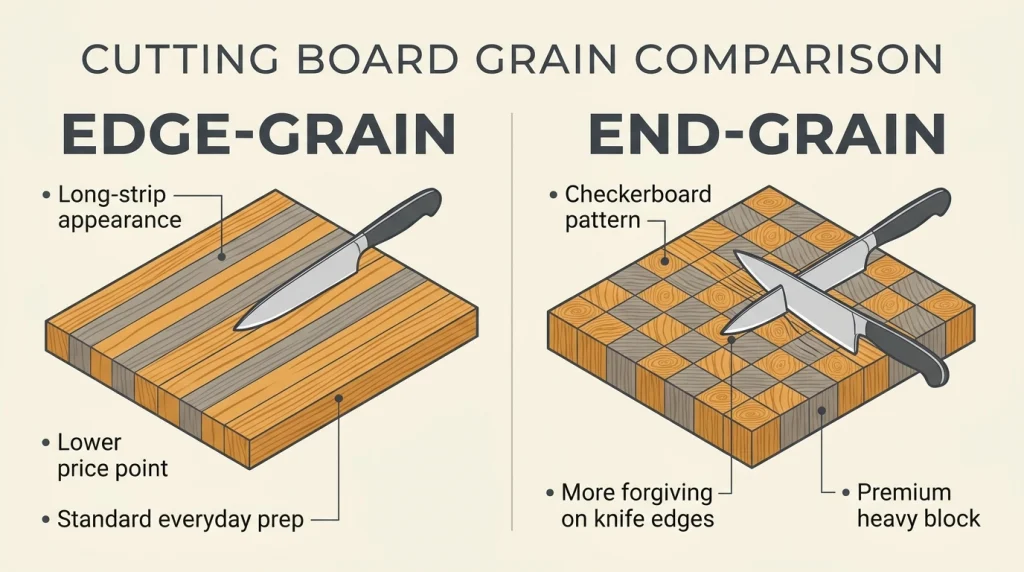
End-grain boards may provide a more forgiving surface during repeated chopping because the knife meets the exposed ends of wood fibers. Edge-grain boards generally cost less and offer excellent everyday functionality.
Both work well with properly maintained chef’s knives. Neither prevents a blade from becoming dull through normal use.
Edge-grain cutting boards
Edge-grain construction joins long pieces of wood with their side grain facing upward. This produces the familiar long-strip appearance found on many traditional wooden cutting boards.
Its advantages include:
- Generally lower prices than comparable end-grain models.
- A flat, practical surface for slicing and dicing.
- A relatively simple appearance that fits many kitchens.
- Availability in several sizes and wood species.
Edge-grain boards can show visible knife marks as they age. However, normal surface markings don’t automatically make a board unusable.
End-grain cutting boards
End-grain boards position the ends of wood fibers toward the cutting surface. Their checkerboard appearance makes this construction easy to recognize.
Benefits include:
- A surface that can be more forgiving during repeated chopping.
- Distinctive square or block-style grain patterns.
- Substantial construction in many butcher-block designs.
- A premium appearance for dedicated preparation areas.
The disadvantages are cost, bulk, and continued maintenance requirements. An end-grain block isn’t automatically necessary for home cooking.
Which construction would I choose?
I would choose maple edge grain for a general-purpose kitchen. It provides a sensible balance between cost, convenience, and cutting performance.
For frequent, intensive chopping, I would consider a large end-grain block. But I would prioritize proper knife technique over paying extra for a particular grain pattern.
If cutting performance matters most, our chef’s knife edge retention guide explains why blade steel and sharpening habits also affect long-term results.
What Are the Biggest Problems With Boos Cutting Boards?
The biggest disadvantages are high prices, ongoing maintenance, considerable weight, and the possibility of moisture damage. These drawbacks don’t make Boos boards poor products, but they affect whether they’re worth buying.
Regular oiling is necessary
Wood gradually loses moisture and can become dry. Boos recommends applying its Mystery Oil at least monthly, depending on use and household conditions.
That maintenance requirement may feel excessive for someone accustomed to plastic cutting boards. It should be part of the purchase decision.
Warping and cracking can happen
Wood responds to changes in moisture and humidity. Uneven drying can contribute to cupping, while excessive dryness may encourage splitting.
Even expensive boards need reasonable care. A premium price doesn’t make wood immune to its natural properties.
Large boards can be inconvenient
A thick butcher block provides a stable cutting platform. Unfortunately, its weight can make washing and moving it awkward.
Measure your sink and countertop before buying. A board that fits your preparation area but not your cleaning routine may become frustrating.
The warranty has limitations
The company’s published warranty generally covers manufacturing defects for one year under specified purchasing conditions. Normal wear, neglect, and misuse are excluded.
Review the John Boos warranty policy before treating the board as a lifetime investment. Long potential service life isn’t the same as lifetime warranty protection.
Are Boos Cutting Boards Better Than Cheap Wooden Boards?
Boos boards may outperform inexpensive alternatives in construction, thickness, and available configurations. However, a well-made lower-priced hardwood board can still deliver excellent cutting performance.
The brand name alone doesn’t guarantee a meaningful improvement.
| Feature | Premium Boos board | Budget wood board |
|---|---|---|
| Material | Specified hardwood species | Varies by manufacturer |
| Construction | Defined product series and designs | Quality varies widely |
| Thickness | Several substantial options | Often thinner, but not always |
| Knife suitability | Good for ordinary chef’s knife use | Can be equally suitable |
| Maintenance | Regular cleaning and oiling | Similar for unfinished hardwood |
| Upfront cost | Usually higher | Usually lower |
My preferred approach is to examine the actual board. Check the joint quality, surface finish, dimensions, and whether the board remains flat.
A solid lower-priced maple board can be a smarter purchase than an oversized premium block. The best option is the one you’ll maintain and use.
Are Boos Cutting Boards Safe for Preparing Food?
Yes, Boos wooden cutting boards can be safe for food preparation when cleaned, dried, and maintained correctly. Wood isn’t automatically unsafe, but it requires attention to hygiene and cross-contamination.
The USDA cutting board guidance recommends using separate boards for fresh produce and raw animal products whenever possible.
Should you cut raw meat on a Boos board?
You can use an appropriate wooden cutting board for raw meat if you clean and sanitize it properly. However, I prefer keeping a separate, easily cleaned board for raw poultry, meat, and seafood.
This approach helps avoid transferring harmful microorganisms to ready-to-eat foods. It also simplifies meal preparation.
When should you replace a wooden cutting board?
A board needs replacement when deep grooves, cracks, or damage make effective cleaning difficult. Superficial marks alone don’t necessarily mean the board has reached the end of its life.
The University of Illinois Extension cutting board recommendations explain why deeply damaged surfaces create food-safety concerns.
How Do You Maintain a Boos Cutting Board Properly?
 Save
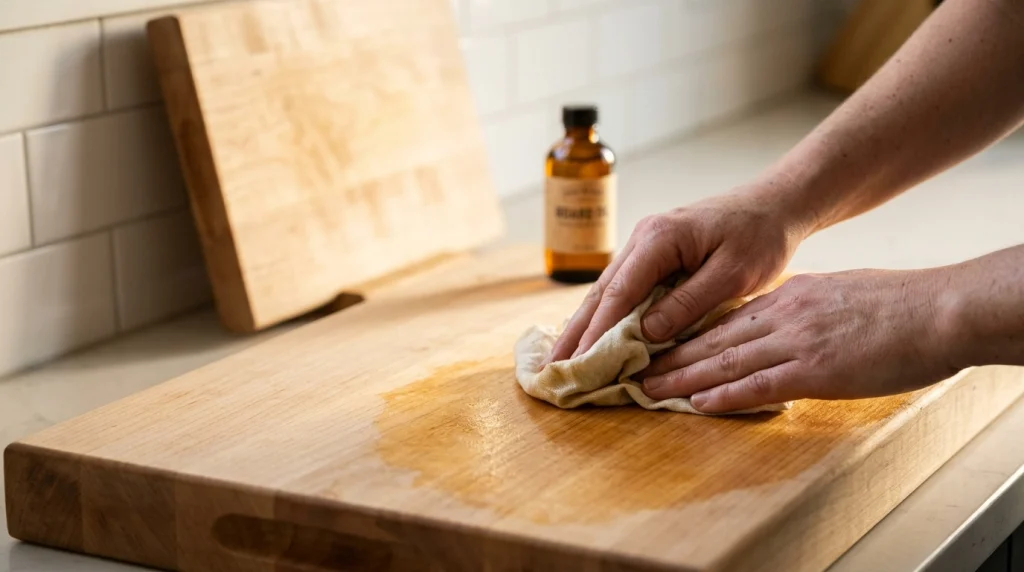
Wash the board by hand, dry it promptly, and apply food-grade mineral oil when the wood becomes dry. Avoid dishwashers, prolonged soaking, and unnecessary exposure to heat.
Proper maintenance isn’t complicated. Consistency matters more than expensive accessories.
Daily cleaning routine
- Remove food scraps: Clear the surface after food preparation.
- Wash with soap: Use warm water, dish soap, and a soft sponge.
- Rinse thoroughly: Remove remaining detergent and food residue.
- Dry immediately: Wipe away excess moisture using a clean towel.
- Allow airflow: Stand the board upright or position it so both sides can dry.
For situations requiring sanitizing, follow an appropriate food-safe procedure. The FDA’s kitchen cleaning guidance provides additional food-safety information.
How often should you oil a Boos board?
John Boos recommends oiling at least once per month, with additional applications when the wood looks dry. Frequent washing and dry indoor conditions may require more attention.
Use food-grade mineral oil or a product specifically designed for wooden cutting boards. Ordinary cooking oils can become rancid and should not replace appropriate board oil.
Simple oiling instructions
- Clean the cutting board and let it dry completely.
- Apply an even layer of food-grade mineral oil.
- Spread the oil across the top, bottom, and edges.
- Allow the oil to absorb according to product instructions.
- Wipe away excess oil before using the board again.
Boos also recommends its Board Cream as an optional protective treatment. Follow the manufacturer’s instructions when combining oil and cream.
Common maintenance mistakes
- Leaving the board submerged in water.
- Putting the wooden board inside a dishwasher.
- Allowing one side to stay wet against the countertop.
- Using unsuitable cooking oils as a long-term treatment.
- Ignoring cracks or deeply damaged cutting surfaces.
- Storing the board beside direct heat sources.
My practical advice is to make cleaning and drying part of the cooking routine. A premium board only becomes a long-term investment when its owner follows the necessary care instructions.
Which Size Boos Cutting Board Should You Buy?
Most home cooks benefit from a board around 18 by 12 inches, provided their countertop has enough room. Larger boards offer more workspace but create storage and cleaning challenges.
Consider these common size categories:
- Small, around 12 × 8 inches: Suitable for small ingredients and limited countertop space.
- Medium, around 18 × 12 inches: A versatile choice for everyday vegetable and meat preparation.
- Large, around 20 × 15 inches: Useful for larger meals and frequent ingredient preparation.
- Extra large, around 24 × 18 inches: Better suited to spacious kitchens and dedicated preparation areas.
I would measure the available counter before choosing a size. Leave enough room for bowls, ingredients, and safe knife movement.
Why does board size matter for knife control?
A crowded cutting board can make food preparation awkward. Ingredients pile up near the blade, reducing available working space.
A suitable surface gives the knife room to move naturally. This is particularly useful when working through large batches of vegetables.
For knife selection, our guide to the best chef knives for vegetables explains how blade shape influences common preparation tasks.
Who Should Buy a Boos Cutting Board?
Boos boards make the most sense for regular home cooks who appreciate hardwood construction and don’t mind handwashing. They are less compelling for occasional cooks who prefer inexpensive, low-maintenance equipment.
A Boos board is worth considering if you:
- Cook several times per week.
- Use a quality chef’s knife regularly.
- Want a substantial, stationary cutting surface.
- Prefer real hardwood over plastic.
- Have space for proper cleaning and storage.
- Are comfortable oiling a wooden board periodically.
You should probably skip it if you:
- Need a dishwasher-safe board.
- Have limited storage or counter space.
- Prefer lightweight equipment.
- Rarely prepare food from scratch.
- Don’t want to maintain wooden kitchen tools.
- Need to prioritize other kitchen purchases.
A cutting board shouldn’t make cooking harder. If its maintenance requirements don’t fit your lifestyle, a practical alternative may serve you better.
What Should You Check Before Buying a Boos Board?
Before purchasing, confirm the wood species, grain orientation, size, thickness, and seller. These details matter more than choosing the most expensive model.
I use the following buying checklist:
- Wood species: Choose maple for value or walnut for its darker appearance.
- Grain construction: Confirm whether the exact product is edge grain or end grain.
- Dimensions: Check countertop, sink, and storage clearance.
- Weight: Consider whether you’ll move the board frequently.
- Features: Decide whether you need finger grips, reversibility, or a juice groove.
- Seller: Prefer the manufacturer or an authorized retailer for warranty eligibility.
- Maintenance: Budget for suitable mineral oil and occasional board care.
For shoppers building a kitchen setup, I would choose the board and knife together. Our best value chef knife guide offers options that may leave more room in the budget for a suitable board.
My Recommended John Boos Cutting Boards
If you’re ready to buy, I would narrow the selection to three specific Boos models. Each suits a different cooking style and budget.
The ratings below are my editorial suitability scores based on published specifications and intended use. They aren’t customer review averages or results from hands-on product testing.
Affiliate disclosure: As an Amazon Associate, we may earn from qualifying purchases made through the links below, at no additional cost to you.
🏆 Best Overall Value
John Boos Maple R-Board Series
★★★★☆ 4.7/5
This 1.5-inch-thick maple board offers a substantial reversible cutting surface with recessed finger grips. I would choose it for everyday kitchen preparation because it balances practical dimensions, traditional hardwood construction, and price.
🪵 Best Premium Chopping Block
John Boos Maple CCB End-Grain Chopping Block
★★★★☆ 4.6/5
This 2.25-inch-thick maple chopping block uses end-grain construction and offers substantial chopping space. I would consider it for a dedicated preparation area where stability matters more than easy portability.
✨ Best for Premium Appearance
John Boos Walnut R-Board Series
★★★★☆ 4.4/5
This 1.5-inch-thick walnut board combines a dark hardwood appearance with a reversible cutting surface. I would recommend it to someone who values countertop presentation and accepts the premium over maple.
Frequently Asked Questions About Boos Cutting Boards
Do Boos cutting boards last a lifetime?
A Boos cutting board can last for many years with proper maintenance, but lifetime durability isn’t guaranteed. Its lifespan depends on moisture exposure, cleaning habits, usage, and construction quality.
Regular oiling and prompt drying help preserve the wood. Deep cracks, severe warping, or uncleanable damage may eventually require replacement.
Are Boos cutting boards better than bamboo?
Boos hardwood boards often provide a more traditional cutting feel than bamboo boards. Bamboo can be a practical, affordable alternative, but its hardness and construction vary across products.
Neither material is automatically better for every kitchen. Choose based on your knife, budget, desired board size, and willingness to perform maintenance.
Can you put a Boos cutting board in the dishwasher?
No. John Boos wooden cutting boards should be washed by hand rather than placed in a dishwasher.
Dishwasher heat, moisture, and detergent can damage hardwood boards and their glued joints. Wash the surface with dish soap and water, rinse, dry promptly, and allow adequate airflow.
Is a Boos cutting board good for Japanese knives?
Yes, a well-maintained Boos wooden board can work well with Japanese chef’s knives. Hardwood offers a more forgiving cutting surface than glass, granite, or ceramic.
End-grain construction may appeal to cooks using thin, delicate edges. However, good cutting technique and appropriate sharpening remain essential for knife care.
Why are John Boos cutting boards so expensive?
John Boos cutting boards cost more partly because of their hardwood materials, substantial construction, available sizes, and established manufacturing brand. Premium walnut and end-grain models require different materials and construction than entry-level boards.
The extra expense doesn’t guarantee better results for every cook. A moderately priced maple board often provides the most sensible value.
Final Verdict: Should You Buy a Boos Cutting Board?
Yes, I think Boos cutting boards are worth considering when you cook regularly and appreciate substantial hardwood equipment. The maple R-Board is my preferred starting point because it avoids much of the premium attached to specialty models.
The main trade-off is maintenance. You’re paying for a wooden work surface that requires careful cleaning, proper drying, and occasional oiling.
Before buying, consider these final priorities:
- Best practical value: Choose a maple edge-grain board.
- Best dedicated chopping setup: Consider a substantial end-grain block.
- Best decorative choice: Look at walnut models.
- Best low-maintenance choice: Consider a quality dishwasher-safe cutting board instead.
My advice is to buy the board that fits your cooking routine rather than the largest or most expensive model. A sensible board, a sharp chef’s knife, and good technique are a combination worth investing in.
Compare the available Boos models, check the exact product specifications, and choose the size you’ll enjoy using every day.

