Can You Use Walnut Wood for a Cutting Board? Benefits, Safety, and Care
Quick Answer
Yes, you can use walnut wood for a cutting board. American black walnut is a durable hardwood with a Janka hardness of approximately 1,010 pounds-force. It offers a comfortable cutting surface, attractive dark grain, and good everyday performance. Choose a properly constructed, food-safe board and maintain it with regular cleaning and conditioning. You can also learn how wooden cutting boards affect knife sharpness.
Why Walnut Works for Cutting Boards
- Balanced hardness: Walnut handles routine chopping while remaining relatively gentle on knife edges.
- Beautiful appearance: Its rich brown color gives the kitchen a warm, distinctive look.
- Practical durability: Quality walnut boards can last for years with proper maintenance.
- Food preparation: Clean, sound walnut boards are suitable for preparing vegetables, fruit, bread, and other foods.
- Simple maintenance: Hand washing, thorough drying, and occasional oiling help preserve the wood.
Important Precautions
- Avoid soaking: Prolonged water exposure may cause swelling, warping, or cracked joints.
- Check the finish: Use boards made with finishes and adhesives suitable for food contact.
- Replace damaged boards: Deep, hard-to-clean cracks and excessive grooves create sanitation concerns.
Walnut cutting boards stand out because they look beautiful and feel comfortable under a kitchen knife. However, their dark appearance isn’t the only reason to consider one.
When choosing a cutting board, I focus on three things: food safety, knife comfort, and long-term maintenance. This guide explains where walnut performs well, where it falls short, and how to choose a suitable board.
Is Walnut Wood Good for Cutting Boards?
Yes, walnut is a good cutting board material for everyday home cooking. It provides a useful balance between hardness, durability, and knife friendliness.
American black walnut, scientifically known as Juglans nigra, is a hardwood commonly used in furniture and kitchen products. Its attractive grain makes it especially popular for premium cutting boards.
What Makes Walnut Suitable for Cutting?
- Moderate hardness: Walnut resists ordinary cutting wear without feeling excessively hard beneath a knife.
- Comfortable cutting surface: Its wood fibers provide a more forgiving surface than glass or stone.
- Distinctive grain: Chocolate-brown heartwood creates an attractive natural appearance.
- Versatile construction: Walnut works in edge-grain and end-grain board designs.
- Repairable surface: Many superficial scratches can be reduced through careful sanding and conditioning.
Walnut isn’t completely scratchproof. Its lower hardness means heavy chopping may leave visible knife marks sooner than on hard maple.
For most home kitchens, that trade-off is reasonable. A slightly softer surface may feel more pleasant during everyday food preparation.
Is Walnut Wood Safe for Food Preparation?
Properly manufactured and maintained walnut cutting boards are generally suitable for household food preparation. However, food safety depends on more than the wood species.
The board must have sound construction, suitable finishing materials, and a surface that can be cleaned thoroughly. Any cutting board can become unsafe when heavily damaged or poorly maintained.
Can Walnut Cutting Boards Harbor Bacteria?
Walnut is porous, like other natural hardwoods. Food residue and moisture can enter scratches or damaged areas if cleaning is inadequate.
That doesn’t mean every walnut board is unsafe. Prompt washing, proper drying, and preventing cross-contamination are essential.
The USDA cutting board guidance emphasizes cleaning and replacing boards with excessively worn surfaces.
Can You Cut Raw Meat on Walnut?
Yes, a properly maintained walnut cutting board can be used for raw meat. However, keeping a separate board for raw meat is the safer and more practical kitchen routine.
Raw meat, poultry, and seafood can carry harmful microorganisms. These organisms may transfer to foods that won’t receive further cooking.
- Use a dedicated board for raw meat whenever possible.
- Keep fresh produce and ready-to-eat foods on a separate clean surface.
- Wash cutting boards thoroughly with hot, soapy water after contact with raw animal products.
- Follow appropriate food-contact sanitizing guidance when needed.
- Replace boards with deep cracks or grooves that cannot be cleaned reliably.
The FoodSafety.gov food safety recommendations explain why separating raw and ready-to-eat foods matters.
Does Walnut Wood Contain Harmful Chemicals?
Natural walnut wood isn’t the same as walnut wood dust, stain, or industrial wood treatments. These materials involve different exposure concerns.
A finished walnut board intended for food contact is generally appropriate for kitchen use. Avoid boards with unknown chemical treatments, unsuitable glues, or decorative coatings not intended for cutting surfaces.
People with known walnut wood sensitivities should seek individualized advice. Food allergy to walnuts and sensitivity to walnut wood or dust are not identical conditions.
How Hard Is Walnut Compared With Other Cutting Board Woods?
 Save
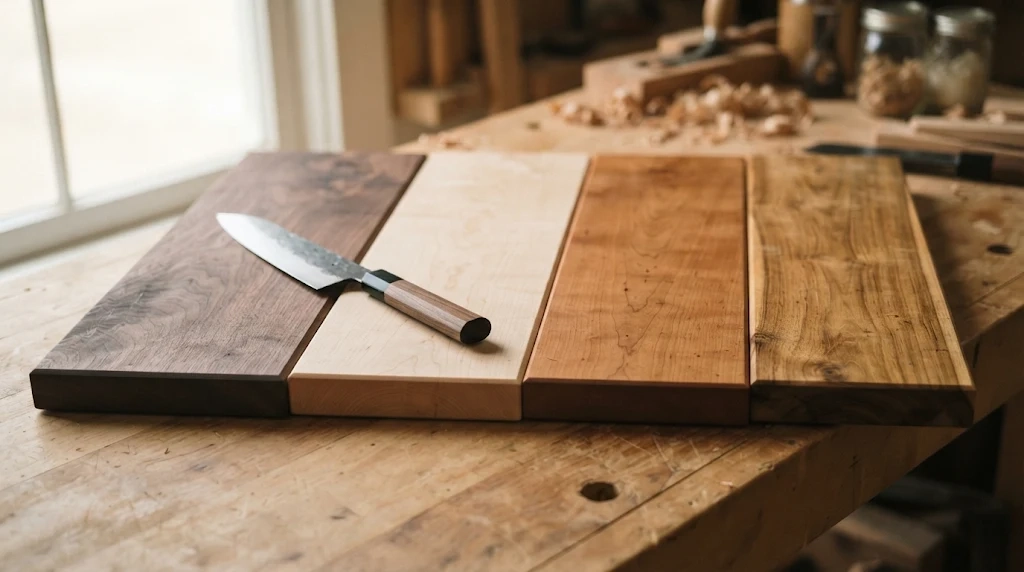
American black walnut has a Janka hardness of approximately 1,010 lbf. This makes it softer than hard maple but slightly harder than American black cherry.
The Janka test measures resistance to indentation, not direct knife sharpness retention. Still, it provides a helpful comparison of wood hardness.
Walnut vs. Maple vs. Cherry vs. Teak
| Wood | Janka Hardness | Main Advantage | Main Drawback |
|---|---|---|---|
| Black walnut | 1,010 lbf | Knife comfort and dark appearance | More prone to dents than maple |
| Hard maple | 1,450 lbf | Excellent wear resistance | Less forgiving than walnut |
| Black cherry | 950 lbf | Gentle cutting surface | Scratches relatively easily |
| Teak | 1,070 lbf | Natural moisture resistance | Silica may increase knife wear |
Note: Values are approximate and refer to commonly compared species. Hardness varies with species, growing conditions, and measurement methods.
The Wood Database cutting board guide provides more information about hardwood selection.
Is Walnut Better Than Maple for Cutting Boards?
Neither wood is universally better. Walnut suits cooks who value a warmer appearance and a relatively forgiving cutting surface.
Maple makes sense for people who prioritize indentation resistance and a fine, uniform grain. It is also a well-established choice for heavily used cutting blocks.
Is Walnut Better Than Bamboo?
Walnut and bamboo offer different cutting experiences. Walnut is natural hardwood, while bamboo boards usually consist of glued strips of processed grass.
Bamboo often provides an affordable, lightweight alternative. However, its hardness, adhesive quality, and knife friendliness vary between products.
What Are the Advantages and Disadvantages of Walnut Cutting Boards?
Walnut has several practical strengths, but it also requires routine attention. Understanding both sides helps prevent disappointment after buying.
Advantages of Walnut Cutting Boards
- Attractive appearance: Rich brown color complements many kitchen styles.
- Knife-friendly feel: The cutting surface is less rigid than glass, ceramic, or stone.
- Useful durability: Well-made boards withstand normal chopping and slicing.
- Versatility: Suitable for vegetables, fruit, bread, and everyday meal preparation.
- Repair potential: Light surface scratches can often be refinished.
- Serving presentation: Attractive enough for bread, cheese, and appetizer displays.
Disadvantages of Walnut Cutting Boards
- Higher cost: Quality walnut boards can be more expensive than common alternatives.
- Surface scratches: Walnut generally dents more easily than hard maple.
- Moisture sensitivity: Prolonged wet conditions can damage the wood.
- Hand maintenance: Most walnut boards require hand washing and periodic conditioning.
- Weight: Thick end-grain models can be cumbersome to move and clean.
My practical preference is to choose construction quality before appearance. A stable, properly joined board is more valuable than a decorative board with questionable finishing.
Is End-Grain or Edge-Grain Walnut Better?
 Save
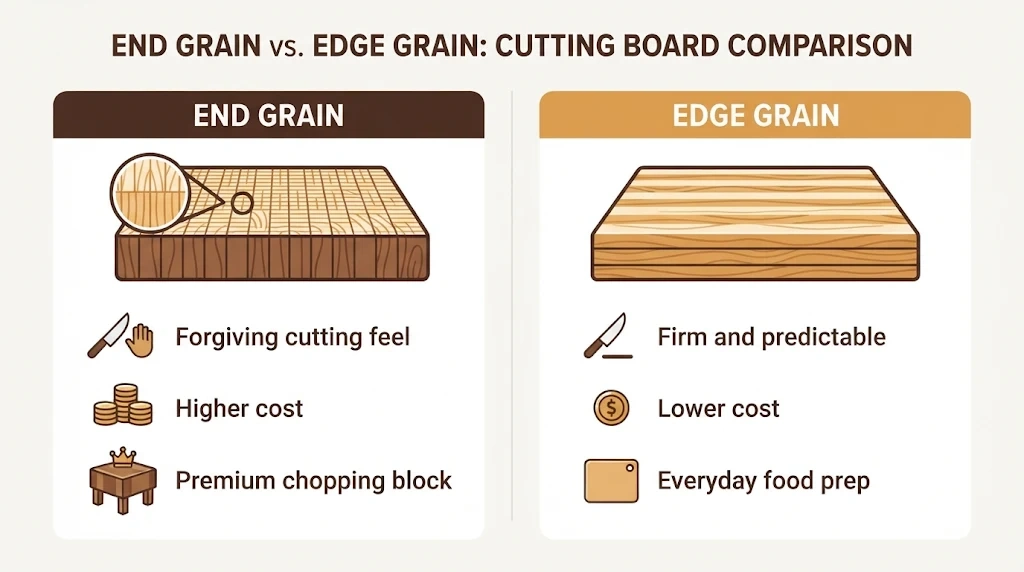
Both constructions can make excellent walnut cutting boards. The best choice depends on your budget, cutting habits, and preferred board thickness.
End-Grain Walnut Cutting Boards
End-grain construction exposes the ends of wood fibers on the cutting surface. The surface typically resembles a checkerboard or mosaic pattern.
This design can provide a forgiving cutting feel and an attractive appearance. However, manufacturing is more involved, and large end-grain boards often cost more.
Edge-Grain Walnut Cutting Boards
Edge-grain boards arrange longer strips of walnut with their edges facing upward. Their construction is usually simpler and more affordable.
An edge-grain model works well for slicing vegetables, chopping herbs, and general kitchen preparation. It is often my suggested starting point for a first walnut board.
| Feature | End Grain | Edge Grain |
|---|---|---|
| Construction | Fiber ends face upward | Long wood strips face upward |
| Cutting feel | Often more forgiving | Firm and predictable |
| Typical cost | Higher | Lower |
| Best use | Premium chopping station | Everyday food preparation |
How Do You Clean and Maintain a Walnut Cutting Board?
Clean your walnut cutting board promptly after each use and dry it thoroughly. Good maintenance helps limit staining, odors, surface damage, and moisture problems.
Step-by-Step Cleaning Instructions
- Remove food debris: Scrape away remaining food using a suitable non-damaging utensil.
- Wash gently: Use warm water, mild dish soap, and a clean sponge or soft brush.
- Rinse thoroughly: Remove detergent and visible residue.
- Dry immediately: Wipe with a clean towel.
- Allow airflow: Stand the board upright or on its edge to finish drying.
- Inspect regularly: Look for cracks, rough areas, or damaged joints.
Do not leave walnut submerged in a sink. Avoid running a laminated walnut board through the dishwasher unless its manufacturer specifically approves that method.
What Oil Should You Use on Walnut Cutting Boards?
 Save
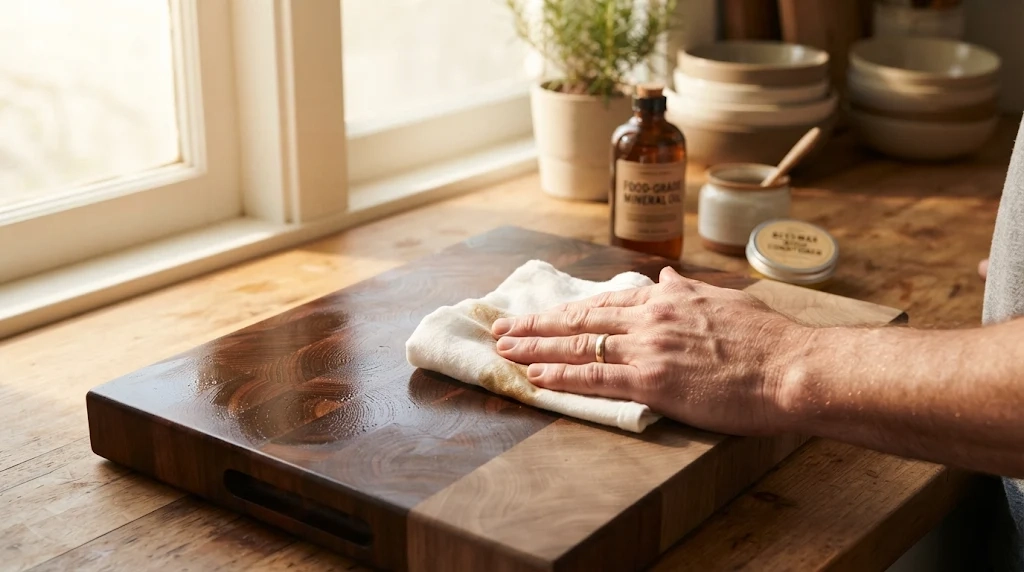
Food-grade mineral oil is a practical choice for conditioning walnut cutting boards. It helps limit rapid moisture absorption and keeps the wood from looking excessively dry.
Some cutting-board conditioners combine mineral oil with beeswax. Choose products intended for food-contact wooden surfaces and follow their instructions.
- Start with a clean, completely dry board.
- Apply a modest quantity of suitable conditioning oil.
- Spread it over both faces, edges, and exposed wooden areas.
- Allow the product to absorb according to its directions.
- Wipe away excess oil before using the board.
Avoid ordinary vegetable oils that may oxidize, develop odors, or become sticky. Conditioning oil does not sanitize the board or repair structural cracks.
How Often Should You Oil Walnut?
Once a month is a reasonable starting point for a frequently used board. However, the ideal schedule depends on washing frequency, climate, and manufacturer guidance.
Condition sooner if the board becomes noticeably dry or dull. Avoid excessive application that leaves an oily residue.
Can You Restore a Scratched Walnut Cutting Board?
Yes, light scratches and raised wood fibers can often be improved through careful sanding and reconditioning. Deep cracks, failed joints, and severe damage require a different approach.
Start by inspecting the board for structural problems. Never sand over loose joints or questionable damage merely to improve appearance.
Basic Walnut Board Restoration Steps
- Wash the board and allow it to dry completely.
- Inspect the surface for deep cracks and loose joints.
- Use suitable fine sandpaper to smooth minor damage.
- Remove all sanding dust carefully.
- Apply food-grade cutting board oil.
- Wipe away excess conditioner before reuse.
For grit selection, preparation, and detailed instructions, read my guide on how to refinish a cutting board.
Light knife marks are often cosmetic. There’s no reason to remove wood aggressively every time a board develops small scratches.
What Should You Look for When Buying a Walnut Cutting Board?
Prioritize sound construction, food-safe materials, useful dimensions, and manageable weight. Appearance should support your decision rather than determine it alone.
Five Important Buying Factors
- Wood identification: Confirm that the product uses genuine walnut rather than an unspecified dark-stained wood.
- Construction: Inspect edge-grain or end-grain design and the quality of glued joints.
- Dimensions: Choose enough working space for your usual ingredients and knives.
- Thickness: Thicker boards provide mass and stability but also add weight.
- Food-safe finish: Look for suitable oil treatments and clear manufacturer care instructions.
What Size Walnut Cutting Board Is Best?
A medium board around 17 by 12 inches provides useful space for many home kitchens. Larger boards may be better for preparing multiple ingredients or carving substantial portions.
Choose a size that fits both your countertop and sink. An oversized board becomes frustrating if cleaning and drying it are difficult.
Can You Make a Walnut Cutting Board Yourself?
Yes, walnut lumber can be used for a homemade cutting board. The material should be clean, appropriately dried, untreated, and free from problematic structural defects.
Use adhesives suitable for the intended food-contact application and follow their curing directions. Sand the board smoothly before applying an appropriate cutting-board finish.
Avoid reclaimed lumber with unknown chemical exposure. Decorative walnut slabs aren’t automatically suitable for cutting food.
Recommended Walnut Cutting Boards for Your Kitchen
If you’re ready to choose a walnut cutting board, these three real models cover different needs. I selected them for their published construction details and intended uses, not from personal hands-on testing.
Disclosure: Some shopping links may earn a commission at no additional cost to you. The ratings below are editorial suitability assessments, not customer-review averages or laboratory test scores.
🏆 Best Everyday Choice
John Boos Walnut R-Board Series
★★★★★ 4.7/5 editorial score
This American black walnut edge-grain board is 1.5 inches thick, reversible, and designed with recessed finger grips. I favor this style for a permanent prep station because its substantial construction offers a practical workspace.
💰 Best Lower-Cost Boos Option
John Boos Walnut 4-Cooks Series
★★★★☆ 4.5/5 editorial score
This 1-inch-thick edge-grain walnut board comes in multiple sizes and features beveled edges and finger grips. I’d consider it for smaller kitchens where easier handling matters more than extra thickness.
✨ Best Premium End-Grain Option
Sonder Los Angeles Alfred Walnut Cutting Board
★★★★★ 4.6/5 editorial score
The Alfred is a 17-by-13-inch walnut end-grain board with a distinctive premium design. I’d shortlist it for cooks who want both an attractive countertop centerpiece and a functional chopping surface.
Product note: Availability, seller listings, and prices may change. Check the exact wood species, dimensions, construction, and seller details before ordering.
Frequently Asked Questions About Walnut Cutting Boards
1. Can You Use Black Walnut for a Cutting Board?
Yes, American black walnut is a suitable hardwood for cutting boards when properly manufactured and maintained. Its approximately 1,010 lbf Janka hardness provides a useful balance between everyday durability and a forgiving cutting surface. Choose food-safe construction, clean it after use, and dry it thoroughly.
2. Does a Walnut Cutting Board Dull Knives?
All cutting surfaces contribute to knife wear over time, but walnut is generally considered knife-friendly. It is softer than hard maple and far less rigid than glass or stone. Cutting technique, knife steel, and surface condition also affect how quickly a blade loses sharpness.
3. Is Walnut Better Than Oak for Cutting Boards?
Walnut is often preferable to open-pored oak species for routine cutting surfaces. Its grain characteristics and moderate hardness make it a practical option for food preparation. However, oak species vary, and board quality, pore structure, construction, and maintenance matter more than a simple species label.
4. Can You Put a Walnut Cutting Board in the Dishwasher?
Most walnut cutting boards should be washed by hand rather than placed in a dishwasher. Prolonged moisture, heat, and repeated drying cycles may encourage warping or joint failure. Follow the manufacturer’s specific care directions, wash with mild detergent, and allow thorough airflow after cleaning.
5. How Long Does a Walnut Cutting Board Last?
A quality walnut cutting board can remain useful for many years with proper care. Its lifespan depends on construction, cleaning habits, use frequency, and surface damage. Replace it when deep cracks, loose joints, or hard-to-clean grooves compromise hygiene and normal maintenance cannot restore a safe surface.
Final Verdict: Is Walnut Worth Using for Cutting Boards?
Yes, walnut is an excellent option for home cooks who appreciate natural hardwood, attractive grain, and a comfortable cutting surface. Its moderate hardness makes it practical for ordinary chopping, slicing, and food preparation.
Walnut isn’t the most dent-resistant choice, and it requires thoughtful care. However, a well-built board can provide lasting everyday value when maintained properly.
For a first purchase, I recommend considering a medium-sized edge-grain walnut board. Choose end-grain construction when you want a thicker, more decorative chopping station and accept the higher cost.
Ready to upgrade your kitchen? Compare the recommended walnut boards, choose a size that suits your workspace, and build a simple washing and conditioning routine from day one.

