Are Stainless Steel Cutting Boards Good and Safe?
Quick Answer
Yes, stainless steel cutting boards can be safe for food preparation when made from suitable food-contact materials and cleaned properly. Their nonporous surfaces resist moisture absorption and are easy to wash. However, they can dull knives faster than wood or plastic, create noise, and slide during cutting. For most kitchens, a knife-friendly cutting board remains a better everyday chopping surface.
Key Benefits and Drawbacks
- Food-contact safety: Properly manufactured food-grade stainless steel is suitable for kitchen use.
- Easy cleaning: Its nonporous surface does not absorb meat juices or cooking liquids.
- Knife wear: Repeated chopping against rigid steel can accelerate blade dulling.
- Long-term durability: Quality stainless steel resists corrosion and requires no oiling.
- Practical limitations: Noise, slippery surfaces, and poor grip can make chopping less comfortable.
My Recommendation
- Best for hygiene-focused prep: Use stainless steel for food staging, dough preparation, and tasks requiring easy cleanup.
- Best for daily chopping: Choose wood, suitable plastic, or rubber to protect knife edges.
Stainless steel cutting boards look modern, durable, and exceptionally easy to clean. But a surface that looks hygienic isn’t automatically the best place to chop vegetables or meat.
I’m Michael, and I believe cutting board safety involves more than choosing a nonporous material. Let’s examine food hygiene, knife damage, metal particles, cleaning, and the practical trade-offs before buying one.
What Is a Stainless Steel Cutting Board?
A stainless steel cutting board is a flat food-preparation surface manufactured from stainless steel rather than wood, plastic, or bamboo. Its rigid, nonporous construction makes it resistant to liquid absorption and relatively straightforward to clean.
Many models use a smooth metal sheet with rounded corners. Some include silicone feet, raised edges, or a separate nonslip base.
What Is Food-Grade Stainless Steel?
Food-grade stainless steel refers to corrosion-resistant steel suitable for its intended food-contact application. Common grades include 304 and 316 stainless steel.
- 304 stainless steel: A common chromium-nickel alloy used in kitchen equipment and food-processing applications.
- 316 stainless steel: Contains molybdenum, providing greater corrosion resistance in demanding environments.
- Unknown steel grades: Require additional caution because material quality and corrosion resistance may be unclear.
Neither 304 nor 316 automatically guarantees that a finished product is safe. Surface finish, coatings, manufacturing quality, and intended use also matter.
When shopping, I would prioritize a manufacturer that clearly identifies the material and provides appropriate food-contact information.
Are Stainless Steel Cutting Boards Safe for Food?
Yes, properly manufactured stainless steel cutting boards can provide a food-safe preparation surface. However, cleanliness, surface condition, and cross-contamination prevention determine how safely you can use them.
Stainless steel has an advantage because its nonporous structure does not absorb food juices like a porous material can. That doesn’t mean bacteria cannot survive on the surface.
Can Bacteria Grow on Stainless Steel Cutting Boards?
Bacteria can remain on stainless steel when food residue or moisture is left behind. A smooth metal surface is easier to inspect, but it is not naturally self-sanitizing.
The USDA Food Safety and Inspection Service emphasizes cleaning cutting boards and preventing cross-contamination. Proper sanitation matters regardless of the material.
- Wash the board after preparing each food item.
- Remove visible food particles before sanitizing.
- Keep raw animal products separate from ready-to-eat foods.
- Allow the board to dry completely before storage.
- Replace boards with damage that prevents effective cleaning.
Are Stainless Steel Cutting Boards Safe for Raw Meat?
Stainless steel can be suitable for handling raw meat because it doesn’t absorb meat juices into its surface. Still, using it doesn’t eliminate the risk of transferring bacteria to other foods.
The FDA’s food safety guidance recommends separating raw meat and seafood from ready-to-eat produce. Using dedicated cutting boards makes that separation easier.
I prefer treating the raw-meat preparation area as its own workspace. After handling meat, the board, knife, hands, and nearby surfaces all need attention.
What Are the Pros and Cons of Stainless Steel Cutting Boards?
 Save
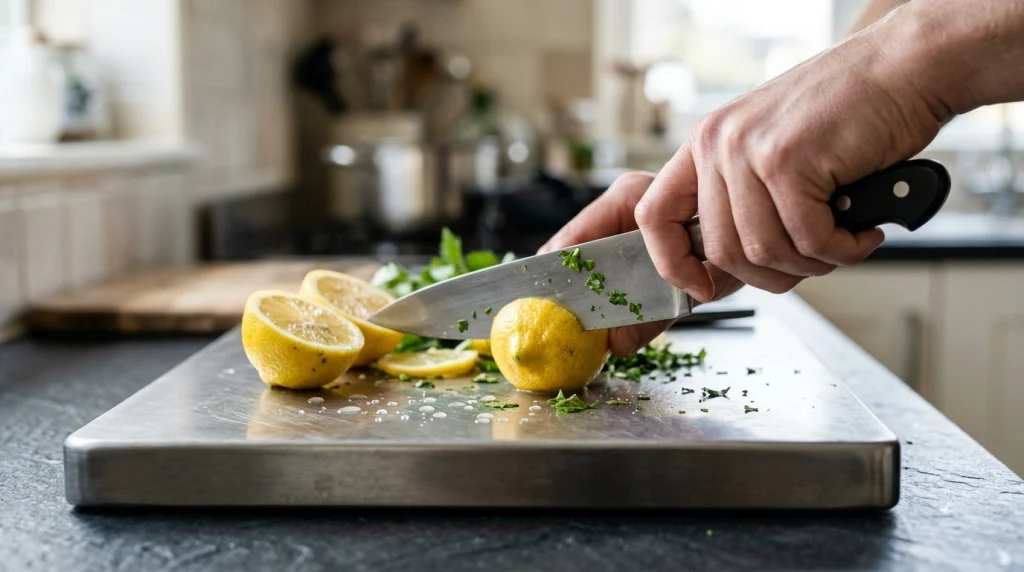
The biggest strengths of stainless steel are moisture resistance, easy cleaning, and durability. Its biggest weakness is the rigid contact surface beneath a knife edge.
Advantages of Stainless Steel Cutting Boards
- Nonporous construction: Food liquids remain on the surface rather than soaking into the material.
- Simple maintenance: There’s no need for mineral oil, waxing, or wood conditioning.
- Odor resistance: Thoroughly cleaned stainless steel is unlikely to retain persistent food odors.
- Corrosion resistance: Quality grades tolerate normal kitchen washing and food preparation.
- Useful versatility: The flat surface can work for dough preparation, food staging, and serving.
- No plastic substrate: A solid stainless steel board avoids plastic-board abrasion as a source of plastic particles.
Disadvantages of Stainless Steel Cutting Boards
- Faster knife dulling: Rigid steel provides little cushioning during repeated cutting.
- Loud chopping: Metal-on-metal contact produces more noise than chopping on wood.
- Slippery surfaces: Smooth boards may move unless properly stabilized.
- Possible scratches: Knife contact can leave surface marks that require inspection.
- Less comfortable cutting: The hard surface may feel unforgiving during extended preparation.
- Variable construction: Thin products may flex, while poorly finished edges can create handling hazards.
The biggest mistake is evaluating a board solely by how easy it is to wash. Knife control and edge retention matter every time you cook.
Do Stainless Steel Cutting Boards Dull Knives?
Yes, stainless steel cutting boards generally dull knives faster than suitable wood, rubber, or plastic surfaces. Their rigid construction does not cushion the cutting edge effectively.
Every chopping motion forces a thin knife edge against the board. Repeated contact can deform or wear that edge, even when the board is softer than the knife itself.
Why Does Metal Damage Knife Edges?
A knife’s cutting edge is extremely thin. It can gradually roll, wear down, or chip when exposed to repeated impact.
Wood and suitable plastic provide more cushioning than metal. This reduces the concentrated stress placed on the edge.
- Western chef’s knives: May tolerate occasional steel-board use but still experience increased wear.
- Thin Japanese knives: Their delicate edges may be more vulnerable to damage from hard contact.
- Ceramic knives: Brittle edges make rigid metal surfaces a poor match.
- Expensive precision knives: Deserve a more forgiving cutting surface for routine work.
If your knife already struggles with tomatoes or onions, a hard board may worsen the problem. See my guide explaining why a chef’s knife becomes dull.
Can You Protect Your Knife While Using Steel?
You can reduce unnecessary impacts with controlled slicing, but no cutting technique makes steel as forgiving as wood. For frequent chopping, switching surfaces is the better solution.
- Use gentle slicing motions instead of forceful chopping.
- Avoid twisting the blade while its edge contacts the board.
- Move chopped food with a bench scraper rather than the knife edge.
- Use a stable, nonslip board setup.
- Inspect the knife edge and sharpen it when necessary.
Stainless Steel vs. Wood vs. Plastic Cutting Boards
 Save
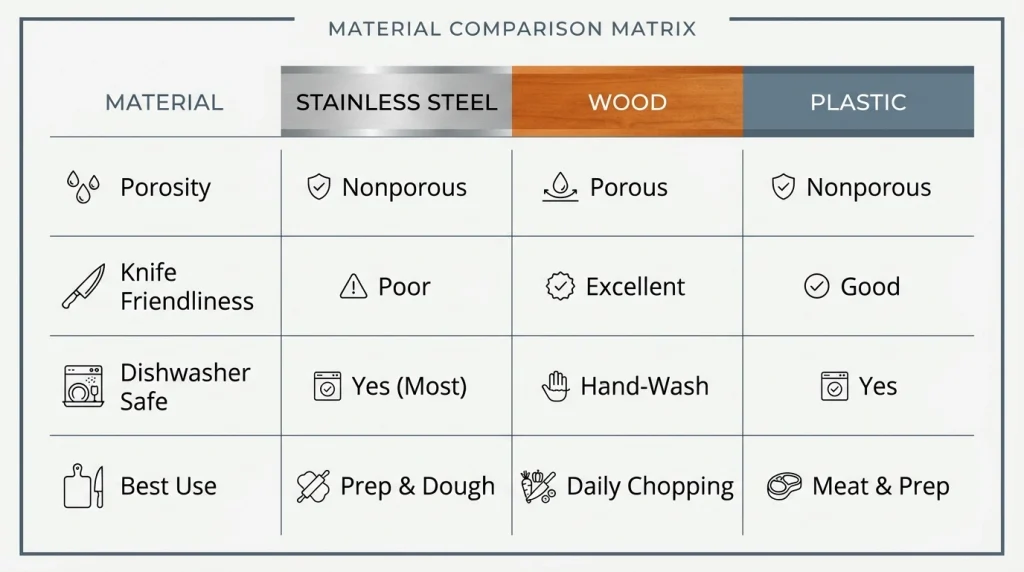
No cutting board material wins every category. Stainless steel favors easy cleanup, while wood and suitable plastic typically provide more forgiving cutting surfaces.
Here is a practical comparison based on material characteristics and normal kitchen maintenance.
| Feature | Stainless Steel | Wood | Plastic |
|---|---|---|---|
| Porosity | Nonporous | Porous | Nonporous material |
| Knife friendliness | Poor | Generally excellent | Generally good |
| Cleaning | Easy when smooth | Requires careful drying | Easy until heavily scored |
| Dishwasher suitability | Many solid models | Usually hand-wash preferred | Many models |
| Maintenance | Wash and dry | Wash, dry, and condition | Wash and inspect grooves |
| Chopping noise | High | Low | Low to moderate |
| Best use | Prep trays and light tasks | Everyday chopping | Everyday and raw-meat prep |
For someone who chops vegetables daily, I would generally choose wood or a suitable plastic board. Stainless steel becomes more attractive when easy cleaning and non-cutting prep tasks matter most.
Can Stainless Steel Cutting Boards Release Metal Particles?
Repeated metal-on-metal contact can cause microscopic surface wear, although particle release varies with the materials and cutting conditions. The presence or amount of particles should not be assumed without testing a specific product.
A board with visible gouges, peeling coatings, or unexplained surface damage deserves closer inspection. I would stop using a damaged product until its condition and food-contact suitability are clear.
Are Stainless Steel Boards Better Than Plastic for Microplastics?
A solid stainless steel board does not produce plastic particles from its cutting surface. Plastic boards, by contrast, can shed particles through cutting abrasion.
However, avoiding plastic particles does not automatically prove that metal is the safest overall choice. Knife wear, board stability, sanitation, and any metallic debris also deserve consideration.
The health implications of plastic particles from food preparation are still being studied. It is important not to turn an exposure concern into an unsupported claim of guaranteed harm.
Do Stainless Steel Cutting Boards Contain Nickel?
Many stainless steel grades, including common 304 and 316 alloys, contain nickel. The amount that may migrate into food depends on the alloy, surface condition, food chemistry, and contact conditions.
People with medically diagnosed nickel sensitivity or specific dietary restrictions should seek individualized guidance. A product marketed as stainless steel should not automatically be considered nickel-free.
How Do You Clean and Sanitize a Stainless Steel Cutting Board?
Wash the board with hot, soapy water after use, rinse thoroughly, and dry it completely. Sanitize when appropriate, particularly after contact with raw poultry, meat, or seafood.
The American Cleaning Institute’s cutting board guidance explains why cleaning and sanitizing are separate steps.
Step-by-Step Cleaning Instructions
- Remove debris: Scrape leftover food into the trash without using a sharp blade edge.
- Wash thoroughly: Use warm or hot water, dish soap, and a soft sponge.
- Clean edges: Pay attention to handles, feet, corners, and surface seams.
- Rinse: Remove all detergent and loosened food residue.
- Sanitize when needed: Follow a suitable food-contact sanitizer’s label directions.
- Dry completely: Use a clean towel or allow the board to air-dry.
- Inspect: Check for corrosion, rough edges, loose parts, and problematic scratches.
For home cutting boards, USDA guidance describes a sanitizing solution containing one tablespoon of unscented liquid chlorine bleach per gallon of water. Follow appropriate contact-time instructions, rinse as directed, and never mix bleach with other cleaners.
For stainless steel, avoid prolonged exposure to chlorine-based solutions because they can promote corrosion. Use the sanitizer according to its label and rinse promptly when instructed.
Can You Put Stainless Steel Cutting Boards in the Dishwasher?
Many solid stainless steel boards are dishwasher-compatible, but manufacturer instructions should always come first. Silicone feet, adhesives, coatings, or attached components may have different cleaning limits.
A dishwasher can simplify cleaning when the entire product is rated for it. Hand-washing remains a dependable alternative.
How Can You Use a Stainless Steel Cutting Board Safely?
A stable cutting surface and controlled knife movement matter more than a board’s appearance. Metal boards require particular attention because their smooth undersides may slide.
Set Up a Stable Cutting Station
- Place the board on a clean, level countertop.
- Use the manufacturer’s nonslip feet or a suitable nonslip mat.
- Test whether the board moves before starting.
- Keep the knife handle and your hands dry.
- Stabilize round foods by creating a flat cutting side.
- Use controlled movements and avoid excessive downward force.
A damp towel beneath a board may improve grip, provided the setup remains stable. If the board still moves, stop and correct the problem.
For better blade control, review my guide on how to cut with a chef’s knife.
Which Tasks Work Best on Stainless Steel?
 Save
- Dough preparation: A smooth, clean metal surface can work for handling and portioning dough.
- Food staging: Arrange ingredients before cooking without exposing them to a porous surface.
- Serving: Use an appropriately finished food-contact board for presentation.
- Light preparation: Handle ingredients without repeated forceful knife contact.
- Raw ingredient organization: Keep meat preparations separate from ready-to-eat foods.
For chopping herbs, finely slicing onions, or preparing large quantities of vegetables, I would switch to wood or rubber. The additional cushioning makes repeated cutting more comfortable.
How Do You Choose a Good Stainless Steel Cutting Board?
Choose a board with documented food-contact suitability, smooth finishing, and a stable design. Do not rely on marketing terms like premium, antibacterial, or surgical-grade without supporting specifications.
What Features Should You Look For?
- Identified material: Look for a clearly stated stainless steel grade, commonly 304 or 316.
- Rounded edges: Avoid sharp, unfinished sheet-metal corners.
- Nonslip construction: Choose stable feet or a compatible base.
- Practical dimensions: Around 12 × 18 inches offers generous workspace for many kitchens.
- Easy-clean design: Avoid gaps that collect food or moisture.
- Care instructions: Confirm cleaning and dishwasher compatibility before buying.
- Reliable product details: Prefer manufacturers that provide material and warranty information.
Is 304 or 316 Stainless Steel Better?
304 stainless steel is generally suitable for many normal kitchen applications when the product is properly manufactured. Grade 316 offers improved corrosion resistance in more demanding environments.
However, a higher steel grade doesn’t solve the fundamental problem of knife wear. I would prioritize safe construction and stability over paying extra for an unnecessary specification.
Are Stainless Steel Cutting Boards Worth Buying in 2026?
They can be worth buying as supplementary kitchen surfaces, especially if you value easy cleaning and moisture resistance. I would not recommend replacing every traditional chopping board with stainless steel.
For regular meal preparation, a combination of different board materials offers better flexibility.
- Choose stainless steel: If you need a durable food-preparation surface for staging, dough, or occasional light cutting.
- Choose wood: If protecting your knife edges and comfortable chopping are priorities.
- Choose plastic: If you want an affordable, easy-clean board for frequent cutting and raw-meat separation.
- Choose rubber: If you prefer a forgiving cutting surface and are comfortable with a higher purchase price.
My preferred arrangement is simple: reserve a dedicated, easy-clean board for raw proteins and another for produce. Pick a knife-friendly material for the cutting tasks you perform most.
Recommended Cutting Boards and Alternatives
If you’re deciding whether to buy stainless steel, I recommend comparing it against proven knife-friendly options. These three products cover different everyday cooking priorities.
The ratings below are editorial suitability assessments, not verified customer-review averages or claims of hands-on testing.
🏆 Best for everyday chopping
John Boos Maple Wood Cutting Board
★★★★☆ 4.7/5
John Boos offers several solid maple cutting board designs with durable wooden surfaces. I favor maple for regular knife work because it provides a more forgiving surface than stainless steel, although it needs proper drying and conditioning.
💰 Best easy-clean option
OXO Good Grips Utility Cutting Board
★★★★☆ 4.6/5
This nonporous plastic board offers a practical cutting surface with grip-focused design features. I would choose it for routine food prep when easy washing and reasonable knife protection matter more than a metal finish.
🍳 Best lightweight alternative
Epicurean Kitchen Series Cutting Board
★★★★☆ 4.4/5
The Kitchen Series uses a wood-fiber composite surface and a thin, lightweight design. I recommend considering it when easy handling and low-maintenance cleaning are priorities, although it feels firmer than traditional wood.
Affiliate disclosure: As an Amazon Associate, qualifying purchases through eligible affiliate links may earn a commission at no additional cost to you.
Frequently Asked Questions
Are stainless steel cutting boards healthier than plastic?
Not necessarily. Stainless steel avoids plastic particles caused by cutting-board abrasion, but that alone doesn’t establish superior overall health outcomes. Both materials can provide hygienic food-preparation surfaces when properly maintained, sanitized, and replaced if damaged. Knife safety and cross-contamination prevention remain important.
Do stainless steel cutting boards rust?
Quality stainless steel resists rust, but it is not completely corrosion-proof. Prolonged exposure to salt, chlorine cleaners, moisture, or damaging chemicals can produce corrosion under unfavorable conditions. Wash and dry the board after use, and inspect suspicious discoloration or pitting.
Can you cut vegetables on stainless steel?
Yes, you can cut vegetables on a suitable stainless steel cutting board. However, frequent chopping may dull your knife more quickly than using wood or plastic. Smooth metal can also feel slippery, so stabilize the board and use controlled cutting techniques.
Are titanium cutting boards safer than stainless steel?
Neither material is automatically safer. Food-contact suitability depends on the actual alloy, surface treatment, construction, and cleaning practices. Both are relatively rigid materials that can be harder on knife edges than wood or plastic. Verify material claims before purchasing.
What is the safest cutting board for raw chicken?
A clean, dedicated, food-contact-safe cutting board that can be thoroughly washed and sanitized is a practical choice. Dishwasher-safe plastic is popular, while properly manufactured stainless steel can also work. Keep raw chicken preparation separate from produce and ready-to-eat foods.
Final Verdict: Are Stainless Steel Cutting Boards Good and Safe?
Stainless steel cutting boards can be safe, durable, and easy to clean, but they are not the best everyday chopping surface for most home cooks. Their rigid construction can accelerate knife wear, and a smooth board requires careful stabilization.
I would consider stainless steel a supplementary prep surface rather than a complete replacement for wood or plastic. The best cutting board is one that stays clean, remains stable, and suits your knives.
Before buying, check the steel grade, food-contact suitability, edge finishing, and care instructions. Most importantly, choose a surface that makes your everyday cooking safer and more comfortable.

