Why Is My Chef Knife Dull? 7 Causes and Fixes
Quick Answer
Your chef knife is usually dull because its cutting edge has worn down, rolled over, or become damaged through use. Hard cutting boards, scraping with the sharp edge, improper sharpening, and poor storage can accelerate the problem. If honing does not restore its cutting ability, sharpen the blade with a suitable abrasive tool while maintaining the correct angle.
A chef knife becomes dull when its thin cutting edge loses the geometry needed to slice cleanly through food. The cause may be ordinary wear, damage from a hard surface, or a sharpening technique that never properly restored the edge.
The best fix depends on what happened. A slightly rolled edge may respond to honing, while a rounded, worn, or chipped edge generally needs sharpening or more extensive repair.
1. Your Chef Knife Has Naturally Worn Down
 Save
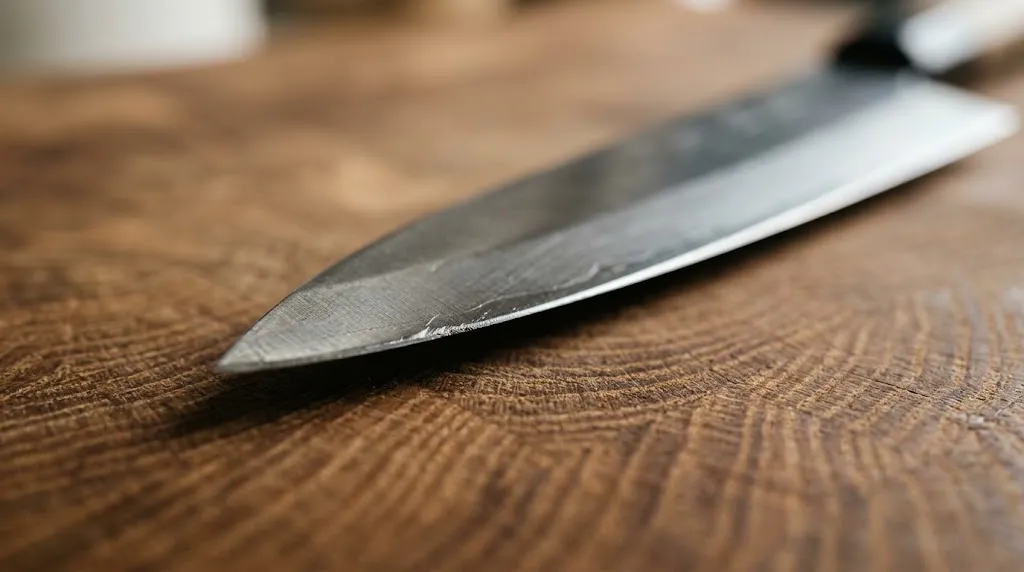
Normal use is one of the most common reasons a chef knife becomes dull. Every cut creates contact between the blade and food, and the cutting board eventually wears down the extremely thin edge.
Even a well-made knife loses sharpness over time. The rate depends on the steel, blade geometry, foods you prepare, cutting technique, and frequency of use.
How to recognize it: The knife gradually becomes less effective rather than suddenly developing a noticeable chip. It may struggle with tomato skin, require more pressure to slice an onion, or tear through delicate ingredients.
What to do: If the edge is only slightly out of alignment, try appropriate honing. If the knife still struggles, sharpen it to create a fresh cutting edge. A knife that receives heavy daily use will generally need attention more often than one used occasionally.
2. You Are Using a Cutting Board That Is Too Hard
A hard cutting surface can damage a knife’s edge surprisingly quickly. Glass, ceramic, stone, and metal surfaces are particularly unsuitable because the blade repeatedly strikes a material that does not cushion the impact.
Bamboo can also be relatively hard on an edge, depending on its construction. A suitable wood or plastic cutting board is generally a better choice for everyday chef knife use.
How to recognize it: The knife loses sharpness despite being used mainly for routine chopping. You may also notice small chips if the blade repeatedly strikes a very hard surface or has a delicate edge.
What to do: Switch to a stable cutting board made from edge-grain or end-grain wood, or suitable food-grade plastic. The board should not slide around while you cut, and it should be maintained according to food-safety guidance.
For more guidance on choosing a suitable board and using a knife safely, see the University of Nebraska–Lincoln’s guide to using and caring for a chef’s knife.
3. You Scrape Food With the Cutting Edge
Dragging a sharp edge sideways across a cutting board can roll, abrade, or damage the thin edge. This habit often occurs when transferring chopped onions, herbs, or vegetables from the board into a pan.
The problem is the sideways pressure, not simply the fact that the knife touches the board. A controlled chopping motion is different from pushing the blade laterally across the surface.
How to recognize it: Your knife becomes noticeably less effective after repeated chopping and food transfer, even when the cutting board itself is suitable.
What to do: Turn the knife over and use its spine to gather chopped ingredients. Alternatively, use a bench scraper to move food without dragging the sharp edge sideways.
This small change reduces unnecessary edge wear and helps the knife retain its sharpness between sharpening sessions.
4. You Are Confusing Honing With Sharpening
Honing and sharpening perform different jobs. Honing helps realign a slightly rolled edge, while sharpening removes a small amount of steel to create a new cutting edge.
A honing steel can improve the performance of a knife whose edge has shifted slightly during use. However, it cannot reliably restore a heavily worn or rounded edge simply by repeated passes.
- Hone the knife when it has lost some bite but the edge is still in reasonably good condition.
- Sharpen the knife when honing no longer improves cutting performance.
- Seek more extensive repair when the edge has significant chips, deep damage, or an uneven profile.
The right maintenance schedule depends on how often you cook and how quickly the edge deteriorates. The Victorinox guide to sharpening and honing explains the difference and describes common maintenance methods.
5. Your Sharpening Technique Is Not Reaching the Edge
If your chef knife remains dull after sharpening, the abrasive may not be reaching the very edge of the blade. Holding the knife at an inconsistent angle can polish the sides of the bevel without bringing them together at a sharp apex.
The apex is the narrow meeting point of the two sides of a conventional double-bevel cutting edge. Unless sharpening restores this point, the blade can look polished while still performing poorly.
Common sharpening mistakes
- Changing the angle during each stroke: This can round over the edge instead of forming a consistent bevel.
- Using an unsuitable angle: The correct angle depends on the knife’s design and the manufacturer’s recommendations.
- Moving to a finer stone too soon: A fine abrasive may polish an edge that has not been properly established.
- Missing the heel or curved tip: Uneven coverage can leave sections of the blade dull.
- Leaving a burr: A thin flap of metal can remain attached after sharpening, making the edge seem sharp temporarily before it folds over.
What to do: Return to a suitable sharpening abrasive, maintain a consistent angle, and work along the entire cutting edge. Refine the edge with lighter alternating strokes and remove the remaining burr rather than assuming that more polishing automatically means more sharpness.
For a more detailed procedure, follow this guide to sharpening a chef knife with a whetstone.
6. You Are Applying Too Much Force or Using the Wrong Tool
More pressure does not automatically produce a sharper knife. Excessive force can make it harder to maintain a consistent angle, create an uneven bevel, and make burr removal more difficult.
The wrong sharpening tool can also be a problem. A preset-angle pull-through sharpener may not suit every blade, while a coarse abrasive can remove more metal than necessary during routine maintenance.
What to do: Use controlled pressure and reduce it as you refine the edge. Match the sharpening method to the knife’s construction, and follow the manufacturer’s guidance rather than assuming every chef knife requires the same angle or abrasive.
If your technique is the main concern, read how much pressure to use when sharpening a chef knife. It explains why consistent contact matters more than forceful strokes.
7. Poor Storage or Dishwasher Use Is Damaging the Edge
 Save
A knife can lose sharpness while it is not being used for cutting. When blades move against other utensils in a drawer, their edges may become nicked or worn. Dishwasher racks and contact with other items can also expose the blade to damaging impacts.
Moisture and detergent may create additional problems, including corrosion or handle damage, depending on the knife’s materials. Stainless steel resists corrosion, but it is not immune to all forms of damage.
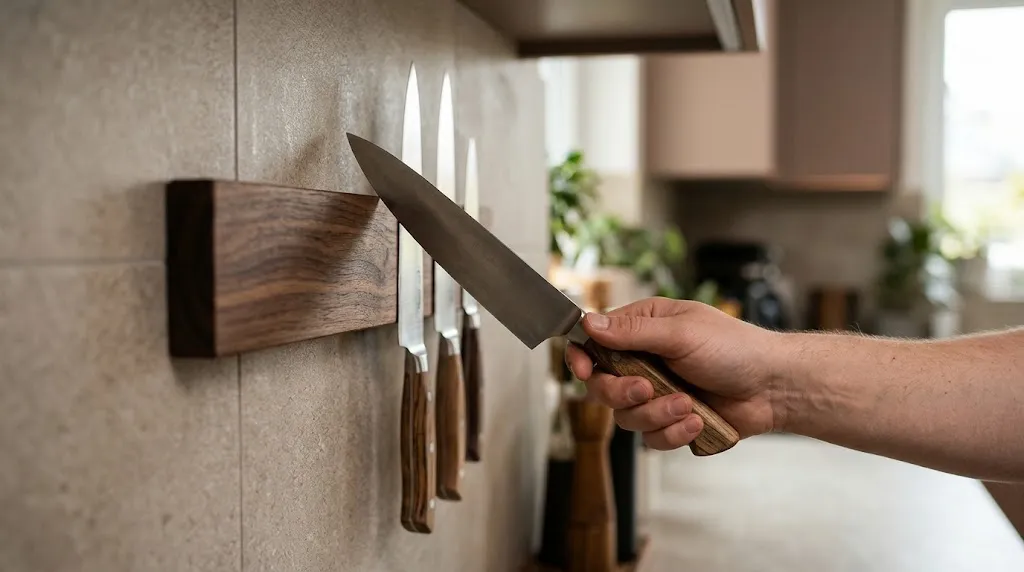
What to do: Hand-wash the knife when the manufacturer recommends it, dry it promptly, and store it in a knife block, protective sheath, or suitable magnetic holder. Keep the cutting edge from contacting other utensils or hard surfaces.
If the knife has developed visible chips or a damaged edge, avoid trying to remove substantial amounts of steel without the right tools and technique. Significant damage may be better handled by a qualified knife sharpener.
How Can You Tell What Is Making Your Knife Dull?
Start with the symptoms rather than sharpening immediately. The way your knife behaves can help you decide whether it needs maintenance, a new edge, or repair.
| What you notice | Likely explanation | Best next step |
|---|---|---|
| Gradual loss of cutting ability | Normal edge wear | Hone, then sharpen if needed |
| Dull immediately after sharpening | Inconsistent angle, incomplete sharpening, or leftover burr | Check technique and edge formation |
| Small chips or sudden roughness | Impact or unsuitable cutting conditions | Inspect and repair the damaged edge |
| Sharp briefly, then dull again | Weak burr, unstable edge, or continued edge damage | Improve deburring and check cutting habits |
| Only certain sections fail to cut | Uneven sharpening or localized damage | Inspect the heel, middle, and tip |
These symptoms are clues, not definitive diagnoses. Several causes can occur together, such as an edge that was sharpened inconsistently and is then worn down by a hard board.
What Should You Do First to Restore Sharpness?
Follow this order to avoid unnecessary sharpening and metal removal.
- Check the cutting surface. Make sure the knife has not been used on glass, stone, metal, or another unsuitable hard surface.
- Inspect the blade visually. Look for obvious chips, bends, rust, or uneven areas without running your fingers along the edge.
- Test cutting performance carefully. A ripe tomato or a sheet of paper can help reveal poor cutting ability. Keep your fingers clear and perform tests on a stable surface.
- Try appropriate honing. If the edge is only slightly rolled and the knife’s design permits honing, use a compatible tool and controlled technique.
- Sharpen if honing fails. Use an appropriate abrasive and follow the knife maker’s instructions. If you cannot maintain the angle or the edge has substantial damage, use a qualified sharpening service.
- Change the habits that caused the problem. Use a suitable board, stop scraping with the edge, and store the knife securely.
A dull knife often encourages people to press harder, which reduces control and can increase the risk of slipping. Stop using the blade for demanding cuts until its cutting ability has been restored.
Tip
The best way to keep a chef knife sharp is to prevent repeated edge damage. Use a suitable cutting board, move chopped food with the spine or a bench scraper, and maintain the edge before it becomes severely dull.
Related Product
Combination Whetstone for Kitchen Knives
A suitable whetstone can help restore a worn chef knife edge when honing is no longer enough. Choose an abrasive compatible with your knife and follow its sharpening instructions.
As an Amazon Associate, we earn from qualifying purchases.
Frequently Asked Questions
Why does my chef knife get dull so quickly?
Frequent cutting, hard boards, sideways scraping, and edge damage can all shorten the time a knife stays sharp. If the knife becomes dull unusually quickly after sharpening, check your sharpening technique and whether a burr remains on the edge.
Can a honing steel fix a completely dull chef knife?
Usually not. A honing steel can realign a slightly rolled edge, but a severely worn or rounded edge generally needs sharpening with an appropriate abrasive.
Does a more expensive chef knife stay sharp longer?
Not necessarily. Edge retention depends on the steel, heat treatment, blade geometry, sharpening quality, cutting surface, and maintenance. A well-maintained knife may outperform a more expensive knife that is used or stored poorly.
How often should I sharpen my chef knife?
There is no universal schedule. Sharpen when the knife no longer cuts effectively after suitable honing. Usage frequency, food preparation habits, steel type, and cutting board material all influence how often sharpening is needed.
Can a dull chef knife be dangerous?
Yes. A dull knife may require more force, making it harder to control and increasing the chance of slipping. Restore its cutting ability and use a stable board and safe cutting technique.
Why does my knife cut paper but struggle with tomatoes?
Paper and tomato skin test different aspects of cutting performance. A knife may slice paper but still lack the fine, clean edge needed to bite into slippery tomato skin. Check the edge condition, remove any remaining burr, and sharpen if necessary.
Conclusion
Your chef knife is most likely dull because of normal edge wear, a hard cutting surface, poor handling, or sharpening that failed to restore a clean cutting edge. Start by checking your cutting board, storage habits, and sharpening technique rather than immediately buying a new knife.
Use honing for minor edge misalignment and proper sharpening when the blade has genuinely worn down. If you find significant chips or cannot restore the edge consistently, professional sharpening may be the better option. With suitable maintenance and fewer damaging habits, your chef knife can retain its cutting performance longer and require less frequent sharpening.

