How to Sharpen a Chef Knife: Whetstones, Steels & Angles
A chef knife is only as good as the steel holding its edge. Different blade alloys react differently to abrasives, wear down at distinct rates, and demand tailored approaches when they go dull.
Western chef knives, commonly forged from softer stainless steels like X50CrMoV15, prioritize toughness and corrosion resistance. They tolerate minor impacts well but lose their biting edge faster, requiring a slightly wider angle to support the apex. In contrast, high-carbon and powder-metallurgy Japanese steels—such as VG-10, SG2, or SG2/R2—offer extreme hardness and edge retention. They allow for acute, razor-thin angles but can chip easily if twisted or forced against hard materials.
Knowing your knife’s steel composition prevents you from applying inappropriate pressure or using the wrong sharpening media, protecting the blade from premature wear.
Sharpening Versus Honing: What Is the Difference?
 Save
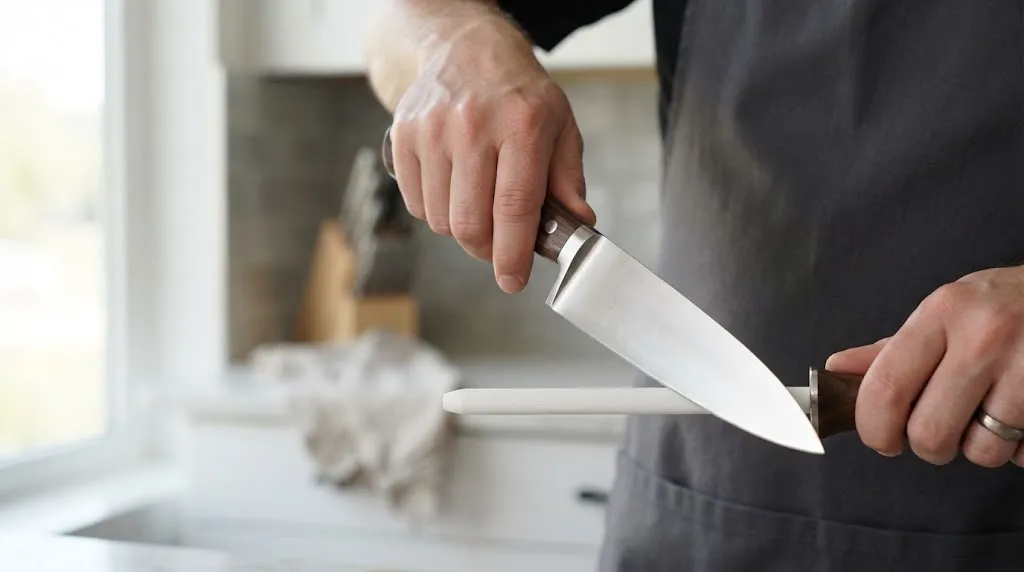
One of the most common kitchen knife mistakes is confusing honing with sharpening. They are entirely separate processes with distinct tools and purposes.
Honing does not remove significant metal from the blade. Instead, a honing steel—whether traditional steel, ceramic, or diamond-coated—realigns microscopic folds and roll-overs along the edge that occur naturally during cutting.
Sharpening physically removes metal to build a brand-new apex. If your knife slides across a tomato skin instead of biting into it, honing will not restore it; it requires a whetstone or a guided abrasive system.
Key Insight
Frequent honing extends the time between required sharpenings, preserving the overall lifespan of your chef knife by minimizing the amount of steel shaved away over years of use.
When to Hone Versus When to Sharpen
- Hone: Every few cooking sessions, or whenever the edge feels slightly lazy during routine slicing.
- Sharpen: Every few months for home cooks, or when the knife no longer cuts cleanly even after thorough honing.
Choosing the Correct Sharpening Angle
The sharpening angle determines the geometry of the cutting edge. A lower angle reduces cutting resistance, while a wider angle provides greater durability.
| Knife Type / Style | Angle Per Side | Total Included Angle | Best Application |
|---|---|---|---|
| Japanese Double-Bevel (Gyuto, Santoku) | 10° to 15° | 20° to 30° | Precision push cuts and vegetable prep |
| Western Chef Knife (German / French) | 15° to 20° | 30° to 40° | General-purpose rocking and heavy tasks |
Matching your chosen angle to the manufacturer specification or the steel’s hardness prevents structural failure. Sharpening a softer German steel below 14 degrees per side often results in immediate edge rolling.
Step-by-Step Whetstone Sharpening Guide
A water-based whetstone offers the most precise control for sharpening high-end kitchen knives. Follow this systematic process to establish a clean apex.
- Soak or prep the stone: Submerge porous waterstones in water for 10 to 15 minutes until air bubbles cease. Place the stone on a damp cloth over a stable countertop.
- Establish your grip: Hold the handle firmly with your dominant hand. Rest the fingertips of your non-dominant hand flat on the flat of the blade near the edge, using a stable pinch grip.
- Set the angle: Raise the spine of the blade to your target angle—roughly 20 degrees for Western blades or 15 degrees for Japanese styles.
- Work section by section: Start at the heel near the bolster. Push the blade edge forward across the stone while maintaining a locked wrist and constant angle, then draw it back lightly. Complete several strokes before moving toward the tip.
- Check for the burr: Continue stroking a specific section until a rough metallic edge, known as a burr, forms along the opposite side of the entire edge.
- Flip and repeat: Turn the knife over and repeat the process on the other side until a matching burr forms.
- Refine and polish: Switch to a finer grit stone (such as 3,000 to 6,000 grit) to remove scratches and polish the apex using lighter, alternating passes.
Warning
Never press down heavily on the stone during sharpening. Excessive downward pressure distorts the bevel geometry and prematurely wears out your whetstone surface.
Common Sharpening Mistakes to Avoid
Even experienced cooks occasionally fall into habits that compromise knife performance. Avoiding these pitfalls ensures a longer-lasting edge.
- Inconsistent angle wobbling: Shifting your wrist mid-stroke rounds over the apex instead of forming a clean, flat bevel.
- Ignoring the tip and heel: Failing to adjust your handle height as you reach the curved belly leads to unsharpened dead zones.
- Skipping the burr check: Moving to a fine stone before a complete burr forms from heel to tip means the apex never actually met.
- Using coarse grit unnecessarily: Resorting to aggressive 200-grit stones for routine maintenance wastes valuable steel.
Frequently Asked Questions
 Save
How often should a chef knife be sharpened?
For a home cook preparing meals several times a week, a full whetstone sharpening every three to six months is typically sufficient, supplemented by regular honing.
Can I use an electric sharpener on high-end Japanese steel?
Most standard electric sharpeners use aggressive motorized wheels set at fixed Western angles, which can easily overheat, chip, or warp delicate high-carbon Japanese blades.
What grit whetstone do I need for a dull knife?
A combination stone featuring a medium 1,000-grit side for sharpening and a fine 3,000 or 6,000-grit side for polishing covers almost all routine kitchen maintenance needs.
Why does my knife still feel dull after sharpening?
This usually happens when the burr is not completely removed. If microscopic metallic debris remains folded over the edge, the knife will catch and tear ingredients.
Is oil required on a waterstone?
Standard Japanese waterstones require only water to create a functional abrasive slurry. Never use mineral oil on stones designed specifically for water soaking.
How do I know when the edge is sharp?
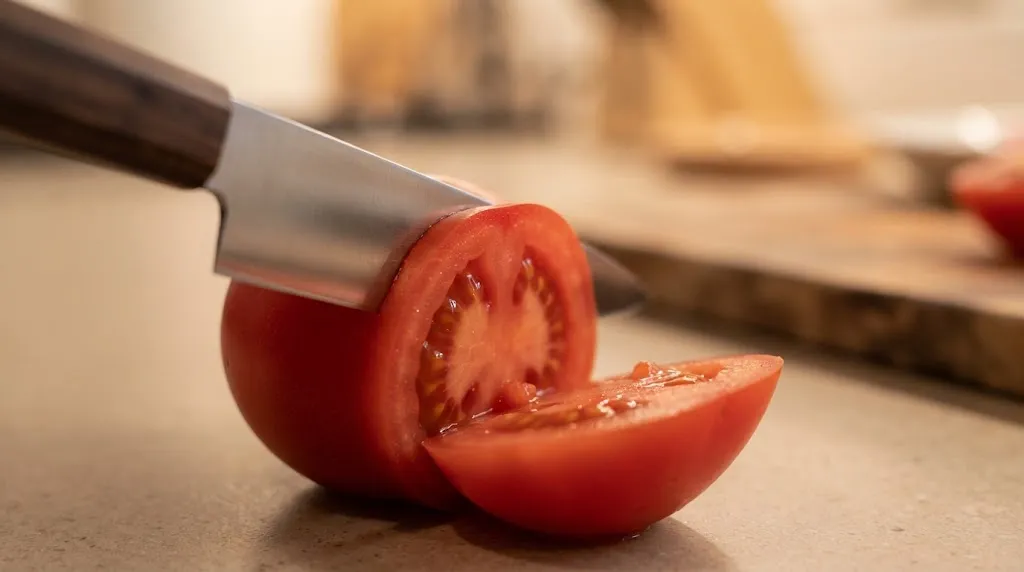
A properly sharpened chef knife should cleanly slice through printer paper or shave a tomato skin with zero downward tearing or jagged resistance.
Conclusion
Maintaining a chef knife requires understanding how different blade steels respond to sharpening media and maintaining a consistent angle throughout the process. By combining routine honing with careful whetstone technique, you can preserve optimal cutting geometry, reduce food preparation effort, and significantly extend the lifespan of your kitchen cutlery.

