How to Maintain a Stainless Steel Chef Knife: 7 Habits
Quick Answer
Maintain a stainless steel chef knife by hand-washing it after use, drying it right away, storing it so the edge cannot knock against other metal, cutting on wood or plastic, honing regularly, and sharpening only when honing no longer restores a clean cut. Stainless steel resists stains, but it is not stain-proof, so prompt cleaning and drying matter most.
A stainless steel chef knife needs less fuss than many other blades, but it still needs a routine. Most damage does not come from hard cooking. It comes from small, repeated habits: leaving the knife wet, dropping it loose into a drawer, cutting on a hard surface, or waiting until the edge is truly dull.
What “Stainless” Actually Means
Stainless steel contains chromium, which helps form a thin protective layer on the surface. That layer resists rust and staining far better than plain carbon steel, but it does not make a knife immune to damage.
Acidic foods, salt, harsh detergents, and long exposure to moisture can still leave spots or small rust marks. A scratch or chip can also give moisture a place to sit. The practical lesson is simple: avoid the conditions that break the protection down, especially prolonged wetness and strong chemicals.
This is also why stainless steel is easier to live with than carbon steel, which usually needs more careful drying and, in some cases, oiling. For the contrast, see our guide to how to maintain a carbon steel chef knife. For stainless steel, cleanliness and dryness come first, not an oil coat after every use.
The Daily Routine That Does Most of the Work
 Save
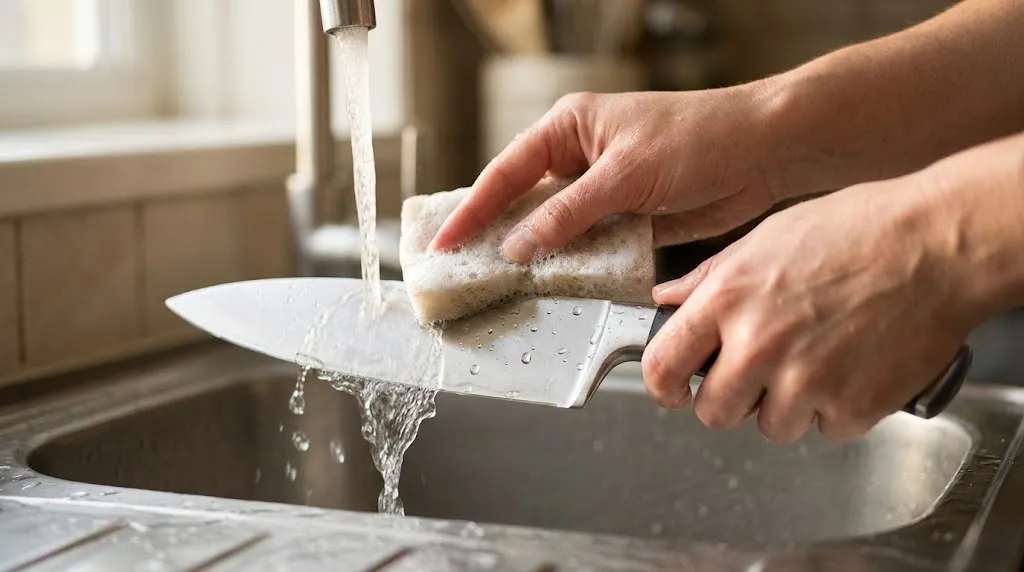
Most maintenance happens in the two minutes after cooking. Follow the same sequence each time and you will prevent most stains and edge damage.
- Wash soon after use. Do not leave the knife in a sink full of water or buried under other dishes.
- Use warm water and mild dish soap with a soft sponge or cloth.
- Rinse fully so soap does not dry into a film on the blade.
- Dry immediately with a clean towel, wiping away from the edge, and dry the handle and bolster area too.
- Store it right away, before it can be knocked off the counter or buried under a pan.
Tip
After cutting tomatoes, citrus, onions, or anything salty or acidic, wash the blade promptly even if you plan to use it again shortly. Acid and salt do the most damage when left to sit, not during cutting.
How to Wash and Dry It Properly
Hand washing is the safest default for a good chef knife, even when a maker describes it as dishwasher-safe. It gives you control over heat, detergent, contact, and drying time.
Hold the knife by the handle, with the edge pointing away from your hand. Wash one side, then the other, with light pressure. Pay attention to where the blade meets the handle, because food and moisture collect there. For the full steps, see our guide to how to clean a chef knife.
Drying deserves the same attention. A towel-dried knife is less likely to develop water spots than one left to air-dry, especially in hard-water areas. Dry both flat sides, then the spine and handle. Wooden handles should not stay damp, because wood can swell, crack, or loosen around rivets. Our guide to how to dry a chef knife explains the safest wiping direction.
The WÜSTHOF care instructions make the same core points: wash by hand, towel-dry immediately, avoid abrasive sponges, and do not leave the knife soaking in the sink. Avoid steel wool, scouring pads, bleach, and harsh cleaners, which can scratch steel or damage handles.
Why the Dishwasher Still Is Not Worth It
A dishwasher combines high heat, strong detergent, long moisture exposure, and repeated bumping against other items. Even if a blade looks fine after one cycle, the edge can dull faster, the handle can loosen or fade, and the finish can spot.
The label matters less than those conditions. Some knives are marketed as dishwasher-safe, yet their makers still recommend hand washing for longevity. That advice is worth following for a knife you use daily. If one goes through by accident, wash it by hand, dry it fully, and check the edge and handle — but do not make it a routine. See also whether you can put kitchen knives in the dishwasher.
Honing vs. Sharpening: Keep Them Separate
Honing straightens an edge that has rolled slightly during normal cutting. A honing steel removes very little metal. For many home cooks, a few light, controlled passes every week or two, or before a longer cooking session, is enough.
Sharpening removes metal to create a new edge, using a whetstone, a good manual sharpener, or a professional service. You need it when honing no longer helps: the knife slips on a tomato skin, crushes herbs instead of slicing them, or needs extra force to start a cut.
Honing a truly dull knife will not restore it, and sharpening too often will wear the blade down faster than necessary. For frequency tied to use, see our article on how often to sharpen a chef knife, and for the stone method, our chef knife whetstone sharpening guide.
Warning
Never test sharpness by running a thumb along the edge. Use a tomato, a sheet of paper, or a normal cutting task instead. A blade that needs work will reveal itself by slipping, tearing, or crushing, without putting your fingers at risk.
Storage and Handles That Protect the Edge
Storage is edge care. Every time a bare blade rubs against another knife, a pan, or a drawer, the fine edge takes a small hit. Over weeks, those hits add up to a dull, nicked knife.
A knife block works well if the slots are clean and the knife slides in spine-first. A magnetic strip works well if the knife is placed flat and lifted away, rather than dragged across the magnet. A blade guard or sheath is a good drawer option, provided it fits and is clean and dry inside. Avoid loose drawer storage, heat sources, and damp spots under a sink.
Check the handle every few weeks for looseness, cracks, or gaps where food can collect. A loose handle is a safety issue and should be assessed by the maker or a repair service, not forced tight. Synthetic handles need only washing, drying, and protection from prolonged high heat. Wooden handles should never be soaked or put in the dishwasher, and occasional food-safe oil can help keep wood from drying out.
Cutting Boards and Habits That Preserve Sharpness
 Save
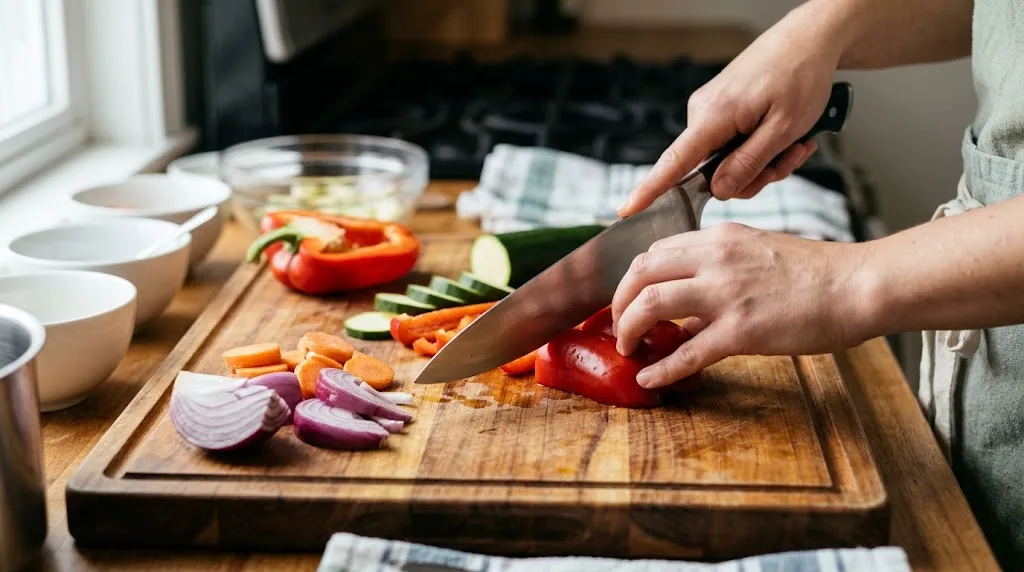
Wood and plastic boards give slightly under the edge, which helps it last longer. Glass, stone, granite, ceramic plates, and metal trays do not give at all, so they dull and chip an edge much faster.
Use the chef knife for its intended work: slicing, dicing, mincing, and chopping soft to moderately firm foods. Do not pry open cans, cut through bones, chop frozen food, or twist the blade sideways. To move cut food, scrape with the spine, not the edge. If a task feels like a fight, it is usually the wrong tool for that task.
Spots, Stains, and Light Rust
First, work out what you are looking at. Water spots are usually pale marks left after air-drying. Food stains may be darker and follow what sat on the blade. Light rust looks orange or brown and feels rough. None of these automatically means the knife is ruined, but none should be ignored.
For water spots and light stains, wash with warm water and mild soap, then dry fully. For a stubborn mark, a paste of baking soda and a little water, rubbed gently along the blade — not across the edge — can help. Rinse well and dry immediately, and avoid steel wool, which can leave scratches that make future staining more likely.
For light rust, act early and gently, then look for the cause: soaking, dishwasher cycles, acidic food left on the blade, a damp block slot, or storage against a wet item. Fixing the cause matters more than removing one mark. If rust is deep, pitted, or near the edge, consider professional help rather than grinding at the blade. Our guide to how to remove rust from kitchen knives explains when a gentle fix is enough.
A Simple Maintenance Schedule
Use the signals in this table, not just the calendar. A knife used once a week needs honing less often than one used for three meals a day.
| Task | How often | Sign it is due |
|---|---|---|
| Wash and dry | After every use | Knife is dirty, wet, or about to be stored |
| Hone | Every week or two | Cuts feel slightly less clean |
| Inspect edge and handle | Monthly | Nicks, looseness, spots, or gaps appear |
| Sharpen | When honing stops helping | Knife slips, tears, or crushes food |
Seek professional help for a visible chip, a bent or broken tip, deep pitting, a loose handle, or an edge that stays uneven after home sharpening. A professional can also reset an edge sharpened at inconsistent angles. Store a damaged knife safely, edge protected, and use another knife until it is repaired.
Related Product
Chef Knife Honing Steel
A honing steel helps keep a stainless steel chef knife cutting cleanly between sharpenings by straightening a rolled edge.
As an Amazon Associate, we earn from qualifying purchases.
Frequently Asked Questions
Can I put a stainless steel chef knife in the dishwasher?
It is best not to, even if the packaging says dishwasher-safe. Heat, harsh detergent, moisture, and contact with other items can dull the edge, spot the finish, and wear the handle faster. Hand washing and immediate drying protect the knife with very little extra effort.
How often should I hone and sharpen a stainless steel chef knife?
Hone lightly every week or two if you cook regularly. Sharpen only when honing no longer restores a clean cut. Judge by performance — slipping, tearing, or crushing — rather than a fixed date, because use and cutting habits vary.
Why does my stainless steel knife have rust spots if it is stainless?
Stainless means stain-resistant, not stain-proof. Spots often come from prolonged moisture, salt, acid, harsh detergent, or dishwasher exposure. Clean the spot gently, dry the blade fully, and remove the cause so it does not return.
Should I oil a stainless steel chef knife?
Usually no. A stainless blade in regular use does not need oiling after every wash. Clean and dry storage is enough. A very light coat of food-safe oil can help before long storage, and wooden handles may benefit from occasional food-safe oil, but check the maker’s guidance first.
What cutting board is best for keeping a chef knife sharp?
Wood or plastic boards are the safest everyday choices because they give slightly under the edge. Avoid glass, stone, granite, ceramic, and metal surfaces for regular cutting. Use the spine, not the edge, to scrape food off the board.
How do I know if my knife needs honing or sharpening?
Try honing first. If a few light, even passes restore a clean slice through a tomato, honing was enough. If the knife still slips, tears, or needs extra force after honing, the edge itself is worn and needs sharpening. Visible nicks also point to sharpening or repair.
Conclusion
Maintaining a stainless steel chef knife does not require special equipment or a long routine. Wash it soon after use, dry it right away, store it with the edge protected, cut on a forgiving board, and hone before the edge feels truly dull. Sharpen only when honing stops working, and deal with spots early rather than letting moisture and acid sit. Those few habits protect the edge, the finish, and the handle, and they keep a good knife cutting cleanly for years.

