How to Pull Cut With a Chef Knife: Step-by-Step Guide
Quick Answer
To execute a clean pull cut with a chef’s knife, anchor the tip of the blade on the cutting board or against the ingredient, draw the knife backward toward your body while applying downward pressure, and slice through the item in one smooth, continuous motion rather than pushing straight down or sawing back and forth.
Understanding the Mechanics of the Pull Cut
The pull cut is a foundational knife technique used by professional chefs and home cooks alike to achieve clean, precise slices without crushing delicate ingredients or fatiguing the hand. Unlike a standard push cut—where the knife travels forward and down away from the body—a pull cut draws the blade backward toward the cook.
This backward motion utilizes the entire length of the cutting edge, reducing the physical downward force required to break through tough skins, fibrous textures, or soft interiors. By letting the sharpness of the steel do the work, you maintain superior control over slice thickness and prevent food from sticking to the side of the blade.
Why Blade Geometry Matters
Chef’s knives typically feature a curved belly that transitions from a straight heel to a rounded tip. The pull cut leverages this natural curve. As you draw the blade backward, the point of contact shifts continuously along the edge, creating a slicing action that minimizes friction and prevents tearing.
Step-by-Step Guide to Executing a Proper Pull Cut
 Save
Mastering the pull cut requires attention to hand placement, blade control, and body mechanics. Follow these steps to build muscle memory and improve your kitchen safety and efficiency.
Step 1: Establish a Secure Knife Grip
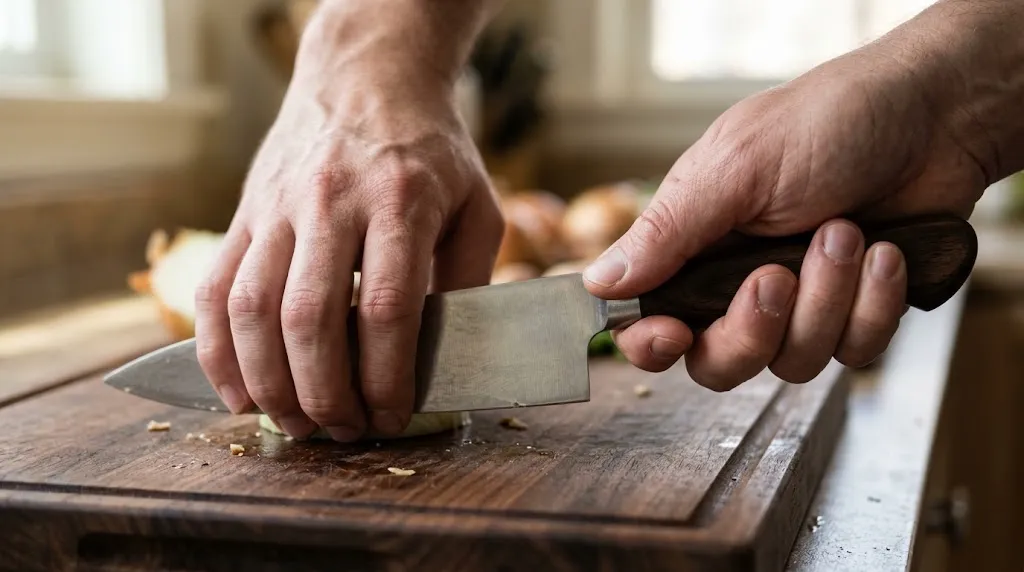
Pinch the blade right in front of the bolster using your thumb and index finger, wrapping your remaining three fingers securely around the handle. This “pinch grip” provides maximum stability, turning the knife into a natural extension of your arm rather than an unstable tool held only by the handle.
Step 2: Position the Guide Hand
Form a “claw” with your non-dominant hand by curling your fingertips inward and tucking your thumb safely behind your fingers. Rest the flat side of the knife blade gently against the knuckles of your guiding hand. This ensures consistent slice widths and keeps your fingertips safely away from the edge.
Step 3: Anchor the Tip and Draw Backward
Rest the tip of the chef’s knife on the cutting board or lightly against the top of the ingredient. As you apply gentle downward pressure, pull the knife backward toward your body in one fluid motion. The heel of the blade should finish the cut as it clears the food.
Tip
Let the natural weight of the chef’s knife do most of the work. Forcing the blade down too aggressively during the pull stroke can cause the knife to slip or result in uneven slices.
When and Where to Use a Pull Cut
Not every kitchen task requires a pull cut, but certain ingredients benefit significantly from this technique. Recognizing when to switch between pushing, rocking, and pulling will dramatically improve your prep speed and ingredient presentation.
Ideal Ingredients for Pull Cuts
- Fibrous vegetables: Celery, leeks, and green onions slice cleanly without leaving stringy attachments.
- Tough skins with soft interiors: Tomatoes, bell peppers, and citrus fruits are easily penetrated when the blade is drawn rather than pushed down.
- Meats and proteins: Boneless cuts of meat or poultry slice smoothly when drawn backward, preventing the flesh from bunching or tearing.
When to Use Alternative Cuts
For hard root vegetables like carrots, potatoes, or winter squash, a traditional push cut or rocking motion is often safer and more efficient. Similarly, mincing herbs is best accomplished with a stationary tip and a rocking motion.
Common Mistakes to Avoid
Even experienced home cooks sometimes fall into bad habits that compromise their knife skills. Be mindful of these frequent errors when practicing your pull cuts.
Warning
Avoid using a sawing motion. Sawing back and forth dulls the knife edge prematurely and increases the risk of the blade jumping off the ingredient.
Lifting the Knife Too High
Keeping the tip or edge unnecessarily high off the board disrupts your rhythm and control. Keep the contact point stable as you transition through the stroke.
Ignoring Blade Sharpness
A dull knife requires excessive downward pressure, making a smooth pull cut nearly impossible. Ensure your chef’s knife is properly honed and sharpened before attempting precision cuts.
Comparing Knife Cutting Techniques
 Save
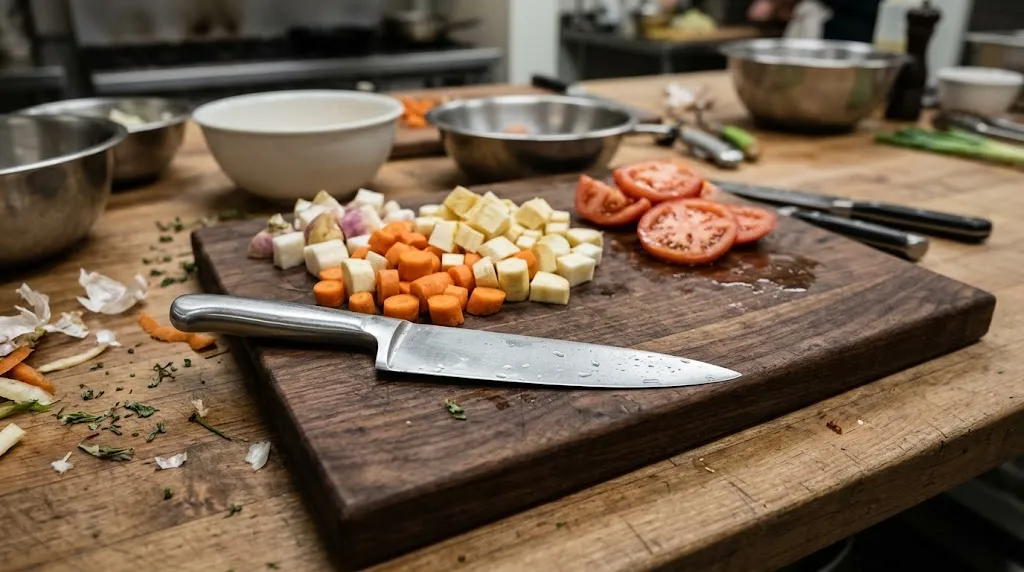
Understanding how the pull cut compares to other standard techniques helps you select the right method for every recipe.
| Technique | Motion | Best Used For |
|---|---|---|
| Pull Cut | Drawn backward toward the body | Tomatoes, peppers, meats, fibrous veg |
| Push Cut | Pushed forward and down | Onions, carrots, firm produce |
| Rocking Chop | Tip stays anchored while heel lifts | Herbs, garlic, smaller vegetables |
Choosing the correct cutting technique ensures cleaner ingredient preparation, reduces hand fatigue, and extends the lifespan of your cutlery.
Related Product
Chef Knife Sharpening Stone Set
A sharp edge is essential for executing smooth pull cuts without crushing delicate ingredients.
As an Amazon Associate, we earn from qualifying purchases.
Frequently Asked Questions
Is a pull cut safer than a push cut?
Both cuts are safe when executed with proper hand positioning and a secure grip. The pull cut is often preferred for slippery or tough-skinned items because it minimizes the risk of the blade glancing off the surface.
Can I perform a pull cut with a dull knife?
While possible, using a dull knife for a pull cut requires dangerous levels of downward force and often results in tearing rather than slicing. Always maintain a sharp edge for clean technique.
Should the knife tip stay on the cutting board during the entire cut?
Keeping light contact with the board provides a stable pivot point, but you can also anchor the tip directly against the top or side of the ingredient depending on its size and shape.
Why does my food stick to the knife during a pull cut?
Food sticking is usually caused by surface tension, moisture, or a blade that lacks a hollow-edge (granton edge) or proper polish. Wiping the blade with a damp towel between cuts can help.
How fast should I pull the blade backward?
Speed should always be secondary to control. Start slowly to build muscle memory, focusing on a smooth, continuous motion from tip to heel.
Does knife length affect how I perform a pull cut?
Yes. Longer chef’s knives provide more cutting edge, allowing for longer, smoother pull strokes, whereas shorter utility or pairing knives require a shorter motion.
Conclusion
Mastering the pull cut transforms your kitchen efficiency by allowing you to slice through challenging ingredients cleanly and safely. By combining a secure pinch grip, proper hand positioning, and a smooth backward draw, you let your chef’s knife do the heavy lifting while maintaining absolute control over your cuts. Practice this technique mindfully during your next meal prep to experience cleaner slices and reduced hand fatigue.

