
Do You Need a Cutting Board? A Complete Kitchen Guide
Quick Answer
Yes, you need a suitable cutting surface for safe, practical food preparation, and a dedicated cutting board is usually the best choice. It protects countertops, supports controlled knife work, and makes cleaning easier. For better food safety, use separate boards for raw animal products and ready-to-eat foods, as recommended by the CDC’s food safety guidance.
Why a Cutting Board Matters
- Protects countertops: Prevents direct knife cuts on kitchen worktops.
- Supports knife control: Provides a predictable surface for chopping and slicing.
- Improves food hygiene: Makes separating and cleaning food-contact surfaces more manageable.
- Helps protect knives: Suitable wood and plastic surfaces are generally more forgiving than glass or stone.
- Simplifies meal preparation: Keeps ingredients and food scraps in one working area.
My Practical Recommendation
- Start with two: Choose one board for raw meat and another for vegetables, bread, and ready-to-eat ingredients.
- Choose easy maintenance: A dishwasher-safe plastic board and a suitable wooden board make a useful combination.
Do you need a cutting board, or can you prepare meals directly on your kitchen counter? It’s a reasonable question, especially when you’re setting up a small kitchen.
I consider a cutting board one of the most practical kitchen essentials. In this guide, I’ll explain when it matters, which alternatives work, and how to choose one without overspending.
What Is a Cutting Board, and What Is It Used For?
A cutting board is a portable, food-contact surface designed for slicing, chopping, trimming, and preparing ingredients with a kitchen knife.
Unlike ordinary countertops or decorative serving trays, a suitable cutting board is designed to tolerate repeated knife contact and routine cleaning.
Common cutting board materials include:
- Wood: A traditional choice that offers a comfortable cutting feel.
- Plastic: Lightweight, practical, and often dishwasher-safe.
- Bamboo: A firm cutting surface that requires appropriate care.
- Rubber: Often provides grip and a resilient cutting surface.
- Paper composite: A thin, durable alternative with manufacturer-dependent cleaning requirements.
A cutting board has two important jobs: providing a suitable work surface and helping keep food preparation organized.
However, the material alone doesn’t guarantee safety. Your cleaning habits and the board’s condition matter just as much.
Do You Really Need a Cutting Board in Your Kitchen?
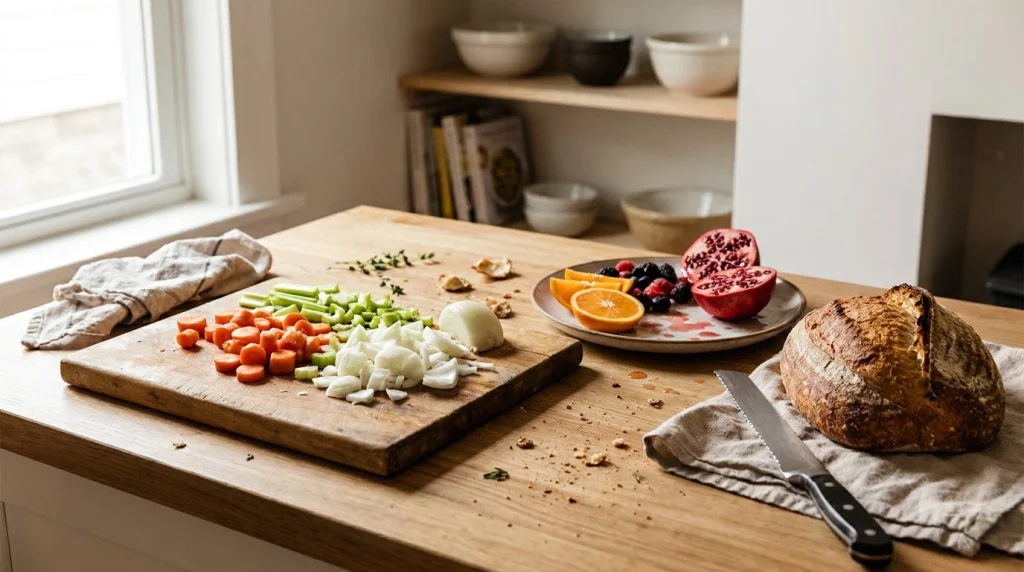
For regular cooking, I strongly recommend owning a dedicated cutting board. You might manage occasional food preparation without one, but proper equipment makes everyday knife work easier.
Think about preparing an onion. A stable board gives you enough room to position the onion, guide your knife, and collect chopped pieces.
Without that surface, you may find yourself using an unsuitable plate, slippery tray, or vulnerable countertop.
When Is a Cutting Board Especially Important?
- Chopping vegetables: Provides a stable area for controlled knife cuts.
- Preparing raw meat: Allows you to isolate a potentially contaminated work surface.
- Slicing bread: Protects countertops from repeated serrated-knife contact.
- Cutting fruit: Contains juice and creates a convenient cleanup area.
- Preparing several ingredients: Helps maintain an organized cooking workflow.
The more often you cook from fresh ingredients, the more useful a cutting board becomes.
Even simple meals involve tasks where a proper cutting surface makes sense.
What Happens If You Cut Food Without a Cutting Board?
Cutting directly on an unsuitable surface can damage the surface, dull your knife, or make food preparation less controlled.
The exact risk depends on the material underneath your knife and how securely the food rests.
Potential Problems
- Countertop scratches: Knives can mark wood, laminate, and other worktop finishes.
- Knife damage: Glass, ceramic, and stone are particularly unforgiving against knife edges.
- Slipping ingredients: Uneven or unstable work surfaces can make knife handling harder.
- Food contamination: Unclean surfaces can transfer unwanted microorganisms to food.
- Difficult cleanup: Food scraps and juices may spread across a larger area.
A countertop may look clean while still requiring proper washing and sanitizing before food preparation.
According to FoodSafety.gov’s four food safety steps, cleaning and separating foods are fundamental kitchen safety practices.
Which Foods Should You Cut on a Cutting Board?
Most ingredients that require a knife benefit from a suitable cutting board. The important distinction is how you separate raw animal products from ready-to-eat foods.
I prefer organizing preparation tasks before starting. That reduces unnecessary washing and prevents confusion between cutting surfaces.
| Food | Recommended Surface | Important Consideration |
|---|---|---|
| Vegetables | Wood, plastic, or suitable composite | Use a clean board for ready-to-eat foods. |
| Raw chicken | Dedicated, easy-to-clean board | Clean and sanitize after preparation. |
| Raw beef | Dedicated food-safe board | Prevent contact with ready-to-eat foods. |
| Bread | Wood or plastic | Allow room for controlled slicing. |
| Fresh fruit | Clean wood or plastic | A juice groove can help contain liquid. |
| Cheese | Food-safe cutting or serving board | Avoid transferring contamination from raw meat. |
The table shows why having two boards can simplify everyday cooking. You won’t need to switch repeatedly between potentially contaminated and ready-to-eat surfaces.
Can You Use a Plate Instead of a Cutting Board?
You can sometimes use a plate for arranging or serving food, but most dinner plates are poor substitutes for cutting boards.
Ceramic and glass plates have hard surfaces that can dull knife edges. They may also slide, chip, or break under unsuitable knife pressure.
Why I Would Avoid Cutting on Dinner Plates
- Plates usually provide limited working space.
- Curved surfaces can make ingredients unstable.
- Hard materials are less forgiving against knife blades.
- A plate may slip while you’re applying cutting pressure.
Occasionally dividing soft food with a table knife is different from chopping vegetables with a chef’s knife.
For regular knife work, a proper cutting board remains the better choice.
If you own a decorative serving board, check whether it’s intended for cutting. My guide on using a serving board as a cutting board explains the differences.
What Can You Use Instead of a Cutting Board?
If you don’t have a traditional cutting board, a food-safe surface specifically designed for knife contact may work as an alternative.
However, not every flat kitchen item is suitable. Material, stability, finish, and cleaning instructions should guide your decision.
Practical Cutting Board Alternatives
- Food-grade rubber cutting mats: Useful when you want a flexible, resilient surface designed for knife work.
- Flexible plastic cutting mats: Convenient for light preparation when placed on a stable, non-slip base.
- Food-safe wooden chopping blocks: A substantial alternative to thinner cutting boards.
- Food-contact paper-composite boards: Useful for lightweight preparation and compact storage.
A flexible mat still needs firm support underneath. Never use it over an unstable or uneven surface.
Avoid assuming that ordinary cardboard, decorative trays, or untreated wood scraps are appropriate food-contact cutting surfaces.
Wood vs. Plastic Cutting Boards: Which Is Better?
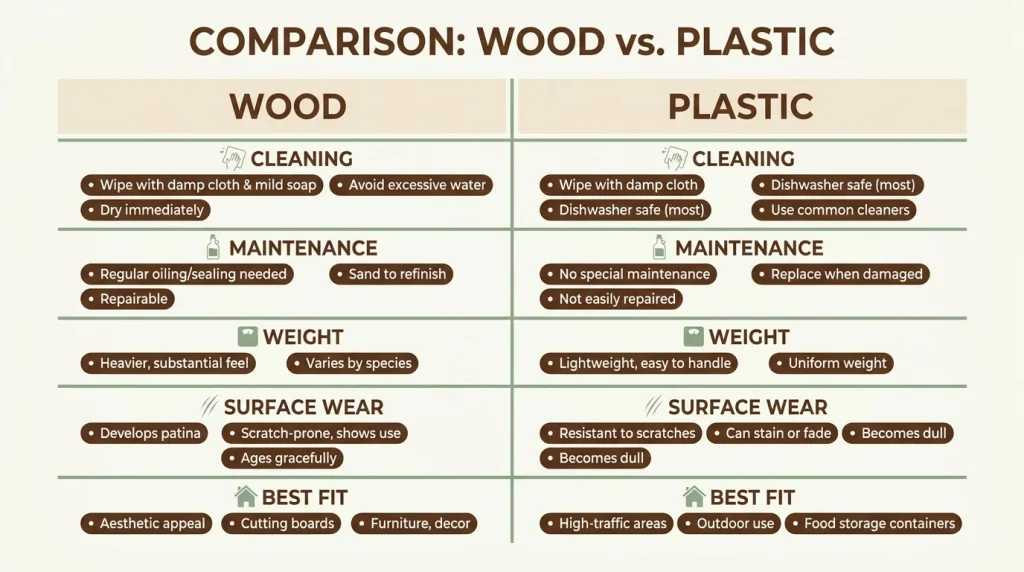
Both wooden and plastic cutting boards can be suitable for home kitchens when properly maintained.
Wood offers a traditional cutting feel, while dishwasher-safe plastic is often more convenient for cleaning after raw meat preparation.
| Feature | Wood | Plastic |
|---|---|---|
| Cleaning | Usually hand wash | Often dishwasher-safe |
| Maintenance | May require conditioning | Usually no oiling |
| Weight | Often heavier | Usually lighter |
| Surface wear | May be refinished if suitable | Replace when deeply scored |
| Best fit | Daily chopping and presentation | Easy-clean everyday preparation |
My preferred starting combination is a wooden board for produce and a dishwasher-safe plastic board dedicated to raw animal products.
That doesn’t mean wooden boards are automatically unsafe for meat. Proper cleaning, sanitizing, and separation remain the deciding factors.
For a deeper breakdown, see my wood vs. plastic cutting board comparison.
How Many Cutting Boards Do You Actually Need?
Most households can start with two cutting boards. One handles raw meat, poultry, and seafood, while another handles ready-to-eat foods.
A third board may improve convenience if you frequently prepare bread, fruit, or large family meals.
Simple Cutting Board Setup
- Board one: Reserve it for raw meat, poultry, and seafood.
- Board two: Use it for vegetables, fruit, bread, and ready-to-eat ingredients.
- Optional board three: Keep a larger board for bulky vegetables, bread, or serving tasks.
Separate boards reduce the chance of accidentally transferring raw meat juices to food that won’t receive further cooking.
The University of Illinois Extension cutting board guidance also emphasizes dedicated boards and effective cleaning.
How Do You Choose the Right Cutting Board?
Choose a board based on your cooking habits, available counter space, knife use, and cleaning preferences.
A more expensive board isn’t necessarily more useful. I would prioritize a stable, washable surface before appearance or premium materials.
1. Choose the Right Size
A medium board around 12 by 18 inches offers a practical working area for many common kitchen tasks.
Smaller boards suit fruit and quick preparation, while larger boards provide more room for vegetables and bulky ingredients.
2. Check Surface Stability
Look for non-slip feet or a design that rests securely on the countertop.
A clean, slightly damp towel or appropriate non-slip mat underneath can help stabilize boards without built-in grips.
3. Consider Knife Compatibility
Wood, suitable plastic, and purpose-made rubber boards are generally preferable to glass or stone for everyday knife work.
Surface hardness influences how a knife feels during repeated cutting. Learn more about which cutting board materials help preserve knife sharpness.
4. Consider Cleaning Requirements
Choose a dishwasher-safe model if convenient machine cleaning is important to you.
If you prefer wood, make sure you’re comfortable handwashing, drying, and conditioning it according to the manufacturer’s instructions.
5. Look for a Practical Shape
- Rectangular boards: Offer straightforward working space.
- Juice grooves: Help catch liquids from juicy foods.
- Handles: Make heavier boards easier to lift.
- Reversible surfaces: Offer extra usable cutting area when cleaned correctly.
I prefer simple designs with enough room to move chopped ingredients aside. That often matters more than decorative details.
How Do You Use a Cutting Board Safely?
Place your cutting board securely before starting and keep your fingers away from the knife’s cutting edge.
The board should remain steady throughout preparation. If it rocks or slides, correct the problem before continuing.
Basic Safe Cutting Routine
- Clean your countertop and wash your hands.
- Inspect the board for damage and contamination.
- Place the board on a flat, stable surface.
- Use a suitable non-slip base when needed.
- Position ingredients securely before cutting.
- Keep your guiding fingertips curled away from the blade.
- Wash the board before switching between incompatible food tasks.
Round ingredients such as potatoes or onions can roll during cutting. Creating a flat side can make subsequent cuts more controlled.
For additional techniques, read my complete guide to using a cutting board safely.
How Do You Clean and Maintain a Cutting Board?
Wash your cutting board after each food preparation task using hot, soapy water, then rinse and dry it thoroughly.
After preparing raw animal products, follow appropriate sanitizing guidance. The method should be compatible with your board’s material.
Everyday Cleaning Steps
- Remove food scraps from the surface.
- Scrub the board with hot, soapy water.
- Rinse thoroughly with clean water.
- Sanitize when appropriate, especially after raw meat preparation.
- Dry with clean paper towels or allow adequate airflow.
- Store only after the board is thoroughly dry.
Many plastic boards can go into a dishwasher, but always confirm the manufacturer’s instructions.
Wooden boards generally require handwashing. Avoid soaking them or leaving them in standing water.
The Academy of Nutrition and Dietetics cutting board safety advice provides further recommendations for cleaning and food separation.
Prevent Moisture Problems
Moisture trapped against a wooden board may encourage unwanted surface changes and contribute to warping or mold growth.
Keep clean boards dry and allow air to circulate around their surfaces.
For more detailed prevention tips, see my guide on preventing mold on cutting boards.
When Should You Replace Your Cutting Board?
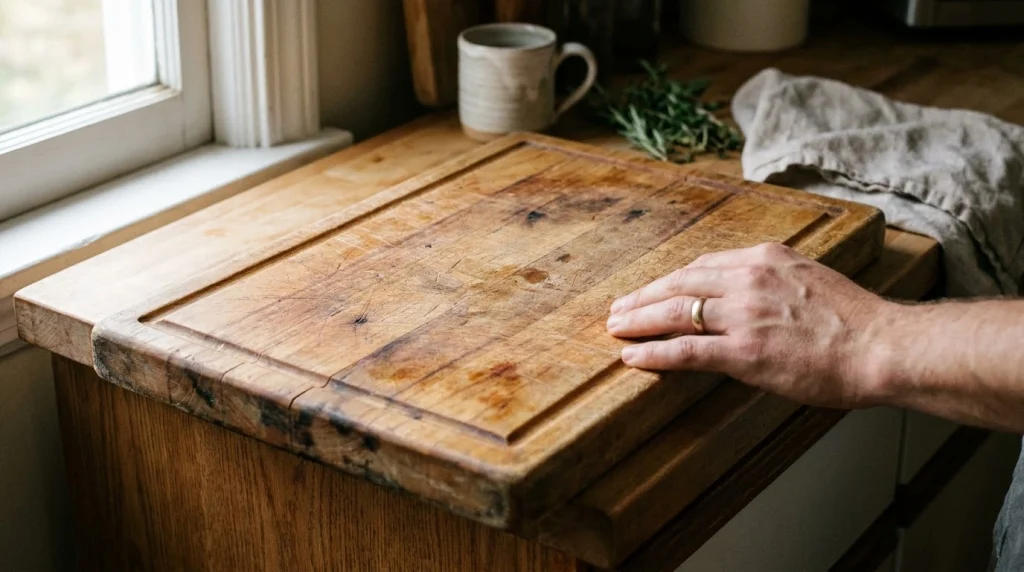
Replace a cutting board when its surface becomes difficult to clean, structurally damaged, or unstable.
There isn’t one universal replacement schedule because board quality, usage, and maintenance vary.
Warning Signs to Watch For
- Deep knife grooves: Cuts that trap debris and resist effective cleaning.
- Cracks: Openings where moisture and food residue can collect.
- Severe warping: A board that rocks during normal knife work.
- Damaged joints: Loose or separating sections on wooden boards.
- Persistent deterioration: Damage that ordinary cleaning cannot correct.
Minor knife marks don’t automatically mean replacement is necessary. Focus on whether the surface remains sound and cleanable.
Some wooden boards can be professionally or carefully refinished. Deeply damaged plastic boards are often better replaced.
Do You Need an Expensive Cutting Board?
No. A costly cutting board isn’t necessary for basic, safe home cooking.
An affordable, food-safe, stable board can perform the essential jobs effectively when you clean and maintain it correctly.
Where Should You Spend Your Money?
- First priority: A stable cutting surface.
- Second priority: Easy cleaning and appropriate food separation.
- Third priority: Enough size for your usual ingredients.
- Optional upgrade: Premium hardwood, thicker construction, or extra preparation space.
For someone who cooks occasionally, two practical boards may offer better value than one expensive display-worthy board.
If you cook frequently, a larger hardwood board can be worth considering for comfort and working space.
Recommended Cutting Boards for Everyday Kitchens
If you’re buying your first cutting boards in 2026, these three established product lines are worth comparing.
These are editorial selections based on product features and intended uses, not claims of personal testing. Prices, stock, and available sizes may change.
🏆 Best for Beginners
OXO Good Grips 2-Piece Cutting Board Set
★★★★★ Editorial fit: 5/5
This set provides two dishwasher-safe cutting boards with non-slip feet. I would choose it for a first kitchen because the separate boards make organizing raw-meat and ready-to-eat preparation easier.
🌳 Best Traditional Wood Option
John Boos Chop-N-Slice Maple Cutting Board
★★★★☆ Editorial fit: 4/5
This hardwood maple board provides a substantial reversible cutting surface. I would consider it for frequent vegetable preparation and cooks who appreciate wood, provided they’re comfortable with handwashing and maintenance.
🍽️ Best Lightweight Alternative
Epicurean Kitchen Series Cutting Board
★★★★☆ Editorial fit: 4/5
This paper-composite cutting board is thin, reversible, and dishwasher-safe. I would shortlist it for small kitchens where easy handling, convenient storage, and straightforward cleanup are important.
Product scores represent editorial suitability for the stated uses, not independently verified customer ratings or laboratory testing. As an Amazon Associate, we may earn from qualifying purchases at no additional cost to you.
Frequently Asked Questions
1. Is a Cutting Board Really Necessary?
A dedicated cutting board is strongly recommended for regular knife-based food preparation. It creates a suitable working surface, protects countertops, and makes cleaning more manageable.
Although some foods need little or no cutting, preparing vegetables, meat, bread, and fruit is easier with a stable board designed for the task.
2. Can You Cut Vegetables Directly on a Countertop?
Cutting directly on a countertop is generally not recommended because knives can damage the finish, and some surfaces are unsuitable for blade contact. Cleaning can also become more difficult.
A washable cutting board provides a more practical and replaceable surface for daily vegetable preparation.
3. Is a Wooden Cutting Board Better Than Plastic?
Neither material is automatically better for every kitchen. Wooden boards offer a traditional cutting feel, while dishwasher-safe plastic boards can simplify cleanup.
Both require proper food separation and cleaning. Choose according to your maintenance preferences and the manufacturer’s instructions.
4. Can You Use One Cutting Board for Everything?
One board can handle different foods if you wash and appropriately sanitize it between incompatible tasks. However, separate boards are more convenient for reducing cross-contamination risks.
Keeping raw meat preparation away from salad vegetables and other ready-to-eat foods is especially important.
5. How Often Should You Buy a New Cutting Board?
There is no fixed replacement interval for every cutting board. Inspect the surface regularly for deep grooves, cracks, warping, and damage that prevents effective cleaning.
Replace boards when they become unsafe or difficult to maintain. A well-maintained board with minor cosmetic wear may remain useful much longer.
Final Verdict: Do You Need a Cutting Board?
Yes, a cutting board is one of the simplest and most useful tools for everyday kitchen preparation. You don’t need an expensive model, but you should use a stable, food-safe surface that suits your knives and ingredients.
For most households, I recommend starting with two boards: one for raw animal products and another for ready-to-eat foods.
Choose materials you can clean properly, inspect them regularly, and avoid using hard decorative surfaces for knife work.
My final advice: Invest in practical food preparation habits before premium kitchen accessories. A suitable cutting board and consistent cleaning routine will serve you better than an expensive board used incorrectly.

