
Do Wooden Cutting Boards Kill Bacteria?
Quick Answer
Wooden cutting boards do not kill bacteria on contact like a disinfectant does. Instead, clean hardwood pulls moisture and germs down into its grain, where the bacteria stop multiplying and die off as the board dries. That is why lab tests keep finding fewer live bacteria on wood than on scarred plastic, and why it still pays to use a cutting board safely every time you cook.
What the science shows
- Germs sink fast: Clean wood absorbed test fluid within 3 to 10 minutes in a 1994 University of Wisconsin study.
- They stop growing: Bacteria trapped inside wood did not multiply and died off over time.
- Plastic holds on: Bacteria stayed alive on plastic for hours and multiplied overnight when the surface stayed moist.
- Scars change everything: Deep knife grooves made plastic hard to clean by hand, while used wood behaved much like new wood.
- Fat blocks the effect: A layer of chicken fat let some bacteria survive on wood for 12 hours or more.
How to stay safe
- Wash with hot water: Scrub with hot, soapy water right after each use and let the board dry upright.
- Separate raw meat: Keep one board for raw meat and another for foods you eat without cooking.
I’ve heard the same warning for years: wood harbors germs, so plastic must be safer. My own kitchen told a different story, and the research backs it up.
This guide walks through what wood does to bacteria, which boards handle germs best, and the simple habits that keep your board safe. You’ll get the lab findings in plain terms, plus the cleaning routine I use on my own maple board.
What Does “Kill Bacteria” Mean for a Cutting Board?
Antibacterial action is any process that kills bacteria or stops them from growing. A disinfectant does this with chemicals, while wood does it with physics.
Wood does not poison germs on contact. It traps them in tiny grain channels and pulls away the moisture they need to live.
That distinction matters. A wooden board is not self-sterilizing, and you still need to wash it.
But it is not the germ sponge many cooks assume it is.
- Kill: Bacteria die, often as the wood dries out after washing.
- Trap: Capillary action pulls fluid and germs below the surface.
- Starve: Inside dry wood, bacteria find no food and no moisture.
Think of it as a slow shutdown, not a quick zap. The germs get pulled in, stranded, and left to die.
What Does the Research Say About Wood and Bacteria?
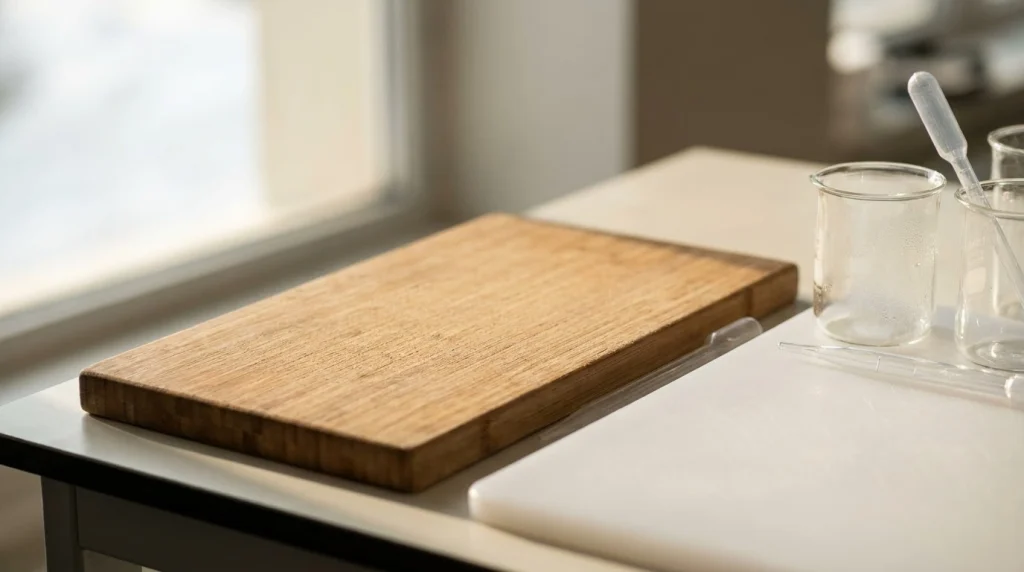
The best-known study comes from the University of Wisconsin-Madison. Researchers Nese Ak, Dean Cliver, and Charles Kaspar published it in the Journal of Food Protection in 1994.
They tested nine hardwoods and four plastics plus hard rubber. They applied E. coli, Salmonella, and Listeria in broth or chicken juice, then tried to recover the bacteria minutes and hours later.
Clean wood absorbed the fluid within 3 to 10 minutes. At the germ levels you’d expect from raw meat, the bacteria could not be recovered once they entered the wood.
Even at the highest doses tested, counts on wood fell by at least 98% after 12 hours. Many samples dropped by more than 99.9%.
- Wood: Bacteria sank in fast and could not be recovered at normal contamination levels.
- Plastic: Bacteria stayed on the surface for hours and multiplied overnight when kept moist.
- Used wood: Knife-cut wood behaved almost the same as new wood.
- Used plastic: Scarred plastic was hard to clean by hand, especially with chicken fat in the grooves.
Cliver later continued this work at UC Davis. His summary notes that bacteria found alive inside wood did not multiply and died over time.
They could only be found by splitting the wood or forcing water through it. A knife cut into a cleaned board released more bacteria from used plastic than from used wood.
Why Do Bacteria Disappear Into Wood?
Hardwood grain works like a bundle of tiny straws. Capillary action draws liquid down into those straws, carrying bacteria with it.
Once inside, the germs sit in a dry, food-poor space. Most foodborne bacteria need moisture to grow, so they stall and die.
Drying is the key step. A board left to air-dry upright finishes the job that the grain started.
Does the Type of Wood Matter?
Yes, and the grain makes the difference. Close-grained hardwoods like maple, walnut, and cherry pull fluid in through fine, even channels.
Open-grained or soft woods split more and leave wider grooves. Those grooves can hold moisture and give bacteria a place to linger.
The 1994 study found little difference among the nine hardwoods it tested. Still, food safety experts keep pointing cooks toward maple and similar close-grained hardwoods.
The FDA Food Code permits cutting boards made of maple or a similar close-grained hardwood. That approval has stood for years, and it still holds as of 2026.
Are Wooden Cutting Boards Safe for Raw Meat?
Wood is safe for raw meat if you wash it well right after use. The risk is not the wood itself, but what you cut next on a dirty board.
Cross-contamination causes most cutting board problems. Raw chicken juice on any board can spread Salmonella or Campylobacter to salad, bread, or cheese.
Many food safety experts suggest a simple split. Use plastic for raw meat, since it can go in the dishwasher, and wood for produce and ready-to-eat foods.
I follow that split in my own kitchen. My maple board handles vegetables, bread, and cooked meat, while a dishwasher-safe board takes the raw chicken.
If you do cut raw meat on wood, wash the board at once with hot water and soap. Dry it upright, and never let raw meat juice sit on it while you prep the next dish.
The FoodSafety.gov site has clear guidance on separating raw and ready-to-eat foods.
Wood vs Plastic: Which Board Is More Hygienic?
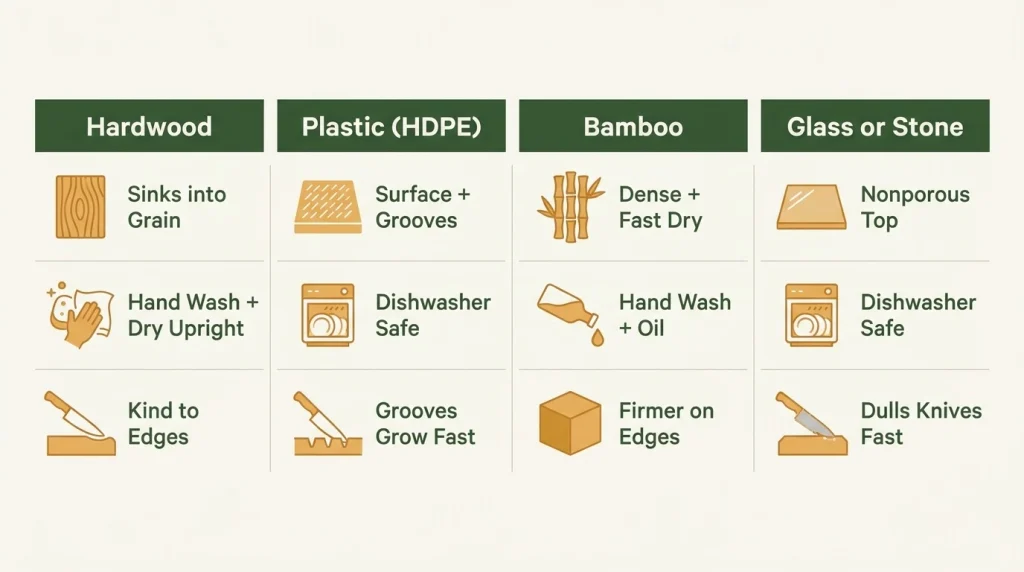
Neither material wins in every case. New plastic is easy to sanitize, and a run through the dishwasher kills germs with heat.
But plastic loses ground fast once knife cuts pile up. Deep grooves shield bacteria from a sponge, and fat in those grooves makes hand washing even less effective.
Wood holds up better over time. Used wood in the lab behaved much like new wood, while scarred plastic became hard to clean by hand.
The honest answer depends on your habits. If you dishwash a plastic board after every use, it stays clean, but if you hand wash, wood has the edge.
For a full side-by-side look at cost, knife wear, and care, see my guide to wood vs plastic cutting boards. It covers the trade-offs beyond germs.
| Material | Bacteria behavior | Cleaning | Knife friendliness |
|---|---|---|---|
| Hardwood (maple, walnut) | Germs sink into grain and die as board dries | Hand wash only; dry upright | Kind to edges, end grain best |
| Plastic (HDPE) | Germs persist on surface; grooves shelter them | Dishwasher safe; sanitize with heat | Gentle at first; grooves grow fast |
| Bamboo | Denser than wood; less absorption, dries fast | Hand wash only; oil now and then | Harder on edges than maple |
| Glass or stone | Nonporous; germs sit on top until washed off | Dishwasher safe for most glass boards | Hard on edges; dulls knives fast |
Plastic still has a real place in the kitchen. If you want the full safety picture for it, read are plastic cutting boards safe before you decide.
Which Cutting Board Is the Most Hygienic Overall?
The most hygienic board is the one you clean well and replace on time. Material helps, but habits decide the outcome.
For most home cooks, a close-grained hardwood board for produce and a dishwasher-safe board for raw meat is the best combo. That split plays to each material’s strength.
If you want a single ranking across every material, my guide to the most sanitary cutting board compares them head to head.
How Do I Keep a Wooden Cutting Board Hygienic?
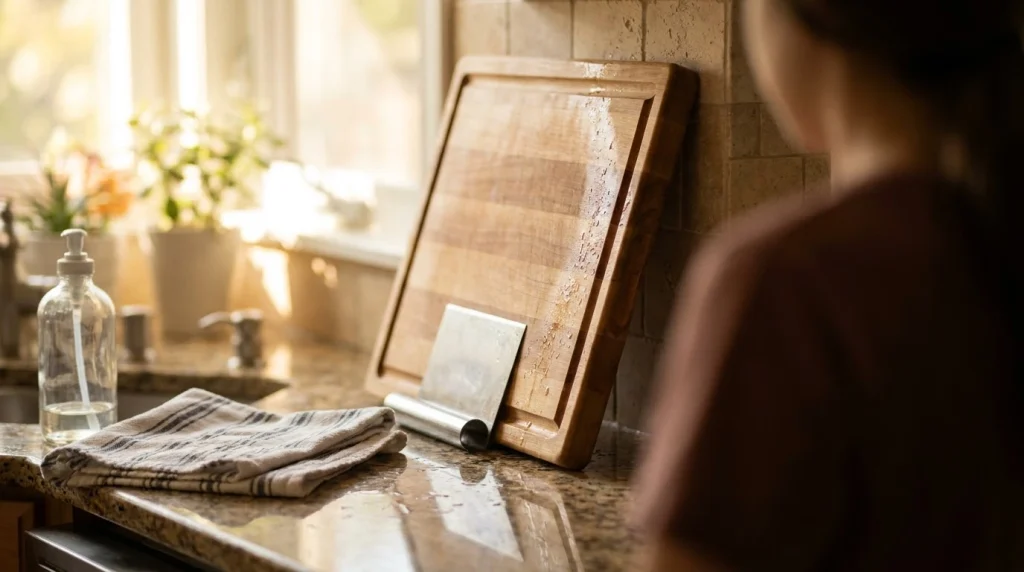
Good habits beat any material claim. A clean, dry, oiled board gives bacteria little chance to settle in.
I clean my maple board the same way after every meal. The whole routine takes about two minutes.
- Scrape off scraps: Use a bench scraper to push food bits into the bin.
- Wash hot and soapy: Scrub both sides with hot water and dish soap.
- Rinse well: Rinse off all soap so no film stays behind.
- Dry upright: Stand the board on edge so air reaches both faces.
- Sanitize weekly: Wipe with white vinegar or a diluted quaternary ammonia cleaner, then rinse.
- Oil monthly: Rub in food-grade mineral oil once the board looks dry or pale.
Skip the dishwasher and skip long soaks. Both warp wood and open cracks where moisture can hide.
Chlorine bleach binds to wood and loses strength fast. Quaternary ammonia cleaners work better on wood, so follow the label dilution if you use one.
Oiling does not seal germs in or out. The 1994 study found mineral oil had little effect on bacteria recovery, but oiling still stops cracks and warping.
Here is how to oil a wooden cutting board the right way.
For the broader rules on safe prep, the USDA Food Safety and Inspection Service and the CDC food safety guidance both stress clean surfaces, separate boards, and proper hand washing.
When Should You Replace a Wooden Cutting Board?
Replace a board when deep grooves, cracks, or warping make it hard to clean. A smooth board is a safe board.
Run your hand across the surface. If you feel ridges that trap food, it is time to sand it down or retire it.
- Deep grooves: Knife cuts you can catch a fingernail in hold moisture and food.
- Cracks or splits: Splits open damp pockets that a sponge cannot reach.
- Warping: A board that rocks on the counter will not dry evenly.
- Stains and smells: Odors that survive washing signal buildup below the surface.
Light wear is easy to fix. Sand the board with 120-grit, then 220-grit sandpaper, wipe it clean, and re-oil it.
I refinished my maple board after three years of daily use. It looked new again, and the surface felt smooth under the knife.
Boards that carry an NSF International mark have passed third-party checks for food-contact safety. That mark is worth a look if you buy a board for a busy kitchen.
If you’re ready to pick one, here’s what I’d recommend:
🏆 Best Overall
John Boos Maple Wood Edge Grain Reversible Cutting Board
★★★★★
Close-grained American hard maple, reversible, with a juice groove on one side. I use mine daily for produce and bread, and the tight grain stays smooth after years of knives.
💰 Best Budget
Bellemain Acacia Wood Cutting Board
★★★★☆
Solid acacia with a warm grain, lighter on the wallet than maple end grain. I keep one as a second board for fruit and cheese, and it holds up well with monthly oiling.
🥩 Best for Raw Meat
Epicurean Non-Slip Cutting Board
★★★★☆
Thin paper-composite board that goes straight in the dishwasher and will not dull knives fast. I pair it with my wood board so raw meat never touches the maple.
Frequently Asked Questions
Do wooden cutting boards kill E. coli?
Wood does not kill E. coli on contact, but lab tests show the bacteria sink into clean hardwood and become unrecoverable within minutes at normal levels. They do not multiply inside the wood, and they die off as it dries, so always wash the board with hot, soapy water after raw meat.
Is wood or plastic safer for cutting boards?
Both can be safe with the right habits, and neither wins outright. New plastic sanitizes well in a dishwasher, while wood handles knife wear better and traps fewer live germs when hand washed, which is why many experts use plastic for raw meat and wood for produce.
Can bacteria live inside a wooden cutting board?
Bacteria can stay alive inside wood for a time after they sink in, but studies found they do not multiply there. They die off as the board dries, and they only show up if the wood is split or soaked through, so regular washing and upright drying keep the risk low.
How do you disinfect a wooden cutting board?
Scrub the board with hot, soapy water first, then wipe it with white vinegar or a diluted quaternary ammonia cleaner and rinse. Let it dry upright so air reaches both sides, and avoid bleach on wood, since chlorine binds to organic material and loses its power.
The Bottom Line
Wooden boards do not kill bacteria like a spray does. They trap germs in the grain, starve them of moisture, and let drying finish the job.
Pick a close-grained hardwood, wash it after every use, and keep raw meat on its own board. Do that, and wood is one of the safest surfaces in your kitchen.

