Can You Use Zebra Wood for a Cutting Board? Safety, Pros, and Better Alternatives
Quick Answer
Can you use zebra wood for a cutting board? Technically, zebrawood is hard enough to resist everyday knife marks, but I don’t recommend it as a first-choice cutting surface. Its large, open pores, coarse texture, and potential sensitizing properties make close-grained hardwoods more practical. According to The Wood Database’s zebrawood profile, the species has a Janka hardness of approximately 1,830 pounds-force.
Key Facts About Zebrawood
- Excellent hardness: Zebrawood resists indentation better than hard maple.
- Open grain: Its larger pores make surface cleaning more demanding.
- Distinctive appearance: Dramatic dark stripes make it attractive for decorative projects.
- Sensitivity concerns: Zebrawood dust has been associated with skin and eye irritation.
- Better alternatives: Hard maple, black walnut, and cherry are more established cutting-board materials.
My Recommendation
- For daily chopping: Choose a properly manufactured hard maple cutting board.
- For decorative projects: Consider zebrawood accents outside the main cutting surface.
- Before food contact: Verify the wood species, construction, and finish with the manufacturer.
Zebrawood is one of those hardwoods that immediately catches my attention. Its bold stripes can turn a simple kitchen accessory into a striking decorative piece.
But an attractive wood isn’t automatically a good cutting-board material. I prefer to evaluate its grain, hardness, cleanability, and suitability for food contact before recommending it.
This guide explains where zebrawood performs well, where it falls short, and which alternatives make more sense for everyday cooking.
What Is Zebrawood?
Zebrawood is a tropical hardwood recognized for its alternating light and dark stripes. The name commonly refers to Microberlinia brazzavillensis, a tree native to parts of West Africa.
Wood suppliers may also use the name zebrano. Because trade names sometimes cover different species, checking the scientific name is important.
What Does Zebrawood Look Like?
Zebrawood usually features a pale golden-brown background with contrasting dark brown streaks. Its pattern can resemble the stripes of a zebra.
The wood often has interlocked grain and a coarse texture. These characteristics create visual interest but can complicate machining and surface finishing.
- Color: Golden brown with darker stripes.
- Texture: Generally coarse with visible pores.
- Grain: Often interlocked or wavy.
- Hardness: Approximately 1,830 lbf on the Janka scale.
- Common applications: Furniture, veneer, decorative panels, and specialty woodworking.
The dramatic grain is zebrawood’s greatest visual advantage. However, the same structure presents challenges for repeated food preparation.
Is Zebrawood Safe for Cutting Boards?
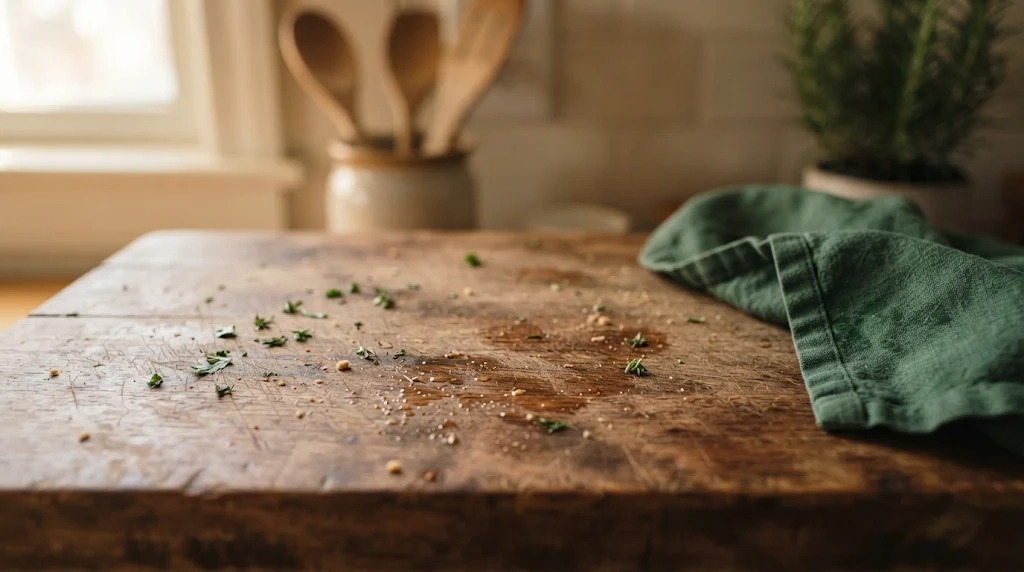
Zebrawood should not automatically be considered a food-safe cutting-board material. Its suitability depends on species identification, manufacturing, surface condition, and verified food-contact use.
I would not recommend making a daily chopping board from unidentified zebrawood lumber. Hardness alone does not establish food safety.
What Makes Wood Suitable for Food Contact?
A suitable cutting-board material must withstand repeated knife contact and routine washing. Its surface should remain smooth and reasonably easy to clean.
The FDA Food Code identifies hard maple or equivalently hard, close-grained wood as acceptable for specified cutting-board applications in regulated food establishments.
This provision provides a useful benchmark. It does not mean every hardwood with sufficient hardness automatically meets the same criteria.
For a broader explanation of selecting kitchen-safe lumber, read my guide to using different wood species for cutting boards.
Why Does Zebrawood’s Open Grain Matter?
Zebrawood has relatively large, open pores. Food debris and moisture may be harder to remove from an uneven or damaged surface.
Open pores do not automatically make every wooden surface unsafe. However, they create an additional cleaning concern when compared with finer-grained woods.
- Food residue: Small particles may collect in surface openings.
- Moisture exposure: Repeated washing can stress poorly maintained wood.
- Knife marks: Cuts can make an already textured surface harder to clean.
- Surface maintenance: Coarse grain may require more attention during sanding and inspection.
My practical rule is simple: choose a smoother, close-grained surface when preparing food every day. A beautiful appearance should never outweigh cleanability.
Can You Cut Raw Meat on Zebrawood?
I would avoid using an unverified zebrawood board for raw meat, poultry, or seafood. These foods create higher cross-contamination concerns.
A dedicated, washable cutting board is a more dependable choice. Separate boards for raw animal products and ready-to-eat ingredients also simplify safe preparation.
The USDA cutting-board guidance explains cleaning and sanitation practices for wooden and plastic boards.
How Hard Is Zebrawood Compared With Other Cutting Board Woods?
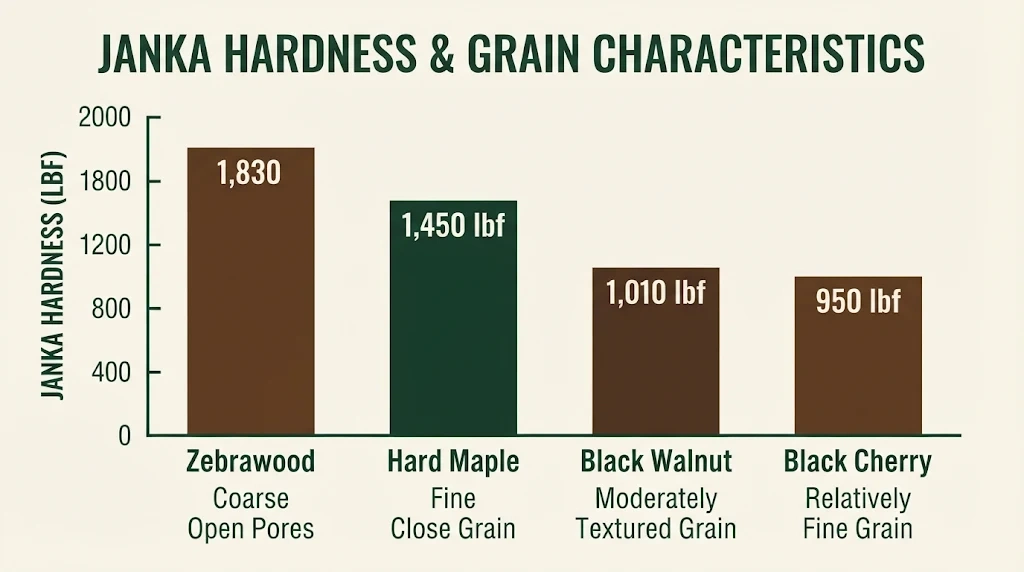
Zebrawood is harder than several popular cutting-board hardwoods. Its typical Janka hardness is approximately 1,830 pounds-force.
The Janka test measures a wood’s resistance to indentation. It does not directly measure food safety, knife sharpness retention, or cleaning performance.
Zebrawood vs. Maple vs. Walnut vs. Cherry
| Wood Species | Janka Hardness | Grain Characteristics | My Preferred Use |
|---|---|---|---|
| Zebrawood | 1,830 lbf | Coarse, open pores | Decorative projects |
| Hard Maple | 1,450 lbf | Fine, close grain | Everyday chopping |
| Black Walnut | 1,010 lbf | Moderately textured grain | Premium kitchen boards |
| Black Cherry | 950 lbf | Relatively fine grain | Light and moderate food prep |
Note: Hardness figures are approximate reference values for the named species. Individual pieces of lumber can vary.
Is Harder Wood Always Better?
No. Extremely hard wood may resist dents, but that doesn’t guarantee comfortable knife work or easier cleaning.
For example, hard maple offers less indentation resistance than zebrawood, yet its fine grain makes it a more established cutting-board choice.
Black walnut provides another useful balance. You can explore its strengths in my guide to walnut wood cutting boards.
What Are the Advantages and Disadvantages of Zebrawood Cutting Boards?
Zebrawood has attractive qualities for woodworking projects. However, several characteristics make it less suitable for routine chopping.
Potential Advantages
- Striking appearance: The striped grain provides a distinctive decorative finish.
- High hardness: Zebrawood offers strong resistance to surface indentation.
- Durable heartwood: The material has useful natural durability in appropriate applications.
- Decorative versatility: Its pattern works well for borders and non-cutting design features.
- Premium appearance: Zebrawood can create an attractive handcrafted presentation piece.
Important Disadvantages
- Large pores: Its open texture is less desirable for a frequently washed cutting surface.
- Interlocked grain: Machining can cause tearout and uneven surfaces.
- Hard cutting feel: Its high hardness may be less forgiving than softer board woods, although actual knife wear depends on several factors.
- Dust sensitivity: Woodworking exposure may irritate sensitive individuals.
- Extra verification: Buyers must confirm species, finishes, and intended food-contact use.
For most home cooks, these disadvantages outweigh the decorative benefits. I would choose zebrawood for its appearance rather than its chopping performance.
Is Zebrawood Toxic or Dangerous?
Zebrawood has been reported as a wood sensitizer, particularly during woodworking. Reported reactions commonly involve irritation of the eyes or skin.
This information concerns exposure to wood and woodworking dust. It does not establish that ordinary food contact with a finished zebrawood object necessarily causes poisoning.
Is Zebrawood Dust Harmful?
Wood dust can irritate the respiratory system and may trigger allergic reactions. Zebrawood’s reported sensitizing potential makes proper dust control especially important.
Anyone sanding or cutting zebrawood should take workplace exposure seriously. I would use suitable dust extraction and appropriate respiratory protection.
- Use effective dust collection when machining zebrawood.
- Wear appropriate respiratory and eye protection.
- Avoid prolonged direct contact with wood dust.
- Clean the work area without spreading dust into the air.
- Stop exposure if irritation develops and seek medical advice when needed.
Does Food-Grade Mineral Oil Make Zebrawood Safe?
No. Mineral oil can condition suitable wooden cutting boards, but it cannot establish that an unsuitable wood species is food-safe.
Oil also doesn’t permanently eliminate large pores or repair contaminated cracks. A food-contact finish is only one part of evaluating a cutting board.
Never assume that applying oil makes unknown lumber, decorative stains, or questionable adhesives safe for direct food preparation.
Can You Use Zebrawood for a Serving Board?
Zebrawood may be more appealing as a decorative serving accessory than as a heavily used cutting surface. However, serving food directly on it still requires appropriate food-contact construction.
I would consider zebrawood for decorative edges, handles, or other features outside the food-contact area. These uses highlight its stripes without relying on it as the primary chopping material.
What About Cheese, Bread, and Charcuterie?
A zebrawood serving board should contact food only when its manufacturer confirms the finished product is suitable. That includes the finish, glue, and the intended serving conditions.
A decorative board with an unknown coating shouldn’t be treated as food-safe. Using a separate approved serving surface is a simpler option.
For a deeper explanation, see my comparison of serving boards versus cutting boards.
Can You Make a Cutting Board With Zebrawood?
You can physically construct a board from zebrawood, but that doesn’t mean the result is suitable for food preparation. I recommend selecting a more established hardwood for the main cutting surface.
If you’re considering a mixed-wood design, keep zebrawood in decorative areas that won’t be exposed to repeated knife contact. Confirm all materials before making anything intended to touch food.
What Should You Check Before Starting?
- Identify the species: Obtain the scientific name from your lumber supplier.
- Confirm its history: Avoid reclaimed, painted, pressure-treated, or chemically contaminated lumber.
- Assess the grain: Look for large pores, tearout, cracks, and unstable areas.
- Verify food-contact suitability: Do not rely on hardness or appearance alone.
- Choose appropriate materials: Confirm that adhesives and finishes match the intended application.
- Prioritize safer alternatives: Use hard maple or another suitable cutting-board hardwood whenever verification is uncertain.
A decorative woodworking project and a working cutting board have different requirements. They should be evaluated separately.
Is Edge Grain or End Grain Better?
Edge-grain and end-grain construction expose different parts of the wood fibers. Both can work well with suitable hardwood species.
However, changing zebrawood’s grain orientation does not remove its species-specific concerns. An end-grain layout cannot automatically solve food-contact or open-pore questions.
For a practical project using established board woods, see my guide to making an end-grain cutting board.
How Should You Clean and Maintain a Wooden Cutting Board?
A properly manufactured wooden cutting board needs consistent cleaning and thorough drying. This applies to maple, walnut, cherry, and other approved wooden boards.
The University of Maine Cooperative Extension provides detailed recommendations for cutting-board materials, sanitation, storage, and maintenance.
Daily Cleaning Steps
- Remove food residue: Scrape away crumbs and remaining ingredients.
- Wash promptly: Use warm water, mild dish soap, and a clean sponge or brush.
- Rinse thoroughly: Remove soap and loosened debris.
- Sanitize when appropriate: Follow established food-contact sanitizer instructions, particularly after raw meat preparation.
- Dry the surface: Wipe with a clean towel.
- Allow airflow: Store the board upright until completely dry.
Do not leave a wooden board submerged in water. Most glued wooden cutting boards also should not go into a dishwasher unless their manufacturer specifically permits it.
How Often Should You Oil a Wooden Board?
Condition a suitable wooden board when it begins looking dry or absorbing water unusually quickly. Usage frequency and washing habits determine how often it needs attention.
Food-grade mineral oil is a common option. Apply a thin, even layer, allow it to absorb according to product directions, and remove excess oil.
When Should You Replace a Cutting Board?
Replace a board when damage prevents effective cleaning. Deep cracks, separating glue joints, and heavily scored surfaces are important warning signs.
Minor scratches on suitable hardwood can sometimes be repaired. Learn when restoration makes sense in my guide to refinishing a wooden cutting board.
What Are the Best Alternatives to Zebrawood for Cutting Boards?
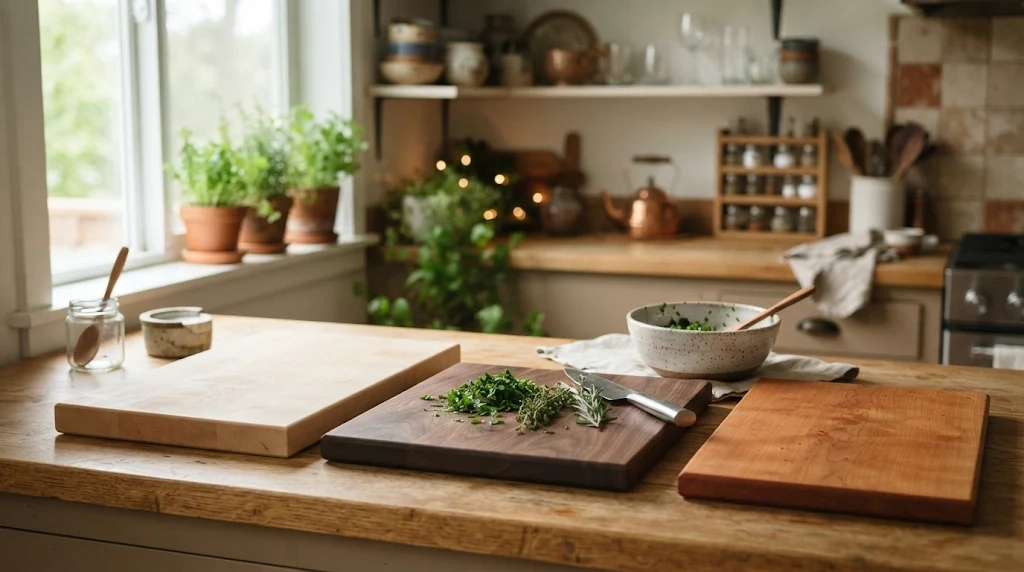
Hard maple is my preferred general-purpose alternative. Black walnut and cherry are also worth considering when sourced and manufactured for food preparation.
1. Hard Maple: Best for Everyday Chopping
Hard maple combines useful hardness with a relatively fine, close-grained structure. It is widely used in traditional cutting boards and butcher blocks.
Its approximately 1,450 lbf Janka hardness offers strong resistance to indentation. I recommend it for cooks who want a durable, straightforward work surface.
2. Black Walnut: Best for Dark Appearance
Black walnut offers a rich chocolate-brown color without zebrawood’s dramatic coarse texture. Its approximate Janka hardness is 1,010 lbf.
Walnut can show dents sooner than maple, but its cutting feel and appearance are appealing. It is a useful option for premium kitchen boards.
3. Black Cherry: Best for a Warm, Traditional Look
American black cherry has an approximate Janka hardness of 950 lbf. Its warm reddish-brown color deepens with age and light exposure.
Cherry is softer than maple and zebrawood, so it may show wear sooner. Still, it provides a practical alternative when properly constructed and maintained.
Recommended Cutting Boards and Care Products
If you’re choosing a cutting board instead of experimenting with zebrawood, these established products are worth comparing. I selected them for their materials, intended uses, and manufacturer-described features.
Disclosure: As an Amazon Associate, I earn from qualifying purchases. The ratings below are editorial suitability assessments, not verified customer-review averages or claims of hands-on testing.
🏆 Best for Everyday Chopping
John Boos Chop-N-Slice Maple Cutting Board
★★★★☆ 4/5
This hard maple board is available in multiple sizes, including an 18-by-12-inch version that is 1.25 inches thick. Its reversible cutting surface makes it my first choice among these options for everyday vegetables, herbs, and general meal preparation.
🌳 Best for Premium Appearance
John Boos Walnut R-Board Series
★★★★☆ 4/5
This solid walnut board comes in several sizes, including an 18-by-12-inch version with a 1.5-inch thickness. I favor it for cooks who want an elegant dark wood surface without choosing zebrawood primarily for its stripes.
🛠️ Best for Board Maintenance
Howard Butcher Block Conditioner
★★★★☆ 4/5
This conditioner combines food-grade mineral oil with beeswax and carnauba wax. It is useful for maintaining compatible wooden boards, although it cannot make an otherwise unsuitable wood species safe for cutting.
Frequently Asked Questions
1. Is Zebrawood Food-Safe for a Cutting Board?
Zebrawood should not be assumed food-safe simply because it is a hardwood. Its large pores, coarse texture, and reported sensitizing properties deserve consideration. A finished product needs verified food-contact suitability, appropriate construction, and reliable cleaning instructions. For frequent chopping, hard maple is generally my preferred alternative.
2. Does Zebrawood Harbor Bacteria?
Zebrawood’s open pores can make food residue and moisture harder to remove from a damaged or poorly maintained surface. That doesn’t prove every zebrawood board contains harmful bacteria. Cleaning practices, surface condition, and manufacturing quality matter. I prefer close-grained wood for routine food preparation.
3. Will a Zebrawood Cutting Board Dull Knives?
Zebrawood is harder than maple, walnut, and cherry, which may make its cutting surface feel less forgiving. However, Janka hardness alone cannot predict knife-edge wear. Grain orientation, cutting technique, knife steel, and surface condition also matter. A suitable maple or walnut board is a more established choice.
4. Can I Use Mineral Oil on Zebrawood?
Food-grade mineral oil can be applied to appropriate unfinished wooden surfaces, but the product instructions must match the intended use. It does not prove that zebrawood is safe for direct food contact. Mineral oil also cannot fix large pores, unstable glue joints, chemical contamination, or unsuitable decorative coatings.
5. Is Zebrawood Better Than Maple for Cutting Boards?
No, not for most everyday kitchen tasks. Zebrawood has greater indentation hardness and a more dramatic appearance, but maple offers a finer, more established cutting surface. Hard maple is generally the more practical choice for frequent chopping, routine cleaning, and reliable long-term kitchen use.
Final Verdict: Should You Use Zebrawood for a Cutting Board?
Zebrawood is an impressive decorative hardwood, but I would not make it my primary cutting-board material. Its 1,830 lbf hardness is appealing, yet open pores and food-contact uncertainty reduce its practical advantages.
For everyday preparation, I recommend a properly manufactured hard maple board. Walnut and cherry are attractive alternatives when you want a different color or cutting feel.
If you already own zebrawood, consider using it for decorative woodworking rather than assuming it belongs under a kitchen knife. Verify any finished object’s food-contact suitability before placing food directly on it.
My final recommendation: Choose zebrawood for its beautiful striped appearance, but choose a proven cutting-board hardwood for daily chopping. Your kitchen will benefit more from a cleanable, dependable surface than an unusual grain pattern.