
How to Clean a Wooden Cutting Board: The Complete Care Guide
Quick Answer
To clean a wooden cutting board, wash it by hand with warm water and mild dish soap. Scrub both sides, rinse thoroughly, and dry immediately with a clean towel. Let it air-dry completely before storage. For extra food safety, follow the FoodSafety.gov cleaning and separation guidelines.
Six Quick Cleaning Steps
- Remove food debris: Scrape away crumbs and leftover ingredients.
- Wash with soap: Use warm water and mild dish detergent.
- Scrub all surfaces: Clean both faces, edges, and grooves.
- Rinse thoroughly: Remove soap and loosened food particles.
- Dry immediately: Wipe away surface moisture with a clean towel.
- Air-dry upright: Allow complete drying before storing the board.
Important Safety Reminder
- Never soak wood: Prolonged water exposure can encourage swelling and warping.
- Sanitize when needed: Extra care matters after contact with raw animal products.
- Condition dry wood: Apply food-grade mineral oil after thorough cleaning and drying.
A wooden cutting board makes chopping comfortable, but proper cleaning is essential for keeping it suitable for food preparation. Even a beautiful hardwood board can develop odors, stains, or moisture damage when neglected.
I recommend a simple care routine that separates cleaning, sanitizing, drying, and conditioning. Each step serves a different purpose, and understanding those differences makes maintenance easier.
This guide explains how to clean a wooden cutting board safely, handle stubborn odors, prevent damage, and recognize when replacement makes more sense than restoration.
Why Is Cleaning a Wooden Cutting Board Important?
Cleaning removes food residue, grease, and surface contamination that accumulate during meal preparation. It also helps prevent cross-contamination between ingredients.
A wooden cutting board is a food-preparation surface made from wood, commonly maple, walnut, cherry, or another suitable hardwood. Unlike nonporous materials, wood can absorb moisture through exposed fibers and damaged areas.
That doesn’t make wooden boards automatically unsafe. Their condition and your cleaning habits matter more than appearance alone.
- Food safety: Proper cleaning reduces the transfer of contamination between foods.
- Odor control: Removing food residue limits lingering smells from garlic, onions, and other ingredients.
- Surface maintenance: Gentle washing helps protect wood from unnecessary wear.
- Moisture management: Thorough drying reduces conditions that encourage mold and warping.
- Long-term value: Consistent maintenance can extend the useful life of a quality board.
The USDA’s cross-contamination guidance recommends washing cutting boards after preparing each food item and before moving to another.
What Do You Need to Clean a Wooden Cutting Board?
You don’t need an expensive cleaning kit. Basic kitchen supplies handle most everyday cleaning tasks.
Essential Cleaning Supplies
- Mild dish soap: Removes grease and ordinary food residue.
- Warm running water: Helps rinse away detergent and loosened particles.
- Soft dish brush: Reaches shallow surface grooves without harsh abrasion.
- Clean towel: Removes moisture immediately after washing.
- Drying rack: Supports airflow around both board surfaces.
Optional Maintenance Supplies
- Food-grade mineral oil: Conditions suitable unfinished wooden surfaces.
- Cutting board conditioner: Helps maintain wood using food-contact-compatible ingredients.
- Baking soda: Offers gentle supplementary cleaning for certain surface odors or marks.
- Food-contact sanitizer: Provides additional sanitizing when used according to appropriate instructions.
Choose cleaning products carefully. Strong fragrances and harsh household chemicals aren’t necessary for routine wooden board care.
How Do You Clean a Wooden Cutting Board After Every Use?
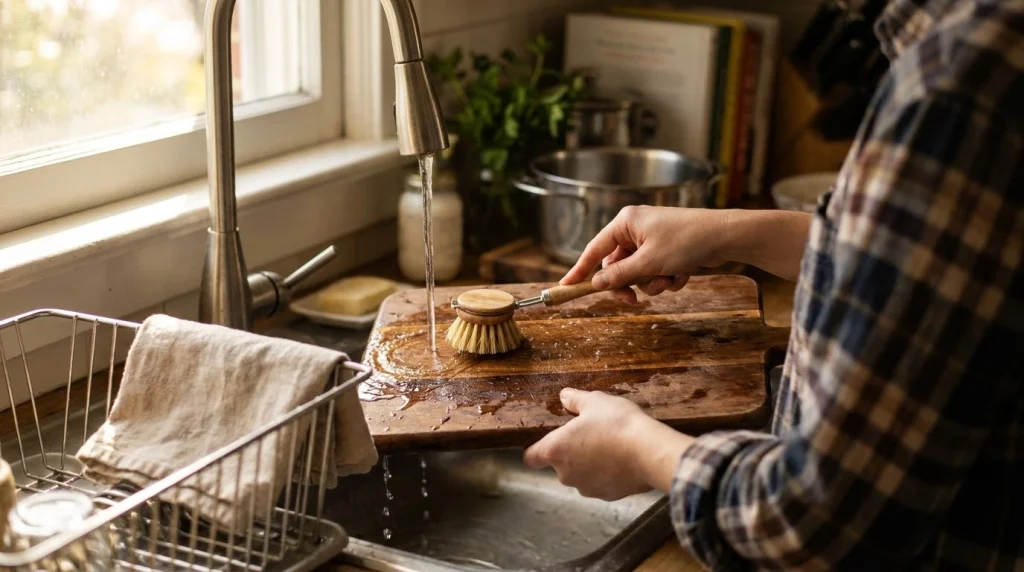
The best everyday method is handwashing with soap and warm water, followed by complete drying. Work promptly instead of allowing food residue to sit on the surface.
Step 1: Remove Food Scraps
Start by removing visible crumbs, vegetable pieces, and other food particles. Use a bench scraper or the back of a suitable utensil without digging into the wood.
Pay attention to corners and juice grooves. These areas can hold residue that a quick wipe might miss.
Step 2: Wash With Warm Water and Dish Soap
Apply a small amount of mild dish soap to a damp sponge or soft brush. Scrub the cutting surface gently while the board is under or near running water.
Warm water helps remove cooking oils and ordinary residue. Avoid leaving the board submerged in a filled sink.
Step 3: Clean Both Sides and Every Edge
Turn the board over and clean its underside. Don’t ignore handles, edges, or juice channels.
These areas can collect food residue and moisture. Cleaning the entire board also makes its condition easier to inspect.
Step 4: Rinse Away the Soap
Rinse all cleaned surfaces with clean running water. Continue until visible suds and loosened particles disappear.
Keep rinsing brief rather than soaking the board. The goal is to remove detergent without unnecessary water exposure.
Step 5: Dry With a Clean Towel
Use a fresh, absorbent towel or clean paper towels to remove standing water. Wipe the top, bottom, and edges.
A board may feel dry on one face while its underside remains wet. Check both sides before moving it to the drying rack.
Step 6: Let the Board Air-Dry Completely
Stand the cutting board upright in a well-ventilated space. Make sure air can circulate around its surfaces.
Avoid placing a damp board flat against a countertop for extended periods. Trapped moisture can contribute to uneven drying.
My practical rule is simple: a clean cutting board isn’t ready for storage until it’s also fully dry.
How Do You Sanitize a Wooden Cutting Board Safely?
Sanitizing reduces microorganisms after physical cleaning removes food residue. It’s especially important when a cutting board has contacted raw meat, poultry, seafood, or their juices.
Washing and sanitizing are different processes. Sanitizers should not replace thorough cleaning with soap and water.
Using a Diluted Bleach Solution
The USDA describes a household sanitizing method using one tablespoon of unscented liquid chlorine bleach per gallon of water. Follow the directions for the specific bleach product and never use scented or splashless products unless they are expressly suitable.
- Wash the board thoroughly with hot, soapy water.
- Rinse away soap and visible residue.
- Prepare a fresh sanitizing solution using the appropriate product and dilution.
- Apply the solution across the food-contact surfaces.
- Allow it to remain for several minutes, following applicable guidance.
- Rinse with clean water when required by the instructions, then dry thoroughly.
Use the sanitizer only as directed, and avoid prolonged soaking of wooden boards. Never mix bleach with vinegar, ammonia, or other cleaners.
For additional instructions, review the USDA’s surface sanitizing recommendations.
When Is Sanitizing Necessary?
- After preparing raw meat, poultry, or seafood.
- After suspected contact with contaminated food.
- Before switching from raw animal products to ready-to-eat ingredients.
- Whenever food-safety guidance calls for additional sanitation.
For easier separation, consider dedicating one board to raw animal products and another to produce or ready-to-eat foods. A dishwasher-safe nonporous board can also be convenient for raw meat preparation.
Wooden Cutting Board Cleaning Methods Compared
Different cleaning methods solve different problems. Choosing the right method prevents unnecessary treatment and helps protect the board.
| Method | Best Use | Key Limitation |
|---|---|---|
| Dish soap and warm water | Everyday cleaning | Does not replace sanitizing when needed |
| Approved sanitizer | Reducing microorganisms after washing | Requires correct dilution and contact time |
| Baking soda paste | Gentle spot cleaning on compatible boards | Not a validated sanitizer |
| Lemon or vinegar | Limited odor or residue treatment where permitted | Acidity may affect finishes; not a sanitizer substitute |
| Food-grade mineral oil | Conditioning clean, dry wood | Does not clean or sanitize |
For most meals, soap and water are the foundation. Supplemental treatments should address a specific issue rather than become automatic daily steps.
Can You Clean a Wooden Cutting Board With Vinegar, Lemon, or Baking Soda?
Some household ingredients can help with limited surface-cleaning problems, but they don’t replace proper washing. Wood species, finishes, and manufacturer instructions affect which treatments are appropriate.
Cleaning With White Vinegar
White vinegar is sometimes used for mild surface cleaning and odors. However, vinegar is not a reliable substitute for a validated food-contact sanitizing procedure.
Repeated acidic treatments may affect certain finishes. Check your board manufacturer’s instructions before applying vinegar to the wood.
Cleaning With Lemon
Lemon can help address some food odors, particularly after cutting aromatic ingredients. Its acidity may also affect sensitive finishes or certain wood surfaces.
If your manufacturer permits it, use lemon sparingly and wash away any residue afterward. Never rely on lemon juice alone after preparing raw poultry or meat.
Using Baking Soda for Surface Marks
Baking soda may help loosen certain superficial stains or residues. Mix a small amount with water to create a soft paste.
- Test the paste on a small, inconspicuous area.
- Apply it gently to the affected spot.
- Rub lightly with a soft damp cloth.
- Wash away the residue using mild soap and water.
- Rinse briefly and dry the board completely.
Avoid aggressive scrubbing because abrasive particles can dull or scratch a smooth wood finish.
The University of Maine Cooperative Extension cutting board guide offers additional material-specific cleaning advice.
How Do You Remove Bad Smells From a Wooden Cutting Board?
Start with thorough washing and drying. Persistent odors often come from food residue, trapped moisture, or strongly aromatic ingredients.
Garlic, onions, fish, and some spices can leave noticeable smells. Treat the underlying residue before trying optional odor-removal methods.
A Practical Odor-Removal Routine
- Remove any visible food particles.
- Wash both sides with mild dish soap.
- Use a soft brush on shallow grooves.
- Rinse thoroughly with clean water.
- Dry the board and allow full airflow.
- Recheck the odor after complete drying.
If the smell remains, consult the board manufacturer’s guidance before using additional treatments. Persistent mustiness accompanied by mold, softening, or damaged joints calls for replacement rather than deodorizing.
For more specific techniques, read this guide on how to remove odors from a cutting board.
How Do You Remove Stains From a Wooden Cutting Board?
Start by identifying the stain. Surface discoloration from beets, berries, or spices differs from dark patches associated with moisture damage.
Not every color change indicates contamination. Some harmless discoloration remains even after a board has been cleaned correctly.
Handling Ordinary Food Stains
- Fresh stains: Wash promptly before residue dries.
- Greasy marks: Use mild dish soap and gentle brushing.
- Colored food residue: Repeat normal cleaning rather than using aggressive chemicals.
- Deep discoloration: Inspect the surrounding surface for cracks, softness, or unusual odors.
A light stain may fade with regular cleaning. Avoid sanding a board simply to remove harmless discoloration.
For stubborn marks, see the detailed guide on removing stains from a cutting board.
How Should You Dry a Wooden Cutting Board?
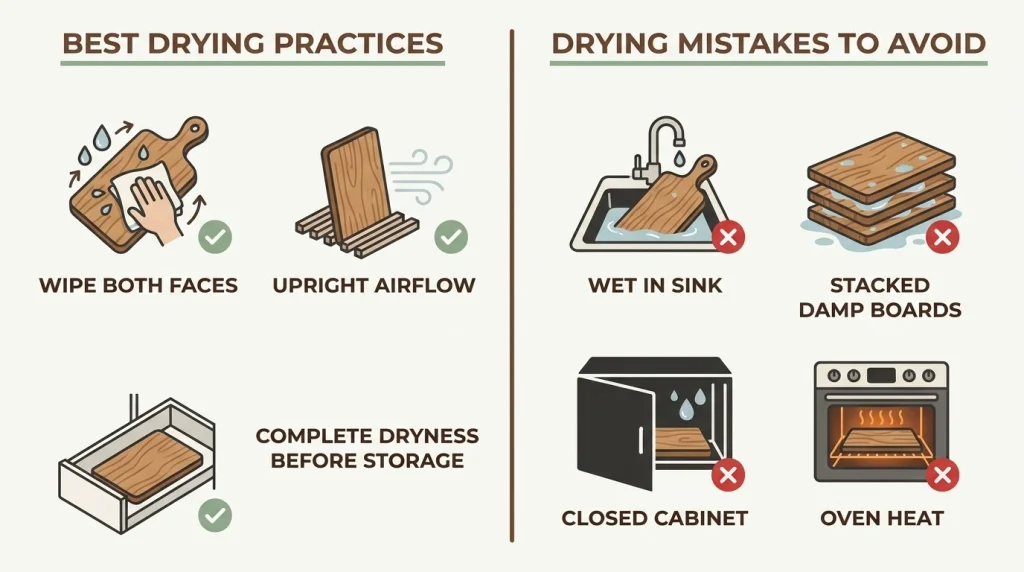
Dry the board with a clean towel, then stand it where air can circulate around both faces. Complete drying is an important part of wooden cutting board maintenance.
Water can enter exposed wood fibers, joints, and knife marks. Uneven moisture exposure may contribute to distortion over time.
Best Drying Practices
- Wipe both faces immediately after rinsing.
- Dry the board’s edges and handles.
- Use a rack that exposes both sides to airflow.
- Keep the board away from standing water.
- Wait until completely dry before enclosed storage.
Drying Mistakes to Avoid
- Leaving the board wet in a sink.
- Stacking damp boards against one another.
- Storing the board inside a closed cabinet while moist.
- Using an oven or direct intense heat to speed drying.
- Resting one wet side directly against a countertop for hours.
Wood can react poorly to abrupt temperature and humidity changes. Normal room-temperature airflow is a gentler approach.
Should You Oil a Wooden Cutting Board After Cleaning?
Oil a suitable unfinished wooden board when its surface looks dry or the manufacturer recommends conditioning. Oiling is maintenance, not a substitute for washing or sanitizing.
Food-grade mineral oil is a common choice because it doesn’t become rancid like many cooking oils. Apply it only after the board is clean and fully dry.
How to Apply Cutting Board Oil
- Wash the board and let it dry completely.
- Place it on a clean, protected work surface.
- Apply a modest amount of food-grade mineral oil.
- Spread the oil across the top, underside, and exposed edges.
- Allow it to absorb according to the product directions.
- Wipe away all excess oil before using the board.
For boards needing frequent maintenance, inspect the surface regularly rather than following a rigid schedule. Heavy use, washing frequency, and indoor humidity all influence conditioning needs.
John Boos recommends approximately monthly conditioning for its applicable wooden products, adjusted for use and household conditions.
See my complete guide on how to oil a wooden cutting board for more detailed maintenance instructions.
Can You Put a Wooden Cutting Board in the Dishwasher?
For most household wooden cutting boards, handwashing is the safest default. High heat, lengthy wet cycles, and dishwasher detergents may damage wood or glued joints.
Some solid hardwood boards can tolerate dishwasher cleaning according to USDA guidance. However, laminated boards and many manufacturers’ wooden products should never go in the dishwasher.
Always follow the instructions for your exact board. If those directions are unavailable, handwash and dry it carefully instead of experimenting with machine washing.
What Should You Do After Cutting Raw Meat on Wood?
Clean the cutting board promptly and sanitize it using an appropriate food-contact procedure. Don’t place cooked food or ready-to-eat vegetables on the contaminated board before cleaning and sanitizing.
Raw poultry, seafood, and meat juices can transfer harmful microorganisms to other foods. Separate cutting boards help reduce this risk.
Safer Food Preparation Habits
- Use a dedicated board for raw animal products whenever possible.
- Wash hands after handling raw meat or poultry.
- Clean knives and other utensils before switching ingredients.
- Keep raw juices away from ready-to-eat foods.
- Sanitize exposed food-contact surfaces as recommended.
- Replace boards with deep, difficult-to-clean grooves.
Imagine cutting raw chicken and then preparing tomatoes for a salad. Switching ingredients without cleaning and sanitizing the work surface creates an avoidable cross-contamination risk.
How Often Should You Clean and Maintain a Wooden Cutting Board?
Wash your wooden cutting board after every use. Sanitizing and conditioning depend on food contact, surface condition, and manufacturer guidance.
| Care Task | Recommended Timing |
|---|---|
| Handwashing | After every use and between food types as needed |
| Sanitizing | After raw animal-product contact and when contamination is suspected |
| Drying | Immediately after every wash |
| Conditioning | When needed or as the manufacturer recommends |
| Damage inspection | Regularly, especially before food preparation |
As of 2026, these basic cleaning and separation practices remain consistent with established food-safety guidance. The right routine should fit your board’s material and condition.
Common Wooden Cutting Board Cleaning Mistakes
Wooden cutting boards often suffer more from improper handling than ordinary food preparation. Avoiding a few habits can make daily care easier.
- Soaking overnight: Extended moisture exposure can encourage swelling, joint damage, and warping.
- Ignoring the underside: Hidden moisture and residue can remain after superficial washing.
- Using harsh abrasives: Aggressive scrubbing may damage the cutting surface.
- Applying oil to dirty wood: Oil doesn’t remove existing contamination.
- Using ordinary vegetable oil: Some food oils can oxidize and develop unpleasant odors.
- Skipping drying: Damp storage creates conditions that encourage moisture problems.
- Using vinegar as sanitizer: Household acidic cleaners aren’t universal substitutes for validated sanitizing methods.
- Keeping heavily damaged boards: Deep grooves and cracks can become difficult to clean properly.
When Should You Replace a Wooden Cutting Board?
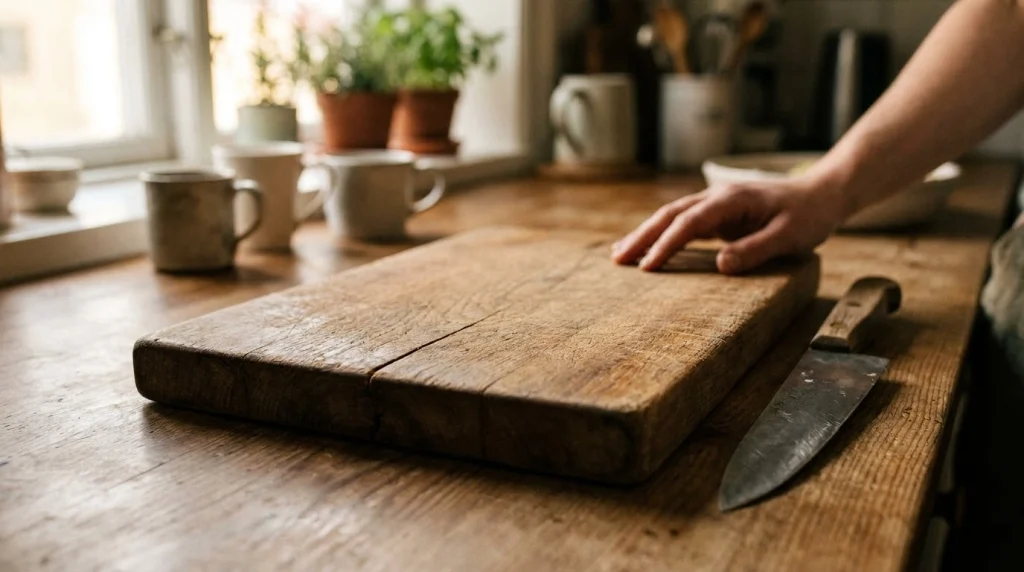
Replace a wooden cutting board when damage makes thorough cleaning difficult. Deep grooves, separating joints, persistent contamination, and significant cracks are warning signs.
Minor cosmetic scratches are different from structural damage. Evaluate whether the surface can still be cleaned, dried, and used reliably.
Signs That Replacement May Be Necessary
- Deep knife grooves: Food debris becomes trapped beyond normal cleaning reach.
- Open cracks: Gaps can retain food and moisture.
- Separated glued joints: The board may no longer form a continuous, cleanable surface.
- Visible mold: Moldy porous boards are safer to replace than attempt to disinfect at home.
- Severe warping: Instability may make knife work unsafe.
- Persistent unpleasant odor: Odor accompanied by damage or moisture problems requires closer inspection.
If you notice suspicious patches or recurring moisture problems, review this guide on preventing mold on cutting boards.
Some lightly worn boards may be candidates for refinishing when their structure remains sound. However, sanding shouldn’t be used to rescue a board with suspected deep contamination or major structural defects.
Recommended Products for Wooden Cutting Board Care
You don’t need every maintenance product available. I prefer choosing a suitable cleaner or conditioner based on the specific problem a board needs help with.
The following products address different maintenance priorities. The stars represent editorial use-case fit, not verified customer-review scores or hands-on test results.
Affiliate disclosure: As an Amazon Associate, we may earn from qualifying purchases made through eligible links, at no additional cost to you.
🏆 Best for Regular Oiling
John Boos Mystery Oil
★★★★★ 5/5 editorial fit
John Boos Mystery Oil is designed for maintaining wooden cutting boards and butcher blocks. Its straightforward application makes it a practical choice for conditioning suitable unfinished wood.
I recommend considering this product when your board needs regular oiling rather than a surface wax treatment.
🪵 Best for Conditioning
Howard Butcher Block Conditioner
★★★★☆ 4/5 editorial fit
Howard Butcher Block Conditioner combines food-grade mineral oil with beeswax and carnauba wax. It is intended for conditioning suitable wooden food-preparation surfaces.
I would choose this option when a compatible board needs a wax-containing conditioner instead of mineral oil alone.
🧽 Best for Everyday Scrubbing
OXO Good Grips Nylon Bristle Dish Brush
★★★★☆ 4/5 editorial fit
This reusable nylon-bristle brush is designed for everyday dish cleaning. A suitable soft-bristle brush can help remove food residue from shallow cutting board grooves.
I recommend using gentle pressure and checking the board finish before scrubbing.
Frequently Asked Questions
Can You Wash a Wooden Cutting Board With Dish Soap?
Yes. Mild dish soap and warm water are suitable for routine cleaning of most wooden cutting boards. Wash both sides, rinse thoroughly, and dry immediately. Avoid soaking the board, and always follow the manufacturer’s care directions if it has a special finish.
How Do You Deep Clean a Wooden Cutting Board?
Start by scrubbing the entire board with warm, soapy water and rinsing it thoroughly. If sanitizing is necessary, use an appropriate food-contact sanitizer according to its instructions. Dry the board completely and inspect it for grooves, cracks, or other damage before reuse.
Does Vinegar Kill Bacteria on Wooden Cutting Boards?
Vinegar has some antimicrobial properties, but household vinegar treatment isn’t a dependable replacement for validated food-contact sanitizing. Wash the board with soap and water first. When additional sanitation is needed, choose an appropriate sanitizer and follow established food-safety guidance.
Can You Use Olive Oil to Condition a Wooden Cutting Board?
Olive oil isn’t the preferred choice for wooden cutting board conditioning because it can oxidize and develop unpleasant odors over time. Food-grade mineral oil or an appropriate board conditioner is generally a better option for compatible unfinished wood.
How Do You Keep a Wooden Cutting Board From Getting Moldy?
Wash the board after use, remove moisture promptly, and let both sides dry completely before storage. Avoid leaving the board wet in a sink or enclosed space. If visible mold develops within porous wood, replacement is the safer practical choice.
Final Takeaway: Keep Your Wooden Cutting Board Clean and Dry
Learning how to clean a wooden cutting board doesn’t require complicated products or harsh treatments. Consistent handwashing, appropriate sanitizing, and complete drying are the foundations of good board care.
Condition suitable wooden boards when needed, and inspect their surfaces regularly. Replace a board when serious damage makes safe cleaning difficult.
For your next meal, start with a clean, dry board and separate raw animal products from ready-to-eat foods. Those small habits can make everyday food preparation safer and easier.

