
How to Remove Stains From a Cutting Board: Easy Methods That Work
Quick Answer
To remove stains from a cutting board, wash it with warm, soapy water, then gently scrub stained areas with a paste of baking soda and water. Rinse thoroughly and dry completely. Wooden boards need gentle hand-cleaning, while plastic boards may tolerate stronger cleaning methods. For food safety, follow the USDA cutting board cleaning guidance.
Five Quick Steps to Remove Stains
- Wash the board: Remove loose food residue using dish soap and warm water.
- Prepare a paste: Combine two parts baking soda with three parts water.
- Treat the stain: Apply the paste and gently scrub with a soft brush.
- Rinse thoroughly: Wash away the paste and loosened discoloration.
- Dry completely: Wipe the board and allow both sides to air-dry.
Important Safety Reminder
- Cleaning is not sanitizing: Stain removal alone does not guarantee that harmful germs are eliminated.
- Inspect for damage: Replace boards with deep, hard-to-clean grooves, serious cracks, or persistent mold.
Nothing makes a cutting board look tired faster than stubborn food stains. Beet juice, turmeric, tomato sauce, and dark berries can leave marks that ordinary washing doesn’t always remove.
My approach is to identify the board material before reaching for a cleaning product. This guide explains how to tackle common stains without unnecessarily damaging your cutting surface.
Why Do Cutting Boards Get Stained?
Cutting boards develop stains when pigments, oils, or food residue remain on their surfaces. Some discoloration settles into knife scratches or the natural grain of wood.
A cutting board stain is a visible change in surface color caused by food, moisture, minerals, or other substances. It isn’t automatically evidence of bacterial contamination.
Common Causes of Cutting Board Stains
- Tomato sauce: Red pigments and oils can leave orange or reddish marks.
- Beets: Strong natural pigments create pink or purple discoloration.
- Turmeric: Curcumin produces stubborn yellow staining.
- Berries: Dark fruit juices can create purple or blue patches.
- Coffee and tea: Plant compounds may leave brown marks.
- Moisture: Water exposure can produce uneven color changes in wood.
- Knife scratches: Tiny grooves can trap colored food particles.
Wood, bamboo, and plastic respond differently to these substances. That’s why the safest cleaning method depends on the material rather than the stain alone.
Does a Stained Cutting Board Mean It’s Dirty?
Not necessarily. A thoroughly cleaned board may retain harmless discoloration from strongly colored ingredients.
However, a clean appearance doesn’t guarantee food safety either. The FDA’s safe food handling guidance emphasizes washing cutting boards and preventing cross-contamination.
My practical rule is simple: judge cleanliness, surface condition, and sanitation separately from appearance.
What Do You Need to Remove Cutting Board Stains?
Most everyday stains don’t require specialized cleaning chemicals. Start with supplies that are gentle enough for routine kitchen maintenance.
Basic Cleaning Supplies
- Dish soap: Loosens grease, food particles, and surface residue.
- Baking soda: Provides mild abrasive action for stubborn discoloration.
- Warm water: Helps wash away loosened material.
- Soft nylon brush: Scrubs without the harshness of steel wool.
- Nonabrasive sponge: Useful for wiping and rinsing.
- Clean towel: Removes excess water after washing.
- Food-grade mineral oil: Conditions suitable wooden boards after cleaning and complete drying.
A fresh lemon may help with some food stains or odors. However, acidic ingredients aren’t suitable for every cutting surface or finish.
Check the manufacturer’s instructions before applying any unusual cleaner. Test new methods on a small, inconspicuous area.
How to Remove Stains From a Wooden Cutting Board
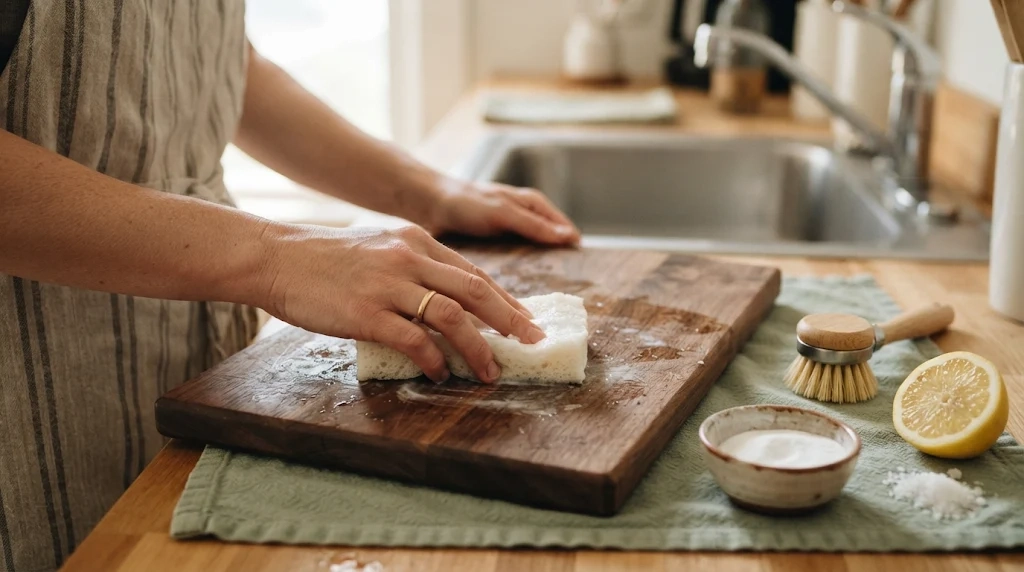
To remove stains from a wooden cutting board, start with mild soap and a soft brush. For remaining discoloration, try a small amount of baking soda paste before considering any stronger treatment.
Wood can absorb water and develop roughness when scrubbed aggressively. Gentle cleaning protects the board’s surface and glued joints.
Step 1: Wash Away Surface Residue
- Remove leftover food particles from the board.
- Wet the surface briefly with warm water.
- Add a small amount of mild dish soap.
- Scrub gently along the wood grain.
- Rinse promptly with clean water.
Clean both sides of the board, even when only one side looks stained. Avoid leaving the wooden board submerged in a sink.
Step 2: Apply a Gentle Baking Soda Paste
Baking soda is a mild abrasive that can help loosen surface discoloration. It offers a useful first treatment before harsher scrubbing.
- Mix two teaspoons of baking soda with three teaspoons of water.
- Spread a thin layer over the stained area.
- Let it remain for about five minutes as a starting point.
- Gently rub using a damp, soft sponge.
- Rinse away every trace of the paste.
Inspect the surface after rinsing. Repeat gently if necessary, but stop if the wood becomes rough or its finish starts changing.
Step 3: Try Lemon and Salt for Suitable Wooden Boards
Lemon and salt may help loosen certain food stains and reduce lingering odors. This traditional method works best as occasional surface cleaning rather than routine aggressive scrubbing.
- Sprinkle a small amount of salt over the affected area.
- Rub gently with the cut side of half a lemon.
- Continue for approximately 30 to 60 seconds.
- Rinse promptly with clean water.
- Dry with a clean towel.
Avoid this method on boards with delicate coatings or manufacturer restrictions. Acid and abrasive particles can alter certain finishes.
Step 4: Dry the Wood Properly
Use a clean towel to absorb water from the front, back, and edges. Stand the board upright where air can circulate.
Never put a wet wooden board directly into a closed cabinet. For more protection, read this guide on preventing a cutting board from warping.
Step 5: Recondition the Board When Needed
Stain removal and repeated washing can leave an unfinished wooden board looking dry. Once it’s completely clean and dry, apply a suitable food-grade board conditioner if the manufacturer recommends it.
Spread a thin layer of oil, allow it to absorb, and wipe away the excess. Follow the detailed process in this wooden cutting board oiling guide.
Important: Mineral oil doesn’t remove stains or sanitize the board. It helps maintain suitable wooden surfaces after cleaning.
How to Remove Stains From a Plastic Cutting Board
Plastic cutting boards are generally easier to clean than wooden boards. Their nonporous surfaces tolerate routine washing well, although knife grooves can hold stains.
White plastic boards often show discoloration from turmeric, tomatoes, and spices. A soft brush and baking soda paste are useful starting tools.
Step 1: Clean With Soap and Warm Water
- Rinse away loose debris.
- Apply ordinary dish soap.
- Scrub the entire cutting surface with a nylon brush.
- Pay special attention to shallow knife marks.
- Rinse thoroughly.
Use enough pressure to remove residue without excessively scratching the plastic. Avoid wire brushes and metal scouring pads.
Step 2: Treat Remaining Discoloration
Apply a small amount of baking soda paste directly to the visible stain. Gently brush the area, then rinse and inspect it.
Some pigments penetrate plastic and leave permanent color changes. Repeated heavy scrubbing can create more scratches without improving the appearance.
Step 3: Use the Dishwasher When Approved
Many plastic cutting boards are dishwasher-safe. The manufacturer’s care instructions determine whether your particular board can tolerate machine washing.
Choose an appropriate wash cycle and allow the board to dry completely. If the plastic warps, cracks, or becomes heavily grooved, consider replacing it.
Can You Remove Stains From Bamboo Cutting Boards?
Yes, many surface stains can be reduced with gentle hand-washing and mild baking soda paste. Bamboo boards should generally be kept out of prolonged water exposure.
Bamboo cutting boards often contain glued strips. Excess moisture can affect their shape and joints.
Safe Bamboo Cleaning Steps
- Wash with mild soap and warm water.
- Scrub gently with a soft sponge.
- Use a small amount of baking soda paste for persistent stains.
- Rinse promptly without soaking.
- Towel-dry both surfaces and allow complete air-drying.
Skip harsh abrasive cleaners and steel wool. They can roughen the cutting surface and make future cleaning more difficult.
The University of Maine’s cutting board safety guide provides additional recommendations for wood, bamboo, plastic, and other materials.
Which Stain Removal Method Works Best?
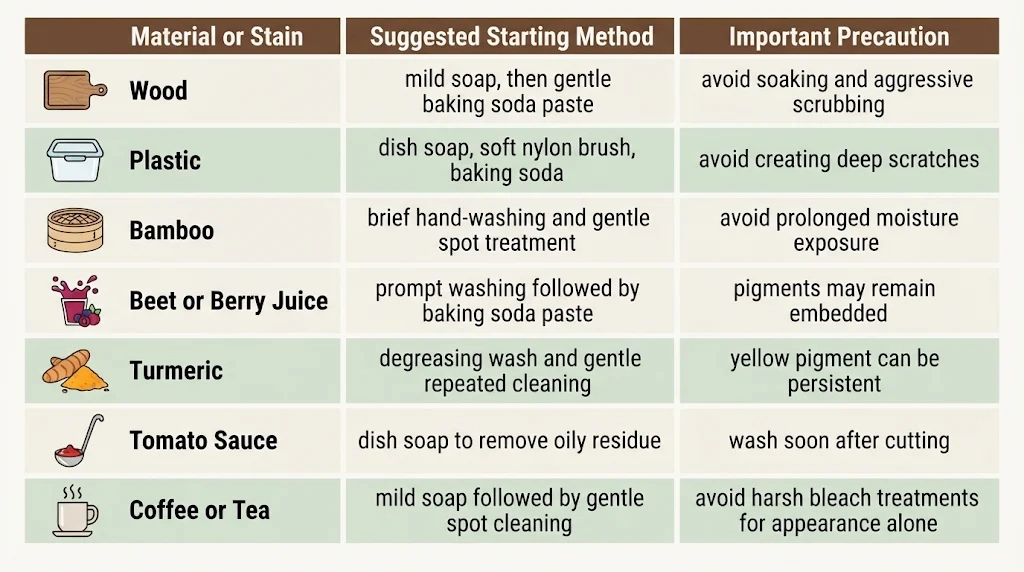
The best method depends on the board material, stain type, and surface condition. The table below compares practical starting approaches rather than guaranteed stain removal results.
| Stain or Material | Suggested Starting Method | Important Precaution |
|---|---|---|
| Wood | Mild soap, then gentle baking soda paste | Avoid soaking and aggressive scrubbing |
| Plastic | Dish soap, soft nylon brush, baking soda | Avoid creating deep scratches |
| Bamboo | Brief hand-washing and gentle spot treatment | Avoid prolonged moisture exposure |
| Beet or berry juice | Prompt washing followed by baking soda paste | Pigments may remain embedded |
| Turmeric | Degreasing wash and gentle repeated cleaning | Yellow pigment can be persistent |
| Tomato sauce | Dish soap to remove oily residue | Wash soon after cutting |
| Coffee or tea | Mild soap followed by gentle spot cleaning | Avoid harsh bleach treatments for appearance alone |
Start with the least aggressive method. Escalate only when the board’s manufacturer permits a stronger treatment.
How Do You Remove Specific Food Stains?
Different foods leave different kinds of discoloration. Identifying the source helps you choose a sensible cleaning approach.
Removing Turmeric Stains
Turmeric contains a strong yellow pigment called curcumin. It can cling to plastic and other cutting surfaces, especially when mixed with cooking oil.
- Wash oily residue away with dish soap.
- Apply a small amount of baking soda paste.
- Scrub gently with a nonabrasive sponge.
- Rinse and repeat if the surface remains intact.
Some yellow discoloration may remain even after thorough cleaning. Don’t damage the board trying to restore a perfectly white appearance.
Removing Beetroot and Berry Stains
Beets and berries contain vivid pigments that can spread quickly across a cutting surface. Early washing often prevents the stain from becoming more noticeable.
- Blot excess juice before it dries.
- Wash with dish soap and warm water.
- Use baking soda paste on remaining marks.
- Rinse thoroughly and allow complete drying.
For example, a pink streak on smooth white plastic is a different problem from a dark mark inside cracked wood. The second situation requires inspecting the board’s condition, not simply removing color.
Removing Tomato and Carrot Stains
Tomatoes and carrots contain pigments that may remain alongside oily residue. Removing the grease first can make surface cleaning easier.
- Apply a small amount of dish soap.
- Scrub with warm water and a soft brush.
- Rinse thoroughly.
- Spot-treat any remaining color with baking soda paste.
Avoid scraping the board with a sharp knife to remove stains. That can damage the cutting surface and create additional places for food to collect.
Removing Dark Coffee or Tea Marks
Coffee and tea stains may develop gradually when liquids remain on the board. Washing them promptly offers the best starting point.
If the stain remains, use gentle paste cleaning and inspect the surface after drying. Deep discoloration in unfinished wood might not disappear completely.
Does Baking Soda or Vinegar Work Better?
Baking soda is generally the better first choice for gentle surface stain removal. Vinegar is acidic and may help with certain residues, but it isn’t appropriate for every material or finish.
Neither product guarantees sanitization. For routine stains, I prefer beginning with dish soap and mild abrasion rather than applying several household chemicals together.
Baking Soda Benefits
- Offers gentle abrasive cleaning when used carefully.
- Can help loosen surface food residue.
- Works on many unfinished wood and plastic surfaces.
- Is inexpensive and widely available.
Vinegar Limitations
- Acidity may affect certain finishes.
- It may not remove embedded food pigments.
- It is not a substitute for an approved food-contact sanitizer.
- It must never be mixed with chlorine bleach.
Mixing vinegar and baking soda produces fizzing, but the reaction doesn’t automatically provide superior stain removal. Treat any cleaning method according to the board manufacturer’s guidance.
Can You Use Bleach to Remove Cutting Board Stains?
Diluted unscented chlorine bleach can be used to sanitize suitable cutting boards after washing. However, sanitizing and removing cosmetic stains are separate goals.
The USDA describes a solution of one tablespoon of unscented liquid chlorine bleach per gallon of water for sanitizing cutting boards. Always check the bleach concentration, product label, and applicable food-contact instructions.
Safe Sanitizing Procedure
- Wash the cutting board thoroughly with hot, soapy water.
- Rinse away the soap and visible debris.
- Prepare the recommended bleach-and-water solution in a suitable container.
- Apply it evenly according to the product and food-safety directions.
- Allow the recommended contact time.
- Rinse with clean water and air-dry completely.
Never apply concentrated bleach directly to wood or plastic. Excessively strong chemicals may damage the cutting board and create unnecessary exposure risks.
Most importantly, never combine bleach with vinegar, lemon juice, ammonia, or another cleaner. Review the CDC’s bleach safety guidance before using chlorine-based products.
Bleach should not be the first treatment for ordinary food discoloration. Begin with simple cleaning unless sanitation is required.
How Can You Prevent Cutting Board Stains?
The easiest stain to remove is the one that never develops. Prompt washing and suitable board maintenance can reduce future discoloration.
Six Everyday Prevention Habits
- Wash promptly: Don’t leave strongly colored food residue sitting on the board.
- Use separate boards: Keep one board for raw animal products and another for ready-to-eat foods.
- Dry thoroughly: Prevent moisture from collecting beneath the board.
- Avoid harsh scrubbing: Preserve a smooth surface that’s easier to clean.
- Condition suitable wood: Apply food-grade mineral oil when recommended.
- Inspect regularly: Check for grooves, cracks, warping, or unusual growth.
For colorful ingredients such as turmeric or beets, an easy-to-clean plastic board can be a practical choice. A wooden board remains useful when it’s properly maintained.
If you are deciding between materials, see this comparison of wood versus plastic cutting boards.
When Should You Replace a Stained Cutting Board?
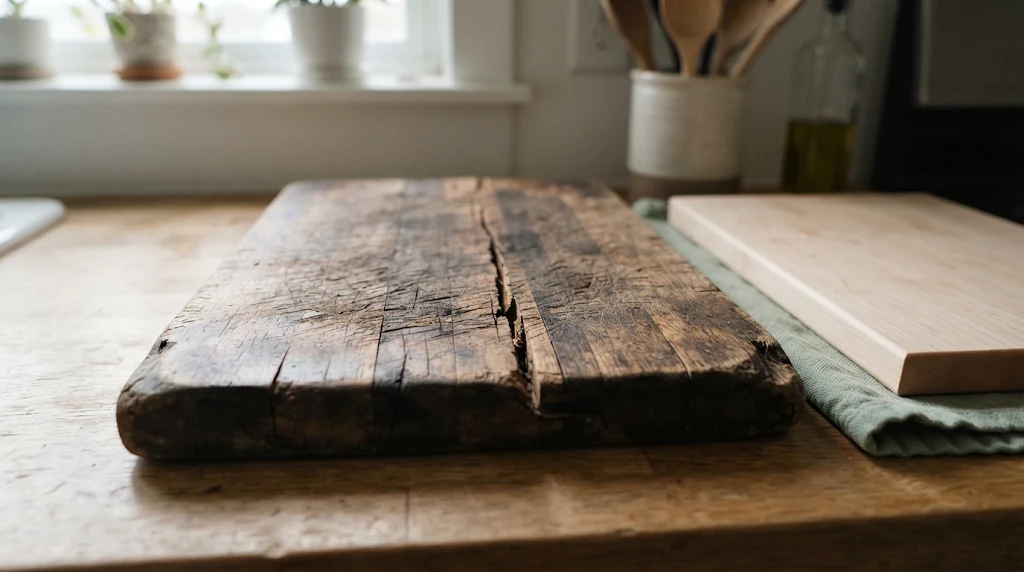
Replace a cutting board when damage prevents reliable cleaning. A faint, harmless food stain alone doesn’t necessarily mean the board needs replacing.
Warning Signs That Matter
- Deep knife grooves: Food particles remain trapped after thorough washing.
- Structural cracks: Openings collect moisture and residue.
- Persistent mold: Suspected growth remains or repeatedly returns.
- Loose joints: Wooden or bamboo strips begin separating.
- Severe warping: The board rocks or moves unpredictably during cutting.
- Unknown contamination: You cannot confidently clean the surface for safe food preparation.
Don’t confuse ordinary dark grain patterns with mold. Look for changes in texture, fuzzy growth, persistent dampness, and other signs of contamination.
For more on keeping boards dry and identifying risky growth, read how to prevent mold on cutting boards.
Can a Wooden Cutting Board Be Refinished?
Some solid wooden boards with superficial wear can be resurfaced. Careful sanding may reduce shallow discoloration, scratches, and rough patches.
However, sanding won’t fix severe cracks, mold penetration, or failed glue joints. Learn the appropriate process in this guide to refinishing a cutting board.
Common Cutting Board Cleaning Mistakes
Even well-intentioned cleaning can shorten a board’s useful life. Avoid these common mistakes when treating stains.
- Soaking wooden boards: Long water exposure can contribute to swelling and warping.
- Using steel wool: Abrasive metal fibers can damage the cutting surface.
- Mixing household chemicals: Certain combinations create dangerous reactions.
- Using furniture polish: Decorative wood products may be unsuitable for food-contact surfaces.
- Ignoring knife grooves: Embedded residue may be harder to remove.
- Storing boards wet: Trapped moisture encourages deterioration.
- Overusing stain treatments: Excessive scrubbing can cause more damage than the original discoloration.
One mistake I particularly recommend avoiding is repeatedly treating a stain without checking whether the surface is deteriorating. A smooth, thoroughly cleaned board with faint color is often preferable to a scratched board that looks whiter.
Helpful Products for Cutting Board Stain Removal
You don’t need an expensive kit to maintain a cutting board. These three products serve different purposes: stain treatment, surface scrubbing, and wooden board conditioning.
The scores below are editorial suitability ratings for these tasks, not verified customer review averages. Some shopping links are affiliate links, which may earn this site a commission at no additional cost to you.
🏆 Best for Gentle Stain Treatment
Arm & Hammer Pure Baking Soda
★★★★½ 4.5/5
This sodium bicarbonate powder can be mixed with water to create a mild cleaning paste. I favor it as an inexpensive starting option for ordinary food stains before considering stronger methods.
🧽 Best for Everyday Scrubbing
OXO Good Grips Dish Brush
★★★★☆ 4.4/5
This handled dish brush offers bristles for everyday washing and a comfortable grip. It’s my practical pick for scrubbing food residue without resorting to metal scouring pads.
🌳 Best for Wooden Board Conditioning
John Boos Mystery Oil
★★★★☆ 4.3/5
This food-grade conditioning oil is made for suitable wooden cutting boards and butcher blocks. I recommend considering it after cleaning and drying, not as a stain remover or sanitizer.
Frequently Asked Questions
1. What Is the Fastest Way to Remove Cutting Board Stains?
The fastest starting method is washing with warm water and dish soap, followed by gentle scrubbing with a baking soda paste. Rinse thoroughly afterward. Fresh surface stains may improve quickly, but deeply embedded pigments can remain even when the cutting board is clean.
2. Can Baking Soda Damage a Wooden Cutting Board?
Baking soda is mildly abrasive, so excessive pressure or repeated aggressive scrubbing can roughen wood. Use a diluted paste, a soft sponge, and gentle movements. Rinse thoroughly, dry completely, and follow the manufacturer’s maintenance instructions for the specific board.
3. How Do You Remove Yellow Stains From a White Plastic Cutting Board?
Wash the board with dish soap to remove oily food residue. Apply baking soda paste to the yellow areas, scrub gently, and rinse. Turmeric discoloration can be persistent, so some staining may remain. Replace the board if severe grooves prevent effective cleaning.
4. Are Lemon and Vinegar Safe for Cutting Boards?
Lemon and vinegar may help with some residues and odors, but their acidity can affect certain board finishes. Check manufacturer guidance and rinse thoroughly after use. Neither should replace appropriate sanitizing, and neither must ever be combined with chlorine bleach.
5. Is It Safe to Use a Cutting Board That Still Has Stains?
A cutting board with harmless food discoloration may remain usable when it is properly cleaned, sanitized when necessary, and structurally sound. However, deep grooves, cracks, suspected mold, or contamination that cannot be removed are reasons to stop using the board and consider replacement.
Final Thoughts: Keep Your Cutting Board Clean and Safe
Learning how to remove stains from a cutting board starts with understanding its material. Gentle soap, warm water, and a carefully applied baking soda paste can handle many everyday food stains.
Wood and bamboo need careful drying and maintenance, while plastic boards often offer easier washing. No cleaning method guarantees that every pigment will disappear.
Focus on cleanliness, safe food handling, and surface condition rather than perfect color. If the board remains smooth, sound, and easy to clean, a faint cosmetic mark may not matter.
Start with the gentlest cleaning method today, inspect your board afterward, and build a simple cleaning routine after each use. A well-maintained cutting board is a more useful kitchen tool than one repeatedly damaged in pursuit of a spotless appearance.

