
How to Clean a Cutting Board: A Complete Guide for Wood, Plastic, and Bamboo
Quick Answer
To clean a cutting board, remove food debris, scrub both sides with hot, soapy water, rinse thoroughly, and dry completely. After cutting raw meat, poultry, or seafood, add an appropriate sanitizing step. These habits support the CDC’s food safety recommendations for preventing cross-contamination.
Six Quick Cleaning Steps
- Remove food debris: Scrape leftover particles into the trash before washing.
- Wash both sides: Use hot water, dish soap, and a clean brush or sponge.
- Rinse completely: Wash away loosened debris and remaining detergent.
- Sanitize when needed: Use a suitable food-contact sanitizer after preparing raw animal products.
- Dry all surfaces: Remove moisture with clean paper towels or a clean towel.
- Store correctly: Let the board dry completely before putting it away.
Important Safety Tip
- Keep foods separate: Use different cutting boards for raw meat and ready-to-eat ingredients whenever possible.
A cutting board handles everything from fresh vegetables to raw chicken. Learning how to clean a cutting board properly helps protect your food and keeps the surface in better condition.
I prefer a simple cleaning routine that works with everyday kitchen tasks. The important part is knowing when ordinary washing is enough and when extra sanitation is necessary.
Different materials also need different care. This guide covers safe cleaning methods, stain removal, drying, maintenance, and the mistakes worth avoiding.
Why Is Cleaning a Cutting Board Important?
Cleaning a cutting board removes food residue, grease, and microorganisms that can remain after preparation. It also reduces the opportunity for germs to move between ingredients.
This transfer is called cross-contamination. It can happen when raw meat juices touch vegetables, bread, or cooked food.
Cleaning vs. Sanitizing: What’s the Difference?
Cleaning means physically removing dirt, food residue, and many germs with soap, water, and scrubbing. Sanitizing means using an appropriate treatment to reduce remaining microorganisms to safer levels.
These actions work together, but they aren’t interchangeable. A sanitizer cannot reliably reach every area if grease or food particles remain on the surface.
- Cleaning: Removes visible and invisible contamination from the surface.
- Rinsing: Clears away soap and loosened residue.
- Sanitizing: Reduces remaining germs using a suitable product or approved process.
- Drying: Prevents moisture from remaining trapped during storage.
The safest routine depends on what you’ve prepared. Boards used for raw animal products deserve particular attention.
What Do You Need to Clean a Cutting Board?
You don’t need an expensive cleaning kit. A few dependable supplies can handle most everyday kitchen messes.
- Dishwashing liquid: Breaks down grease and helps lift food residue.
- Hot running water: Helps remove soap and loosened particles.
- Soft cleaning brush: Scrubs textured surfaces and shallow knife marks.
- Clean sponge: Works well on smooth, lightly soiled boards.
- Paper towels: Remove excess moisture without reusing a dirty cloth.
- Food-contact-safe sanitizer: Provides additional sanitation when needed.
- Food-grade mineral oil: Conditions unfinished wooden boards after cleaning and drying.
Keep a dedicated cleaning brush in good condition. Replace brushes or sponges that smell unpleasant, remain dirty, or develop damaged bristles.
How to Clean a Cutting Board Step by Step
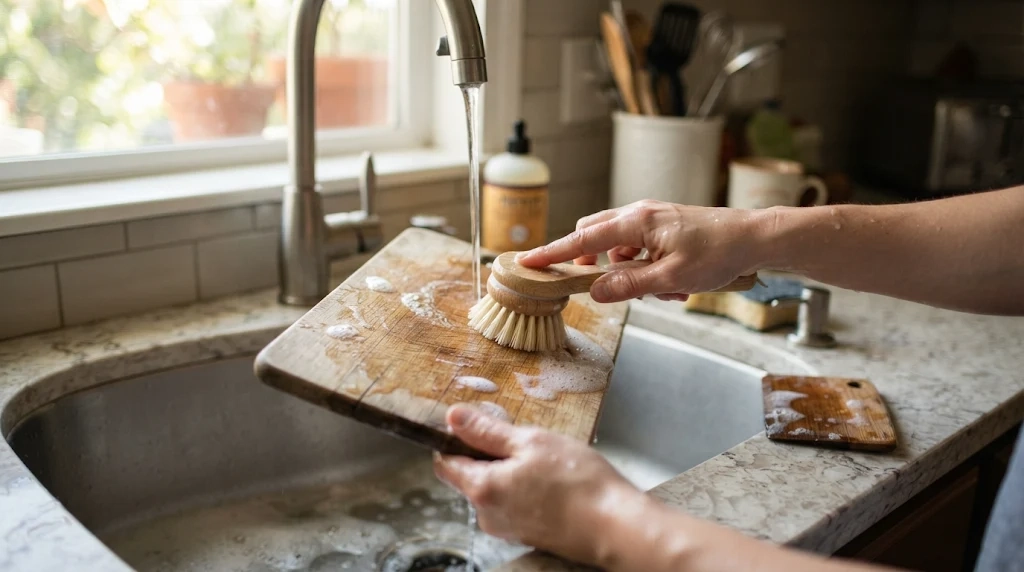
The basic cleaning method works for most cutting board materials. Adjust the amount of moisture and heat according to the manufacturer’s care instructions.
Step 1: Remove Leftover Food
Start by discarding vegetable scraps, meat trimmings, and other debris. Avoid spreading raw meat juices across your countertop.
Use a scraper or the dull back of a suitable utensil to move food particles into the trash. This makes washing more effective.
Step 2: Wash with Hot, Soapy Water
Apply ordinary dish soap to a clean brush or sponge. Scrub the cutting surface thoroughly using hot water that’s comfortable to handle safely.
Give extra attention to frequently used cutting areas. Food particles may remain inside small knife marks.
Step 3: Clean the Edges and Underside
The underside often gets overlooked. Moisture and food residue can collect around handles, grooves, and edges.
Turn the board over and clean these areas carefully. Don’t forget juice grooves around the perimeter.
Step 4: Rinse Thoroughly
Rinse the board with clean running water. Check that no visible soap or debris remains.
For wooden boards, keep water exposure brief. Never leave them soaking in a sink.
Step 5: Sanitize When Necessary
If the board touched raw poultry, meat, or seafood, sanitize it after washing. Use a product suitable for food-contact surfaces and follow its label directions.
A dishwasher-safe board may also have an approved dishwasher cleaning or sanitizing option. Check both the board instructions and your dishwasher settings.
Step 6: Dry Completely
Use a clean towel or paper towels to remove surface water. Then allow sufficient airflow around both faces.
Standing the board upright can help moisture escape. Avoid stacking damp boards together.
How to Clean Different Types of Cutting Boards
Wood, bamboo, plastic, and composite boards don’t respond to heat and water in exactly the same way. The material determines which cleaning method is most practical.
The University of Maine Cooperative Extension’s cutting board guidance explains how cleaning and maintenance requirements vary across materials.
| Board Material | Cleaning Method | Dishwasher | Special Care |
|---|---|---|---|
| Wood | Hand wash with soap and warm water. | Generally avoid unless manufacturer permits. | Dry promptly and condition periodically. |
| Plastic | Scrub thoroughly with hot, soapy water. | Usually yes, if labeled dishwasher-safe. | Inspect for deep grooves and warping. |
| Bamboo | Wash gently by hand. | Generally avoid. | Avoid soaking and excessive heat. |
| Composite | Follow the manufacturer’s washing directions. | Depends on product. | Check heat resistance and surface damage. |
| Glass | Wash with dish soap and water. | If manufacturer-approved. | Inspect for chips; hard surfaces may dull knives. |
How to Clean a Wooden Cutting Board
Wooden cutting boards benefit from quick handwashing and thorough drying. Extended soaking can cause swelling, cracking, and damage to glued joints.
- Remove food scraps from the wooden surface.
- Wash both faces using mild dish soap and warm water.
- Scrub gently along the grain with a clean brush.
- Rinse promptly without leaving the board submerged.
- Dry the faces and edges with clean towels.
- Stand upright until completely dry.
When the wood appears dry or rough, consider applying food-grade mineral oil. Follow my detailed guide on how to oil a wooden cutting board for the maintenance process.
Oiling improves the board’s moisture resistance. It doesn’t replace washing or sanitizing.
How to Clean a Plastic Cutting Board
Plastic cutting boards are convenient because many can tolerate dishwasher cleaning. Their nonporous construction also makes them relatively easy to wash.
- Remove any food scraps and residue.
- Scrub both faces with dish soap and hot water.
- Focus on knife scratches and textured areas.
- Rinse completely and inspect for leftover debris.
- Use a dishwasher only when the manufacturer approves.
- Dry thoroughly before putting the board away.
Plastic eventually develops knife marks. If the grooves become difficult to clean, replacing the board may be safer than attempting a repair.
For more information, read my guide to resurfacing a plastic cutting board safely, including when replacement is the better choice.
How to Clean a Bamboo Cutting Board
Bamboo boards need gentle cleaning because prolonged moisture exposure may affect the surface and glued construction. Handwashing is usually the safer option.
- Remove food particles immediately after preparation.
- Wash with mild soap and warm water.
- Scrub lightly using a soft brush or sponge.
- Rinse without submerging the board for long periods.
- Dry both sides promptly.
- Allow complete air circulation before storage.
Check the manufacturer before applying conditioning products. Some bamboo boards have specific finishes or maintenance requirements.
How Do You Sanitize a Cutting Board After Raw Meat?
After handling raw chicken, beef, pork, fish, or other animal products, wash the board first and then sanitize it. This reduces the chance of transferring harmful microorganisms to ready-to-eat foods.
One traditional household sanitizing method uses diluted unscented liquid chlorine bleach. Follow the bleach label and food-contact surface directions because formulations and concentrations vary.
Using a Diluted Bleach Solution
A commonly published USDA-style dilution is 1 tablespoon of regular unscented liquid chlorine bleach per 1 gallon (about 3.8 liters) of water.
Use only a suitable bleach product and follow its current label. Don’t substitute concentrated, scented, splashless, or other specialty formulations without appropriate food-contact instructions.
- Wash the board with hot water and dish soap.
- Rinse away all soap and visible debris.
- Prepare the appropriate sanitizer dilution in a suitable container.
- Wet the cutting surface evenly with the solution.
- Allow the solution to remain for several minutes, following the product instructions.
- Rinse with clear water when directed, then dry completely.
Do not mix bleach with vinegar, ammonia, or other household cleaners. Mixing chemicals can release dangerous gases.
Prepare sanitizer in a ventilated area and keep it away from children. The Iowa State University Extension cutting board guide provides additional household sanitation information.
Can a Dishwasher Sanitize a Cutting Board?
Some dishwashers offer sanitizing cycles, but the board must be dishwasher-safe. Check the product’s heat tolerance and your appliance’s operating instructions.
Plastic boards commonly support dishwasher cleaning. Wooden and bamboo boards may warp, split, or lose their protective finish under extended heat and moisture exposure.
Why Separate Cutting Boards Matter
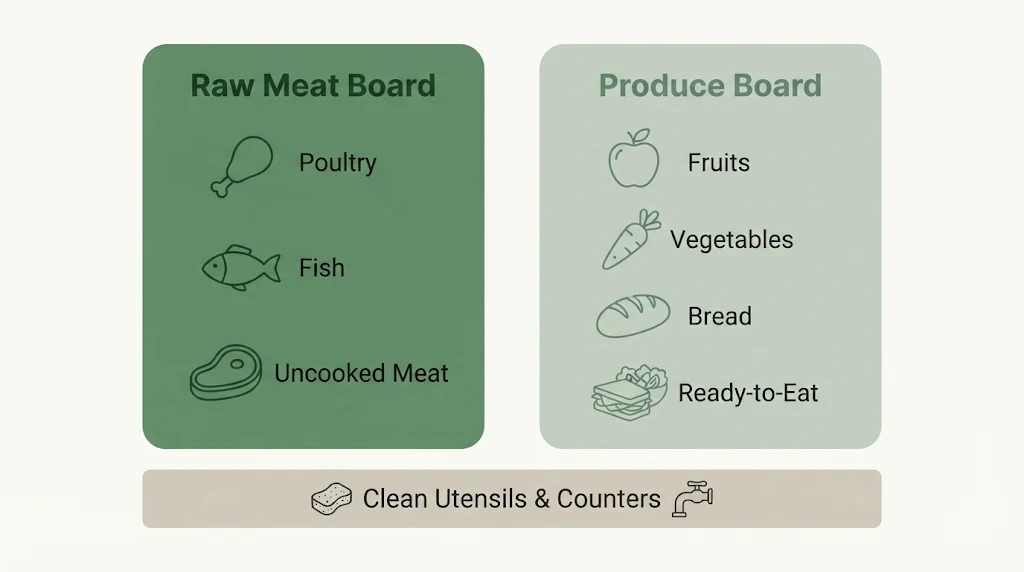
Using separate boards for raw meat and ready-to-eat food creates a practical barrier against cross-contamination. This is especially useful when preparing several ingredients together.
My preferred kitchen workflow is to prepare salad ingredients before handling raw chicken. Separate boards make this routine easier to manage.
- Raw meat board: Reserve for poultry, fish, and uncooked meat.
- Produce board: Use for fruits, vegetables, bread, and ready-to-eat foods.
- Clean utensils: Wash knives and tools when switching between raw and ready-to-eat ingredients.
- Clean countertops: Wash surfaces that contact raw meat juices.
You can find more guidance in my article on how to use a cutting board safely.
The FDA’s safe food handling guide also explains the importance of separating raw foods from cooked and ready-to-eat ingredients.
How Do You Remove Stains and Odors From a Cutting Board?
Food stains and unpleasant odors don’t always mean a board is unsafe. However, they deserve attention because trapped food residue may be contributing to the problem.
Removing Light Food Stains
A mild baking soda paste can help lift some surface stains. It works as a cleaning aid rather than a reliable food-contact sanitizer.
- Wash the board with dish soap and water.
- Mix baking soda with a little water to form a paste.
- Apply the paste to the stained area.
- Scrub gently with a soft brush or sponge.
- Rinse thoroughly and dry completely.
Test any cleaning treatment on a small area first. Avoid abrasive scrubbing that damages the board’s surface.
Removing Onion or Garlic Smells
Strong-smelling ingredients sometimes leave temporary odors on wooden and plastic boards. Thorough washing and complete drying should be your first steps.
For persistent mild odors, a baking soda paste may help. Some cooks also use lemon and salt as a deodorizing scrub, but neither replaces proper sanitation.
What About Vinegar?
White vinegar may help with certain household cleaning tasks. However, it isn’t a dependable replacement for a properly labeled food-contact sanitizer.
Never combine vinegar with chlorine bleach. Use separate cleaning methods and rinse appropriately between treatments.
How Do You Prevent Mold on a Cutting Board?
Mold prevention starts with removing food residue and controlling moisture. Even a clean board may develop problems if stored damp in a poorly ventilated cabinet.
Wooden boards are particularly sensitive to moisture conditions. Pay attention to the underside and areas around joints.
- Dry immediately: Remove visible water after washing.
- Allow airflow: Stand the board upright while it dries.
- Avoid soaking: Keep wooden and bamboo boards out of standing water.
- Inspect regularly: Check seams, edges, scratches, and underside surfaces.
- Store dry: Don’t stack damp boards or place them in enclosed spaces.
Visible mold inside cracks or difficult-to-clean areas can indicate a board should be replaced. See my complete guide on how to prevent mold on cutting boards.
How Should You Dry and Store a Cutting Board?
Proper drying is one of the simplest ways to protect a cutting board. Trapped moisture can encourage unwanted microbial growth and contribute to material damage.
The Best Drying Method
- Rinse the cleaned board thoroughly.
- Remove surface moisture using clean paper towels or a clean towel.
- Place the board upright on a clean rack.
- Allow both faces to receive airflow.
- Wait until completely dry before storage.
There isn’t one drying time that works for every cutting board. Thick wood may take longer than thin plastic, especially in humid conditions.
Uneven moisture exposure can also distort wooden boards. My guide on preventing cutting board warping explains the maintenance habits that help.
How Often Should You Clean a Cutting Board?
Clean a cutting board after every use and whenever you switch between ingredients that could cross-contaminate one another. Don’t wait until the board looks dirty.
The cleaning schedule should reflect both your cooking habits and the board’s material.
| Situation | Recommended Action |
|---|---|
| After chopping vegetables | Wash with soap and water, rinse, and dry. |
| After handling raw meat | Wash, sanitize appropriately, and dry. |
| Between raw and ready-to-eat foods | Use separate boards or clean and sanitize before switching. |
| Before storing | Confirm both faces are completely dry. |
| When unfinished wood looks dry | Apply suitable food-grade conditioning oil. |
| During routine inspection | Check for cracks, grooves, mold, and warping. |
What Are the Biggest Cutting Board Cleaning Mistakes?
A few common habits can damage cutting boards or create avoidable food-safety concerns. Most are easy to correct.
- Skipping dish soap: Water alone may leave grease and food residue behind.
- Soaking wooden boards: Prolonged water exposure can encourage cracking and warping.
- Storing boards wet: Trapped moisture creates conditions favorable to mold.
- Using harsh abrasives: Aggressive scrubbing can damage protective finishes.
- Ignoring knife grooves: Deep scratches may trap debris and become difficult to clean.
- Mixing cleaning chemicals: Combining bleach with acids or ammonia can create hazardous fumes.
- Skipping sanitation after raw meat: Ordinary washing may not provide the additional protection recommended for raw animal products.
- Assuming natural ingredients sanitize: Lemon, salt, and baking soda are not substitutes for appropriate sanitizing products.
My rule is to keep cleaning straightforward and repeatable. Consistency matters more than complicated cleaning tricks.
When Should You Replace a Cutting Board?
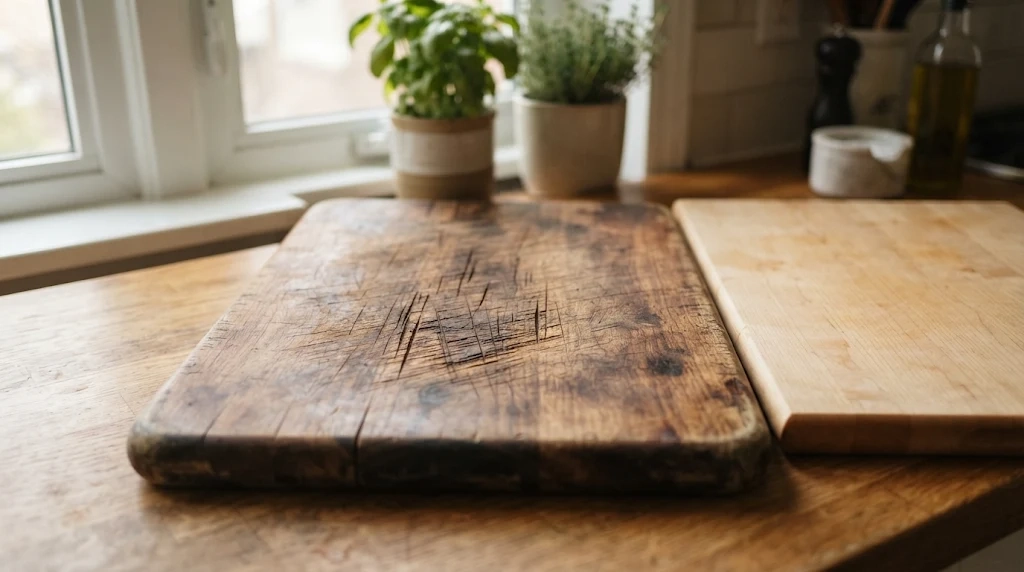
Replace a board when damage prevents thorough cleaning or creates a physical hazard. Surface appearance alone doesn’t always determine whether a replacement is needed.
Warning Signs to Look For
- Deep knife grooves: Food residue remains trapped after careful washing.
- Open cracks: Damaged wood or plastic creates hard-to-clean spaces.
- Persistent mold: Visible growth remains within porous or damaged areas.
- Serious warping: The board no longer sits securely on the countertop.
- Loose fragments: Splinters, chips, or peeling material may contaminate food.
- Damaged joints: Glued sections begin separating or trapping moisture.
A scratched board doesn’t automatically need replacing. The deciding factor is whether its surface can still be cleaned and used safely.
The Academy of Nutrition and Dietetics cutting board safety guidance also recommends replacing excessively worn boards.
Helpful Products for Cutting Board Cleaning and Care
You can clean most boards with ordinary soap and water. Still, a reliable brush, an easy-care board, and a suitable wood conditioner can simplify maintenance.
These are practical product options based on their stated features and intended uses, not hands-on testing results. The ratings below represent editorial use-case fit, not verified customer ratings.
Affiliate disclosure: As an Amazon Associate, qualifying purchases may earn this website a commission at no additional cost to you.
🏆 Best Everyday Cleaning Tool
OXO Good Grips Dish Brush
★★★★☆ 4/5
This everyday dish brush has a comfortable non-slip handle and a built-in scraper for stubborn residue. I’d consider it a useful choice for cleaning food particles from cutting board surfaces and edges.
🧼 Best Easy-Care Board
OXO Good Grips Utility Cutting Board
★★★★★ 5/5
This nonporous cutting board provides a roomy preparation surface and dishwasher-safe construction. I’d choose it for households that value straightforward washing and frequent food preparation.
🌿 Best Wood Maintenance Option
Howard Cutting Board Oil
★★★★☆ 4/5
Howard Cutting Board Oil contains clear, odorless food-grade mineral oil designed for wooden food-contact surfaces. I’d consider it for conditioning clean, fully dried wooden boards that need protection from moisture.
Frequently Asked Questions
Can You Clean a Cutting Board With Just Water?
Water alone isn’t the best cleaning method because it may leave grease and food residue behind. Use dish soap and running water after each use, then rinse thoroughly and dry. Add an appropriate sanitizing step after preparing raw animal products.
Can You Put a Wooden Cutting Board in the Dishwasher?
Handwashing is the safer default for most wooden cutting boards. Dishwasher heat and prolonged moisture may cause cracks, warping, or joint separation. Some solid wood products have different manufacturer instructions, so always check before using an automatic dishwasher.
Is Baking Soda Safe for Cleaning Cutting Boards?
Baking soda can help remove mild surface stains and odors when used gently. Rinse thoroughly after scrubbing and avoid damaging the board’s finish. Baking soda is not a reliable substitute for a food-contact sanitizer, particularly after handling raw chicken or other meat.
How Long Should a Cutting Board Dry Before Storage?
A cutting board should be completely dry before storage. The required time depends on its thickness, material, humidity, and airflow. Remove excess water with a clean towel, then let both faces air-dry. Avoid placing damp boards inside closed cabinets.
How Do You Clean a Cutting Board After Raw Chicken?
Remove raw chicken residue, then wash the board thoroughly with hot, soapy water. Rinse and apply a suitable food-contact sanitizer according to its label. Rinse again if directed and dry completely. Clean any knives, utensils, and countertops exposed to the raw chicken juices.
Final Takeaway: The Best Way to Keep a Cutting Board Clean
Learning how to clean a cutting board doesn’t require complicated equipment. The essential habits are thorough washing, appropriate sanitation, complete drying, and regular inspection.
Choose a cleaning method that suits your board material. Protect wooden boards from soaking, use dishwasher-safe plastic boards according to their instructions, and replace heavily damaged surfaces.
Most importantly, keep raw meat preparation separate from ready-to-eat food. A consistent cleaning routine makes everyday cooking safer and more manageable.
Start with your next meal: Wash the board thoroughly, dry it completely, and make proper cleaning part of your regular kitchen routine.

