Can You Use Citrus Oils on a Cutting Board? A Complete Safety Guide
Quick Answer
Can you use citrus oils on a cutting board? Yes, but only when the oil is part of a product specifically approved for food-contact cutting surfaces. Applying concentrated lemon, orange, or grapefruit essential oil directly to a cutting board is not recommended. For everyday maintenance, food-grade mineral oil remains a dependable choice. Follow this wooden cutting board oiling guide for a safer maintenance routine.
Five Important Safety Facts
- Pure citrus oils: Avoid applying concentrated essential oils directly to food-preparation surfaces.
- Food-safe blends: Choose citrus-containing conditioners explicitly intended for cutting boards.
- Mineral oil: Food-grade mineral oil conditions wood without adding fragrance.
- Cleaning limitations: Citrus oil does not replace proper washing and sanitizing.
- Product labels: Check ingredients, intended use, application instructions, and food-contact suitability.
My Recommendation
- For routine care: Use food-grade mineral oil or a purpose-made board conditioner.
- For citrus fragrance: Select a manufacturer-approved formula rather than mixing essential oils yourself.
Citrus oils smell refreshing, so using them on a wooden cutting board sounds appealing. However, something that smells natural isn’t automatically suitable for food preparation.
I prefer to separate fragrance, cleaning, and wood conditioning before choosing any treatment. This guide explains the differences and helps you choose a practical, food-safe approach.
What Are Citrus Oils?
Citrus oils are aromatic oils extracted from citrus fruits, commonly from their peels. Examples include lemon, sweet orange, grapefruit, lime, and bergamot essential oils.
These concentrated extracts contain naturally occurring aromatic compounds. One important example is limonene, which contributes to the familiar citrus scent.
You’ll find citrus-derived ingredients in several kinds of products:
- Lemon essential oil: A concentrated aromatic extract, usually obtained from lemon peel.
- Sweet orange essential oil: An aromatic oil commonly used in fragrance and specialty cleaning formulations.
- Grapefruit essential oil: A citrus peel extract used primarily for its fragrance.
- Citrus-based cleaners: Products that may contain citrus oils, solvents, detergents, and other ingredients.
- Citrus-scented board conditioners: Specialty wood-care products formulated for suitable kitchen surfaces.
These products aren’t interchangeable. Their concentrations, additional ingredients, and intended applications can differ substantially.
Are Citrus Oils the Same as Lemon Juice?
No. Citrus essential oil and lemon juice come from different parts of the fruit and have different chemical compositions.
Lemon juice is mostly water and contains citric acid. Lemon essential oil is a concentrated mixture of aromatic compounds, primarily obtained from the peel.
A lemon used briefly during cleaning doesn’t have the same effect as applying undiluted essential oil. Neither should replace normal washing.
Can You Safely Use Citrus Oils on a Wooden Cutting Board?
You can use certain citrus-containing products when their manufacturers explicitly approve them for cutting boards and direct food contact. However, I wouldn’t apply an ordinary bottle of concentrated citrus essential oil to unfinished wood.
A wooden cutting board regularly contacts food, moisture, and sharp knives. Its treatment must be suitable for those conditions.
Why Food-Contact Approval Matters
Some citrus oils have recognized uses as food flavoring ingredients. However, approval for a particular food application doesn’t automatically make every retail essential oil suitable for coating a cutting board.
The FDA food-substances database identifies regulated food uses of lemon oil. The intended use and applicable conditions matter.
For cutting boards, look for these details before applying a product:
- The manufacturer specifically mentions cutting boards or food-preparation surfaces.
- The product is suitable for direct food contact under its instructions.
- The complete ingredient information is available.
- The application method and any waiting period are clearly explained.
- The formula is compatible with the board’s existing finish.
A bottle labeled “100% natural” isn’t enough evidence. Natural describes an ingredient’s origin, not every possible use.
Why Shouldn’t You Apply Pure Citrus Essential Oil Directly?
Concentrated citrus essential oils are not dependable substitutes for purpose-made cutting board conditioners. They can create avoidable questions about residues, fragrance transfer, and surface compatibility.
1. Concentration and Residue
Essential oils contain concentrated aromatic substances. Applying them undiluted can leave a strong scent or oily residue on the board.
That residue may contact food during chopping. A product designed for aromatherapy isn’t necessarily intended for repeated contact with meals.
2. Unwanted Flavor Transfer
A cutting board should prepare ingredients without unexpectedly changing their flavor. Strong aromatic residues can make this difficult.
Imagine slicing bread after treating the board with concentrated orange oil. Even a faint citrus aroma could be distracting when the flavor isn’t wanted.
3. Surface Compatibility
Citrus oils contain compounds that behave differently from mineral oil. Some citrus-based cleaning products also include solvents capable of affecting certain finishes.
This matters particularly for sealed, painted, or factory-finished surfaces. Never assume a cleaner is compatible with a board simply because it contains citrus ingredients.
4. Uncertain Long-Term Conditioning
Cutting board conditioning is about managing the wood’s exposure to moisture. Fragrance alone provides no reliable evidence that a product performs this function.
Food-grade mineral oil is widely recommended for unfinished wooden boards. Its role is clearer than that of an improvised essential-oil mixture.
5. Skin Sensitivity
Concentrated essential oils can irritate skin or cause sensitivity in some people. Products also vary in their purity and added ingredients.
I recommend avoiding unnecessary fragrance on food-contact equipment when a fragrance-free alternative can perform the same task.
Citrus Essential Oil vs. Mineral Oil: Which Is Better?
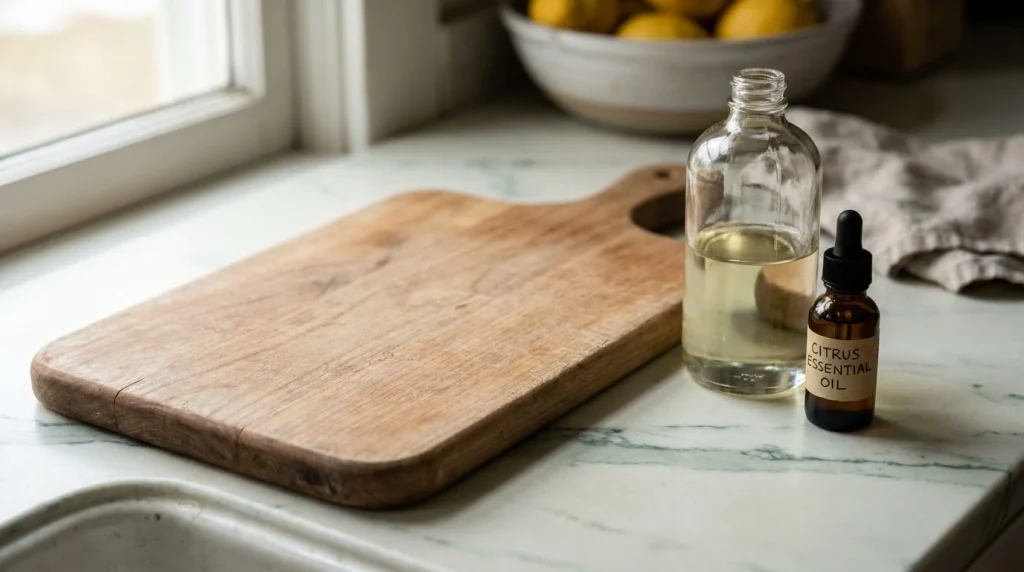
For most unfinished wooden cutting boards, food-grade mineral oil is the more practical choice. It conditions the wood without the strong fragrance associated with concentrated citrus oils.
The comparison below separates intended function from marketing claims.
| Treatment | Main Purpose | Cutting Board Suitability | Recommendation |
|---|---|---|---|
| Pure citrus essential oil | Aroma and specialty formulation | Not established for direct application | Avoid using alone |
| Food-grade mineral oil | Wood conditioning | Suitable for many unfinished wooden boards | Preferred everyday choice |
| Mineral oil and beeswax | Conditioning and moisture resistance | Suitable when formulated for food-contact boards | Good conditioning option |
| Approved citrus-containing conditioner | Product-specific wood care | Depends on manufacturer approval | Follow exact label instructions |
| Ordinary vegetable oil | Cooking | May oxidize or develop off-odors | Not preferred for routine care |
Food-grade mineral oil also resists the rancidity associated with many edible cooking fats. That makes maintenance more predictable.
For a closer comparison of ordinary cooking oils, read my guide on using vegetable oil on a cutting board.
Does Citrus Oil Disinfect Cutting Boards?
No citrus essential oil should be treated as a substitute for proper cutting board cleaning or approved sanitizing methods. Laboratory research on antimicrobial activity doesn’t establish an effective household cleaning procedure.
Some concentrated citrus compounds demonstrate antimicrobial effects under controlled experimental conditions. Actual kitchens involve different concentrations, food residues, surfaces, and contact times.
What Do Food-Safety Authorities Recommend?
The USDA Food Safety and Inspection Service recommends washing cutting boards with hot, soapy water between food-preparation tasks.
Keeping raw meat separate from ready-to-eat foods also helps prevent cross-contamination. A pleasant citrus scent doesn’t demonstrate that harmful microorganisms are gone.
For normal cleaning, follow these steps:
- Remove visible food scraps from the board.
- Wash thoroughly with dish soap and warm or hot water.
- Scrub around knife marks and edges.
- Rinse away soap and loosened food residue.
- Sanitize when appropriate using a method suitable for the board.
- Dry thoroughly before storing or applying conditioner.
Use a separate cutting board for raw poultry and other ready-to-eat ingredients whenever possible. This simple habit matters more than adding fragrance.
Can You Clean a Cutting Board With Lemon Juice?
Lemon juice may help reduce some surface odors, but it isn’t a replacement for dish soap or an approved sanitizer. Its acidity also makes it different from citrus essential oil.
For occasional deodorizing, some people rub a cut lemon across a suitable wooden board. However, the board manufacturer’s cleaning instructions should take priority.
A Practical Approach to Removing Odors
- Begin with soap: Thoroughly wash away food residue.
- Check compatibility: Confirm whether the board’s finish tolerates lemon juice.
- Use sparingly: Avoid prolonged acidic exposure or excessive scrubbing.
- Rinse thoroughly: Remove remaining lemon juice and loose residue.
- Dry completely: Allow airflow before putting the board away.
If an unpleasant smell persists, identify the cause before applying more products. My guide on removing odors from a cutting board covers additional cleaning considerations.
How Should You Oil a Wooden Cutting Board Safely?
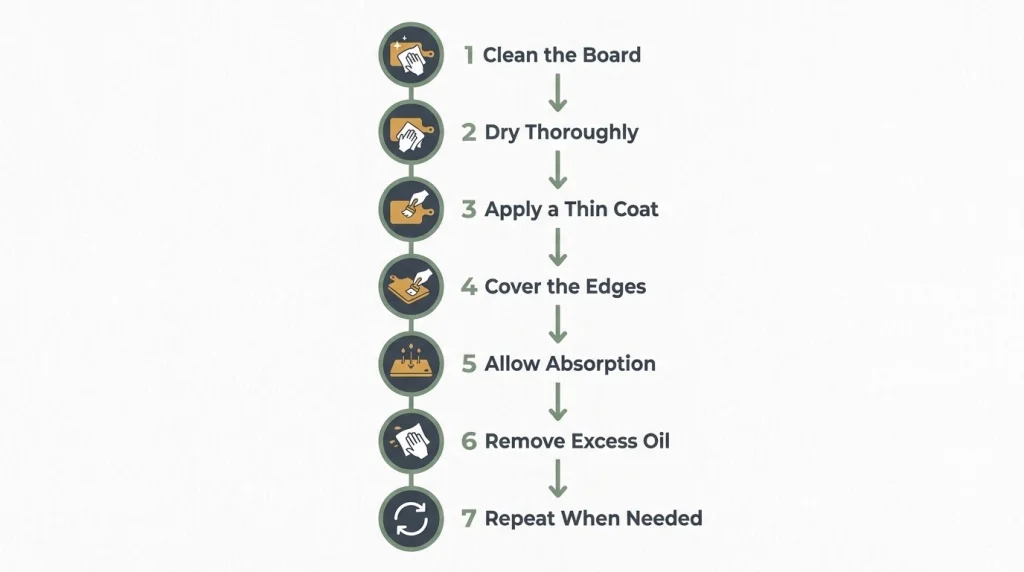
Proper oiling starts with a clean, dry, structurally sound board. Use a conditioning product that explicitly supports food-contact cutting surfaces.
The University of Maine Cooperative Extension recommends food-safe mineral oil or beeswax for wooden cutting board maintenance. Monthly care is a useful starting point, depending on the board’s condition.
Supplies You’ll Need
- Food-grade mineral oil or an approved board conditioner
- A clean, lint-free cloth
- Mild dish soap and warm water
- A clean towel
- A well-ventilated drying area
Step 1: Clean the Board
Wash the surface with mild dish soap and warm water. Pay attention to corners and areas where food residue collects.
Step 2: Dry Thoroughly
Remove surface water with a clean towel. Allow the board to air-dry completely before adding oil.
Step 3: Apply a Thin Coat
Pour a modest amount of food-grade oil onto your cloth. Spread it evenly across exposed wooden surfaces.
Step 4: Cover the Edges
Condition the sides, ends, and accessible underside as directed by the manufacturer. Uneven maintenance can leave some areas less protected against moisture.
Step 5: Allow Absorption
Let the oil absorb according to the product instructions. Some manufacturers recommend several hours or overnight.
Step 6: Remove Excess Oil
Buff away any remaining surface oil with a clean cloth. The board shouldn’t feel greasy when you resume food preparation.
Step 7: Repeat When Needed
Inspect the board regularly for dryness, roughness, or water absorption. Adjust the maintenance schedule to its condition and manufacturer’s directions.
Oil helps maintain wood, but it cannot repair structural damage. Deep cracks, loose joints, or hard-to-clean grooves require separate attention.
What About Citrus-Scented Cutting Board Conditioners?
A citrus-scented conditioner can be appropriate when its complete formulation is approved for food-contact cutting boards. The important factor is the finished product, not the presence of a familiar ingredient.
Some commercial wood-care products combine conditioning oils with smaller amounts of aromatic ingredients. Manufacturers are responsible for determining their products’ intended uses and instructions.
How to Evaluate a Citrus-Containing Product
- Read the product name: Confirm it is intended for cutting boards rather than furniture.
- Check food-contact statements: Look for specific manufacturer guidance.
- Review the ingredients: Identify other oils, solvents, fragrances, or additives.
- Check the finish: Make sure the treatment suits your board’s material.
- Follow the directions: Respect application quantities and waiting periods.
- Inspect before use: Avoid cutting food on a board with persistent excess residue.
One example of a specialized board-care product is John Boos Mystery Oil. Its manufacturer markets it for wooden food-preparation surfaces.
However, formulations and available product information should be checked before purchase. Don’t assume every similarly named product contains the same ingredients.
Can Citrus Oils Damage Bamboo or Plastic Cutting Boards?
The answer depends on the board material, its finish, and the exact citrus product. Different surfaces don’t require the same conditioning routine.
Wooden Cutting Boards
Unfinished wood generally benefits from suitable conditioning oil. Concentrated citrus essential oil shouldn’t replace a proven wood-care product.
Bamboo Cutting Boards
Some bamboo boards can receive manufacturer-approved food-safe mineral oil. Their glued construction and surface treatment make compatibility particularly important.
Plastic Cutting Boards
Plastic cutting boards generally don’t need oil conditioning. Avoid applying citrus solvents or essential oils unless the board manufacturer specifically approves the product.
Factory-Sealed Boards
Some boards have specialized protective coatings. Applying additional oil may be unnecessary or incompatible with the existing finish.
Follow the manufacturer’s maintenance directions rather than treating every surface like unfinished hardwood.
What If You Already Applied Citrus Essential Oil?
Don’t panic if you accidentally applied a small amount of citrus essential oil. The next step depends on the product’s ingredients, concentration, and the board’s condition.
What to Do Next
- Stop using the oil: Don’t add another layer to cover its scent.
- Check the label: Identify the essential oil and any additional ingredients.
- Remove surface residue: Wash with mild dish soap and warm water.
- Rinse and dry: Allow the board to dry completely.
- Inspect the surface: Check for persistent fragrance, tackiness, or visible finish changes.
- Confirm suitability: Contact the product manufacturer if food-contact safety remains uncertain.
Don’t assume washing removes every absorbed ingredient from porous wood. If an unsuitable product penetrated deeply or leaves persistent residue, replacement may be the safer option.
Sanding is not always appropriate, especially for unidentified finishes. If restoration is suitable, consult this cutting board refinishing guide before proceeding.
Best Alternatives to Pure Citrus Oils for Cutting Boards
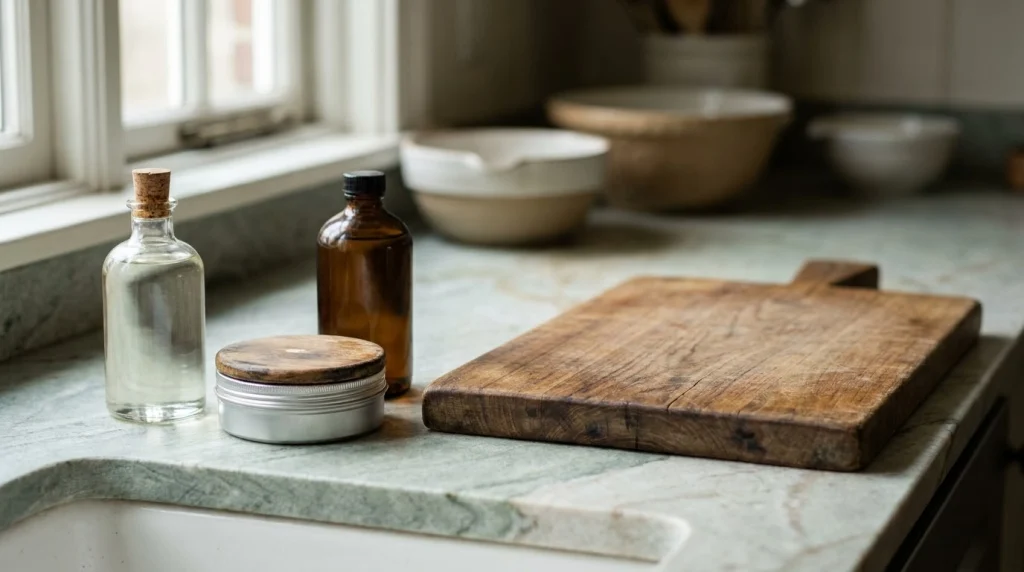
For routine wood care, I would prioritize straightforward products with clear food-contact instructions. These are three established options worth comparing.
The suitability ratings below reflect their intended use cases, not verified customer-review averages or hands-on product testing.
🏆 Best for Simple Maintenance
Howard Cutting Board Oil
★★★★★ Editorial suitability
This food-grade mineral oil is designed for cutting boards and butcher blocks. I consider it a practical first choice because it conditions wood without added citrus fragrance.
🛡️ Best for Added Wax Protection
Howard Butcher Block Conditioner
★★★★☆ Editorial suitability
This conditioner combines food-grade mineral oil, beeswax, and carnauba wax. I favor this type of formula when additional surface moisture resistance is the priority.
🪵 Best for Boos Board Maintenance
John Boos Mystery Oil
★★★★☆ Editorial suitability
John Boos recommends Mystery Oil for maintaining its wooden cutting boards. I would consider it for a Boos board while checking the current ingredients for any fragrance sensitivity.
As a general maintenance rule, I prefer the simplest suitable formula. A fragrant treatment rarely offers a compelling advantage when reliable, fragrance-free conditioning is available.
Frequently Asked Questions
Can I use lemon essential oil on a wooden cutting board?
I don’t recommend applying concentrated lemon essential oil directly to a cutting board. Although certain lemon oil ingredients have approved food uses, that doesn’t establish the safety of every retail essential oil for treating wood. Choose a cutting board conditioner specifically intended for direct food-contact surfaces instead.
Is orange oil safe for cutting boards?
Orange oil may be an ingredient in a food-contact-approved board conditioner, but pure orange essential oil shouldn’t automatically be considered suitable. Check the exact product’s intended use, complete formulation, and application directions. Avoid ordinary furniture polish or citrus cleaning solvents unless specifically approved for your board.
Can citrus oil remove bacteria from a cutting board?
Citrus essential oils may show antimicrobial activity in laboratory studies, but that doesn’t make them reliable household cutting board sanitizers. Wash boards with dish soap and water, then sanitize when appropriate using an approved method. Keep separate boards for raw meat and ready-to-eat ingredients.
How often should I oil my wooden cutting board?
About once a month is a reasonable starting point for many unfinished wooden cutting boards. Your schedule may vary with washing frequency, wood condition, humidity, and manufacturer instructions. Apply a suitable food-safe conditioner whenever the surface appears dry, and wipe away all excess oil.
What is the safest alternative to citrus essential oil?
For most unfinished wooden cutting boards, food-grade mineral oil is a dependable alternative. It is widely recommended for wood maintenance and doesn’t have the strong aroma of concentrated citrus oils. You can also choose a food-contact-approved mineral oil and beeswax conditioner for additional surface protection.
Final Thoughts: Should You Use Citrus Oils on Your Cutting Board?
In 2026, the most sensible approach remains straightforward: use cutting board treatments designed for food-contact surfaces. Pure citrus essential oil isn’t my recommendation for everyday wood conditioning.
If you prefer citrus-scented products, select a manufacturer-approved board conditioner and follow its exact instructions. Don’t rely on fragrance or natural-origin claims alone.
For routine maintenance, food-grade mineral oil offers a simpler option. Pair it with proper washing, complete drying, and regular board inspections.
My final recommendation: Check your current cutting board oil label before the next application. If it doesn’t explicitly support food-contact cutting surfaces, replace it with a purpose-made product.