
Can You Use Padauk Wood for a Cutting Board? Safety, Pros, Cons, and Best Alternatives
Quick Answer
Yes, padauk wood can be used to make a cutting board, but it is not my first choice for everyday food preparation. African padauk is durable and hard, yet its open pores, natural extractives, and reported sensitization risks deserve consideration. For regular chopping, close-grained hardwoods such as maple are generally more practical. Learn more about choosing suitable cutting board wood before starting your project.
Key Things to Know
- Wood hardness: African padauk has a Janka hardness of approximately 1,710 pounds-force.
- Grain structure: Its coarse, open pores make cleaning more demanding than with close-grained maple.
- Allergy considerations: Padauk dust can irritate the skin, eyes, and respiratory system.
- Color changes: Its bright orange-red appearance naturally darkens with age.
- Best application: Decorative serving pieces or carefully evaluated occasional-use boards.
- Better daily option: Hard maple offers a close-grained surface with an established cutting-board track record.
My Recommendation
- For daily cooking: Choose maple or another suitable close-grained hardwood.
- For decorative projects: Consider verified, untreated padauk with an appropriate food-contact finish.
- For sensitive users: Avoid padauk if exposure has caused a previous reaction.
Padauk is one of those hardwoods that immediately catches my attention. Its vibrant reddish-orange color makes almost any woodworking project look distinctive.
However, beautiful wood does not automatically make a suitable kitchen cutting surface. I prefer to consider food-contact suitability, grain structure, cleaning requirements, and long-term maintenance before recommending any species.
In this guide, I’ll explain where padauk works well, where it falls short, and how it compares with traditional cutting board woods.
What Is Padauk Wood?
Padauk is a common name used for several tropical hardwoods belonging to the Pterocarpus genus. African padauk, scientifically known as Pterocarpus soyauxii, is one of the best-known woodworking varieties.
It grows naturally in parts of Central and tropical West Africa. Woodworkers value it for its distinctive appearance, strength, and dimensional stability.
Main Characteristics of African Padauk
- Scientific name: Pterocarpus soyauxii.
- Wood family: Fabaceae, also known as Leguminosae.
- Typical color: Bright reddish-orange to deep reddish-brown.
- Janka hardness: Approximately 1,710 lbf.
- Average dried density: Approximately 745 kg/m³.
- Grain pattern: Usually straight, sometimes interlocked.
- Texture: Coarse and open-pored.
- Common applications: Furniture, flooring, musical instruments, decorative objects, and specialty woodwork.
The African padauk species profile from The Wood Database documents these characteristics.
One important detail is the meaning of the word padauk. Different species sold under this name can have different physical properties, so scientific identification matters.
Is Padauk Wood Safe for Cutting Boards?
Padauk is not automatically unsafe simply because it is an exotic hardwood. However, there is insufficient evidence to declare every padauk species or board universally suitable for direct food contact.
The suitability of a finished board depends on the exact species, lumber source, construction, surface condition, and intended use.
1. Natural Wood Extractives and Allergies
Padauk contains natural extractive compounds that contribute to its distinctive appearance and physical properties. Some people develop irritation or sensitivity when exposed to padauk, especially during woodworking.
The Wood Database guide to wood allergies and toxicity explains why sensitivity deserves attention when evaluating unfamiliar species.
Reported problems involving padauk include:
- Skin irritation after direct contact or exposure to dust.
- Eye irritation from airborne wood particles.
- Respiratory irritation during sawing or sanding.
- Allergic sensitization following exposure in susceptible individuals.
These reports primarily concern wood dust and occupational exposure. They do not establish that ordinary contact with every properly finished padauk board causes the same reactions.
Still, cutting boards experience repeated knife contact and surface wear. I would not assume that applying mineral oil eliminates all potential exposure concerns.
2. Open Grain and Food Residue
African padauk has a relatively coarse, open-pored structure. Those surface openings can make food residue and moisture more difficult to remove than on a smoother, close-grained board.
Open pores do not automatically prove that a board is contaminated. They do make careful washing, inspection, and drying especially important.
When choosing a daily cutting board, I generally favor a wood with smaller pores and a surface that remains easy to clean.
3. What Food Safety Guidance Says About Wood
The FDA Food Code identifies hard maple or equivalently hard, close-grained wood as suitable for certain cutting boards in regulated food establishments. Hardness alone does not satisfy that description.
Padauk may exceed maple in hardness, but its coarser texture means it should not automatically be treated as equivalent.
Home-kitchen requirements and commercial food-service requirements can differ. Anyone making boards for professional kitchens should check the applicable local rules.
Practical takeaway: I would choose maple for routine food preparation rather than assume padauk’s hardness makes it the better material.
What Are the Advantages of Padauk Cutting Boards?
Padauk has several appealing properties for woodworking. These advantages help explain why some craftspeople incorporate it into kitchen-related projects.
Attractive Natural Appearance
Its intense reddish-orange heartwood creates a striking visual contrast with pale woods. Even a small padauk accent can change the appearance of a serving board.
The color gradually changes as the wood ages. That natural darkening is part of its character, not necessarily a defect.
Good Hardness and Wear Resistance
A Janka rating near 1,710 lbf indicates substantial resistance to indentation. This can be useful for furniture, handles, and decorative objects subjected to regular handling.
However, a harder wood is not automatically more knife-friendly. Grain, construction, and edge retention also affect the cutting experience.
Dimensional Stability
Properly dried African padauk offers favorable dimensional stability compared with many other hardwoods. This helps explain its popularity for precision woodworking.
Nevertheless, any wooden board can warp if repeatedly soaked or dried unevenly. Appropriate construction and maintenance remain essential.
What Are the Disadvantages of Using Padauk for a Cutting Board?
The main disadvantages concern its open texture, potential sensitivity issues, and uncertain suitability across different sources. These drawbacks matter more when the board will receive constant knife contact.
- Coarse pores: Cleaning may require additional attention.
- Dust sensitivity: Sanding and machining require proper exposure controls.
- Natural color change: Bright orange heartwood darkens over time.
- Possible color transfer: Pigments or extractives may migrate during some finishing processes.
- Hard surface: Its wear resistance does not guarantee ideal knife-edge performance.
- Variable sourcing: Species identification and untreated lumber history should be verified.
- Sourcing restrictions: Some padauk trade is subject to conservation-related documentation requirements.
I consider these limitations when deciding whether the appearance justifies additional work. For a frequently used kitchen board, practicality matters more than color.
Padauk vs. Maple vs. Walnut vs. Cherry: Which Is Better?
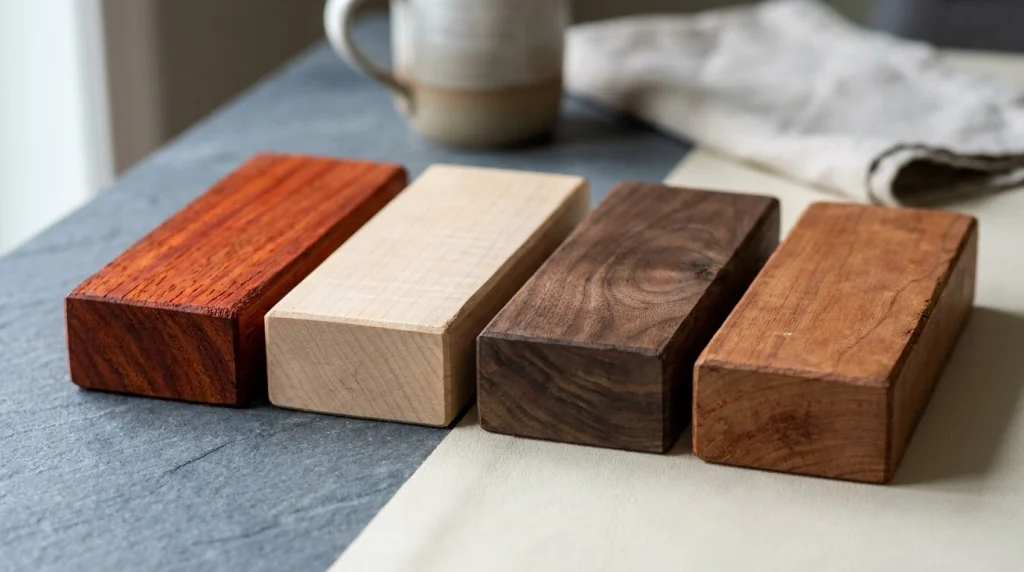
Hard maple is my preferred option among these woods for a general-purpose cutting board. Walnut and cherry are also popular choices, while padauk brings additional considerations.
The table below compares representative species using published Janka hardness values. These values measure resistance to indentation rather than food safety or knife friendliness.
| Wood Species | Janka Hardness | Grain Characteristics | Practical Assessment |
|---|---|---|---|
| African Padauk | 1,710 lbf | Coarse, open-pored | Decorative uses; evaluate food-contact suitability carefully |
| Hard Maple | 1,450 lbf | Fine, close-grained | Excellent established choice for daily chopping |
| Black Walnut | 1,010 lbf | Moderately coarse | Popular darker hardwood option |
| Black Cherry | 950 lbf | Fine, relatively close-grained | Suitable for many everyday cutting tasks |
Why does maple win? It offers a useful balance of hardness, grain structure, durability, and established food-preparation use.
Cherry may appeal to cooks who prefer a somewhat softer board. Walnut provides an attractive darker appearance without padauk’s vivid red coloring.
Padauk has impressive hardness, but its texture and exposure considerations make it a less straightforward recommendation.
Can You Make a Cutting Board From Padauk Wood?
It is physically possible to build a padauk cutting board using standard woodworking methods. The larger question is whether the finished product is appropriate for its intended food-contact use.
If you already own untreated padauk lumber, begin by identifying the species and evaluating its suitability. Do not use reclaimed material with an unknown chemical treatment history.
Materials and Tools
- Verified, properly dried, untreated hardwood.
- Table saw or another suitable cutting tool.
- Clamps and straightedges.
- Adhesive approved for the intended application.
- Planer or appropriate flattening tools.
- Sandpaper and dust collection equipment.
- Suitable respiratory and eye protection.
- Food-grade mineral oil or an approved board conditioner.
Step 1: Inspect the Lumber
Check for cracks, insect damage, contamination, and inconsistent moisture content. Confirm that the wood has not received preservatives, stains, or unknown industrial treatments.
Be especially careful with lumber sold under an ambiguous common name. The appearance alone cannot reliably identify the exact species.
Step 2: Plan the Board Layout
Choose a manageable size and consider whether the project is decorative or intended for actual cutting. Arrange the grain to produce stable, well-supported joints.
A standard kitchen board might measure approximately 12 by 18 inches. The right dimensions depend on workspace, sink size, and storage requirements.
Step 3: Cut and Prepare the Pieces
Cut the wood using sharp tools and proper dust extraction. Padauk dust can be irritating, so avoid uncontrolled sanding or sawing exposure.
Keep the workpieces straight and square for accurate assembly. Poorly prepared joints can later separate when exposed to moisture.
Step 4: Assemble and Clamp
Use an adhesive with documented suitability for the intended cutting-board application. Follow its clamping, curing, and food-contact instructions.
A strong joint matters because cutting boards experience repeated moisture changes. Weak glue lines can develop openings that become difficult to clean.
Step 5: Flatten and Smooth the Surface
After the adhesive has cured, flatten the assembled board. Sand progressively until the working surface feels smooth and free of splinters.
Coarse pores are a natural feature of padauk and cannot simply be sanded away. Do not rely on an unknown pore filler to make the board food-safe.
Step 6: Apply an Appropriate Finish
For a surface approved for direct food contact, use a manufacturer-approved cutting-board finish. Food-grade mineral oil is commonly used on unfinished wooden boards.
Allow the recommended absorption period and wipe away excess oil. Follow the specific finish manufacturer’s instructions before placing food on the surface.
Step 7: Inspect Before Use
Check the completed surface for roughness, color transfer, loose joints, and unwanted residue. If any food-contact concern remains unresolved, keep the project decorative rather than use it for chopping.
For a broader construction tutorial, see my guide on how to make a wooden cutting board.
How Do You Finish and Seal Padauk Wood?
A suitable cutting-board finish helps condition the surface and limit moisture absorption. However, no ordinary oil treatment automatically proves that an unsuitable wood species is safe for repeated food contact.
Recommended Finish Considerations
- Food-grade mineral oil: Commonly used to condition unfinished wooden cutting boards.
- Board conditioner: A properly formulated mineral oil and beeswax product may provide added surface conditioning.
- Manufacturer-approved finishes: Use only products appropriate for the board’s intended food-contact and knife-use conditions.
- Unknown furniture coatings: Avoid finishes without clear guidance for cutting surfaces.
- Ordinary vegetable oils: Generally avoid them because they can oxidize and become sticky or rancid.
Simple Oiling Routine
- Wash the approved wooden board with mild dish soap.
- Rinse and allow it to dry completely.
- Apply a thin coat of food-grade mineral oil.
- Cover both faces and all exposed edges.
- Allow the oil to absorb according to product directions.
- Buff away remaining oil using a clean cloth.
- Inspect the finish before returning the board to use.
Repeat conditioning when the wood looks dry or as directed by the board manufacturer. Over-applying oil will not solve deep cracks or contamination problems.
For more detailed maintenance advice, read how to oil a wooden cutting board.
How Do You Clean a Padauk Cutting Board Safely?
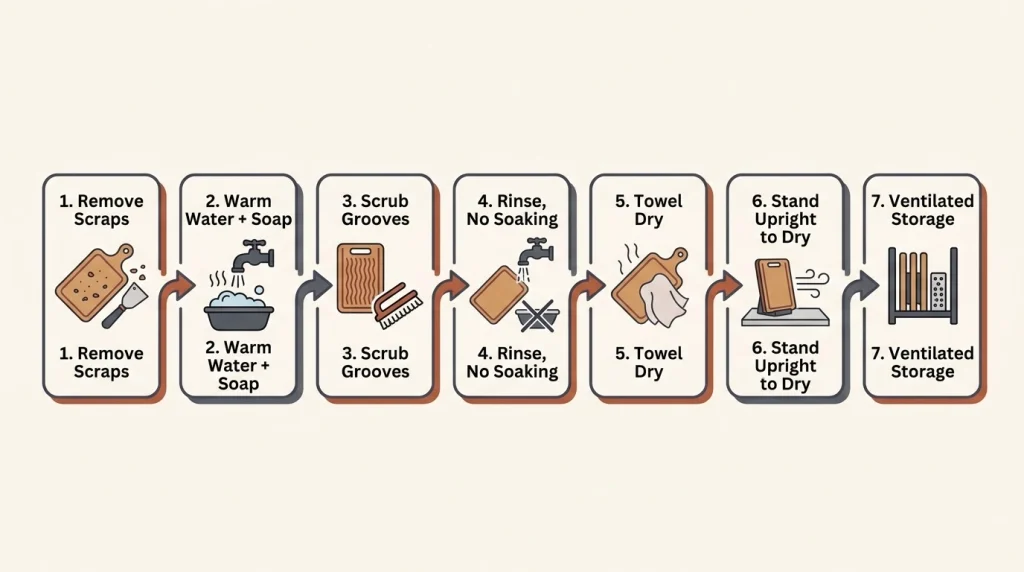
Clean a padauk cutting board after each use, assuming its material and construction have already been judged suitable for food preparation. Pay particular attention to its open grain and any areas where residue collects.
The University of Maine Cooperative Extension cutting board safety guide provides useful cleaning and maintenance recommendations.
Everyday Cleaning Steps
- Remove visible crumbs and food scraps.
- Wash the surface with warm water and mild dish soap.
- Gently scrub any accessible grooves or textured areas.
- Rinse thoroughly without prolonged soaking.
- Dry both sides with a clean towel.
- Stand the board upright until completely air-dried.
- Store it in a clean location with adequate ventilation.
Never leave a wooden board submerged in the sink. Extended water exposure can contribute to swelling, joint failure, and warping.
What About Sanitizing?
Proper washing removes food debris, while sanitizing provides additional microbial control when needed. Choose a sanitizer labeled for food-contact surfaces and follow its concentration, contact time, and rinsing directions.
USDA guidance discusses sanitizing cutting boards with a properly diluted unscented chlorine bleach solution. Never mix bleach with vinegar, ammonia, or other cleaning chemicals.
For home use, I prefer to keep a separate, easily sanitized board for raw animal products. This reduces unnecessary cross-contamination risks.
Can You Cut Raw Meat on a Padauk Cutting Board?
I would not select padauk as my first choice for cutting raw chicken, meat, or seafood. Its open texture creates additional cleaning considerations, especially when knife grooves develop.
The USDA cutting board safety guidance supports separating raw animal products from ready-to-eat foods.
A nonporous, dishwasher-safe cutting board is often more convenient for raw meat. Always follow the manufacturer’s washing and sanitizing instructions.
Use a separate board for the following foods when possible:
- Raw poultry.
- Raw beef, pork, and other meats.
- Raw seafood.
- Fresh fruit and ready-to-eat vegetables.
- Bread and other ready-to-eat foods.
Color-coded boards can make this separation easier. Cleaning remains necessary even when different foods have designated cutting surfaces.
Does Padauk Wood Bleed Color Into Food?
Padauk contains natural coloring compounds, and some finishes can cause its color to migrate into adjacent materials. However, this does not establish how often a finished board transfers color to food.
Freshly worked padauk is particularly vibrant. Its heartwood gradually darkens through exposure to light and environmental conditions.
What Should You Check?
- Unexpected red or orange residue after cleaning.
- Visible color transfer onto a clean, damp cloth.
- Surface coatings that appear to soften or lift.
- Unusual odors or residues after washing.
- Loose splinters or surface particles.
If color transfer or unexplained residue occurs, stop using the board for food preparation. Have the material and finish assessed instead of assuming that additional oil will solve the problem.
Is Padauk Better for Serving Boards Than Cutting Boards?
Padauk can be an attractive option for decorative serving pieces when the exact species, finish, and intended food contact have been properly evaluated. Serving generally produces less knife wear than continuous chopping.
However, calling an item a serving board does not eliminate food-contact requirements. Direct food contact still calls for suitable materials and finishes.
Potential Decorative Applications
- Decorative wooden trays with suitable food-contact construction.
- Presentation pieces used with separate food-safe liners.
- Accent panels that do not contact food directly.
- Display boards for kitchen decoration.
- Carefully evaluated occasional-use serving surfaces.
For direct contact with cheese, fruit, or other food, verify the entire finished product’s suitability. Decorative coatings should not automatically be treated as cutting-board finishes.
When Should You Avoid Using Padauk for a Cutting Board?
Avoid using padauk when its identity, chemical history, or suitability cannot be established. Do not use material with known contamination or a finish that is inappropriate for repeated food contact.
Important Warning Signs
- The wood came from an unknown reclaimed source.
- The board has a chemical odor or unexplained residue.
- Its surface sheds splinters or colored particles.
- Glue joints have opened or separated.
- Deep knife grooves cannot be cleaned effectively.
- A previous exposure caused irritation or an allergic reaction.
- The coating has no clear food-contact suitability information.
- The wood’s species or sourcing information is unreliable.
If these problems cannot be resolved, replace the board or reserve it for decoration. Food safety should always take priority over appearance.
What Should You Consider Before Buying Padauk Lumber?
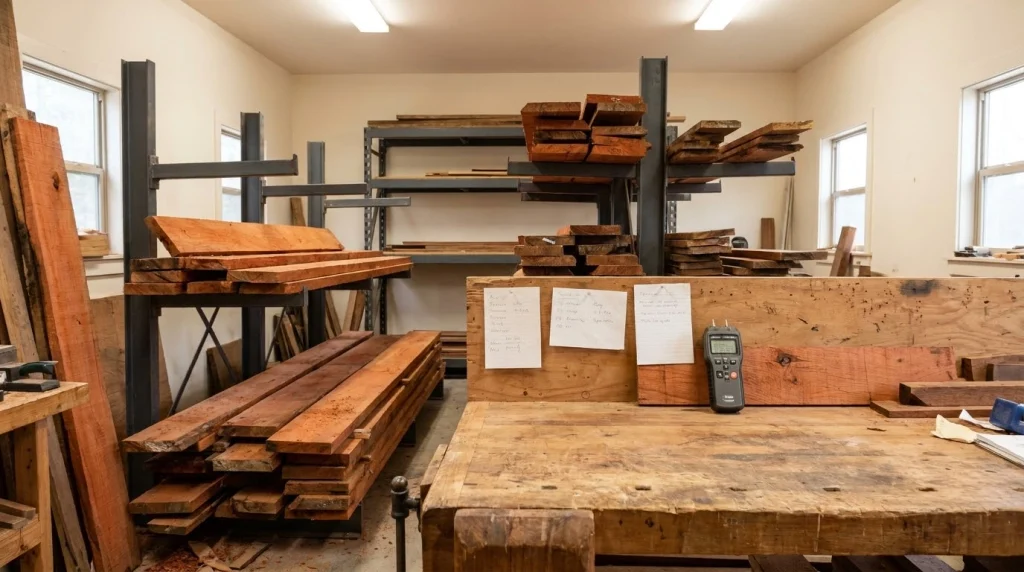
As of 2026, responsible sourcing is another consideration when buying African padauk. Certain African Pterocarpus species are covered by CITES trade controls, making supplier documentation relevant.
For a woodworking project, ask the seller these questions:
- What is the exact scientific name of the wood?
- Where was the lumber harvested?
- Is the material untreated and free from preservatives?
- Has the wood been dried appropriately?
- What sourcing or import documentation is available?
- Is the supplier making any documented food-contact suitability claim?
Responsible sourcing does not automatically establish food safety. Both the material’s origin and its intended application deserve separate evaluation.
Useful Products for Cutting Board Care and Food Preparation
If you want a more straightforward daily kitchen setup, I would prioritize a proven hardwood board and suitable maintenance supplies. A separate washable board for raw meat also makes everyday food preparation easier.
Affiliate disclosure: The following links are Amazon affiliate search links. I may earn a commission from qualifying purchases at no additional cost to you. The suitability scores below are editorial assessments, not verified customer-review averages or hands-on test results.
🏆 Best Everyday Wood Board
John Boos R-Board Hard Maple Cutting Board
★★★★★ Editorial suitability: 5/5
The 18-by-12-inch R-Board features edge-grain hard maple construction and a 1.5-inch thickness. I recommend it as a conventional hardwood alternative for regular food preparation, provided it receives proper cleaning and maintenance.
🪵 Best for Board Maintenance
Howard Cutting Board Oil
★★★★☆ Editorial suitability: 4/5
Howard Cutting Board Oil contains clear, odorless food-grade mineral oil for conditioning unfinished wooden kitchen surfaces. I consider it a practical maintenance option for a suitable wooden board, although conditioning does not replace proper cleaning.
🍗 Best Separate Prep Board
OXO Good Grips Carving & Cutting Board
★★★★★ Editorial suitability: 5/5
This nonporous cutting board provides a practical alternative for preparing raw meats and other ingredients. I would keep a separate OXO board for raw proteins and reserve the wooden board for produce, bread, and everyday chopping.
Frequently Asked Questions
Is Padauk Wood Toxic to Humans?
Padauk is associated with reported allergic and irritation reactions, particularly from wood dust exposure. That does not mean every finished padauk object is toxic during ordinary handling. However, users with known sensitivities should avoid exposure, and woodworkers should use appropriate dust protection when cutting or sanding it.
Is African Padauk a Food-Safe Wood?
African padauk cannot be declared universally food-safe based on its species name alone. Its coarse grain and reported sensitization potential deserve consideration. For a cutting board, confirm that the exact material, adhesives, finishes, and construction are suitable for the intended food-contact application.
Does Padauk Wood Dull Knives?
African padauk is harder than many traditional cutting-board woods, with a Janka rating of approximately 1,710 lbf. However, hardness alone cannot predict knife-edge wear. Cutting technique, blade steel, grain orientation, and board construction also matter. Maple is generally a more established choice for everyday knife work.
Can Padauk Be Used With Maple in a Cutting Board?
Padauk and maple can be combined physically in woodworking projects. However, joining them does not eliminate padauk’s grain and exposure considerations. For a food-preparation board, assess every wood species and adhesive individually. A padauk accent in a non-food-contact decorative area may be a more cautious design choice.
What Is the Best Alternative to Padauk for Cutting Boards?
Hard maple is a strong alternative because it offers a close-grained surface, useful hardness, and an established history in food preparation. Black walnut and cherry are also popular hardwood options. Choose a well-constructed board from untreated material, maintain it properly, and replace it when damage prevents effective cleaning.
Final Verdict: Should You Use Padauk for a Cutting Board?
Yes, padauk can physically be made into a cutting board, but that does not automatically make every finished board appropriate for food preparation. Its strength and color are appealing, yet its open pores, natural extractives, and sensitivity considerations deserve attention.
For everyday cooking, my recommendation is hard maple. It offers a more established combination of food-preparation suitability, durability, and manageable maintenance.
If you already have padauk, consider using it in a decorative project unless the exact material and construction have been evaluated for food contact. Never compromise cleaning or safety for appearance.
For more advice on preparing food safely, explore my complete guide on how to use a cutting board safely.
A good cutting board should do more than look beautiful. It should provide a dependable surface you can clean, maintain, and use with confidence.

