Can You Use Vegetable Oil on a Cutting Board?
Quick Answer
You can put vegetable oil on a wooden cutting board, but it’s not recommended for regular maintenance. Common cooking oils can oxidize and develop unpleasant odors or sticky residues over time. Instead, choose food-grade mineral oil or a cutting board conditioner, as recommended by John Boos cutting board care guidance.
What you should know
- Vegetable oil: Edible, but not a dependable long-term wood conditioner.
- Rancidity risk: Cooking oils can develop unwanted smells as they oxidize.
- Better choice: Food-grade mineral oil is stable, odorless, and designed for this purpose.
- Extra protection: A mineral oil and beeswax conditioner helps resist moisture.
- Already used it? Wash the board, dry it thoroughly, and check for lingering residue or odor.
The simplest solution
- Clean: Wash with mild dish soap and warm water.
- Dry: Allow the board to become completely dry.
- Condition: Apply a thin coat of food-grade mineral oil and wipe away excess.
It’s tempting to grab vegetable oil when a wooden cutting board starts looking dry. After all, it’s already in the kitchen, and it seems harmless.
But edible doesn’t always mean suitable for maintaining wood. I’ll explain what happens when you use vegetable oil, which alternatives work better, and how to care for your board without unnecessary expense.
Can You Really Use Vegetable Oil on a Wooden Cutting Board?
Yes, vegetable oil can physically coat and soak into unfinished wood. However, using it as a regular cutting board treatment creates avoidable maintenance problems.
Many vegetable oils contain unsaturated fats that react with oxygen over time. This process can produce off-odors and changes in the oil’s texture.
The problem isn’t that a small amount of edible oil suddenly makes your cutting board poisonous. The concern is that cooking oil isn’t designed to provide a stable, lasting finish on a frequently washed food-preparation surface.
What exactly is vegetable oil?
Vegetable oil is a broad name for oils extracted from plant sources. Grocery-store bottles commonly contain soybean, canola, sunflower, corn, or blended oils.
These oils work well for cooking because their culinary properties are useful. That doesn’t make them equally effective for maintaining wooden kitchen equipment.
Why does wood need conditioning?
Wood is porous, meaning its structure contains tiny spaces that can take in and release moisture. Repeated washing and drying can leave an unfinished wooden board looking pale and rough.
A suitable cutting board oil penetrates exposed wood and helps reduce moisture-related changes. Regular maintenance can help limit excessive dryness, splitting, and warping.
Wood conditioning means treating a suitable wooden surface with a food-contact-appropriate oil or conditioner to help preserve its condition.
Why Is Vegetable Oil Bad for Cutting Boards?
 Save
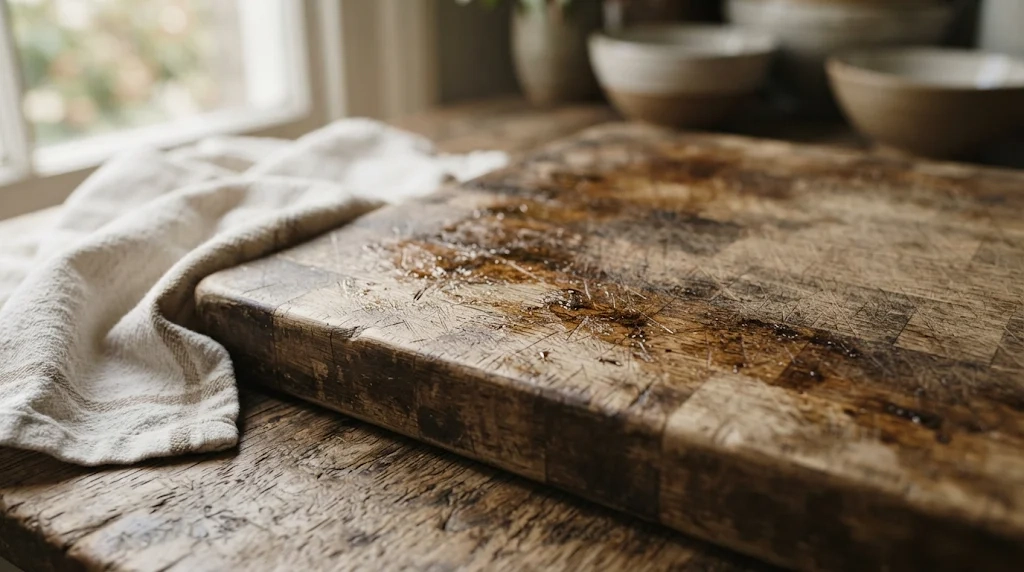
The main concern is oxidation, which can eventually cause unpleasant smells and residue. Vegetable oil also offers less predictable long-term performance than a purpose-made board conditioner.
1. Vegetable oil can become rancid
Rancidity develops when fats deteriorate through processes such as oxidation. Heat, oxygen, light, and time can influence how quickly this happens.
A cutting board provides many opportunities for oil to contact air. A cooking oil absorbed into the wood may eventually produce an unpleasant stale smell.
2. Some oils can leave sticky residue
Not every vegetable oil behaves the same way. However, some plant oils can thicken or form a tacky film as they react with oxygen.
This is especially frustrating on a surface used for chopping vegetables, herbs, and other ingredients. A cutting board should feel clean and dry, not greasy or gummy.
3. Oil can retain unwanted smells
Wood already needs careful cleaning after contact with strongly scented foods. A deteriorating oil layer can add another source of unwanted odor.
If your board smells strange even after proper washing, check its overall condition. Don’t automatically assume another coat of oil will solve the problem.
4. It can complicate future maintenance
A stable mineral oil finish is comparatively straightforward to refresh. Old cooking oil residue may require more cleaning before applying the correct treatment.
- Bad odor: An old, sour, or paint-like smell can indicate deterioration.
- Tacky surface: Sticky areas can signal leftover or altered oil.
- Uneven finish: Some spots may look greasy while others remain dry.
- Cleaning difficulty: Excess residue may take repeated washing to remove.
These symptoms don’t prove that the board is unsafe in every case. They are signs that the surface needs attention before food preparation continues.
Vegetable Oil vs. Mineral Oil: Which Is Better for Cutting Boards?
 Save
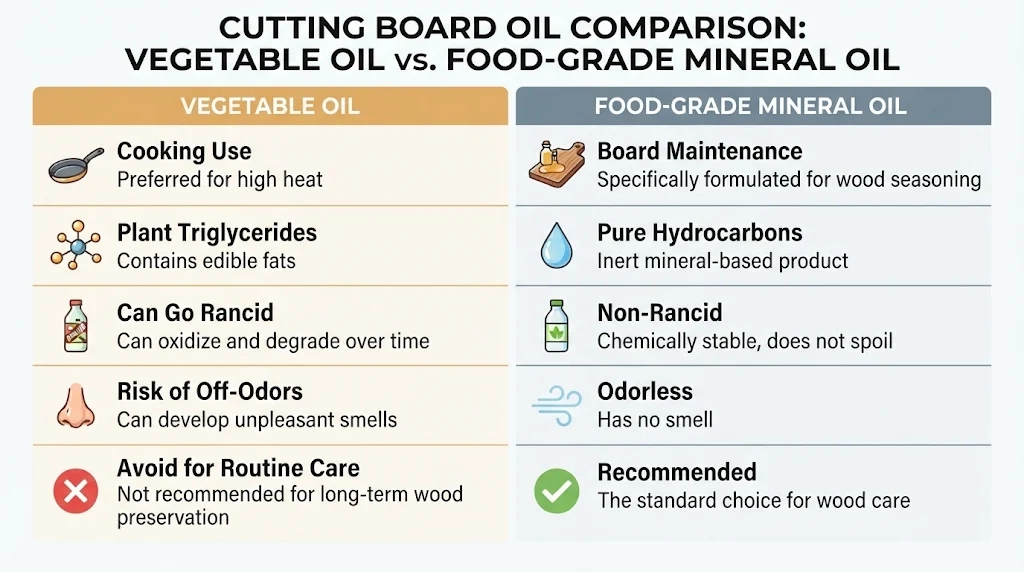
Food-grade mineral oil is the better everyday choice for most unfinished wooden cutting boards. Unlike ordinary vegetable oil, it doesn’t turn rancid through the same fat-oxidation process.
The comparison below focuses on practical maintenance properties rather than cooking performance.
| Factor | Vegetable Oil | Food-Grade Mineral Oil |
|---|---|---|
| Primary use | Cooking and food preparation | Wooden food-contact surface maintenance |
| Oil type | Plant-derived triglycerides | Refined mineral hydrocarbons |
| Rancidity | Can become rancid | Doesn’t become rancid like cooking oils |
| Odor | May develop off-odors | Normally odorless |
| Maintenance reliability | Less predictable | Designed for repeated conditioning |
| Recommendation | Avoid for routine conditioning | Recommended for suitable unfinished boards |
My preferred rule is simple: cooking oils belong in recipes, while dedicated board oils belong on unfinished wooden cutting boards.
That distinction also makes shopping easier. You don’t need an expensive specialty treatment if plain food-grade mineral oil meets your board manufacturer’s instructions.
What Is the Best Oil for a Wooden Cutting Board?
For most unfinished wood cutting boards, pure food-grade mineral oil is a dependable option. Mineral oil and beeswax conditioners are also useful when you want additional surface moisture resistance.
Food-grade mineral oil
Mineral oil enters the wood’s exposed pores and helps maintain its appearance. It is normally colorless, tasteless, and odorless.
Choose a product explicitly labeled for cutting boards or appropriate food-contact applications. Don’t assume every industrial or general-purpose mineral oil is suitable.
Mineral oil and beeswax conditioner
These products combine penetrating mineral oil with a wax-based surface treatment. Beeswax helps create a moisture-resistant finish without turning the board into a completely waterproof object.
Some formulas also contain carnauba wax. Follow the manufacturer’s directions because soaking times and application methods differ.
Purpose-made cutting board oils
Products such as John Boos Mystery Oil are marketed specifically for maintaining wooden food-preparation surfaces. They can be convenient when you want a product aligned with a particular board manufacturer’s care recommendations.
Always check the ingredients and compatibility instructions. A product being labeled natural doesn’t automatically make it appropriate for every wooden surface.
Can You Use Olive, Coconut, or Canola Oil Instead?
Most ordinary kitchen oils aren’t my first choice for maintaining wooden cutting boards. Their behavior varies, but purpose-made products offer more predictable results.
| Oil | Suitable for routine board conditioning? | Main consideration |
|---|---|---|
| Olive oil | Not recommended | Can oxidize and leave unwanted odors |
| Canola oil | Not recommended | Can become rancid over time |
| Sunflower oil | Not recommended | Oxidation behavior varies by formulation |
| Regular coconut oil | Not preferred | Can solidify at cooler temperatures and leave residue |
| Food-grade mineral oil | Yes | Stable, odorless, and suitable when used as directed |
Some specialized wood-finishing oils use modified or specially processed plant oils. They shouldn’t be confused with ordinary bottles of cooking oil.
Likewise, certain dedicated coconut-derived board oils may use refined formulations. Judge those products by their stated food-contact suitability and instructions, not by the word coconut alone.
How Do You Oil a Wooden Cutting Board Correctly?
 Save
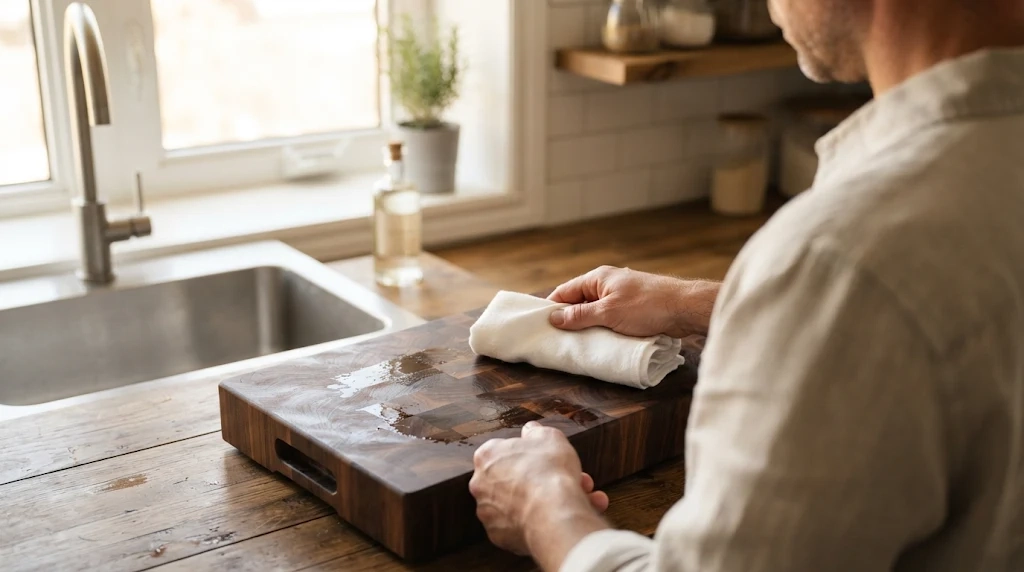
Start with a clean, completely dry wooden board. Apply the recommended oil evenly, allow it to penetrate, and remove any excess before preparing food.
Step 1: Wash the board
Use warm water, mild dish soap, and a clean sponge or brush. Remove food particles from the surface, edges, and any juice grooves.
Avoid leaving the board submerged in water. Prolonged soaking can contribute to swelling and distortion.
Step 2: Dry it completely
Wipe away surface water with a clean towel. Then stand the board upright or place it where air can reach both sides.
Don’t trap moisture under a freshly applied oil layer. The surface should be fully dry before conditioning.
Step 3: Apply food-grade mineral oil
Pour a modest amount of oil onto a clean, lint-free cloth. Spread it evenly across the cutting surface, edges, and other exposed areas.
Work gradually rather than flooding the board. Add more only if the wood absorbs the initial coat quickly.
Step 4: Allow the oil to absorb
Follow the product’s stated soaking time. Some formulas recommend at least 20 minutes, while others recommend leaving the treatment overnight.
Thicker or untreated boards may require additional coats. Let the manufacturer’s instructions determine whether another application is appropriate.
Step 5: Wipe off the excess
Use a clean cloth to remove any visible or greasy residue. A properly maintained board shouldn’t leave an oily film on your fingers.
Wait until the surface feels dry and clean before returning it to food preparation.
Step 6: Add conditioner if desired
Apply a compatible beeswax-based board conditioner after the mineral oil treatment. Use a thin layer and buff according to its directions.
This extra step is optional, but it can improve surface moisture resistance. It doesn’t replace normal cleaning and drying.
What Should You Do If You Already Used Vegetable Oil?
Using vegetable oil once doesn’t automatically ruin a wooden cutting board. The appropriate response depends on how much oil was used and whether any residue or smell remains.
- Remove excess oil: Wipe the surface thoroughly using a clean paper towel or cloth.
- Wash carefully: Clean the board with warm water and a mild dish detergent.
- Rinse: Remove the soap and loosened grease without soaking the board.
- Air-dry: Stand the board upright until it becomes completely dry.
- Inspect: Check for sticky patches, lingering odors, cracks, or deep grooves.
- Recondition: If the surface is clean and sound, apply a suitable food-grade board oil.
What if the cutting board still feels sticky?
A sticky board may need another gentle wash and a longer drying period. Repeatedly adding mineral oil won’t remove old, gummy cooking oil deposits.
If the residue remains embedded, refinishing may be necessary. Follow the board manufacturer’s instructions or seek advice from someone familiar with food-contact wood surfaces.
What if the board smells rancid?
Don’t use the board for food preparation while it has a persistent unpleasant odor. Wash and dry it, then reassess whether the smell has disappeared.
If rancid odor or tackiness continues despite appropriate cleaning, replacing the board may be the most practical option.
How Often Should You Oil a Wooden Cutting Board?
Oil a wooden cutting board when it begins looking dry, dull, or noticeably lighter in color. For many frequently used boards, approximately once a month is a reasonable starting point.
John Boos recommends at least monthly maintenance for its applicable cutting boards, depending on household conditions and use. Your specific board may require a different schedule.
- Frequent daily use: Inspect the surface regularly and condition when dry.
- Occasional use: Check the finish before applying another coat.
- New unfinished board: Follow the initial conditioning instructions supplied with the board.
- Dry indoor conditions: Watch for visible dryness and roughness.
- After heavy washing: Let the board dry before deciding whether more oil is needed.
Don’t treat a calendar as more important than the board’s actual condition. Excessive oiling can leave unnecessary residue without providing extra benefits.
How Do You Keep a Wooden Cutting Board Safe and Clean?
Proper cleaning matters more than oiling alone. Oil helps maintain appropriate wood surfaces, but it doesn’t disinfect them or replace washing.
The USDA Food Safety and Inspection Service provides food-safety guidance on cleaning food-preparation equipment and preventing cross-contamination.
Clean after food preparation
Wash your board after each use with hot, soapy water. Rinse it and dry it thoroughly before putting it away.
Use separate cutting boards for raw meat and ready-to-eat foods when practical. This reduces the risk of transferring raw-meat juices to foods that won’t be cooked.
Avoid soaking and unnecessary dishwasher exposure
Most unfinished wooden cutting boards shouldn’t be soaked or placed in the dishwasher. Follow your board manufacturer’s care instructions, especially for laminated or glued wood.
Extended contact with water and heat may weaken joints or contribute to cracking and warping.
Replace excessively worn boards
Deep knife grooves can become difficult to clean thoroughly. Structural cracks and permanently damaged surfaces also deserve attention.
The USDA advises replacing cutting boards that become excessively worn or develop hard-to-clean grooves. You can review broader kitchen hygiene practices through FoodSafety.gov.
Does the Cutting Board Material Change Which Oil You Should Use?
Yes. Traditional wood boards and plastic boards require different maintenance, and not every wood-like product accepts the same finish.
- Unfinished hardwood: Usually suitable for food-grade mineral oil, subject to manufacturer instructions.
- Bamboo: Some boards accept mineral oil, but construction and finish recommendations vary.
- Plastic: Does not require mineral oil conditioning.
- Glass: Does not absorb conditioning oil and requires no oil treatment.
- Composite boards: Follow the manufacturer’s specific cleaning and maintenance guidance.
Don’t apply an oil treatment to a sealed or coated surface unless the manufacturer recommends it. The original finish determines which maintenance products are compatible.
Common Cutting Board Oiling Mistakes to Avoid
Most conditioning problems come from selecting the wrong product or applying it incorrectly. Avoiding a few simple mistakes makes board care easier.
- Using cooking oil: Choose food-grade mineral oil rather than ordinary vegetable oil.
- Applying oil to wet wood: Let the board dry completely before conditioning.
- Using too much: Remove excess rather than leaving an oily puddle.
- Ignoring instructions: Different board finishes and conditioner formulas have different requirements.
- Confusing oil with sanitizer: Keep cleaning, sanitizing when appropriate, and conditioning as separate tasks.
- Neglecting board damage: Oil cannot repair serious cracks or make deeply grooved surfaces easy to clean.
One useful habit is to inspect the board each time you wash and dry it. A clean, smooth, odor-free surface is a better starting point than simply applying more conditioner.
Recommended Products for Wooden Cutting Board Care
If you’re ready to replace vegetable oil with a more suitable maintenance product, these three established options cover different needs. My selections focus on ingredient suitability, maintenance purpose, and convenience rather than hands-on product testing.
🏆 Best overall
Howard Cutting Board Oil
★★★★☆ 4.8/5 editorial fit
This product uses pure food-grade mineral oil to condition wooden cutting boards and butcher blocks. I’d choose it as a straightforward starting option because it doesn’t require a more complicated treatment routine.
🛡️ Best for added protection
Howard Butcher Block Conditioner
★★★★☆ 4.7/5 editorial fit
This conditioner combines food-grade mineral oil, beeswax, and carnauba wax. I favor this type of formula when a board needs both conditioning and a more moisture-resistant surface finish.
🪵 Best for Boos board care
John Boos Mystery Oil
★★★★☆ 4.6/5 editorial fit
John Boos recommends Mystery Oil for maintaining its suitable wood boards and butcher blocks. I’d prioritize it for owners who prefer to follow the board manufacturer’s dedicated care system.
Editorial ratings are comparative suitability judgments, not verified customer ratings or results from personal product testing. Product formulas and availability can change, so check the current label before purchasing.
Frequently Asked Questions
Is vegetable oil safe to put on a cutting board?
Vegetable oil is edible, so a small accidental application doesn’t automatically make a board unsafe. However, it’s not a good long-term conditioning choice because it can oxidize and develop unwanted odors or residue. Wash away excess and use a suitable food-grade board oil for routine maintenance.
Can you use vegetable oil on a bamboo cutting board?
Vegetable oil isn’t recommended for routine bamboo cutting board maintenance. Some bamboo boards can be maintained with food-grade mineral oil, but their construction and factory finishes vary. Check the manufacturer’s instructions first, and avoid applying any treatment to a surface that doesn’t require oiling.
What happens if you never oil a wooden cutting board?
An unfinished wooden cutting board may become increasingly dry and rough with repeated washing. Over time, moisture changes can contribute to cracking or warping. Appropriate conditioning helps preserve the wood, but cleaning, drying, and avoiding prolonged soaking remain important parts of maintenance.
Can I use baby oil instead of mineral oil?
Baby oil often contains mineral oil, but many versions include fragrance or other ingredients. Those formulations aren’t necessarily intended for food-contact cutting boards. Select plain food-grade mineral oil specifically labeled for suitable kitchen surfaces rather than assuming a personal-care product is interchangeable.
How long should mineral oil stay on a cutting board?
Follow the instructions on your specific product. Some mineral oils recommend at least 20 minutes of absorption, while certain board-care systems recommend leaving oil overnight. Afterward, wipe away excess thoroughly and allow the board to feel clean and dry before food preparation.
Final Verdict: Should You Use Vegetable Oil on a Cutting Board?
Vegetable oil is convenient, but it isn’t the right choice for regular wooden cutting board maintenance. Its potential for rancidity and residue makes it less reliable than food-grade mineral oil.
For most unfinished wood boards, start with a simple food-grade mineral oil treatment. A compatible beeswax conditioner can offer additional surface protection when needed.
Keep the board clean, dry it thoroughly, and inspect it regularly. Those habits matter just as much as choosing the right oil.
My recommendation: Save vegetable oil for cooking, use dedicated food-contact-safe products for wood care, and always follow your cutting board manufacturer’s maintenance instructions.

