Silicone vs. Plastic Cutting Boards: Which Is Better?
Quick Answer
Silicone vs. plastic cutting boards comes down to flexibility, stability, cleaning, and knife comfort. Silicone works well for lightweight food preparation and easy ingredient transfer. A thick plastic board is usually better for everyday chopping and raw meat preparation. Both need proper cleaning, as explained in the FDA food preparation guidelines.
Key Differences at a Glance
- Best for chopping: Thick plastic boards provide a firm, dependable work surface.
- Best for flexibility: Silicone bends easily, helping transfer chopped ingredients.
- Knife friendliness: Both can be gentle on blades when designed for cutting.
- Cleaning: Many models are dishwasher-safe, but always check manufacturer instructions.
- Food safety: Cleaning, separating foods, and replacing damaged boards matter more than material alone.
- Best overall: Choose thick plastic for general use and silicone for flexible prep.
My Practical Recommendation
- Everyday cooking: Start with a sturdy plastic board.
- Quick vegetable preparation: Add a food-grade silicone mat if you value flexibility.
- Raw meat: Reserve a separate, easy-to-clean board.
Choosing a cutting board sounds simple until you compare silicone and plastic. Both promise convenient cleaning, but they behave differently beneath a sharp kitchen knife.
I’m Michael, and I prefer evaluating kitchen tools by how they fit real cooking tasks. In this guide, I’ll compare their strengths, limitations, cleaning needs, and overall value.
What Are Silicone and Plastic Cutting Boards?
Silicone and plastic cutting boards are nonwood food preparation surfaces made from different synthetic materials. Their construction affects flexibility, stability, maintenance, and cutting performance.
What Is a Silicone Cutting Board?
A silicone cutting board is a cutting surface made primarily from silicone elastomer. This flexible, rubber-like material can bend without permanently changing shape during normal use.
Silicone boards range from thin preparation mats to thicker cutting surfaces. Their softness can feel comfortable beneath a knife, although performance depends on thickness and construction.
- Flexible construction for convenient food transfer.
- Water-resistant material that doesn’t require oiling.
- Usually lightweight and easy to store.
- Available in different thicknesses and textures.
- Potential for stretching, gouging, or moving during forceful cutting.
A thick silicone model with a textured underside is more practical for chopping than a floppy mat. Thin mats are better suited to lighter slicing jobs.
What Is a Plastic Cutting Board?
A plastic cutting board is usually made from food-contact polymers such as polyethylene or polypropylene. These materials create a firmer cutting surface than most flexible silicone mats.
High-density polyethylene, often called HDPE, is common in cutting boards. It provides a useful balance of durability, affordability, and everyday practicality.
- Firm support for chopping and slicing.
- Multiple thickness and size options.
- Easy cleaning on appropriate dishwasher-safe models.
- Affordable replacement options.
- Possible deep knife grooves after extended use.
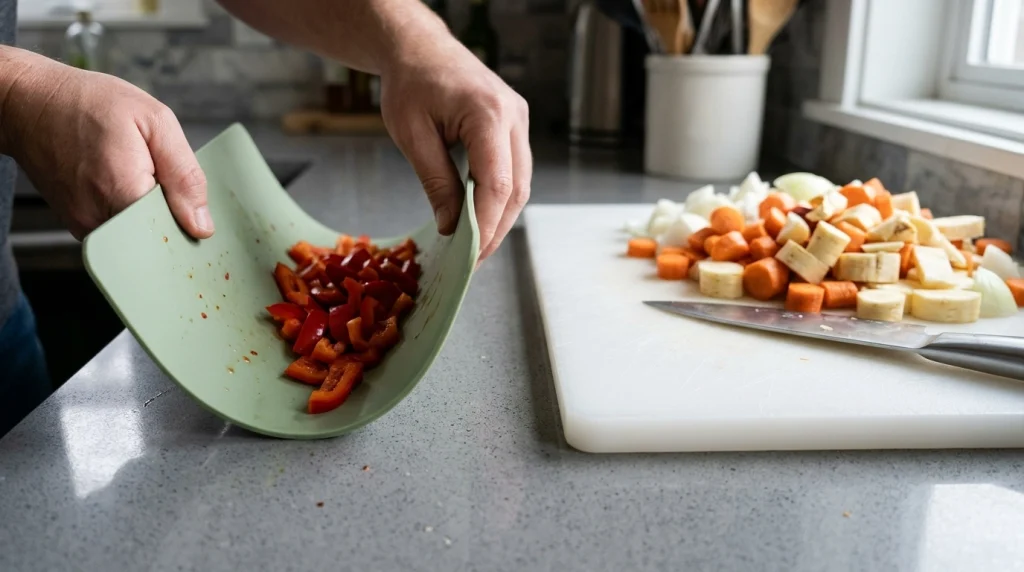
The biggest difference is structural. Silicone tends to bend, while thick plastic generally maintains its shape under pressure.
Silicone vs. Plastic Cutting Boards: Side-by-Side Comparison
 Save
Neither material wins every category. The better choice depends on your cutting technique and the foods you prepare most often.
| Feature | Silicone Board | Plastic Board |
|---|---|---|
| Main material | Silicone elastomer | Usually PE or PP |
| Flexibility | High | Low to moderate |
| Chopping support | Depends on thickness | Generally firm |
| Knife friendliness | Generally forgiving | Generally knife-friendly |
| Dishwasher cleaning | Many models compatible | Many models compatible |
| Ingredient transfer | Excellent flexibility | Requires lifting or scraping |
| Common damage | Cuts and gouges | Knife grooves and warping |
| Best applications | Light prep and transfers | General chopping and meat prep |
These differences describe typical products, not every model. A premium thick silicone board may feel steadier than a cheap, thin plastic mat.
Which Cutting Board Is Safer for Food Preparation?
Both materials can support safe food preparation when they are suitable for food contact and properly maintained. Neither automatically prevents bacterial contamination.
The most important safety factors are cleanliness, surface condition, and preventing cross-contamination. A neglected board becomes a concern regardless of its material.
Can Bacteria Grow on Silicone Cutting Boards?
Yes. Bacteria can remain on a silicone surface when food residue and moisture are left behind.
Silicone’s water resistance makes cleaning convenient, but it doesn’t sterilize itself. Knife damage and textured areas may also create difficult cleaning spots.
Are Plastic Cutting Boards Hygienic?
Plastic boards can be hygienic with thorough cleaning and regular inspection. Their main limitation is the knife damage that develops over time.
Deep grooves may trap food particles and bacteria. The University of Maine Cooperative Extension explains why worn cutting surfaces need attention.
How Can You Prevent Cross-Contamination?
Cross-contamination occurs when harmful microorganisms transfer between foods or surfaces. Raw poultry juices touching prepared salad vegetables are a common example.
I recommend keeping your raw-meat board clearly different from your produce board. This reduces confusion during busy meal preparation.
- Use one dedicated board for raw meat, poultry, and seafood.
- Keep another board for vegetables, fruit, bread, and ready-to-eat foods.
- Wash surfaces thoroughly between different food preparation tasks.
- Clean knives and surrounding countertops after handling raw ingredients.
- Replace boards with deep, hard-to-clean damage.
Food safety tip: Choose a board you can clean thoroughly after every use. Easy maintenance is often more valuable than a material’s marketing claims.
Are Silicone Cutting Boards Better for Your Knives?
Silicone can provide a forgiving cutting surface because it has some give beneath the blade. However, that doesn’t prove every silicone board preserves sharpness better than plastic.
Knife-edge wear depends on board hardness, blade geometry, cutting pressure, and technique. Quality plastic boards can also be gentle on kitchen knives.
How Does Silicone Affect a Knife Edge?
A silicone surface can cushion normal blade contact. This may appeal to cooks using thin or delicate kitchen knives.
However, very soft silicone may grip the knife edge during cutting. Excessive pressure can also leave permanent cuts in the board.
Does Plastic Dull Knives Faster?
Plastic cutting boards generally offer a more forgiving surface than glass or stone. Whether they dull knives faster than silicone depends on the specific products.
For more guidance on knife-edge care, see the American Cleaning Institute’s knife and cutting board cleaning recommendations.
My preference is simple: prioritize a stable, knife-friendly surface over a material label. Good technique matters just as much.
Which Material Is More Durable?
 Save
Thick plastic cutting boards generally offer better structural support during heavy chopping. Silicone’s durability depends heavily on thickness, formulation, and intended use.
Both materials can suffer knife damage. Neither should be considered permanent kitchen equipment.
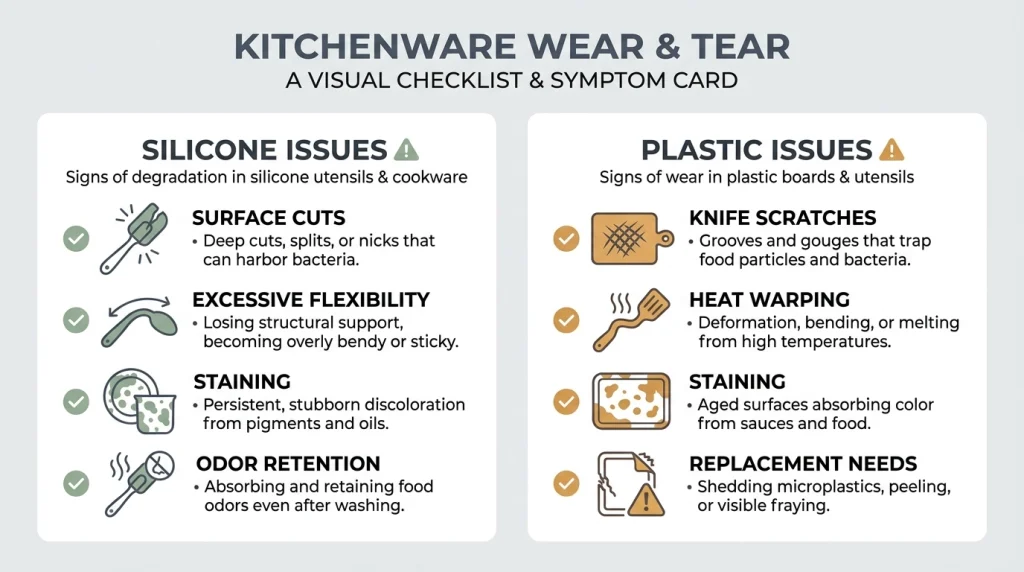
Common Silicone Cutting Board Problems
- Surface cuts: Sharp blades may gouge soft silicone.
- Excessive flexibility: Thin boards may shift or bunch during cutting.
- Staining: Strong food pigments may discolor certain models.
- Odor retention: Some silicone surfaces may retain food smells.
- Wear: Repeated cutting may leave rough or damaged areas.
These problems don’t affect every silicone product equally. A thick, purpose-built model is preferable to an ordinary baking mat.
Common Plastic Cutting Board Problems
- Knife scratches: Repeated chopping creates visible grooves.
- Warping: Excessive heat can deform unsuitable plastic boards.
- Staining: Foods such as turmeric and beetroot can leave marks.
- Surface wear: Heavy use may produce rough patches.
- Replacement needs: Deep cuts can become difficult to clean.
The Academy of Nutrition and Dietetics recommends discarding boards with excessive knife scars or hard-to-clean grooves.
Silicone vs. Plastic Cutting Boards: Which Is Easier to Clean?
Both can be simple to clean, although dishwasher compatibility varies by manufacturer. Look for explicit cleaning instructions rather than assuming every board handles high heat.
Plastic often has an advantage for established everyday kitchen routines. Silicone can be equally convenient if its shape and texture allow thorough washing.
How to Clean a Silicone Cutting Board
- Remove visible food scraps immediately after use.
- Wash the board with warm water and dish soap.
- Pay attention to textured surfaces and knife marks.
- Rinse thoroughly with clean water.
- Air-dry completely or use a clean paper towel.
- Use the dishwasher only when the manufacturer permits it.
Avoid abrasive scrubbing tools that damage the silicone surface. If the board develops deep cuts or begins shedding material, replace it.
How to Clean a Plastic Cutting Board
- Scrape away leftover food particles.
- Wash with hot, soapy water.
- Scrub visible knife grooves carefully.
- Rinse with clean water.
- Sanitize when necessary, following food-safety guidance.
- Dry thoroughly before storing.
Dishwasher-safe plastic boards offer convenient cleaning after raw-meat preparation. Still, inspect the board for warping or damage afterward.
How Should You Sanitize a Cutting Board?
Sanitizing reduces microorganisms after the surface has been cleaned. It’s particularly important after preparing raw meat, poultry, or seafood.
For compatible boards, food-safety guidance describes using one tablespoon of unscented liquid chlorine bleach per gallon of water. Follow the product’s directions and rinse thoroughly afterward.
For silicone, confirm that the board manufacturer permits the chosen sanitizer. Never mix bleach with ammonia, vinegar, or other cleaners.
Do Silicone Cutting Boards Release Microplastics?
Silicone is not the same material as conventional polyethylene or polypropylene plastic. However, silicone can still experience physical wear and release small fragments when damaged.
Plastic cutting boards can release microscopic plastic particles as knives abrade their surfaces. The amount depends on material, cutting conditions, and wear.
Is Silicone Completely Free From Particle Shedding?
No cutting surface should be assumed to have zero material shedding. Silicone can release fragments through cutting, tearing, or abrasion.
Silicone also has different chemical properties from conventional plastic. That difference alone doesn’t establish that its cutting debris poses no risk.
Are Plastic Cutting Board Microplastics Dangerous?
Plastic particle exposure is an active area of scientific research. The exact health significance of particles released from household cutting boards remains uncertain.
Current evidence doesn’t justify treating every plastic cutting board as inherently unsafe. It does support avoiding heavily worn surfaces and reducing unnecessary abrasion.
Practical tip: Replace boards that show loose fragments, deep gouges, or significant surface deterioration. Do not scrape a cutting board aggressively with a sharp knife edge.
Which Cutting Board Is Better for Raw Meat?
A sturdy, dishwasher-safe plastic cutting board is my preferred choice for raw meat preparation. Its firmness makes cutting predictable, while straightforward cleaning supports hygienic use.
Silicone can also work if the manufacturer specifies it for cutting raw foods. The board must remain stable and be thoroughly cleaned afterward.
Why I Favor Thick Plastic for Meat Preparation
Meat cutting often involves longer slicing movements and more pressure than chopping soft herbs. A rigid board provides a consistent working surface.
I would choose a full-size plastic board over a thin, flexible mat for trimming chicken. The extra stability is worth having.
- Choose a substantial board that stays flat.
- Look for a nonslip base or use a clean damp towel underneath.
- Consider a juice groove for foods that release liquid.
- Keep the board reserved for raw animal products.
- Wash and sanitize it appropriately after use.
A juice groove is useful, but it doesn’t replace careful handling. Raw meat juices must never contact ready-to-eat food.
Which Board Works Best for Vegetables, Fruit, and Herbs?
 Save
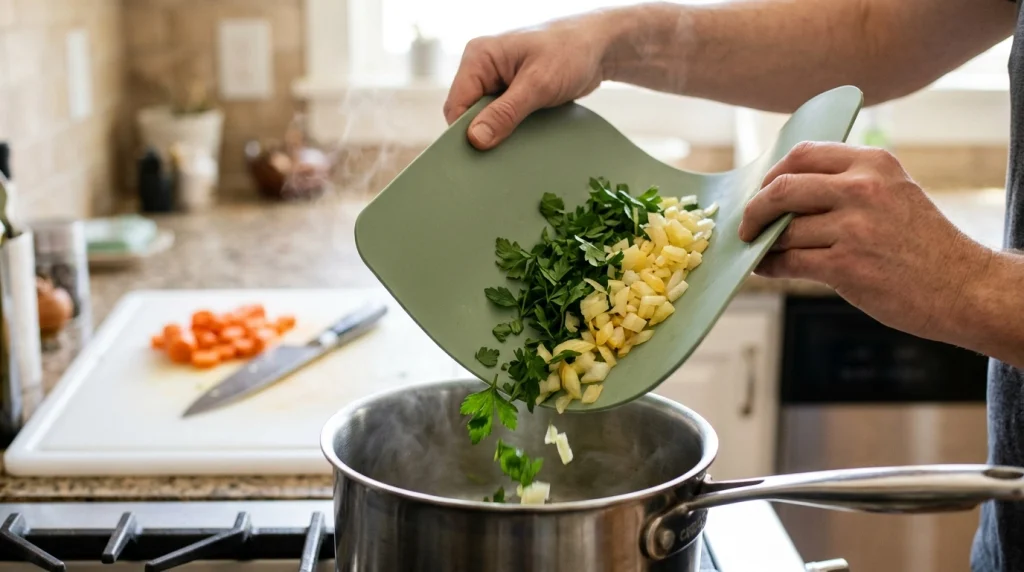
Both materials perform well for ordinary vegetable preparation. Silicone becomes especially appealing when you want to move chopped ingredients directly into a cooking pan.
Plastic remains preferable when you want a large, flat chopping area. Its firmness helps when cutting dense vegetables.
When Silicone Makes Cooking Easier
- Slicing soft fruit into small pieces.
- Chopping herbs for sauces or garnishes.
- Transferring diced onions into a saucepan.
- Preparing small quantities of vegetables.
- Working in kitchens with limited storage space.
Imagine chopping a handful of parsley before adding it to soup. A flexible silicone mat lets you lift the edges and guide the herbs neatly into the pot.
When Plastic Is the Better Option
- Cutting large quantities of vegetables.
- Chopping firm carrots or potatoes.
- Preparing ingredients with an eight-inch chef’s knife.
- Working with a rocking-chop technique.
- Handling multiple ingredients during meal preparation.
For a longer cooking session, I would choose a larger, stable plastic board. More space helps keep ingredients organized and reduces overcrowding.
Are Silicone or Plastic Cutting Boards Better for the Environment?
Neither material is automatically the greener choice. Environmental impact depends on manufacturing, lifespan, disposal options, and how often you replace the board.
Silicone usually requires specialized recycling systems. Polyethylene and polypropylene may be recyclable in some locations, although cutting boards aren’t always accepted by local programs.
What Should Eco-Conscious Buyers Consider?
- Durability: Choose a board that withstands your usual cutting tasks.
- Replacement frequency: Avoid cheap mats that wear out quickly.
- Recycling access: Check local collection rules before purchasing.
- Product quality: Favor reputable food-contact materials.
- Waste reduction: Maintain your board and replace it only when necessary.
A longer-lasting board may reduce repeated purchases. However, a complete environmental comparison would require product-specific life-cycle data.
How to Choose the Right Cutting Board
Choose based on what you cook, how you clean, and the space available. The best board is one you’ll use safely and maintain properly.
Five Features Worth Checking Before Buying
- Material identification: Look for clearly identified food-contact silicone, polyethylene, or polypropylene.
- Thickness: Choose a thicker board for demanding chopping tasks.
- Stability: Check for nonslip feet, textured backing, or a secure countertop grip.
- Cleaning instructions: Confirm dishwasher and sanitizer compatibility.
- Useful dimensions: Match board size to your knife and available counter space.
For an eight-inch chef’s knife, I prefer a cutting area around 12 by 18 inches when space allows. This is a practical preference, not a mandatory standard.
Smaller boards are convenient for fruit and garnishes. They become frustrating when preparing an entire meal.
Should You Buy One Board or Two?
Two boards make food separation easier. One can handle raw animal products while the other stays dedicated to produce and ready-to-eat ingredients.
If your budget permits, a sturdy plastic board paired with a flexible silicone board offers useful versatility. You don’t need a large collection.
Recommended Silicone and Plastic Cutting Boards
If you’re ready to shop, these are two practical options worth comparing. My selections reflect material, design, and intended use rather than hands-on laboratory testing.
Disclosure: As an Amazon Associate, CookingFlavour may earn from qualifying purchases through affiliate links, at no additional cost to you. Ratings below are editorial suitability scores, not verified customer review averages.
🏆 Best for flexible prep
Liflicon Silicone Thick Cutting Board Mats Set
★★★★☆ 4.2/5 editorial score
This silicone mat set offers flexible cutting surfaces, textured undersides, and different sizes for food preparation. I would consider it for vegetables, herbs, and convenient ingredient transfer rather than heavy chopping. Check the current specifications before ordering.
🍽️ Best for everyday chopping
OXO Good Grips Cutting Board
★★★★☆ 4.5/5 editorial score
OXO Good Grips plastic cutting boards are designed for everyday chopping, with practical features such as nonslip edges on selected models. This is the style I would favor for regular vegetable and meat preparation. Verify the size and cleaning instructions for your chosen version.
Frequently Asked Questions
Are silicone cutting boards safer than plastic?
Silicone isn’t automatically safer than plastic. Both can be suitable food-contact materials, but their safety depends on manufacturing quality, cleaning, and surface condition. Use separate boards for raw meat and ready-to-eat foods, and replace either material when deep damage makes cleaning difficult.
Do silicone cutting boards dull knives?
Silicone cutting boards are generally forgiving beneath knife edges. However, performance depends on material formulation and cutting technique. A soft board can also grip a blade or develop cuts. A quality plastic board is another reasonable choice for protecting kitchen knives.
Can silicone cutting boards go in the dishwasher?
Many silicone cutting boards are dishwasher-safe, but not every product has identical temperature limits. Follow the manufacturer’s instructions. Wash away food debris before loading the dishwasher, and ensure the board dries completely afterward. Replace any product that becomes damaged or distorted.
Are plastic cutting boards bad because of microplastics?
Plastic cutting boards can release microscopic particles through knife abrasion. However, the precise health implications of this exposure remain uncertain. To reduce unnecessary wear, use appropriate cutting techniques, avoid aggressive scraping, and replace boards with heavily damaged surfaces.
Which cutting board lasts longer, silicone or plastic?
A thick, well-made plastic board often provides dependable long-term chopping support. Silicone durability varies considerably with thickness and intended use. Both can develop knife damage, so inspect them regularly. Product quality and cutting habits matter more than choosing a material alone.
Final Verdict: Silicone or Plastic Cutting Board?
For most home cooks, I recommend a thick, stable plastic cutting board as the primary kitchen work surface. It supports daily chopping, provides predictable knife control, and is easy to maintain.
Silicone is an excellent complementary option for light preparation and flexible ingredient transfer. Choose a purpose-built cutting mat rather than a silicone baking mat.
The biggest priority is safe food handling. Keep boards clean, separate raw meats from ready-to-eat foods, and replace damaged cutting surfaces.
My final recommendation: Start with a quality plastic cutting board. Add silicone when its flexibility solves a specific kitchen problem.
Before buying, check the board’s dimensions, stability, food-contact suitability, and cleaning requirements. A practical board that fits your routine is the best investment.

