Metal vs. Wood Cutting Boards: Which Is Better?
Quick Answer
For most home kitchens, wood cutting boards are better than metal cutting boards. Wood is gentler on knife edges, quieter, and more comfortable for everyday chopping. Stainless steel is nonporous and easy to wash, but its hard surface can dull knives faster. The University of Maine’s cutting board safety guidance also emphasizes choosing materials based on cleaning, durability, and knife care.
Key differences at a glance
- Knife protection: Wood offers a more forgiving cutting surface than stainless steel.
- Cleaning: Smooth metal resists moisture absorption and wipes clean easily.
- Maintenance: Wood needs careful drying and occasional conditioning.
- Noise and comfort: Wood generally feels quieter and less harsh during chopping.
- Best everyday choice: A quality maple or walnut board suits most kitchen knives.
My recommendation
- Choose wood for regular vegetable preparation, slicing, and chopping.
- Consider stainless steel for washable prep surfaces, not as your main knife-cutting surface.
- Keep a separate, dishwasher-safe plastic board for raw meat when practical.
Metal cutting boards look sleek, while wooden boards bring warmth and tradition into the kitchen. But appearance alone doesn’t tell you which surface works better.
I focus on how each material affects knife sharpness, food safety, cleaning, and long-term value. This guide will help you choose a board that matches the way you cook.
What Is the Difference Between Metal and Wood Cutting Boards?
A metal cutting board is a food preparation surface made from metal, usually stainless steel. A wood cutting board uses natural hardwood, often maple, walnut, cherry, or teak.
The biggest difference is how each surface responds to a knife. Steel remains rigid during cutting, while wood provides a slightly more forgiving surface.
How metal cutting boards work
Stainless steel cutting boards typically feature a smooth, nonporous surface. Their appeal comes from easy cleaning, moisture resistance, and a modern appearance.
- Material: Usually stainless steel, although construction and grades vary.
- Surface: Hard, rigid, and resistant to moisture absorption.
- Cleaning: Usually straightforward with detergent and water.
- Limitations: Can be noisy, slippery, and harsh on knife edges.
Not every metal prep surface is designed for repeated knife contact. Always check the manufacturer’s intended use before buying.
How wooden cutting boards work
Wooden boards use solid hardwood or bonded hardwood strips to create a durable cutting surface. The wood grain helps determine how the board feels during chopping.
- Maple: A dense hardwood with a balanced cutting feel.
- Walnut: A popular choice with a relatively forgiving surface.
- Cherry: Offers a warm appearance and moderate hardness.
- Teak: Contains natural oils and requires appropriate care.
Wood also comes in edge-grain and end-grain construction. Both work well, although their appearance, price, and cutting characteristics differ.
Metal vs. Wood Cutting Boards: Side-by-Side Comparison
 Save
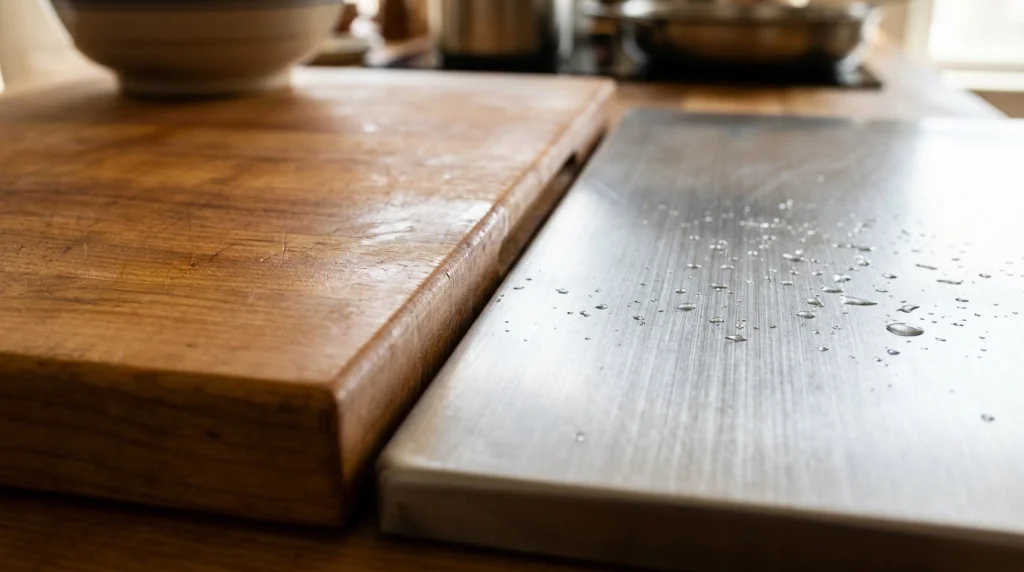
Wood wins several important categories for daily knife work. Metal has an advantage when easy washing and moisture resistance matter most.
| Feature | Metal cutting board | Wood cutting board |
|---|---|---|
| Typical material | Stainless steel | Maple, walnut, cherry, teak |
| Knife friendliness | Poor for repeated chopping | Generally good |
| Moisture absorption | Nonabsorbent surface | Absorbs some moisture |
| Cleaning | Easy to wash | Requires washing and thorough drying |
| Dishwasher suitability | Depends on product design | Usually hand-wash for longevity |
| Chopping noise | Usually louder | Usually quieter |
| Routine maintenance | Cleaning and inspection | Cleaning, drying, occasional oiling |
| Surface refinishing | Not typically a home repair | Some solid boards can be sanded |
| Best use | Washable food prep surface | Daily cutting and chopping |
These comparisons describe typical household products rather than every model. Surface finish, thickness, and construction can change the experience.
Are Metal Cutting Boards Bad for Knives?
 Save
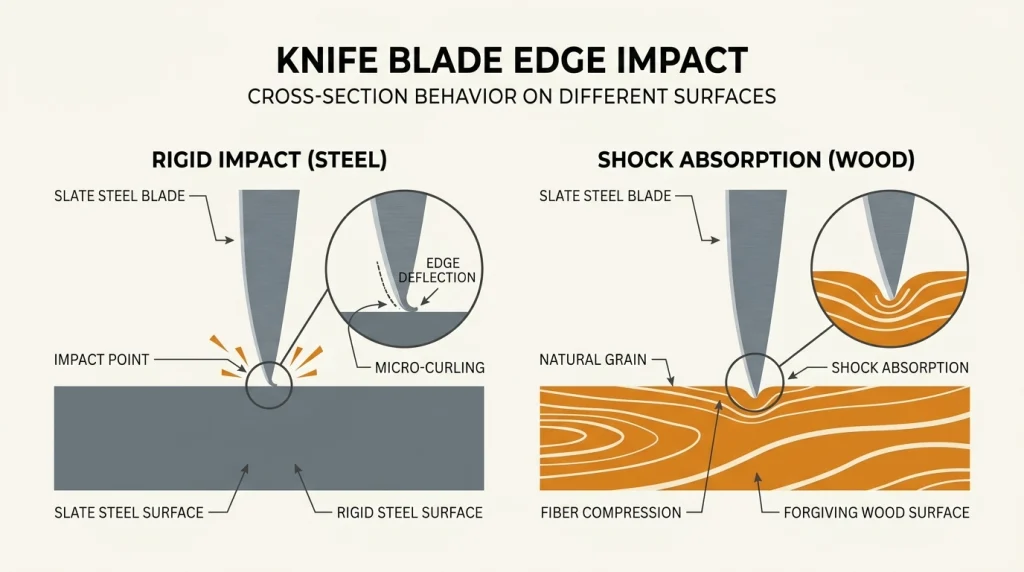
Metal cutting boards are generally harder on kitchen knife edges than wooden boards. Repeated contact with stainless steel can accelerate edge wear.
A sharp knife has a thin cutting edge that needs careful support. Striking a rigid metal surface repeatedly creates unnecessary stress along that edge.
Why stainless steel can dull knife blades
The problem isn’t simply whether one metal is harder than another. Knife-edge geometry, pressure, and the way the blade hits the surface also matter.
- Edge deformation: Repeated contact may bend or damage delicate cutting edges.
- Faster sharpening needs: Hard cutting surfaces may increase knife maintenance.
- Chopping discomfort: The rigid surface provides little cushioning.
- Potential slipping: Smooth metal may offer less grip for certain foods.
The North Carolina Cooperative Extension identifies metal among the hard surfaces that can wear knife edges faster. It recommends more forgiving materials for regular cutting.
Are wooden boards better for expensive knives?
Yes, a well-made wooden cutting board is usually the better choice for a quality chef’s knife. Maple and walnut are especially practical options.
I recommend pairing a sharp kitchen knife with a stable wooden surface. It provides a better balance of blade protection, cutting control, and comfort.
Which Is More Hygienic: Stainless Steel or Wood?
Stainless steel has an advantage in nonporosity and straightforward cleaning. However, both wood and stainless steel need proper washing to prevent cross-contamination.
A nonporous surface does not automatically remain germ-free. Food residue and bacteria can still sit on its surface until removed.
Is stainless steel naturally antibacterial?
Ordinary stainless steel is not a self-sanitizing material. Its smooth, nonporous surface makes it easier to remove food residue during cleaning.
- It doesn’t absorb food juices like porous wood can.
- It tolerates routine washing when made and finished appropriately.
- It can still carry bacteria from raw poultry, meat, or seafood.
- Scratched joints, seams, and damaged areas may become difficult to clean.
Never assume a shiny metal surface is sterile. Cleaning still matters after every food preparation session.
Are wooden cutting boards sanitary?
Yes, wooden cutting boards can be sanitary when cleaned and maintained correctly. Close-grained hardwoods provide a suitable cutting surface for home kitchens.
Wood is porous, so moisture management matters. Deep cracks, trapped food, and poor drying can create sanitation problems.
The USDA’s cross-contamination guidance recommends using separate boards for fresh produce and raw animal products when possible. This reduces the chance of transferring harmful microorganisms.
Which surface is best for raw meat?
A dedicated, easy-to-sanitize board is the most practical choice for raw meat. Dishwasher-safe plastic is often more convenient than wood or metal.
Stainless steel can serve as a washable preparation surface, but knife wear remains a concern. I wouldn’t choose it solely because it looks more hygienic.
- Reserve one cutting board for raw poultry, meat, and seafood.
- Use another clean board for vegetables, fruit, bread, and ready-to-eat foods.
- Wash knives and surfaces before changing food categories.
- Sanitize food-contact surfaces when appropriate.
- Replace boards with damage that prevents thorough cleaning.
Which Cutting Board Lasts Longer: Metal or Wood?
Stainless steel resists moisture-related swelling and does not rot. Quality wooden boards can also last many years with proper maintenance.
The better choice depends on what you mean by durability. Physical survival and maintaining a knife-friendly cutting surface are different goals.
Durability of stainless steel boards
Stainless steel typically resists cracking and moisture absorption. It may still collect scratches, dents, or discoloration depending on its grade and finish.
- Moisture resistance: Does not swell like wood.
- Surface damage: Can develop visible scratches.
- Corrosion: Resistant to rust, but not immune under every condition.
- Handling: Thin models may flex, while heavier models can be cumbersome.
Durability of hardwood cutting boards
A thick hardwood board can remain useful for years. Poor drying, soaking, or extreme temperature changes can shorten its life.
One benefit of solid wood is that minor surface wear may be repairable. Suitable boards can sometimes be sanded and refinished.
- Keep the board away from prolonged standing water.
- Dry both faces and edges after washing.
- Condition unfinished or oil-finished wood as directed.
- Inspect glued joints for separation.
- Replace boards with serious cracks or contamination concerns.
Are Metal Cutting Boards Easier to Clean?
Yes, a smooth stainless steel cutting board is generally easier to wash than an unfinished wooden board. It doesn’t require mineral oil conditioning.
That convenience is useful, especially when handling wet ingredients. Still, cleaning must remove food debris before any sanitizing step.
How to clean a stainless steel cutting board
- Remove food scraps: Clear the surface after preparation.
- Wash thoroughly: Use warm or hot water and dish soap.
- Rinse: Remove remaining detergent and food particles.
- Sanitize when needed: Use a food-contact-safe sanitizer according to its directions.
- Dry: Wipe with a clean towel or allow air drying.
Check whether the manufacturer permits dishwasher cleaning. A metal board with rubber feet or attached components may have special instructions.
How to clean a wooden cutting board
- Scrape away residue: Remove crumbs and food particles.
- Hand-wash: Scrub with dish soap and warm water.
- Rinse promptly: Avoid leaving the board submerged.
- Dry thoroughly: Wipe it and allow airflow around both sides.
- Condition when needed: Apply food-grade mineral oil after the board dries.
The University of Maine Cooperative Extension emphasizes cleaning and proper drying. Follow the manufacturer’s instructions for dishwasher suitability and wood treatment.
How often should you oil a wooden cutting board?
Oil an unfinished or oil-finished wooden board when it begins looking dry. Many boards benefit from conditioning about once a month, depending on use.
Use food-grade mineral oil or a conditioner made specifically for cutting boards. Avoid ordinary cooking oils that may develop unwanted odors.
Does a Metal Cutting Board Create More Noise?
Metal cutting boards usually create a louder chopping sound than wooden boards. The hard surface produces sharper impact noise when a blade strikes it.
Wood tends to absorb more of that impact. This makes a noticeable difference during repeated chopping sessions.
What about comfort and stability?
A secure cutting surface matters more than material alone. Either type can slide if it lacks proper support.
- Choose a board with non-slip feet or a stable base.
- Use a clean, damp towel beneath a board when appropriate.
- Keep the work surface level.
- Avoid excessive chopping force.
- Make sure the board is large enough for your ingredients.
For longer preparation sessions, I favor a thick wooden board. Its softer cutting feel makes repetitive work more pleasant.
What Are the Pros and Cons of Metal Cutting Boards?
Metal boards offer easy washing and moisture resistance. Their biggest drawbacks involve knife wear, noise, and cutting comfort.
Advantages of metal cutting boards
- Nonporous surface resists liquid absorption.
- Simple to wipe and wash after use.
- No routine wood oiling required.
- Resistant to swelling from ordinary water exposure.
- Modern appearance suits some kitchen designs.
Disadvantages of metal cutting boards
- Can dull kitchen knives faster than wood.
- Creates a harder and noisier chopping experience.
- Some foods may slide on smooth surfaces.
- Thin boards may shift without adequate grip.
- Surface scratches can become visible over time.
Metal may work well as a preparation tray or washable work surface. It is less appealing as the main surface for daily knife work.
What Are the Pros and Cons of Wooden Cutting Boards?
Wood provides a practical balance of cutting performance, comfort, and appearance. Its main disadvantage is the care needed to control moisture and wear.
Advantages of wooden cutting boards
- Generally gentle on knife edges.
- Quieter during chopping.
- Available in several attractive hardwoods.
- Can offer excellent stability when thick and heavy.
- Some solid boards can be resurfaced.
- Useful for both food preparation and serving.
Disadvantages of wooden cutting boards
- Needs thorough drying after washing.
- May warp or crack after prolonged soaking.
- Some models need occasional mineral oil.
- Heavy hardwood boards can be difficult to move.
- Deep cracks or damaged joints can create cleaning problems.
A well-cared-for maple or walnut board remains my preferred option. The maintenance is manageable, and the benefits support daily cooking.
What Type of Wooden Cutting Board Is Best?
Hard maple is one of the strongest all-around choices for a wooden cutting board. Walnut and cherry are also worth considering.
Wood species aren’t the only factor. Board thickness and grain orientation also influence performance.
End-grain vs. edge-grain cutting boards
End-grain boards expose the ends of wood fibers on the cutting surface. Edge-grain boards expose the longer sides of wood strips.
- End-grain: Often prized for its forgiving cutting feel and distinctive checkerboard pattern.
- Edge-grain: Usually simpler in construction and often more affordable.
- Maintenance: Both need prompt cleaning and appropriate drying.
- Value: A quality edge-grain maple board is an excellent everyday starting point.
What size cutting board should you buy?
For everyday home cooking, a board around 17 by 12 inches offers useful working space. A larger 20 by 14-inch board gives more room for serious meal preparation.
Make sure it fits comfortably on your countertop. Leave space around the board for safe knife handling.
Are Metal Cutting Boards Worth Buying in 2026?
As of 2026, stainless steel cutting boards are still a specialized choice rather than my first recommendation. Their easy-clean design doesn’t remove the disadvantages of cutting against metal.
For regular chopping, I’d spend the money on a hardwood board. If easy sanitizing is the priority, a dishwasher-safe plastic board is another practical option.
When a metal board makes sense
- You want a nonporous surface for light food preparation.
- You need a washable surface for transferring ingredients.
- You don’t intend to use it for extensive knife chopping.
- You value moisture resistance over cutting comfort.
When a wooden board makes more sense
- You prepare vegetables frequently.
- You use quality chef’s knives.
- You want a quieter chopping experience.
- You prefer a board that can serve food attractively.
- You’re comfortable with regular cleaning and occasional conditioning.
Recommended Cutting Boards for Everyday Cooking
 Save
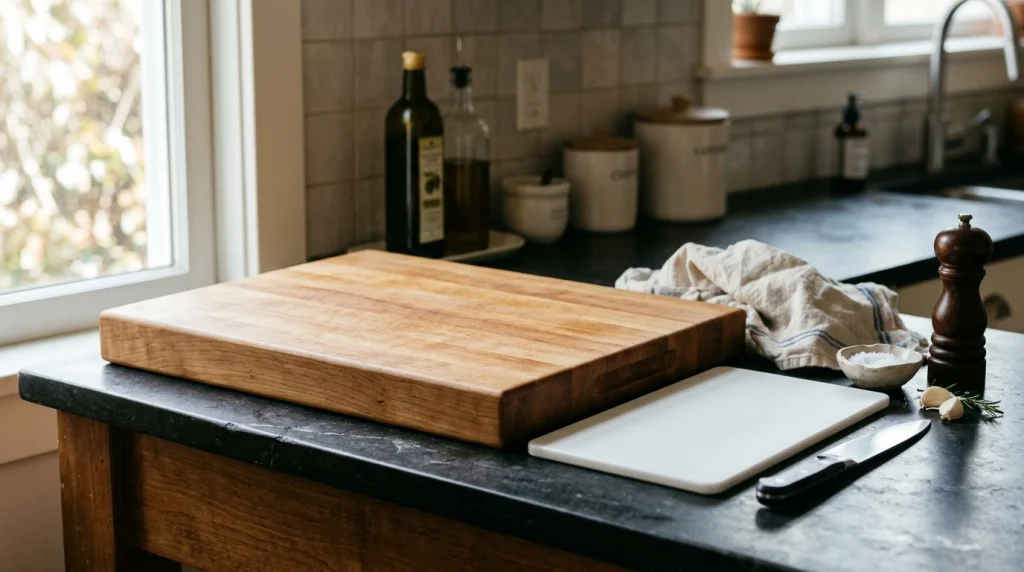
If you’re deciding between metal and wood, these are the practical alternatives I’d consider. Each serves a different kitchen priority.
Affiliate disclosure: As an Amazon Associate, this website may earn from qualifying purchases made through eligible links, at no extra cost to you.
🏆 Best everyday wood option
John Boos Chop-N-Slice Maple Cutting Board
★★★★☆ 4.7/5
This reversible edge-grain maple board comes in several sizes and offers a practical cutting surface. It’s my first choice for buyers who want a traditional hardwood board without stepping up to a thick butcher block.
💰 Best compact wood option
John Boos 4-Cooks Maple Cutting Board
★★★★☆ 4.5/5
The 1-inch-thick maple design features beveled edges and a reversible cutting surface. I’d consider the smaller version for simple meal preparation where counter space is limited.
🧼 Best easy-clean alternative
OXO Good Grips Carving & Cutting Board
★★★★☆ 4.6/5
This polypropylene board has non-slip feet, a reversible design, and dishwasher-safe construction. I’d choose it over stainless steel when easy cleaning is the main priority.
Ratings above are editorial suitability assessments, not verified customer-review averages or laboratory test scores. Check current specifications and seller details before purchasing.
Frequently Asked Questions
Are stainless steel cutting boards safe for food?
Food-grade stainless steel can provide a suitable food-contact surface when properly manufactured and maintained. However, it still needs cleaning after handling food. Stainless steel isn’t automatically antibacterial, and its hardness makes it less desirable for repeated knife chopping.
Do metal cutting boards ruin knives?
Metal cutting boards don’t necessarily ruin a knife immediately, but repeated chopping can accelerate edge wear. Hard contact may deform or damage a thin blade edge. A quality wooden or suitable plastic board is generally better for preserving kitchen knife sharpness.
Do wooden cutting boards hold bacteria?
Wooden boards can retain bacteria if food residue or moisture remains in cracks and grooves. Proper washing, thorough drying, and regular inspection help reduce contamination risks. Separate raw-meat preparation from ready-to-eat food whenever possible.
Is stainless steel better than wood for cutting raw meat?
Stainless steel is nonporous and easy to wash, but that doesn’t make it the best cutting surface for knives. A dedicated dishwasher-safe plastic board is often more practical for raw meat. Whichever material you use, clean and sanitize it appropriately.
Which cutting board is best for Japanese knives?
A quality wooden board is generally preferable to stainless steel for Japanese kitchen knives, especially knives with thin cutting edges. Choose a stable, smooth surface and avoid excessive chopping force. Suitable soft synthetic boards are another option for delicate blades.
Final Verdict: Metal or Wood Cutting Board?
Wood is the better choice for most everyday cutting tasks. It offers a more forgiving surface, quieter chopping, and better compatibility with quality kitchen knives.
Metal wins for moisture resistance and easy washing, but those advantages don’t outweigh its knife-related drawbacks for daily use.
My preferred kitchen setup is simple: a solid maple board for vegetables and general preparation, plus a separate dishwasher-safe plastic board for raw meat. That combination offers practical knife care and manageable food safety.
Bottom line: Choose wood for regular cutting, and prioritize proper cleaning regardless of the board material.

