How Long Is a Chef’s Knife Blade? Standard Sizes Explained
Quick Answer
A standard chef’s knife blade is usually 8 inches (20.3 cm) long, although common sizes range from 6 to 10 inches. An 8-inch blade offers a practical balance of cutting reach, control, and versatility for everyday cooking. If you’re choosing your first knife, compare blade length with your hand size, cutting board, and the foods you prepare most often.
Common Chef’s Knife Blade Lengths
- 6 inches: A compact choice for smaller hands, smaller boards, and lighter food preparation.
- 7 inches: A useful middle ground for cooks who want maneuverability without a very short blade.
- 8 inches: The versatile standard for chopping vegetables, mincing herbs, and slicing meat.
- 10 inches: A longer option for large vegetables, bigger batches, and longer slicing strokes.
- 12 inches: A specialized size that generally suits experienced cooks with plenty of workspace.
How to Choose the Right Size
- Check control: Hold the knife securely and make a few controlled cutting motions on a stable board.
- Measure correctly: Check the blade from the heel to the tip, excluding the handle.
- Match your tasks: Choose a length that works for your usual ingredients and available cutting space.
Choosing a chef’s knife gets easier once you understand what its blade length means in everyday cooking. The right size can make chopping onions, slicing tomatoes, and preparing larger ingredients feel more comfortable.
In this guide, I’ll explain standard chef’s knife measurements, compare popular sizes, and show you how to choose a blade that fits your kitchen. You’ll also learn how to measure a knife correctly and which features matter beyond length.
What Is the Standard Length of a Chef’s Knife Blade?
A chef’s knife typically has an 8-inch blade, measured from the heel near the handle to the tip. This length provides enough cutting surface for general food preparation without making the knife unnecessarily difficult to control.
A chef’s knife is a multipurpose kitchen knife with a broad blade, a tapered point, and a cutting edge suited to chopping, slicing, mincing, and dicing. Its curved profile often supports a rocking motion across the cutting board.
Although 8 inches is a common standard, manufacturers also offer shorter and longer versions. Some chef’s knives fall outside the usual range, so always check the stated blade measurement before buying.
Why Is an 8-Inch Blade So Popular?
An 8-inch blade gives most home cooks enough reach for everyday ingredients while remaining manageable on a typical cutting board. It can handle small jobs, such as mincing garlic, as well as larger tasks, such as slicing a whole chicken breast.
Its versatility also reduces the need to switch knives repeatedly during meal preparation. For someone buying one all-purpose kitchen knife, 8 inches is a sensible starting point.
- Everyday chopping: Dice onions, carrots, celery, and peppers.
- Fine preparation: Mince garlic, ginger, and fresh herbs.
- Slicing: Cut boneless meat, fish, and larger fruits.
- Batch cooking: Process several ingredients without constantly repositioning them.
How Long Are Chef’s Knife Blades in Different Sizes?
 Save
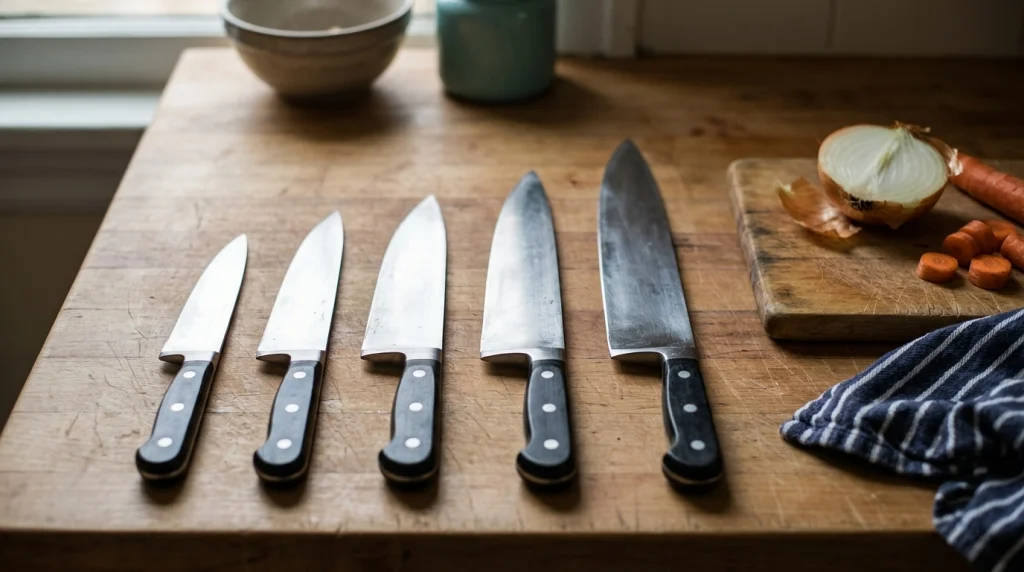
Chef’s knife blades commonly range from 6 to 10 inches for everyday home cooking, with some designs extending to 12 inches or beyond. Each size changes the balance between reach, maneuverability, and workspace requirements.
The following comparison shows common blade lengths, their approximate metric equivalents, and the situations in which they make sense.
| Blade length | Metric length | Best suited for | Main consideration |
|---|---|---|---|
| 6 inches | 15.2 cm | Compact kitchens and smaller tasks | Less reach for large ingredients |
| 7 inches | 17.8 cm | Cooks wanting a compact all-purpose knife | Less cutting surface than an 8-inch model |
| 8 inches | 20.3 cm | Most everyday home cooking | A practical balance of reach and control |
| 10 inches | 25.4 cm | Large ingredients and frequent batch preparation | Needs more space and confident handling |
| 12 inches | 30.5 cm | Specialized, high-volume preparation | Can feel cumbersome in a small kitchen |
These measurements describe blade length rather than the knife’s total length, which also includes the handle. Individual designs can differ in blade height, thickness, curvature, and weight even when their blades measure the same length.
How Do You Measure a Chef’s Knife Blade Correctly?
Measure a chef’s knife from the heel of the blade to its tip, following the manufacturer’s stated measurement convention. Do not include the handle when checking blade length.
If you want to verify an existing knife, use a ruler or tape measure and keep your fingers away from the cutting edge.
- Place the knife securely: Set it flat on a stable surface, with the sharp edge facing away from your hands.
- Find the heel: Identify the rear end of the blade near where it joins the handle.
- Measure to the tip: Read the distance between the heel and the point of the blade.
- Convert the measurement: Multiply inches by 2.54 to obtain centimeters.
For example, an 8-inch blade measures approximately 20.32 centimeters, while a 10-inch blade measures 25.4 centimeters. A small difference in rounding does not change the knife’s nominal size.
Some specifications can use different conventions, particularly when discussing knives for legal or technical purposes. If precision matters, consult the manufacturer’s published specifications rather than relying on a visual estimate.
Is an 8-Inch or 10-Inch Chef’s Knife Better?
An 8-inch chef’s knife is generally the more versatile choice for everyday home cooking, while a 10-inch knife offers more reach for large ingredients and longer slicing strokes. Neither size is automatically better; comfort, technique, and available space matter just as much.
Compare these differences before deciding which length fits your kitchen.
| Feature | 8-inch knife | 10-inch knife |
|---|---|---|
| Maneuverability | Usually easier in tight spaces | Needs more room to move |
| Large ingredients | Suitable for most household tasks | Offers more reach and cutting surface |
| Small cutting boards | Generally a better fit | May feel crowded |
| Learning knife skills | A practical starting size | Requires comfort with a longer blade |
| Long slicing strokes | Works well for many cuts | Can reduce the need for repeated strokes |
Consider your usual ingredients before focusing on length alone. If you regularly prepare large quantities of vegetables or slice sizeable boneless cuts of meat, a 10-inch blade may be useful.
For compact counters, quick weeknight meals, and general food preparation, an 8-inch blade usually makes a more flexible first purchase.
What Chef’s Knife Length Is Best for Your Hand Size?
The best chef’s knife length is one you can control comfortably without straining your wrist or crowding your cutting board. Hand size can influence your preference, but it should not be the only factor in your decision.
People with smaller hands may prefer a shorter blade, while cooks with larger hands or more experience may enjoy the reach of a longer one. However, handle shape, grip diameter, knife weight, and balance can matter as much as the blade measurement.
Choose a 6-Inch Blade If You Prefer Compact Control
A 6-inch chef’s knife can suit smaller kitchens, limited counter space, and cooks who find longer blades awkward. It works well for many vegetables, herbs, and boneless proteins.
Its shorter cutting edge can make large cabbages, watermelons, or sizeable roasts less convenient to handle. If you often prepare those foods, consider an 8-inch model instead.
Choose an 8-Inch Blade for Everyday Versatility
An 8-inch knife suits cooks who want one main blade for most routine preparation. It can accommodate different cutting styles without demanding the workspace of a much longer knife.
When shopping, hold the handle as you would while cooking and check that your wrist feels relaxed. The knife should move predictably rather than pulling your hand forward.
Choose a 10-Inch Blade for More Reach
A 10-inch chef’s knife can be helpful for experienced cooks who work with large ingredients or prepare food in batches. Its extra length allows longer strokes when slicing suitable foods.
However, a longer blade is not necessarily heavier, sharper, or more durable. Those qualities depend on the knife’s construction, steel, thickness, and overall design.
Does Blade Length Affect Cutting Performance?
Blade length affects reach and maneuverability, but it does not determine cutting performance on its own. Sharpness, blade geometry, steel, balance, and cutting technique also influence how a knife moves through food.
For example, a sharp 8-inch knife with a thin blade may slice a tomato more cleanly than a dull 10-inch knife. The extra two inches cannot compensate for a poorly maintained cutting edge.
- Blade profile: A curved edge supports rocking cuts, while a flatter profile can suit push-cutting techniques.
- Blade height: A taller blade may offer more knuckle clearance and help move chopped food.
- Steel and edge: Steel properties and sharpening influence edge retention and cutting feel.
- Balance: A comfortable balance helps you guide the knife without excessive effort.
- Handle fit: A secure, comfortable grip supports consistent control.
Before upgrading to a longer knife, check whether your current blade needs sharpening or whether its shape suits your cutting style. Better maintenance or a different blade profile may solve the problem more effectively than extra length.
How Does a Chef’s Knife Compare With Other Kitchen Knives?
A chef’s knife is designed for general food preparation, while other kitchen knives have shapes and lengths suited to more specific tasks. Comparing them helps you avoid buying a long blade when a specialized knife would work better.
| Knife type | Common blade length | Main purpose |
|---|---|---|
| Chef’s knife | 6–10 inches | Chopping, slicing, mincing, and dicing |
| Paring knife | 2–4 inches | Peeling and small, precise cuts |
| Utility knife | 5–7 inches | Medium-sized cutting and trimming jobs |
| Bread knife | 8–10 inches | Slicing bread and soft foods with tough skins |
| Carving or slicing knife | Often 8–14 inches | Long, even slices of cooked meat |
These ranges are typical examples rather than fixed standards; manufacturers offer different lengths for each knife type. A bread knife, for instance, may be as long as a chef’s knife but has a serrated edge for a different cutting action.
For more guidance on using kitchen knives, the University of Nebraska–Lincoln’s chef’s knife guide explains basic technique and safe handling.
What Should You Check Before Buying a Chef’s Knife?
Blade length is a useful starting point, but the best purchase combines a comfortable size with sound construction and manageable maintenance. As of 2026, an 8-inch knife remains a practical default for a general-purpose home kitchen.
Use this checklist when comparing models in a store or online.
- Blade length: Start with 8 inches unless you have a clear reason to choose a shorter or longer blade.
- Weight: Check whether the knife feels comfortable during repeated cutting motions.
- Handle: Look for a secure grip that fits your hand without awkward finger placement.
- Balance: Make sure the knife feels predictable when you guide it across a cutting board.
- Steel: Consider edge retention, corrosion resistance, and how much maintenance you’re willing to do.
- Cutting board: Ensure the blade can move freely without repeatedly running into the board’s edges.
- Storage: Check that your drawer insert, knife block, or blade guard accommodates the full knife.
Don’t choose a knife solely because it has a premium price or an unusually long blade. A well-made knife that fits your hands and cooking habits can be more useful than an expensive model that feels awkward.
If you need a refresher on everyday upkeep, read this guide to cleaning a chef’s knife safely. Proper cleaning and drying help protect the blade regardless of its length.
Which Chef’s Knife Should You Consider?
 Save
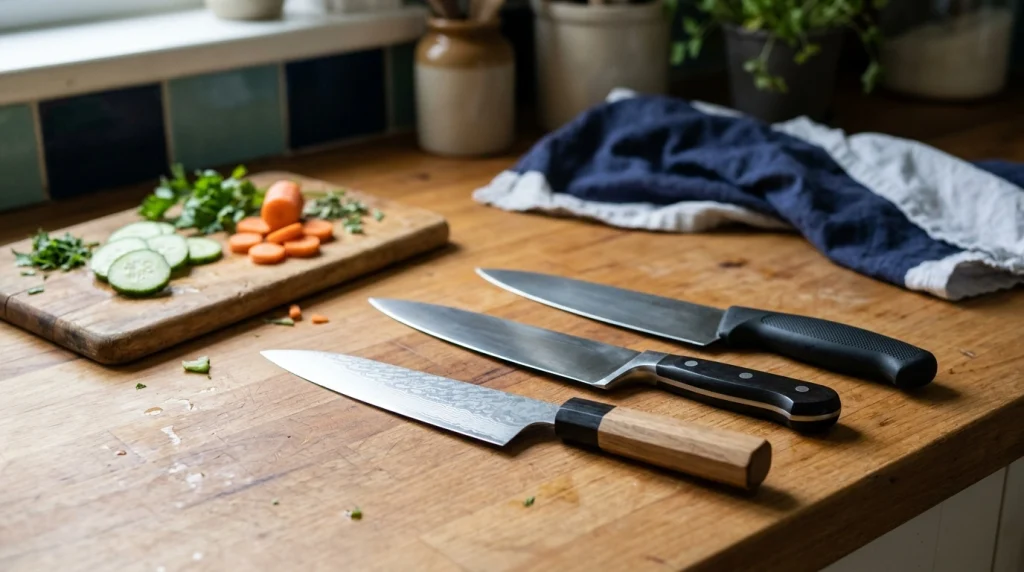
If you’re ready to buy, start with a proven 8-inch design and compare comfort, construction, and maintenance requirements. These three established models offer different approaches to everyday knife use, from budget-conscious cooking to premium precision.
BEST EVERYDAY OPTION
Victorinox Fibrox Pro 8-Inch Chef’s Knife
★★★★☆
Its 8-inch blade and textured handle make it a practical candidate for daily chopping and slicing. I’d consider this style for a first chef’s knife when straightforward handling matters more than a premium finish.
BEST PREMIUM PICK
Wüsthof Classic 8-Inch Chef’s Knife
★★★★☆
This forged German-style knife offers a full-size blade for general kitchen preparation. I’d shortlist it for frequent cooking if you prefer a substantial feel and are comfortable paying more for a premium knife.
BEST JAPANESE-STYLE OPTION
Shun Classic 8-Inch Chef’s Knife
★★★★☆
This Japanese-style knife pairs an 8-inch blade with a thin cutting profile designed for precise slicing. I’d consider it for cooks who value fine cuts and are prepared to protect the edge from twisting and hard impacts.
These are product suggestions, not the results of a new hands-on test, and the star symbols are editorial indicators rather than verified customer ratings. Check the current listing for exact specifications, availability, and care instructions before purchasing.
For additional models and a broader buying comparison, see our guide to the best chef knives for 2026.
Frequently Asked Questions
Is an 8-inch chef’s knife long enough for most cooking?
Yes, an 8-inch chef’s knife is long enough for most everyday home cooking, including chopping vegetables, mincing herbs, and slicing boneless meat. Its combination of reach and maneuverability makes it a practical all-purpose choice for many kitchens.
Is a 6-inch chef’s knife too small?
No, a 6-inch chef’s knife can work well for smaller hands, compact cutting boards, and cooks who prefer a shorter blade. However, it offers less reach for large vegetables and sizeable cuts of meat, so consider your regular cooking tasks before choosing it.
Is a 10-inch chef’s knife better than an 8-inch knife?
A 10-inch knife offers more cutting surface and reach, which can help with large ingredients and longer slicing strokes. An 8-inch knife is generally easier to maneuver in limited space, making it a sensible option for most home cooks.
Does the stated knife length include the handle?
Usually, a chef’s knife size refers to the blade rather than the total length of the knife. An 8-inch blade measures approximately 20.3 centimeters, but the complete knife is longer once the handle is included.
What chef’s knife size should a beginner buy?
An 8-inch chef’s knife is a sensible starting point for most beginners because it handles a wide range of ingredients without requiring an unusually long cutting stroke. If it feels difficult to control, try a shorter model and compare handle fit, weight, and balance.
Final Takeaway: Choose the Blade Length You Can Control
A chef’s knife blade is commonly 8 inches long, although 6-, 7-, 10-, and 12-inch options are also available. The right size depends on your hand comfort, cutting board, cooking habits, and experience.
For most home kitchens, start by comparing well-made 8-inch knives. Choose a shorter blade if compact control matters more, or a longer one if you regularly prepare large ingredients and have enough workspace.
Above all, prioritize a secure grip, a sharp edge, and safe cutting technique over length alone. The best chef’s knife is the one you can handle confidently and use comfortably for the meals you cook most often.

