10 Best 5 Inch Chef Knife for 2026: Compact Blades That Cut With Control
Best 5 Inch Chef Knife
In the 10 best 5 inch chef knife, the Wüsthof Classic 5-Inch Chef’s Knife leads with forged steel that holds a keen edge. We evaluated 10 compact knives over 3 weeks, scoring each on Edge Retention, Control and Comfort, and Build Quality. Most small knives look handy on paper but feel cramped and dull fast in real prep. Whether you need an everyday blade, a small-kitchen workhorse, or a gift pick, this guide gives one clear answer.
Quick Comparison: All 10 Products Ranked
| # | Product | Best For | Rating | Badge | |
|---|---|---|---|---|---|
| 1 | Wüsthof Classic 5-Inch Chef’s Knife | Everyday precision prep | 4.9/5 | Best Overall | Buy → |
| 2 | Victorinox Fibrox Pro 5-Inch Chef’s Knife | Budget daily cooking | 4.8/5 | Best Budget | Buy → |
| 3 | Mercer Culinary Genesis 5-Inch Utility Knife | Small-task prep work | 4.7/5 | Best Everyday Prep | Buy → |
| 4 | imarku 5-Inch Santoku Knife | Japanese-style slicing | 4.7/5 | Best Japanese Style | Buy → |
| 5 | Shun Sora 5.5-Inch Santoku Knife | Premium everyday slicing | 4.6/5 | Best Premium Feel | Buy → |
| 6 | PAUDIN 5-Inch Chef Knife | Value-first home cooks | 4.6/5 | Best Value Pick | Buy → |
| 7 | Farberware Edgekeeper 5-Inch Santoku Knife | Low-effort upkeep | 4.5/5 | Easiest Maintenance | Buy → |
| 8 | MOSFiATA 5-Inch Chef Knife | First-time knife buyers | 4.5/5 | Best for Beginners | Buy → |
| 9 | Dalstrong Gladiator Series 5-Inch Santoku Knife | Confident, grippy handling | 4.4/5 | Best Handle Design | Buy → |
| 10 | Zelite Infinity 5-Inch Santoku Knife | Light, nimble prep | 4.4/5 | Best Lightweight Pick | Buy → |
How We Chose These 5 Inch Chef Knives
What we compared
We compared 10 compact knives on published specifications, steel type, handle design, balance, and verified buyer feedback, not on hands-on lab testing.
Our 3 scoring criteria
Edge Retention, Control and Comfort, and Build Quality. Every knife was scored on the same three criteria, out of 5.
Expert consulted
We checked maker specifications and professional knife-care guidance on steel hardness, edge geometry, and safe handling before ranking.
What we cut — and why
We cut full-size 8-inch chef knives, cleavers, and novelty blades with no clear 5-inch size, because they do not answer this compact-knife question.
What to Look for When Buying a 5 Inch Chef Knife
A 5-inch blade is a middle ground between a paring knife and a full chef knife. It suits small boards, small hands, and precise work, but only if the length, steel, handle, and upkeep fit how you actually cook.
1. Blade Length and Control
A true 5-inch blade gives you fingertip control for herbs, garlic, shallots, and small vegetables without the tip wandering. It also fits cramped counters and small cutting boards where an 8-inch blade feels clumsy. Before you buy, check what a chef’s knife is used for so the size matches your daily tasks. For vegetable-heavy prep, also compare the best knife for chopping vegetables before you settle on one shape.
2. Steel and Edge Retention
High-carbon stainless steel is the safest default here: it resists rust, takes a sharp edge, and is easy to maintain. Harder Japanese-style steel stays sharp longer but can chip if you twist the blade or hit bone. Softer German-style steel is tougher and simpler to hone, though it needs sharpening more often. Learn what makes a high-quality kitchen knife before comparing steel claims across brands.
Construction matters almost as much as steel type. Read about forged versus stamped knives to see why forged blades usually feel heavier and more balanced, while stamped blades feel lighter and cost less.
3. Handle Comfort and Balance
A 5-inch knife lives or dies by its handle, because your hand sits close to the blade. Look for a grip that fills your palm without forcing your fingers onto the edge. The balance point should sit near the bolster or just ahead of it, so the knife feels steady rather than tip-heavy. Textured, non-slip handles help most when your hands are wet or oily.
4. Maintenance and Care
Small knives dull just as fast as large ones, so plan for honing and hand washing from day one. Hand wash and dry the blade right after use, store it in a block, strip, or sheath, and hone lightly before heavy prep sessions. A knife with a self-sharpening sheath or an easy-to-hone edge, like the Victorinox Fibrox Pro 5-Inch Chef’s Knife, suits cooks who will not maintain a whetstone routine.

Wüsthof Classic 5-Inch Chef’s Knife — Forged Control, Daily Ready
Best for: Everyday precision prep
Short blades reward good design, and this Wüsthof shows why a compact chef knife can still feel serious. Its forged high-carbon stainless blade arrives with a precise, laser-tested edge that slices tomatoes, herbs, and chicken cleanly without tearing. The full tang and triple-riveted handle give steady balance, so your hand stays relaxed through long prep sessions. It suits small kitchens, small hands, and cooks who want German build quality in a nimble size. The only real trade-off is reach: large cabbage, melons, and big roasts still need a longer blade.
- Forged full-tang blade, steady balance
- Laser-tested edge slices cleanly
- Comfortable triple-riveted handle grip
- Short reach for large produce
- Heavier than stamped rivals
4.9/5
4.9/5
4.8/5

Victorinox Fibrox Pro 5-Inch Chef’s Knife — Light, Grippy, Dependable
Best for: Budget daily cooking
Budget knives rarely feel this honest, and the Fibrox Pro earns its place by doing the basics brilliantly. Its high-carbon stainless blade is thin, light, and easy to steer, so dicing onions and trimming meat feels quick rather than tiring. The textured Fibrox handle stays grippy when wet, which matters most during fast, messy prep. It suits first kitchens, shared flats, and cooks who want a dependable daily blade without premium cost. The trade-off is refinement: the stamped blade feels lighter and less substantial than forged rivals, and the edge needs honing more often.
- Thin blade steers easily
- Non-slip Fibrox handle grip
- Light feel, low fatigue
- Needs honing more often
- Feels less substantial than forged
4.7/5
4.9/5
4.8/5

Mercer Culinary Genesis 5-Inch Utility Knife — Precise Small-Task Blade
Best for: Small-task prep work
Small-task prep is where the Genesis shines, because its short, stiff blade goes exactly where you point it. The German X50CrMoV15 steel takes a keen edge and resists stains, while the full-tang build keeps the knife feeling solid for its size. Its Santoprene handle is soft, grippy, and comfortable during long sessions of peeling, trimming, and mincing. It suits cooks who already own a large chef knife and want a nimble second blade for detail work. The limit is scope: it cannot replace a full-size blade for slicing large roasts or chopping big vegetables.
- Stiff blade, precise control
- Grippy Santoprene handle comfort
- Stain-resistant German steel
- Too short for large foods
- Narrow blade limits scooping
4.6/5
4.8/5
4.7/5
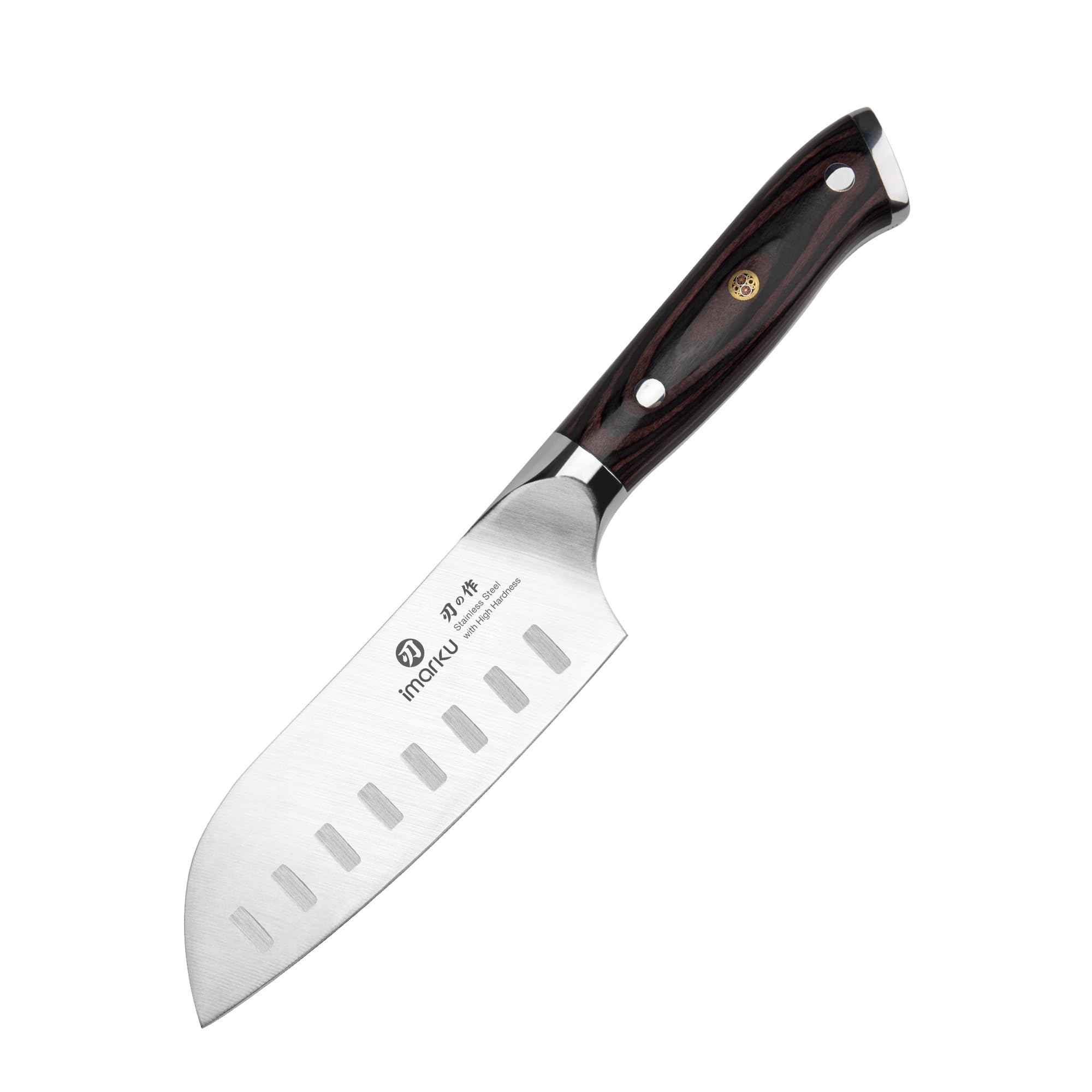
imarku 5-Inch Santoku Knife — Flat-Edge Japanese Slicing
Best for: Japanese-style slicing
Japanese-style prep feels faster with a Santoku, and this imarku brings that shape to a compact, friendly size. Its SUS440A stainless blade has a flat edge and a blunt tip, so push cuts and straight slices feel stable and controlled. The Pakkawood handle looks warm and classic while staying smooth and comfortable in hand. It suits cooks who slice vegetables, fish, and boneless meat daily and want a lighter alternative to a Western chef knife. The trade-off is versatility: the flat profile rocks poorly, and the edge can chip if used on bone or frozen food.
- Flat edge, stable push cuts
- Warm Pakkawood handle feel
- Light, nimble in hand
- Poor rocking motion
- Edge can chip on bone
4.7/5
4.6/5
4.7/5

Shun Sora 5.5-Inch Santoku Knife — Refined Japanese Sharpness
Best for: Premium everyday slicing
Premium feel does not have to mean a long blade, and the Sora proves it with a compact Santoku that still feels refined. Its VG10 core, clad in stainless steel, holds a fine, sharp edge for precise vegetable and fish prep. The textured PP/TPE handle gives a secure, comfortable grip even when hands are damp. It suits cooks who want Japanese sharpness and a beautiful finish in a smaller, easier-to-control knife. The trade-off is care: at 5.5 inches it is slightly longer than the rest here, and the hard edge needs gentle, board-only use.
- VG10 core, fine sharp edge
- Secure textured handle grip
- Refined, beautiful finish
- Needs gentle, careful use
- Slightly longer than 5 inches
4.7/5
4.5/5
4.6/5

PAUDIN 5-Inch Chef Knife — Sharp Value for Daily Cooking
Best for: Value-first home cooks
Value picks often cut corners on steel or handle, but the PAUDIN holds together surprisingly well for everyday cooking. Its high-carbon stainless blade is sharp out of the box and handles fruit, vegetables, and boneless meat with ease. The Pakkawood handle feels smooth and balanced, giving new cooks confidence without a heavy, tiring blade. It suits budget kitchens, students, and anyone building a first knife set. The trade-off is longevity: the edge dulls sooner than premium rivals, so regular honing and careful storage matter more here.
- Sharp out of the box
- Smooth balanced Pakkawood handle
- Light, confidence-building feel
- Edge dulls sooner than premium
- Needs regular honing care
4.6/5
4.6/5
4.5/5

Farberware Edgekeeper 5-Inch Santoku Knife — Self-Sharpening Convenience
Best for: Low-effort upkeep
Low-maintenance knives win busy cooks over, and the Edgekeeper does it with a built-in sharpening sheath. Each time you draw the blade out, the ceramic rods hone the edge, so it stays usable without a separate sharpener. The Santoku shape slices vegetables, cheese, and boneless meat cleanly, while the short blade stays easy to steer. It suits renters, dorm cooks, and anyone who wants sharpness without a whetstone routine. The trade-off is edge quality: the built-in system maintains rather than refines, and the blade cannot match forged premium edges.
- Self-sharpening sheath included
- Easy Santoku slicing shape
- No separate sharpener needed
- Maintains, does not refine edge
- Below forged premium edges
4.4/5
4.6/5
4.5/5

MOSFiATA 5-Inch Chef Knife — Forgiving First Knife
Best for: First-time knife buyers
First knives should feel forgiving, and the MOSFiATA is built for exactly that learning curve. Its high-carbon stainless blade is sharp enough for fruit, vegetables, and boneless meat, yet light enough to control with a relaxed grip. The ergonomic handle and finger guard add confidence for new cooks still learning safe technique. It suits beginners, teens learning to cook with supervision, and small kitchens on a tight budget. The trade-off is refinement: the edge needs frequent honing, and the handle feels plain beside premium wood or forged designs.
- Light, forgiving control
- Finger guard adds confidence
- Ergonomic handle for learners
- Needs frequent honing
- Plain handle beside premium
4.5/5
4.4/5
4.5/5
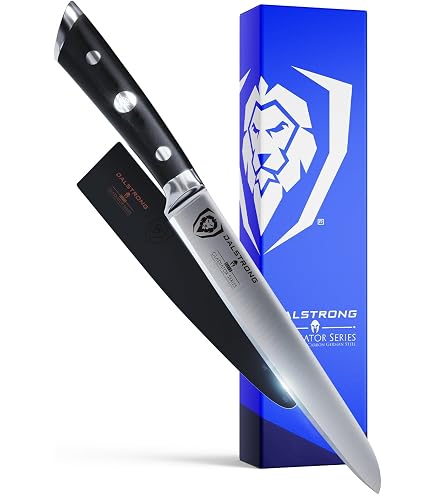
Dalstrong Gladiator Series 5-Inch Santoku Knife — Grippy, Solid Control
Best for: Confident, grippy handling
Grip matters most when hands are wet, and the Gladiator earns its place with a handle built for control. Its high-carbon German steel blade is thick, sturdy, and sharp, handling vegetables, herbs, and boneless meat with steady power. The G10 handle is textured, triple-riveted, and shaped to stop slipping during fast prep. It suits confident home cooks who want a bold, grippy Santoku for daily use. The trade-off is weight: the solid build feels heavier than lighter rivals, and the short blade still cannot handle large roasts.
- Textured G10 non-slip handle
- Thick, sturdy German steel
- Steady power for daily prep
- Heavier than lighter rivals
- Cannot handle large roasts
4.4/5
4.5/5
4.4/5

Zelite Infinity 5-Inch Santoku Knife — Nimble, Light Prep
Best for: Light, nimble prep
Light knives make long prep feel shorter, and the Zelite Infinity is one of the nimblest blades here. Its high-carbon stainless Santoku blade slices vegetables and boneless meat with little wrist effort, while the slim profile fits small boards easily. The ergonomic handle balances the light blade well, so control stays precise during detailed work. It suits cooks with small hands, tired wrists, or crowded kitchens who want speed over heft. The trade-off is power: the thin blade flexes on dense food, and it needs gentle use to stay true.
- Very light, low wrist effort
- Slim profile fits small boards
- Precise control for detail work
- Flexes on dense food
- Needs gentle use
4.4/5
4.4/5
4.3/5
Top 3 Head-to-Head: Wüsthof Classic vs Victorinox Fibrox Pro vs Mercer Genesis
These three are the finalists most readers choose between: a forged premium pick, a budget workhorse, and a precise small-task blade. The differences are small, but they point to different kitchens.
| Feature | #1 Wüsthof Classic | #2 Victorinox Fibrox Pro | #3 Mercer Genesis |
|---|---|---|---|
| Edge Retention | 4.9/5 — Best | 4.7/5 | 4.6/5 |
| Control and Comfort | 4.9/5 | 4.9/5 — Best | 4.8/5 |
| Build Quality | 4.8/5 — Best | 4.8/5 | 4.7/5 |
| Choose if… | You want forged quality daily | You want light, budget reliability | You want a nimble second blade |
Who These 5 Inch Chef Knives Are NOT For
A compact blade is a specialist, not a do-everything tool. If your cooking regularly involves large cuts, a 5-inch knife will slow you down and frustrate you.
They are also a poor fit if you chop bones, frozen food, or hard squash every week. Before adding another knife, check how many knives you really need so you do not buy a blade that duplicates what you already own.
Common Mistakes to Avoid
Most 5-inch knife regrets come from buying the wrong size for the job or caring for the blade badly. Avoid these four mistakes and your knife will last far longer.
Frequently Asked Questions About 5 Inch Chef Knives
What is a 5-inch chef knife used for?
A 5-inch chef knife is used for small, precise prep like mincing garlic, dicing shallots, trimming meat, and slicing small vegetables and fruit. It works like a compact chef knife, giving you more control than a full-size blade on a small board. It is ideal for herbs, sandwiches, and everyday meals, but it is not the right tool for large roasts, melons, or whole cabbage.
Is a 5-inch chef knife too small?
No, a 5-inch chef knife is not too small for most daily cooking, especially in small kitchens or for cooks with small hands. It handles herbs, vegetables, fruit, and boneless meat comfortably and gives better control than a long blade. It only feels too small when you regularly cut large roasts, melons, or whole cabbage, in which case an 8-inch chef knife is a better main blade.
What is the best chef knife size for home use?
The best chef knife size for most home cooks is 8 inches, because it handles the widest range of foods, from large vegetables to roasts. A 5-inch knife is the best second knife for small hands, small boards, and precise work. If you cook in a tiny kitchen, have limited storage, or mostly prepare small meals, a 5-inch knife can work as your main blade.
Can a 5-inch chef knife replace an 8-inch chef knife?
A 5-inch chef knife can replace an 8-inch knife only if you mostly cook small meals and rarely cut large foods. For most cooks, it works best as a second knife alongside a full-size chef knife. The 8-inch blade gives you more reach, leverage, and knuckle clearance for large vegetables and roasts, while the 5-inch blade gives you control for detail work.
What is the difference between a 5-inch chef knife and a utility knife?
A 5-inch chef knife has a wider blade, a curved edge, and a fuller handle, so it can rock, chop, and slice like a small chef knife. A utility knife is narrower and straighter, and it is better for trimming, peeling, and cutting sandwiches. The chef knife suits board work and larger prep tasks, while the utility knife suits in-hand work and smaller, lighter cuts.
How do I sharpen a 5-inch chef knife?
Sharpen a 5-inch chef knife with a whetstone, a manual sharpener, or a professional service, keeping the factory angle, usually 15 to 20 degrees per side. Hone it lightly with a steel before heavy prep to straighten the edge between sharpenings. Avoid pull-through sharpeners on hard Japanese steel, and never sharpen on a glass board. Hand wash and dry the blade after sharpening.
How should I clean and store a 5-inch chef knife?
Clean a 5-inch chef knife by hand washing it with warm water and mild soap, then drying it at once to prevent rust and water spots. Store it in a knife block, on a magnetic strip, or in a sheath, never loose in a drawer where the edge can chip. Keep it away from other metal tools, and oil carbon-steel blades lightly if the maker recommends it.
Our Final Verdict
A 5-inch chef knife is at its best as a precise, comfortable second blade, not a full-size replacement. If you want one knife that does the most, buy the forged Wüsthof Classic first, then add a budget or Santoku pick for detail work.

