Chef Knife Handle Materials Explained: Pros, Cons & Care
Quick Answer
Chef knife handles are crafted from a variety of materials, primarily categorized into traditional woods, highly durable composite materials like Pakkawood and Micarta, modern synthetic plastics (such as POM and polypropylene), and premium metals like stainless steel. The ideal handle material depends on your priorities regarding water resistance, maintenance requirements, grip security, and overall balance.
Understanding the Anatomy and Purpose of a Chef Knife Handle
The handle of a chef knife does much more than simply provide a place to hold the blade. It dictates how the knife feels during extended prep sessions, how well it resists moisture in a busy kitchen environment, and how easily it can be sanitized. When evaluating chef knife handle materials, understanding the interaction between the blade’s tang—the portion of the steel extending into the handle—and the surrounding material is essential for assessing durability.
Kitchen environments involve frequent exposure to water, oils, acids, and fluctuating temperatures. Because of these demanding conditions, handle materials must balance ergonomic comfort with structural resilience. Different culinary traditions also favor distinct materials; for example, Western-style kitchen knives traditionally rely on full-tang construction secured with compression rivets, while Japanese knives often feature traditional ho wood handles fitted into a tapered tang.
Traditional Wood Handles: Natural Feel and Aesthetics
 Save
Wood is the oldest and most traditional handle material used in cutlery. It offers a warm tactile feel and distinct aesthetic appeal that synthetic alternatives rarely replicate. However, untreated natural wood requires regular maintenance to prevent cracking, warping, and moisture absorption.
Common Wood Types and Their Properties
Knife manufacturers utilize various domestic and exotic woods depending on the desired hardness, grain pattern, and moisture resistance:
- Maple and Walnut: Common in traditional Western cutlery, offering comfortable weight and classic appearance but requiring mineral oil conditioning.
- Ho Wood and Magnolia: Traditional choices for Japanese wa-handles. They are lightweight, absorb minimal moisture, and provide a neutral grip, though they require gentle handling.
- Ebony and Rosewood: Dense, heavy hardwoods prized for their natural oils and durability against wear, though high-end exotic woods can increase the overall cost of the knife.
Warning
Never submerge natural wood handles in water for extended periods or clean them in a dishwasher. Extreme moisture cycling causes the wood to swell, crack, and pull away from the knife tang.
Composite and Stabilized Materials: The Modern Standard
To overcome the vulnerabilities of natural wood while retaining its aesthetic warmth, manufacturers developed engineered composites. These materials combine natural fibers or veneers with high-strength resins under intense heat and pressure.
Pakkawood (Compreg)
Pakkawood consists of thin layers of hardwood impregnated with colored phenolic resin and compressed. The resulting material is exceptionally dense, completely impervious to moisture, and resistant to warping or fading. It provides the rich look of polished wood combined with the water resistance required in professional kitchens.
Micarta and G-10
Micarta is manufactured by layering linen, canvas, or paper with resin, while G-10 uses woven fiberglass cloth. Both materials are virtually indestructible under normal kitchen conditions. They do not absorb odors, resist chemical degradation, and maintain excellent grip security even when wet or greasy.
Synthetic Polymers: Durability and Hygiene
 Save
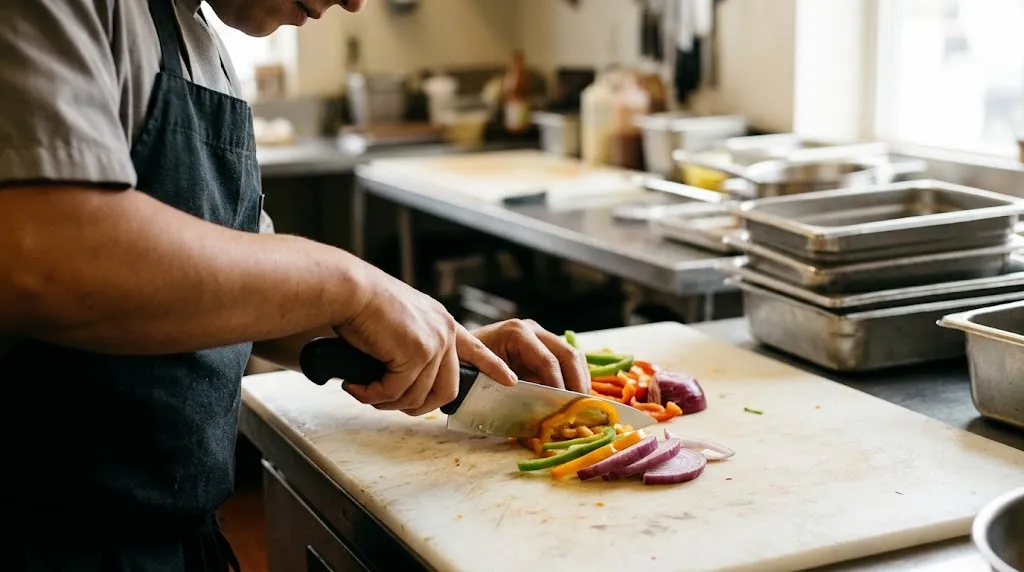
Synthetic plastics dominate commercial and heavy-duty residential kitchens due to their low cost, high hygiene standards, and zero maintenance requirements. They can be molded seamlessly around the tang, preventing food particles and bacteria from trapping in crevices.
- POM (Polyoxymethylene): A high-performance engineering thermoplastic frequently used for high-end forged Western chef knives. It offers exceptional rigidity, dimensional stability, and resistance to impact and heat.
- Polypropylene and Fibrox: Common in commercial-grade utility and butcher knives. Fibrox provides a textured, slip-resistant grip that remains secure during fast-paced food preparation.
- ABS Plastic: A budget-friendly thermoplastic used for lightweight consumer knives, though it can become brittle over time when exposed to harsh sanitizing chemicals.
Key Insight
While synthetic handles offer superior hygiene and ease of care, they lack the organic texture and balance adjustment capabilities that dense wood or full-metal handles provide.
Metal and Specialized Handle Materials
Some chef knives feature handles forged entirely from stainless steel or integrated with titanium and carbon fiber. Stainless steel handles offer seamless, sterile construction that is completely dishwasher safe. However, solid metal handles can become slippery when wet and add unwanted weight to the rear of the knife unless hollowed out or textured.
Carbon fiber is another premium material occasionally found in high-end culinary knives. It offers extreme strength-to-weight ratios and a striking modern pattern, though manufacturing complexities make it significantly more expensive.
Comparing Chef Knife Handle Materials
| Material Type | Water Resistance | Maintenance Needs | Ideal Environment |
|---|---|---|---|
| Natural Wood | Low to Moderate | High (Regular oiling) | Home kitchens with careful washing |
| Pakkawood / Micarta | High | Low | All-purpose residential and light commercial |
| POM / Thermoplastics | Maximum | Very Low | High-volume commercial kitchens |
| Stainless Steel | Maximum | Low | Sterile environments and modern aesthetics |
Reviewing these material differences ensures you select a knife handle that matches your cooking habits and maintenance preferences.
How to Choose the Right Handle Material for Your Needs
Selecting the appropriate chef knife handle depends heavily on your daily cooking routine and how you clean your cookware. If you prefer low-maintenance tools that can withstand constant washing without degradation, synthetic materials like POM or textured composite handles are ideal choices.
Conversely, if you value traditional craftsmanship, hand-feel, and aesthetic beauty, a stabilized wood or Pakkawood handle provides an excellent compromise between natural warmth and modern durability. Always consider how the handle shape fits your grip style—whether pinch grip, hammer grip, or point grip—as ergonomics ultimately dictates cutting comfort.
Related Product
Chef Knife Maintenance and Mineral Oil Kit
Keep wooden handles conditioned and protected against moisture cracking with food-safe mineral oil.
As an Amazon Associate, we earn from qualifying purchases.
Frequently Asked Questions
Can wooden chef knife handles go in the dishwasher?
No. Dishwashers expose wooden handles to high heat, harsh detergents, and prolonged water saturation, which causes the wood to warp, crack, and pull away from the metal tang.
What is the most durable handle material for a kitchen knife?
Synthetic polymers like POM, Micarta, and G-10 offer the highest durability because they do not absorb moisture, resist chemical and thermal degradation, and maintain structural integrity over years of heavy use.
How often should natural wood handles be oiled?
Natural wood handles should be treated with food-grade mineral oil or beeswax every few months, or whenever the wood begins to feel dry, dull, or rough to the touch.
Do synthetic handles become slippery when wet?
Smooth plastics like ABS can become slick when wet or greasy, but textured synthetics like Fibrox or engineered micarta provide a secure, non-slip grip under demanding kitchen conditions.
Why do traditional Japanese knives use wooden handles?
Traditional Japanese wa-handles are made from lightweight woods like magnolia to keep the balance point of the knife forward, allowing for precise control and effortless blade maneuverability.
How do I repair a loose chef knife handle?
If a handle becomes loose due to wood shrinkage or failed rivets, it typically requires professional re-pinning or epoxy reinforcement depending on whether it is a full-tang or traditional hidden-tang construction.
Conclusion
Choosing the right chef knife handle material involves balancing comfort, aesthetic preference, and maintenance requirements. While natural woods offer unmatched tactile warmth, composite and synthetic materials provide exceptional durability and water resistance for busy environments. By understanding how each material performs under daily kitchen conditions, you can select a knife that feels comfortable, performs reliably, and meets your long-term culinary needs.

