Do Bamboo Cutting Boards Warp or Absorb Water?
Quick Answer
Yes, bamboo cutting boards can warp and absorb water, although bamboo generally absorbs less moisture than many traditional wood materials. Prolonged soaking, dishwasher cleaning, uneven drying, and excessive humidity increase the risk of warping. Regular handwashing, upright drying, and proper bamboo cutting board oiling help minimize moisture-related damage.
What You Need to Know:
- Water resistance: Bamboo resists moisture but is not completely waterproof.
- Uneven absorption: Differences in moisture between surfaces can cause bending.
- Dishwasher damage: Excessive water and heat may cause cracking or separation.
- Regular conditioning: Food-grade mineral oil helps slow moisture penetration.
- Proper drying: Standing the board upright promotes balanced airflow.
- Structural damage: Severe warping and separated bamboo layers may require replacement.
Quick Verification Tip:
- Place your completely dry cutting board on a flat countertop and gently press each corner to check for rocking or unevenness.
Bamboo cutting boards are popular because they’re lightweight, attractive, and relatively easy to maintain. However, their natural moisture resistance sometimes leads people to believe that water cannot damage them.
I recommend understanding how bamboo reacts to moisture before changing your cleaning routine or replacing a warped board. This guide explains water absorption, common causes of bending, prevention methods, and when replacement becomes necessary.
Why Do Bamboo Cutting Boards Absorb Water?
Bamboo cutting boards absorb water because bamboo contains natural plant fibers that interact with moisture. Although its dense structure can limit water penetration, bamboo remains a moisture-sensitive material.
A bamboo cutting board is a food preparation surface commonly manufactured from compressed and bonded bamboo strips. These strips form a solid panel suitable for chopping vegetables, slicing fruit, and preparing other ingredients.
How Bamboo Fibers React to Moisture
Bamboo contains cellulose, hemicellulose, and lignin within its natural structure. Some of these components attract water molecules and respond to changes in environmental moisture.
When bamboo absorbs water, its fibers can expand. When moisture evaporates, those fibers may contract.
- Moisture absorption: Water enters exposed fibers and surface imperfections.
- Fiber expansion: Moisture causes changes in the material’s dimensions.
- Moisture evaporation: Drying reduces the amount of retained water.
- Fiber contraction: The material shrinks as moisture levels decrease.
- Repeated movement: Frequent wetting and drying may create internal stress.
The USDA Forest Products Laboratory provides research and educational resources about moisture behavior in natural wood-based materials.
Are Bamboo Cutting Boards Waterproof?
No, bamboo cutting boards are not waterproof. Their natural density may provide some resistance to water, but extended moisture exposure can still cause swelling, discoloration, and structural damage.
Water resistance describes how effectively a material slows moisture penetration. Waterproofing means preventing water from passing through under specified conditions.
Most ordinary bamboo cutting boards do not have a completely waterproof barrier.
Water-Resistant vs. Waterproof Cutting Boards
| Characteristic | Water-Resistant Bamboo | Nonabsorbent Plastic |
|---|---|---|
| Water absorption | Possible | Generally negligible |
| Prolonged soaking | Not recommended | Generally tolerates water |
| Moisture-related swelling | Possible | Uncommon |
| Dishwasher compatibility | Usually unsuitable | Model dependent |
| Oil conditioning | Recommended for unfinished boards | Unnecessary |
| Moisture-related warping | Possible | Less likely; heat can still cause warping |
Even a freshly conditioned bamboo board can absorb moisture through exposed surfaces. Cutting marks, unfinished edges, and damaged joints may increase susceptibility.
What Causes Bamboo Cutting Boards to Warp?
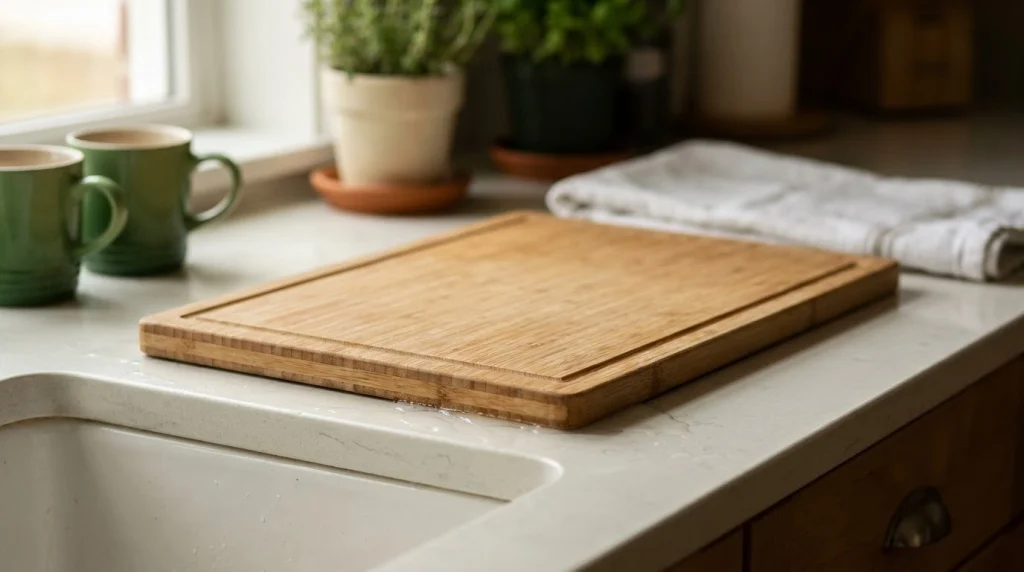
Bamboo cutting boards usually warp when different sections expand or contract unevenly. Water exposure, temperature changes, construction quality, and drying conditions can contribute to this movement.
1. Uneven Water Absorption
When one side of a cutting board absorbs more moisture than the other, the two surfaces can develop different dimensions. This imbalance creates stress that may bend the board.
For example, leaving a washed board flat on a wet countertop traps moisture underneath while the exposed surface dries. The resulting moisture difference can produce temporary or permanent curvature.
2. Prolonged Soaking in Water
Leaving bamboo submerged in a sink allows moisture to penetrate more deeply. Repeated soaking can also place stress on the adhesive joints between individual bamboo strips.
Avoid these common situations:
- Leaving a cutting board inside a sink overnight.
- Submerging the entire board to remove food stains.
- Using a board as a soaking tray.
- Leaving wet kitchen towels underneath it.
- Allowing standing water to remain on the surface.
3. Dishwasher Cleaning
Dishwashers combine sustained moisture exposure with elevated temperatures. These conditions can accelerate dimensional changes and weaken some laminated bamboo constructions.
Unless the manufacturer explicitly identifies your bamboo board as dishwasher-safe, clean it by hand.
4. Excessive Heat Exposure
Heat can cause one part of a bamboo board to lose moisture faster than another. Uneven contraction may lead to bending, surface cracks, or separation.
- Avoid placing hot cookware directly on bamboo boards.
- Keep cutting boards away from active stovetops.
- Do not dry bamboo inside an oven.
- Avoid prolonged exposure to strong direct sunlight.
- Keep boards away from concentrated heating vents.
5. High Humidity and Poor Storage
Bamboo exchanges moisture with the surrounding air. Humid kitchens and poorly ventilated cabinets can slow drying and encourage uneven moisture retention.
Store bamboo cutting boards in a dry location with adequate ventilation. Always allow freshly washed boards to dry before putting them away.
6. Poor Construction Quality
Some bamboo boards have unevenly bonded strips, inconsistent thickness, or weak adhesive joints. These manufacturing differences may reduce resistance to repeated moisture exposure.
Thin boards may also bend more readily than thicker boards of similar construction. However, thickness alone cannot guarantee resistance to warping.
What Are the Signs of Water Damage on a Bamboo Cutting Board?
Water damage can appear as curvature, raised fibers, swollen edges, dark stains, or separation between bamboo strips. Identifying these warning signs early helps determine whether the board remains usable.
| Warning Sign | Possible Cause | Recommended Action |
|---|---|---|
| Rocking corners | Uneven moisture | Dry evenly and reassess |
| Rough surface | Raised bamboo fibers | Dry and inspect |
| Swollen edges | Water penetration | Stop soaking and assess damage |
| Dark patches | Staining or possible mold | Inspect before further use |
| Separated strips | Adhesive joint failure | Replace the board |
| Persistent musty odor | Possible microbial growth | Replace if odor persists |
Surface discoloration alone does not prove that mold is present. However, persistent moisture, suspicious growth, and unpleasant odors deserve careful attention.
Does Oiling a Bamboo Cutting Board Prevent Water Absorption?
Oiling helps reduce the speed at which bamboo absorbs moisture, but it does not make the board waterproof. Suitable conditioning oils help maintain exposed fibers and reduce excessive drying.
My preferred starting point for an unfinished bamboo board is food-grade mineral oil. It’s easy to apply and does not develop rancid odors like many ordinary cooking oils.
Suitable Bamboo Cutting Board Conditioners
- Food-grade mineral oil: A stable conditioner for unfinished bamboo surfaces.
- Mineral oil and beeswax: Combines penetrating oil with a protective surface coating.
- Cutting board cream: Helps maintain the appearance and condition of compatible surfaces.
- Manufacturer-approved conditioners: Useful when a board requires specific maintenance products.
Avoid ordinary vegetable oils unless the manufacturer specifically approves the formulation. Learn more about the differences in this guide to using vegetable oil on cutting boards.
How Often Should You Oil Bamboo?
For many unfinished bamboo cutting boards, monthly conditioning is a reasonable starting point. Frequently washed boards may require more attention, while lightly used boards may need less.
Look for a pale, dry appearance or rough texture rather than relying entirely on a calendar. Always follow the manufacturer’s instructions for factory-finished surfaces.
How to Prevent Bamboo Cutting Boards From Warping
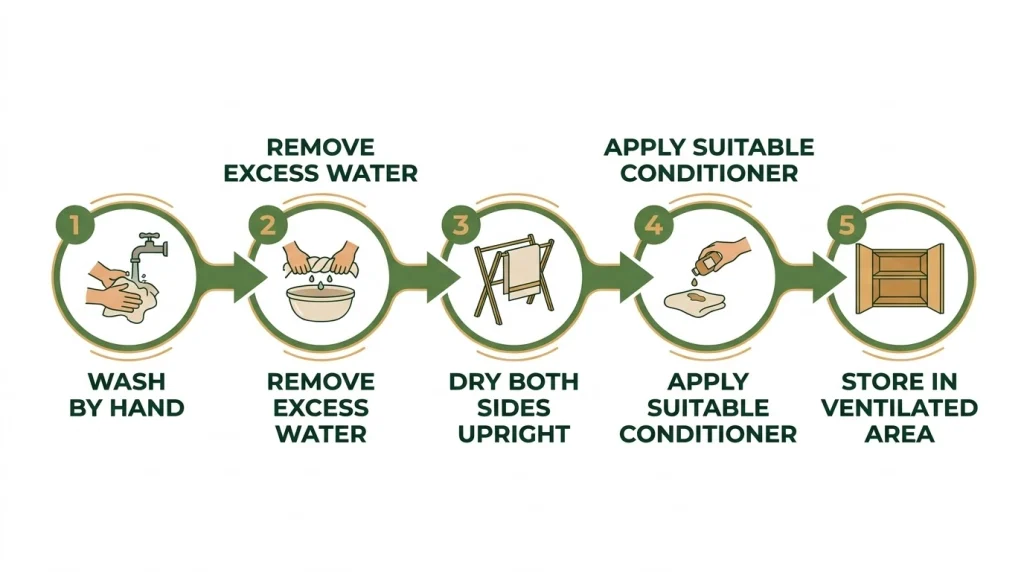
The most effective prevention method combines brief water exposure, balanced drying, suitable conditioning, and proper storage. Consistent daily habits matter more than occasional intensive maintenance.
Step 1: Wash the Board by Hand
Use warm water, mild dish soap, and a clean sponge or soft brush. Remove food residue without leaving the board submerged.
Step 2: Remove Excess Water
After rinsing, use a clean kitchen towel to remove visible moisture. Pay particular attention to edges, corners, handles, and juice grooves.
Step 3: Allow Both Sides to Dry
Stand the cutting board upright in a stable position where air can reach both surfaces. Avoid placing a damp board directly against a wall or another board.
Step 4: Apply a Suitable Conditioner
Condition the board only after it has dried completely. Apply the recommended product to both faces and exposed edges according to its instructions.
Step 5: Store in a Ventilated Area
Keep your cutting board away from standing water, excessive humidity, and concentrated heat. Do not place damp boards inside enclosed drawers or cabinets.
Practical Tip: I would prioritize balanced drying over simply applying more oil. Conditioning cannot compensate for repeatedly leaving the bottom of a bamboo board on a wet countertop.
These habits also work for many other wooden surfaces. For additional techniques, explore this guide on preventing cutting boards from warping.
Can You Fix a Warped Bamboo Cutting Board?
A slightly warped bamboo board may become flatter once its moisture levels stabilize. Severe bending, cracked joints, and separated layers are more difficult to correct safely.
How to Address Minor Warping
- Stop using the board: Avoid cutting on an unstable surface until you assess its condition.
- Inspect the construction: Check for splits, loose strips, and signs of adhesive failure.
- Remove surface moisture: Wipe the board thoroughly with a clean towel.
- Dry evenly: Place it upright in a ventilated room at normal indoor temperatures.
- Allow stabilization: Reassess after 24 to 48 hours, allowing more time if necessary.
- Check stability: Place the dry board on a level counter and test each corner.
There is no guaranteed home method for restoring permanently warped laminated bamboo. Avoid boiling water, steam treatments, heavy forced bending, and oven drying.
Replace the board if it continues to rock or shows structural separation.
Do Bamboo Cutting Boards Absorb More Water Than Wooden Cutting Boards?
Bamboo often resists moisture better than some traditional wood cutting boards, but absorption varies with construction, surface treatment, and material properties. A well-maintained hardwood board may perform better than a poorly manufactured bamboo board.
| Material | Moisture Behavior | Maintenance |
|---|---|---|
| Bamboo | Relatively moisture-resistant, but absorbent | Handwash and condition |
| Maple | Dense hardwood that responds to humidity | Regular conditioning |
| Walnut | Absorbent natural hardwood | Handwash and condition |
| Teak | Natural oils contribute to moisture resistance | Periodic conditioning |
| Plastic | Generally nonabsorbent | No oiling required |
Moisture resistance is only one factor when selecting a cutting surface. Knife compatibility also matters, particularly if you regularly use expensive kitchen knives.
Read more about whether bamboo cutting boards dull knives before choosing your next board.
Can Water Absorption Cause Mold on Bamboo Cutting Boards?
Yes, retained moisture can create conditions favorable to mold growth, particularly when food residue remains on the board. Poor ventilation and prolonged dampness increase this risk.
Even moisture-resistant materials require effective cleaning and drying after contact with food.
- Clean food residue promptly after preparation.
- Use separate boards for raw meat and ready-to-eat foods.
- Allow complete drying between uses.
- Inspect joints and grooves for trapped debris.
- Replace boards with persistent mold or deep structural damage.
The University of Maine Cooperative Extension cutting board safety guide offers additional information about material selection, cleaning, and safe food preparation.
When Should You Replace a Water-Damaged Bamboo Cutting Board?
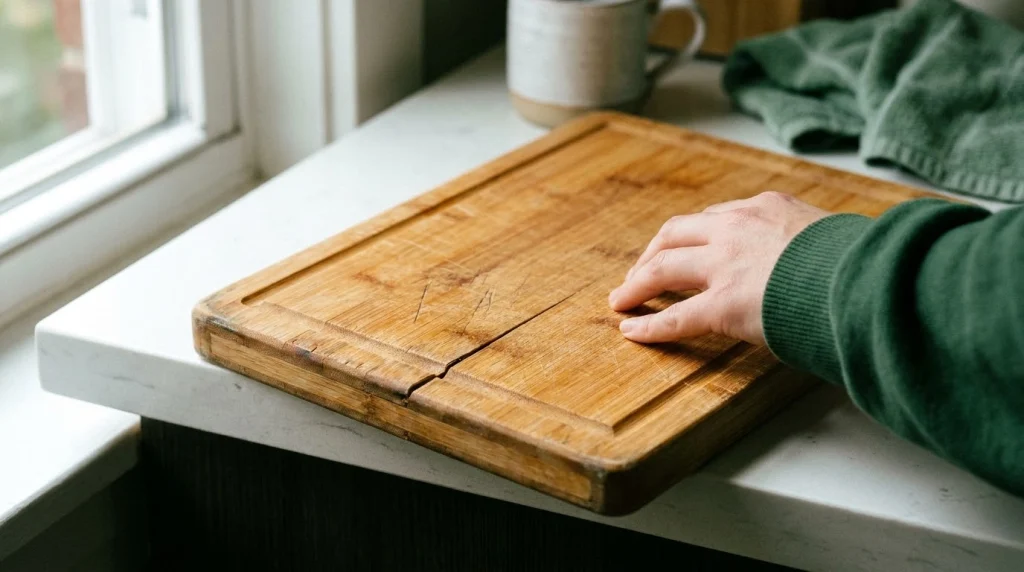
Replace a bamboo cutting board when water damage affects its structural integrity, stability, or ability to be cleaned properly. Cosmetic marks do not automatically require replacement.
Consider replacing your board if you notice any of these conditions:
- Permanent curvature that makes chopping unstable.
- Deep cracks that collect food particles.
- Visible gaps between laminated bamboo strips.
- Persistent mold growth or musty odors.
- Loose splinters or deteriorating surfaces.
- Swelling that prevents the board from sitting securely.
Food preparation guidance from the USDA Food Safety and Inspection Service can help you maintain safer kitchen surfaces and reduce cross-contamination.
Choosing a Moisture-Resistant Bamboo Cutting Board in 2026
No bamboo cutting board is guaranteed to remain flat under every condition. However, selecting a well-constructed board can improve its suitability for everyday kitchen use.
- Consistent thickness: Look for a sturdy board that does not flex excessively.
- Secure lamination: Inspect the bamboo strips for visible gaps.
- Smooth edges: Choose a board without loose fibers or unfinished damage.
- Suitable finish: Select a product intended for direct food preparation.
- Clear care instructions: Check the manufacturer’s washing and conditioning recommendations.
- Balanced storage: Choose dimensions that allow convenient upright drying.
Recommended Products for Bamboo Cutting Board Maintenance
If you want to reduce moisture-related damage, a suitable conditioning product is a practical starting point. These options serve different cutting board maintenance needs.
Affiliate disclosure: As an Amazon Associate, I earn from qualifying purchases.
🏆 Everyday Conditioning
Howard Cutting Board Oil
This food-grade mineral oil provides straightforward conditioning for compatible bamboo and wooden cutting surfaces. I recommend this type of oil for routine maintenance without an elaborate application process.
🌿 Bamboo-Specific Care
Totally Bamboo Revitalizing Mineral Oil
Available in an 8-ounce bottle, this conditioner is designed for bamboo and wooden kitchen products. I’d consider it when maintaining an unfinished bamboo board with a dry or faded appearance.
🛡️ Surface Conditioning
Howard Butcher Block Conditioner
This conditioner combines mineral oil with natural waxes to help maintain compatible cutting surfaces. I would choose an oil-and-wax conditioner when an additional surface coating is desirable.
Frequently Asked Questions
Can Bamboo Cutting Boards Get Wet?
Yes, bamboo cutting boards can safely get wet during ordinary washing, provided you remove excess moisture promptly and allow both sides to dry. Avoid prolonged soaking or leaving the board on a damp countertop, as these conditions can contribute to swelling and warping.
Will a Bamboo Cutting Board Warp in the Dishwasher?
A bamboo cutting board can warp, crack, or develop separated adhesive joints in a dishwasher because of repeated moisture exposure and elevated temperatures. Unless the manufacturer specifically approves dishwasher cleaning, washing the board by hand remains the safer maintenance method.
Does Mineral Oil Make Bamboo Cutting Boards Waterproof?
No, food-grade mineral oil helps slow moisture penetration and maintains the condition of unfinished bamboo, but it does not create a completely waterproof surface. You must still avoid soaking, dry the board thoroughly, and follow the manufacturer’s recommended maintenance routine.
Can a Warped Bamboo Cutting Board Become Flat Again?
A slightly warped bamboo cutting board may flatten naturally as its moisture levels become balanced, particularly if the curvature developed recently. However, permanent bending, adhesive failure, and separated bamboo strips generally cannot be corrected reliably through ordinary home maintenance.
How Long Should a Bamboo Cutting Board Dry After Washing?
A bamboo cutting board should dry until both surfaces and all exposed edges are completely free of moisture. Drying time varies with board thickness, humidity, airflow, and water exposure, so upright air-drying is more reliable than following a fixed time limit.
Final Takeaway
Bamboo cutting boards can absorb water and warp despite their relatively moisture-resistant construction. Uneven drying, prolonged soaking, high temperatures, and poor storage are common contributing factors.
The good news is that most everyday moisture-related problems are preventable. Wash your board by hand, remove excess water, dry it upright, and condition unfinished surfaces when necessary.
My recommendation: Make balanced drying your first priority and regular conditioning your second. Replace any board that develops permanent instability, deep cracks, or separated bamboo layers.
With consistent maintenance, a well-made bamboo cutting board can remain a practical and dependable food preparation surface.