Can You Use a Chef Knife to Cut Cheese? Explained
Quick Answer
Yes, you can use a chef knife to cut most cheese. A sharp chef knife works especially well for blocks and wedges of cheddar, Gouda, Monterey Jack, Gruyère, and many other firm or semi-firm cheeses. Soft cheeses may stick to its broad blade, while very hard or crumbly cheeses can be easier and safer to portion with a purpose-built cheese knife, wire, slicer, or sturdy hard-cheese tool.
A chef knife is designed as a versatile kitchen tool, so cheese does not automatically require a specialized blade. For ordinary meal preparation—cubing cheddar, slicing Gouda for sandwiches, or cutting mozzarella into portions—the knife already on your cutting board is often enough.
The important question is not simply whether a chef knife can cut cheese. It is whether its broad blade and cutting style match the texture, size, and shape of the cheese you are working with.
Which Cheeses Can You Cut With a Chef Knife?
A chef knife is most comfortable with cheeses that are firm enough to hold their shape but not so hard that you need excessive pressure to get through them.
That makes it practical for many cheeses commonly used in sandwiches, burgers, pasta, casseroles, snacks, and cheese boards.
| Cheese Type | Chef Knife? | Main Consideration |
|---|---|---|
| Firm cheddar | Yes | Use straight, controlled cuts |
| Gouda or Gruyère | Yes | Cut large wedges into manageable sections first |
| Monterey Jack | Yes | Usually cuts cleanly with a sharp blade |
| Low-moisture mozzarella | Yes | Wipe the blade if cheese begins to cling |
| Brie or Camembert | Possible | Soft interior can stick to a broad blade |
| Very hard aged cheese | Sometimes | A specialized sturdy tool may offer better control |
So the chef knife performs best in the middle of the cheese-texture spectrum. The farther you move toward extremely soft or extremely hard cheese, the more useful specialized cheese tools become.
How to Cut Cheese Cleanly With a Chef Knife
 Save
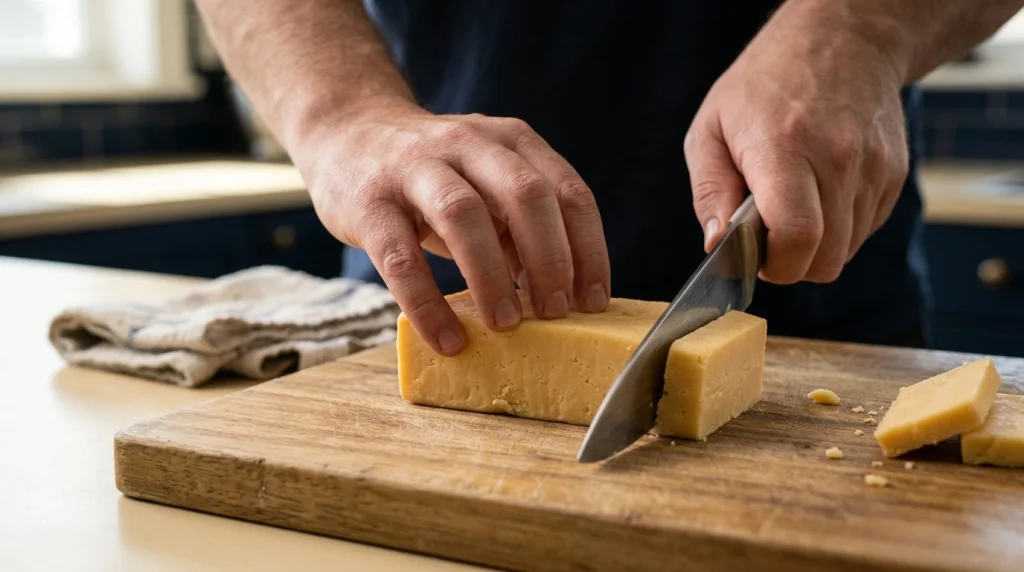
SaveThe quality of the cut depends as much on setup and technique as it does on the knife itself. A sharp chef knife should pass through manageable pieces of cheese with controlled pressure rather than brute force.
- Use a stable cutting board. Place the cheese on a flat, secure surface rather than holding a block or wedge in your hand.
- Start with a sharp, clean knife. A dull edge encourages you to push harder and gives you less control.
- Make the cheese stable. If a wedge rocks or rolls, position it on its broadest flat side before cutting.
- Reduce oversized pieces first. A manageable block requires less pressure than trying to force the blade through a huge wheel or thick wedge.
- Use a controlled downward or slicing cut. Let the sharp edge do the work instead of forcing the knife suddenly through the cheese.
- Keep your free hand out of the cutting path. Curl your fingertips back and reposition them as the piece becomes smaller.
- Wipe the blade when necessary. Soft or moist cheese residue increases drag and can make later cuts messier.
Tip
If a large block requires so much force that you feel you are fighting the knife, divide the cheese into a smaller, more stable section or switch to a tool intended for that texture.
Why Does Soft Cheese Stick to a Chef Knife?
A chef knife usually has a tall, broad blade. That shape is useful for chopping vegetables and transferring ingredients, but it creates a relatively large area of metal in contact with cheese.
With creamy or moist cheeses, the freshly cut surface can cling to that broad blade. Instead of falling away cleanly, the cheese may follow the knife upward, smear, bend, or tear.
This is one reason many soft-cheese knives use narrower blades, perforations, or cutouts. Reducing the amount of blade surface touching the cheese helps reduce adhesion and allows delicate slices to release more cleanly.
A chef knife can still cut Brie, Camembert, soft blue cheese, and similar varieties when necessary. The difference is that you may spend more time cleaning the blade between cuts, and presentation may be less tidy than with a purpose-built soft-cheese knife or wire.
Key Insight
For soft cheese, the limitation of a chef knife is usually not its sharpness. It is the large amount of blade surface touching the sticky interior of the cheese.
What About Very Hard or Crumbly Cheese?
Very hard, aged, or granular cheese presents the opposite problem. Instead of sticking, it may resist the blade or naturally fracture as pressure is applied.
A chef knife can handle reasonably sized pieces of many firm cheeses, but forcing a broad blade through an extremely dense wedge is not always the best approach.
For cheeses such as Parmigiano Reggiano or very aged, crumbly cheddar, you may actually want irregular chunks rather than smooth slices. A sturdy pointed hard-cheese knife can be inserted partway and used to separate pieces along their natural breaks.
Thin shavings are another job where a cheese plane or slicer can be more convenient than a chef knife.
Warning
Do not use your free hand to brace cheese directly in front of a heavily loaded blade. If a cut requires excessive force or the cheese cannot sit securely on the board, change the setup or use a more appropriate cutting tool.
Chef Knife vs. Cheese Knife: Which Should You Use?
You do not need a special cheese knife every time cheese appears in a recipe. The specialized tool becomes useful when its design solves a specific problem.
- Choose a chef knife for everyday cubing, chopping, and slicing of manageable firm or semi-firm cheese.
- Choose a perforated or thin soft-cheese knife when creamy cheese repeatedly sticks to your chef knife.
- Choose a cheese wire when you want clean portions from very soft or delicate cheese with minimal drag.
- Choose a sturdy hard-cheese knife when the goal is to break or chunk dense aged cheese.
- Choose a cheese plane or slicer when you want repeated thin slices from firm cheese.
The chef knife therefore wins on versatility. Specialized cheese knives win when you need better release, more delicate presentation, thin repetitive slices, or more control with an unusually hard texture.
Common Mistakes When Cutting Cheese With a Chef Knife
Using a Dull Knife
A dull edge can make cheese cutting feel harder than it should. Instead of making a controlled cut, you may compensate with extra pressure. A properly maintained knife gives you more predictable movement.
Trying to Cut an Oversized Block in One Motion
A chef knife may be capable of cutting the cheese but still be poorly matched to a huge piece. Breaking a large wedge into smaller, stable portions makes subsequent slicing much easier.
Ignoring the Shape of the Cheese
A rolling log, narrow wedge, or rounded wheel can move when pressure is applied. Before cutting, look for the position that gives the cheese the largest secure contact area with the board.
Expecting One Technique to Work for Every Cheese
A block of cheddar and a ripe Brie behave completely differently under the blade. Clean cheese cutting comes from adjusting to the texture rather than simply pushing harder.
When Is a Specialized Cheese Knife Actually Worth Using?
 Save
SaveIf cheese is only an occasional cooking ingredient in your kitchen, your existing chef knife may be all you need. There is little reason to add another tool just to cube cheddar or slice a manageable block of Gouda.
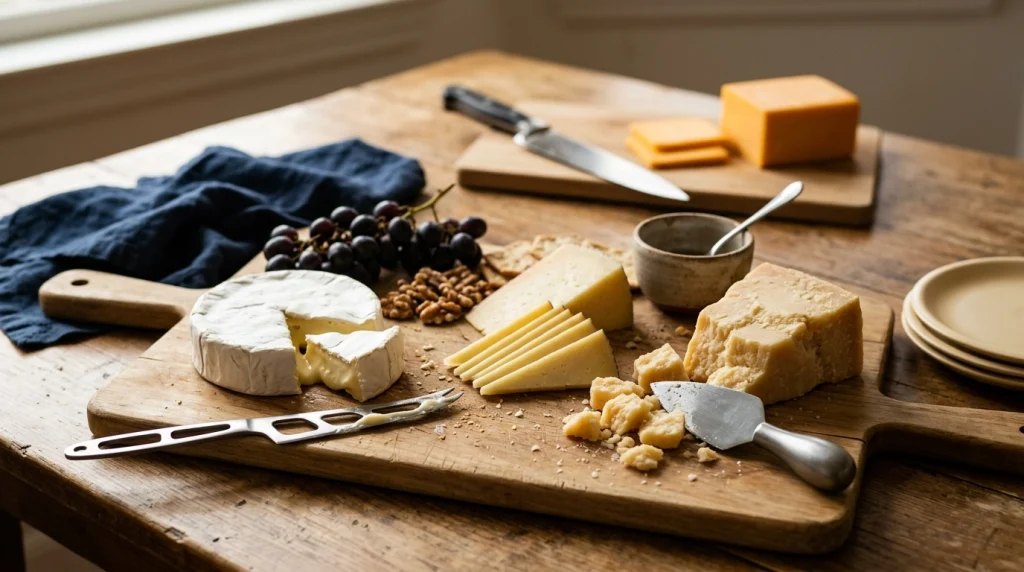
A specialized cheese knife becomes more useful if you regularly serve cheese boards, work with creamy cheeses, want neat presentation, slice large quantities, or frequently portion very hard aged cheese.
In that situation, the improvement is not that a cheese knife magically makes ordinary cheese cuttable. It gives you blade geometry designed around a specific problem that a general-purpose chef knife does not solve as elegantly.
Relevant Product
Cheese Knife or Cheese Knife Set
A dedicated cheese knife can be useful if soft cheese frequently sticks to your chef knife or you regularly serve several cheese textures on a board.
As an Amazon Associate, we earn from qualifying purchases.
Frequently Asked Questions
Can a chef knife cut a block of cheddar?
Yes. A sharp chef knife works well for most ordinary blocks of cheddar. Place the block securely on its broad side and make controlled downward cuts rather than forcing the blade through an unstable piece.
Can you cut Brie with a chef knife?
Yes, but the creamy interior may stick to the chef knife’s broad blade. A thin or perforated soft-cheese knife generally releases the cheese more cleanly when presentation matters.
Does cutting cheese damage a chef knife?
Ordinary cheese cutting is a normal food-preparation task for a suitable sharp kitchen knife. Problems are more likely when excessive force is used on extremely hard food or when the knife is twisted, pried, or otherwise used outside normal cutting motions.
Why do some cheese knives have holes?
The openings reduce the amount of blade surface touching soft or sticky cheese. With less contact, the cheese is less likely to cling to the blade as strongly after the cut.
Is a cheese wire better than a chef knife?
It depends on the cheese and the cut you want. A chef knife is more versatile, while a wire creates very little contact with the cheese and can produce clean cuts through certain soft or delicate varieties.
Do you need a separate cheese knife for a cheese board?
No. A chef knife can prepare many of the portions before serving. A dedicated set becomes more useful when guests need to cut different soft, firm, and hard cheeses directly on the board.
Conclusion
A chef knife is perfectly suitable for cutting most everyday cheese. It is particularly practical for firm and semi-firm blocks that can sit securely on a cutting board. Keep the knife sharp, stabilize the cheese, reduce oversized pieces first, and use controlled cuts rather than excessive force.
Specialized cheese tools become worthwhile at the extremes: thin or perforated blades and wires help with sticky soft cheeses, while sturdy hard-cheese tools are better suited to dense, crumbly aged varieties. For everything in between, your chef knife will usually do the job.