Glass vs. Plastic Cutting Boards: Which Is Better for Your Kitchen?
Quick Answer
Plastic cutting boards are generally better than glass cutting boards for everyday chopping. Plastic is gentler on knife edges, lighter, and easier to handle. Glass resists knife grooves and stains, but its hard surface can quickly dull blades. Both materials are nonporous and relatively easy to clean, provided you follow proper USDA food safety guidance.
Key Differences at a Glance
- Knife protection: Plastic is more forgiving, while glass accelerates edge wear.
- Cleaning: Both are nonporous, and many models are dishwasher-safe.
- Surface wear: Plastic develops knife marks; glass resists most cutting grooves.
- Safety: Plastic generally provides a more comfortable chopping surface, while glass can be slippery.
- Best use: Choose plastic for food preparation and glass mainly for serving or presentation.
My Recommendation
- Choose plastic for regular vegetable prep, meat preparation, and frequent knife work.
- Choose glass when appearance, stain resistance, and serving convenience matter more than chopping performance.
Choosing between glass and plastic cutting boards sounds simple until you consider your knives, food safety, and cleanup routine. Both have advantages, but they behave differently under a sharp kitchen knife.
I prefer judging cutting boards by how they support daily cooking, not just how they look on a countertop. This guide compares their performance, maintenance, durability, and practical value.
What Is the Difference Between Glass and Plastic Cutting Boards?
A glass cutting board is a rigid food-preparation surface, usually made from tempered glass. A plastic cutting board typically uses a food-contact polymer such as polypropylene or polyethylene.
The biggest difference is surface hardness. Glass barely gives beneath a knife, while plastic provides some flexibility when the blade contacts it.
That distinction affects nearly everything, including cutting comfort, knife sharpness, and long-term board wear.
How Glass Cutting Boards Work
Tempered glass cutting boards have a hard, smooth, nonporous surface. They resist staining and do not develop the deep knife grooves common on softer boards.
However, the hardness that protects the board also works against your knife. Repeated blade contact with glass can damage or dull a carefully sharpened edge.
- Material: Usually tempered glass.
- Surface: Hard, rigid, and smooth.
- Maintenance: Generally simple washing and drying.
- Main weakness: Poor compatibility with sharp knife edges.
- Ideal role: Serving, presentation, and limited food preparation.
How Plastic Cutting Boards Work
Plastic boards create a more forgiving cutting surface. Common materials include high-density polyethylene (HDPE) and polypropylene.
These polymers allow some blade penetration without immediately damaging the edge. That makes plastic a practical option for repetitive chopping and slicing.
- Material: Commonly HDPE or polypropylene.
- Surface: Moderately flexible and knife-friendly.
- Maintenance: Wash after each use; many models support dishwasher cleaning.
- Main weakness: Scratches and grooves accumulate over time.
- Ideal role: Everyday cutting, vegetable preparation, and raw meat handling.
Glass vs. Plastic Cutting Boards: Side-by-Side Comparison
The following table compares the characteristics that matter most in an everyday kitchen. These are general material differences, so individual products may perform differently.
| Feature | Glass Cutting Board | Plastic Cutting Board |
|---|---|---|
| Common material | Tempered glass | HDPE or polypropylene |
| Knife friendliness | Poor | Good |
| Surface hardness | Very hard | Moderately soft |
| Knife grooves | Highly resistant | Develops grooves with use |
| Dishwasher cleaning | Many models, if approved | Many models, if approved |
| Stain resistance | Excellent | Varies by material and wear |
| Impact resistance | Can chip or break | Generally resists breakage |
| Weight | Often heavier | Usually lightweight |
| Best application | Serving and presentation | Daily food preparation |
| Overall choice | Special-purpose accessory | Better everyday cutting surface |
The important takeaway is that board durability and knife friendliness are different qualities. A surface that barely scratches may still be a poor place to cut food.
Are Glass or Plastic Cutting Boards Better for Your Knives?
 Save
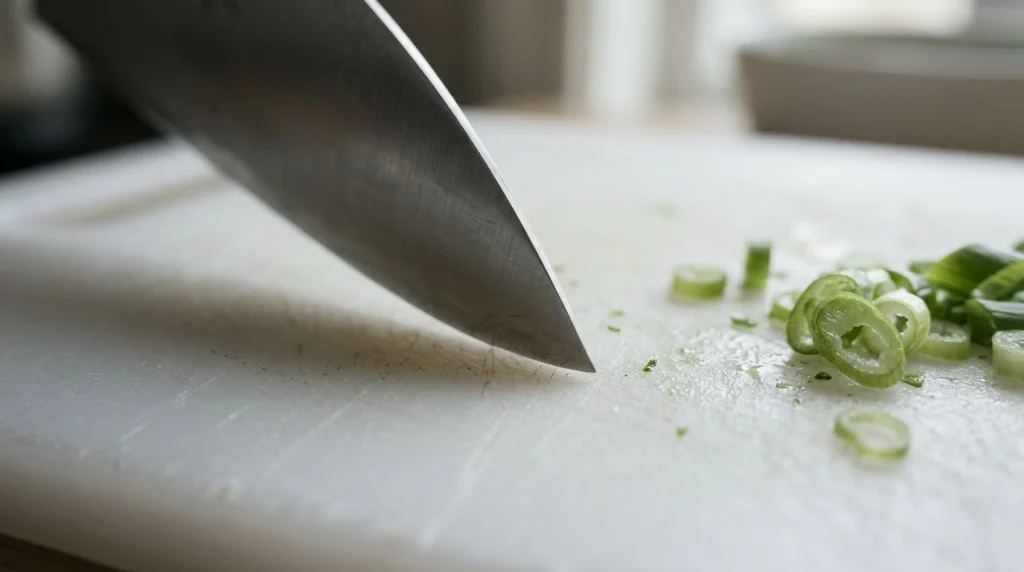
Plastic cutting boards are considerably better for preserving knife edges. Glass is so hard that repeated cutting can accelerate edge wear.
A knife edge is a thin piece of steel, even when the blade feels sturdy. Striking a rigid surface repeatedly places stress on that delicate cutting edge.
Why Glass Cutting Boards Dull Knives
When a sharp knife meets glass, the cutting surface offers almost no cushioning. This can contribute to edge rolling, microscopic damage, or chipping, depending on the blade steel and cutting technique.
The problem becomes more noticeable during repetitive chopping. Each downward stroke creates another hard contact between the edge and the board.
Kitchen knife guidance from Kansas State University also favors suitable wood, plastic, or rubber surfaces over glass and ceramic.
Why Plastic Is More Forgiving
Plastic offers a softer landing for the blade. A sharp knife can make a shallow mark without taking the same direct impact it would on glass.
Consider chopping carrots with an eight-inch chef’s knife. A stable plastic board supports the repetitive movements, while glass creates harder blade contact and can feel less controlled.
- For chef’s knives: Use a stable plastic or suitable wooden board.
- For Japanese knives: Avoid glass, especially with thin or delicate edges.
- For frequent chopping: Choose a forgiving surface with enough room for your cutting technique.
- For expensive knives: Preserve the cutting edge by avoiding glass, stone, and ceramic boards.
Which Cutting Board Is More Hygienic: Glass or Plastic?
Both glass and plastic can be hygienic when cleaned correctly. Neither material automatically prevents foodborne illness.
Glass has an advantage in surface smoothness because normal knife use produces fewer grooves. Plastic, however, remains easy to wash and sanitize until excessive wear makes cleaning difficult.
Does Glass Harbor Bacteria?
Intact glass is nonporous and does not absorb food juices like some porous materials. Its smooth surface also makes visible residue easier to remove.
That doesn’t mean glass stays sanitary without washing. Raw meat juices and contaminated utensils can introduce harmful microorganisms onto any surface.
Can Bacteria Grow in Plastic Cutting Board Scratches?
Yes, scratches and deep grooves can trap food residue and moisture. The risk increases when cuts become difficult to scrub thoroughly.
The USDA’s cutting board guidance recommends replacing excessively worn boards with hard-to-clean grooves.
That guidance matters more than the board’s original color or price. A cheap, clean board in good condition can be safer than an expensive, badly worn one.
How to Prevent Cross-Contamination
 Save
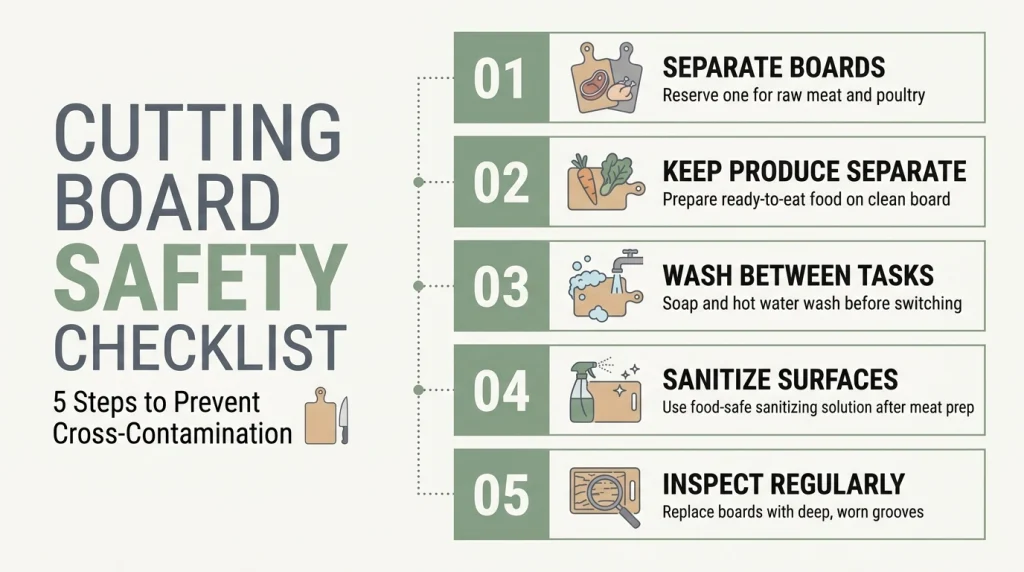
Cross-contamination happens when harmful microorganisms move from one food or surface to another. Raw poultry juices reaching ready-to-eat vegetables are a common example.
The Academy of Nutrition and Dietetics recommends separate cutting boards for raw animal products and ready-to-eat foods.
- Use separate boards: Reserve one for raw meat, poultry, and seafood.
- Keep produce separate: Prepare salad vegetables, fruit, and bread on a clean second board.
- Wash between tasks: Clean boards and utensils before changing food categories.
- Sanitize when needed: Follow food-safe sanitizer directions after raw animal-product preparation.
- Inspect regularly: Replace damaged or excessively grooved boards.
Are Glass Cutting Boards Safer Than Plastic Cutting Boards?
Not necessarily. Although glass resists staining and scratching, plastic generally offers better control during everyday knife work.
Kitchen safety includes the cutting surface, the knife, and the board’s stability. All three affect how confidently you can prepare food.
Slipping and Sliding Risks
Smooth glass can shift on a countertop when it lacks effective non-slip feet. Moisture underneath can make stability harder to maintain.
Plastic boards can slide too, especially thin models without grips. A stable board should stay securely in place during cutting.
- Choose boards with effective non-slip feet or edges.
- Place the board on a clean, level countertop.
- Keep the work surface free from pooled water.
- Use a clean, slightly damp towel underneath only when appropriate for the board and countertop.
- Stop cutting if the board moves unexpectedly.
Breakage and Impact Damage
Tempered glass is stronger than ordinary glass, but it is not unbreakable. A severe impact or damaged edge can cause breakage.
Plastic is less likely to shatter when accidentally dropped. It can still warp, crack, or deteriorate, particularly when exposed to unsuitable temperatures.
Which Board Is Easier to Clean and Maintain?
Glass and plastic are both relatively low-maintenance materials. The easiest option depends on whether the specific board is dishwasher-safe and how worn its surface becomes.
How to Clean a Glass Cutting Board
Glass usually releases grease and food residue without extensive scrubbing. Always check the manufacturer’s instructions before using a dishwasher.
- Remove visible food scraps.
- Wash with warm or hot water and dish soap.
- Clean the edges, corners, and any attached feet.
- Rinse thoroughly with clean water.
- Sanitize when appropriate for the food prepared.
- Allow the board to dry completely before storage.
How to Clean a Plastic Cutting Board
Plastic needs particular attention around knife marks. Scrub those areas rather than simply wiping the surface with a damp cloth.
- Remove food particles immediately after use.
- Scrub with dish soap and warm or hot water.
- Pay special attention to visible knife grooves.
- Rinse thoroughly.
- Use a dishwasher only if the manufacturer permits it.
- Dry completely and inspect the cutting surface.
How Should You Sanitize a Cutting Board?
For suitable boards, USDA guidance describes a sanitizing solution made with one tablespoon of unscented liquid chlorine bleach per gallon of water. Follow current product-label directions and use only bleach appropriate for this purpose.
After washing, apply the solution, allow several minutes of contact, rinse with clean water, and dry. Never mix bleach with vinegar, ammonia, or other cleaning chemicals.
The American Cleaning Institute also explains why regular washing and proper sanitizing matter for food-contact surfaces.
How Long Do Glass and Plastic Cutting Boards Last?
Glass can retain a smooth appearance for years if it avoids chips and breakage. Plastic develops cutting marks and requires replacement when those marks become too difficult to clean.
There is no universal replacement schedule. Board quality, cutting frequency, cleaning habits, and damage matter more than a fixed number of months.
Signs You Should Replace a Glass Board
- Visible chips along the cutting surface or edges.
- Cracks or impact damage.
- Loose or damaged feet that cannot be secured safely.
- Any breakage that could contaminate nearby food.
Signs You Should Replace a Plastic Board
- Deep knife grooves that trap residue.
- Persistent rough or damaged surface areas.
- Cracking, splitting, or serious warping.
- Food residue that remains difficult to remove after thorough washing.
- A surface that no longer sits securely during cutting.
I would prioritize replacing a board that is difficult to clean rather than one with harmless cosmetic discoloration. Functional condition matters more than appearance alone.
Are Plastic Cutting Boards Safe From Microplastics?
Plastic cutting boards can release small plastic particles as knives wear their surfaces. This is an additional consideration beyond traditional cleaning and sanitation.
Research has examined the release of microplastic particles during chopping. However, measuring particle release does not establish that ordinary cutting-board use causes a specific disease.
What Can You Do to Reduce Plastic Surface Wear?
Choose a quality, food-contact-rated board and avoid unnecessary scraping with sharp knife edges. Replace boards when they become heavily scarred.
- Use a properly sharpened knife with controlled cutting pressure.
- Avoid chopping directly against deeply damaged surfaces.
- Do not use abrasive tools that unnecessarily roughen the board.
- Replace heavily worn boards instead of repeatedly sanding or shaving food-contact plastic.
- Consider a suitable wooden board if reducing plastic contact is a priority.
Glass avoids plastic cutting-surface wear, but it creates a serious disadvantage for knife edges. It isn’t an ideal solution for someone who chops food frequently.
Glass vs. Plastic Cutting Boards for Different Kitchen Tasks
 Save
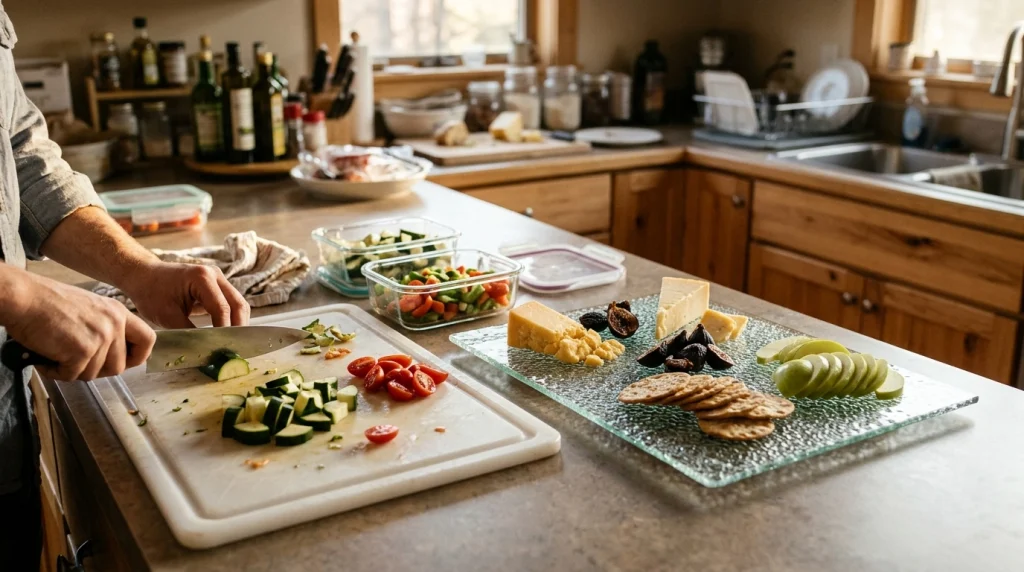
The right board also depends on what you prepare. A surface that works for arranging cheese may be uncomfortable for cutting several pounds of vegetables.
For Raw Meat and Poultry
A dedicated dishwasher-safe plastic board is a practical choice. It can provide a stable cutting surface and straightforward cleanup after handling raw animal products.
Choose a board with enough space and a juice groove when necessary. Clean and sanitize it before using it again.
For Vegetables and Fruit
Plastic is preferable for repetitive slicing and dicing. Its more forgiving surface helps protect the knife edge.
Use a separate clean board for produce that will be eaten without cooking. This reduces the chance of contamination from raw meat preparation.
For Bread and Sandwiches
Plastic works well for slicing bread and preparing sandwiches. A wooden board is another practical option when maintained correctly.
Glass is unnecessary for most bread-cutting tasks. Its smooth appearance offers little benefit while a knife contacts the surface.
For Cheese and Serving Food
Glass becomes more useful when the primary task is presentation. It can display cheese, fruit, crackers, or appetizers attractively.
For knife-intensive slicing, prepare ingredients on a suitable cutting board first. Then transfer the food to glass for serving.
| Kitchen Task | Preferred Material | Main Reason |
|---|---|---|
| Chopping vegetables | Plastic | More knife-friendly |
| Preparing raw chicken | Dedicated plastic | Easy to wash and sanitize |
| Slicing bread | Plastic or wood | Better cutting surface |
| Serving cheese | Glass | Attractive presentation |
| Daily meal preparation | Plastic | Practical balance of care and performance |
What Are the Environmental Differences Between Glass and Plastic?
Environmental impact depends on materials, manufacturing, transportation, replacement frequency, and disposal options. Neither material is automatically the greener choice in every situation.
Glass is made from mineral-based ingredients and can be recyclable in some forms. However, tempered glass cutting boards may not be accepted in ordinary bottle-and-jar recycling programs.
Plastic boards use polymer materials that may be difficult to recycle through local household programs. Their lightweight construction can reduce transportation weight, but frequent replacement generates additional waste.
- Glass: Long-lasting surface, but relatively heavy and vulnerable to breakage.
- Plastic: Lightweight and useful, but susceptible to knife damage and particle shedding.
- Replacement: A durable, properly maintained board can reduce unnecessary purchases.
- Disposal: Check local recycling rules instead of assuming either material is accepted.
For someone concerned about plastic waste, a well-maintained wooden cutting board is worth considering. It avoids the knife-edge drawbacks of glass while providing a practical preparation surface.
What Should You Look for When Buying a Cutting Board?
The most useful cutting board is one you can keep clean, stable, and comfortable during food preparation. Material matters, but individual design features also make a difference.
Five Features Worth Checking
- Food-contact suitability: Choose products intended for direct food preparation.
- Non-slip design: Rubberized feet or edges improve stability.
- Usable cutting area: A larger board gives ingredients and knives more room.
- Cleaning instructions: Verify dishwasher compatibility before purchasing.
- Construction quality: Avoid rough edges, unstable feet, or visibly damaged surfaces.
For a general-purpose board, a size near 12 by 16 inches gives many home cooks useful preparation space. Smaller boards work better for quick fruit or sandwich tasks.
Recommended Cutting Boards for Everyday Kitchens
If you’re ready to choose a board, I would prioritize a stable plastic design over glass for regular chopping. These models offer different size and storage advantages.
Affiliate disclosure: As an Amazon Associate, qualifying purchases made through eligible links may earn a commission at no additional cost to you. The recommendations below are based on stated product features, not claimed hands-on testing.
🏆 Best for Everyday Preparation
OXO Good Grips Utility Cutting Board
★★★★☆
This double-sided plastic board includes non-slip feet, a grooved side, and easy-pour corners. Its dishwasher-safe construction makes it my preferred style of board for everyday vegetable and meat preparation.
💰 Best for Small Kitchens
OXO Good Grips Prep Cutting Board
★★★★☆
Measuring approximately 7.23 by 10.75 inches, this compact board is designed for lighter preparation tasks. I would choose this size for fruit, small vegetables, and quick snacks rather than large meals.
🍽️ Best for Large Cutting Tasks
OXO Good Grips Carving and Cutting Board
★★★★☆
This polypropylene board measures approximately 21.1 by 14.5 inches and includes a liquid-catching groove. Its generous surface makes it my preferred option here for carving, larger ingredients, and spacious meal prep.
Product ratings above reflect editorial suitability, not verified customer review averages. Product specifications and availability should be confirmed with the retailer.
Frequently Asked Questions
1. Is a glass cutting board better than a plastic cutting board?
Plastic is generally better for everyday cutting because it is more forgiving on knives and easier to handle. Glass offers stain resistance and a smooth surface, but it can quickly dull knife edges. For most home kitchens, plastic is the more practical cutting material.
2. Do glass cutting boards dull knives?
Yes. Glass is much harder than the cutting surfaces typically recommended for kitchen knives. Repeated chopping against glass can accelerate edge wear and potentially damage delicate blades. Plastic, wood, or suitable rubber surfaces are better choices when preserving sharpness matters.
3. Are plastic cutting boards sanitary?
Plastic cutting boards can be sanitary when properly washed, sanitized when necessary, and replaced after excessive wear. Deep knife grooves can collect residue and become difficult to clean. Using separate boards for raw animal products and ready-to-eat foods also helps prevent cross-contamination.
4. Can you put glass and plastic cutting boards in the dishwasher?
Many glass and plastic cutting boards are dishwasher-safe, but compatibility depends on the manufacturer’s instructions. Some plastic boards may warp under unsuitable heat, while glass boards may contain attached components requiring special care. Always check the product label before machine washing.
5. Which cutting board is best for raw meat?
A dedicated, dishwasher-safe plastic board is a practical option for preparing raw meat and poultry. Choose a stable design with enough cutting space, then wash and sanitize it after use. Keep a separate clean board for produce and other ready-to-eat foods.
Final Verdict: Should You Choose Glass or Plastic?
For most kitchens, plastic is the better everyday cutting board. It offers a more knife-friendly surface, convenient cleaning, and practical handling for regular meal preparation.
Glass still has a place in the kitchen, especially for food presentation. I would simply avoid making it my main chopping surface.
- Choose plastic for daily chopping, slicing, and meal preparation.
- Choose glass for attractive serving arrangements and limited knife work.
- Choose a suitable wooden board if you want another knife-friendly option without a plastic cutting surface.
- Maintain every board through proper cleaning, drying, and timely replacement.
My preferred setup is two clearly separated cutting boards: one for raw meat and another for ready-to-eat food. That simple approach supports safer preparation and makes everyday cooking easier.
Before buying, check the board’s dimensions, non-slip features, cleaning instructions, and intended use. A dependable cutting surface should protect your ingredients, your knives, and your confidence in the kitchen.

