Are Glass Cutting Boards Good and Safe? Pros, Cons, and Better Alternatives
Quick Answer
Are glass cutting boards good and safe? Food-grade glass cutting boards can be hygienic, but they’re not ideal for everyday chopping. Their nonporous surface is easy to clean, yet hard glass dulls knife edges and can become slippery. I recommend using glass for serving and choosing wood or plastic for regular food preparation, consistent with University of Maine cutting board guidance.
Key Advantages and Disadvantages
- Easy cleaning: Smooth glass resists absorbing food liquids and odors.
- Knife damage: The rigid surface can dull sharp blades quickly.
- Breakage risk: Chipped or cracked glass can create dangerous fragments.
- Slipping hazard: Smooth boards without secure feet may move during cutting.
- Better alternatives: Wood, plastic, and suitable composite boards provide more practical cutting surfaces.
My Recommendation
- Use glass: For attractive serving, food presentation, or other tasks permitted by its manufacturer.
- Avoid glass: For frequent vegetable chopping, meat preparation, and heavy knife work.
Glass cutting boards look elegant, clean easily, and seem like an excellent kitchen upgrade. But appearance and hygiene aren’t the only things worth considering.
I’m Michael, and my priority when choosing a cutting board is balancing food safety with knife performance. Here’s how glass compares with other materials and when it makes sense to use one.
What Is a Glass Cutting Board?
A glass cutting board is a flat food-preparation surface made from glass, often tempered for improved strength. Unlike wood, glass has a nonporous surface that doesn’t readily absorb moisture.
Many glass boards feature decorative prints, smooth surfaces, rounded corners, and small rubber feet. Some are marketed for chopping, while others work better as serving surfaces.
What Are Glass Cutting Boards Made Of?
Most modern glass cutting boards use tempered glass, although construction varies by manufacturer. Tempering strengthens glass through controlled heating and cooling.
Tempered glass can still chip, crack, or break under certain impacts. Its increased strength doesn’t make it unbreakable.
- Tempered glass: Stronger than ordinary glass but still vulnerable to damage.
- Textured glass: Offers a patterned surface that may influence cleaning and knife contact.
- Decorative glass: Features printed designs and may be intended primarily for presentation.
- Glass boards with feet: Include rubber or silicone supports to help reduce movement.
Before buying a decorative board, confirm that its food-contact surface is suitable for food preparation. Don’t assume every decorative glass panel is designed for cutting.
Are Glass Cutting Boards Safe for Food Preparation?
Yes, intact food-grade glass cutting boards can be safe from a food-contact and cleaning perspective. However, their hard surface creates practical concerns for knives and cutting control.
The USDA identifies tempered glass among the nonporous cutting board materials that are relatively easy to clean. That advantage matters, but cleanliness alone doesn’t determine overall safety.
Are Glass Cutting Boards Hygienic?
Glass resists absorbing meat juices, vegetable liquids, and food odors. Its smooth surface also makes visible food residue easier to remove.
However, nonporous doesn’t mean bacteria-proof. Harmful microorganisms can remain on dirty glass until the surface is properly cleaned and sanitized.
The FDA’s food preparation guidance recommends separating raw meat, poultry, and seafood from produce. This rule applies regardless of cutting board material.
Can Glass Cutting Boards Break or Chip?
Yes, glass cutting boards can break or develop damaged edges. Dropping a board, striking it against a hard object, or using excessive force can cause damage.
A small chip can create sharp edges or introduce fragments into food. I would replace a damaged glass board immediately rather than attempt to repair its cutting surface.
Are Glass Cutting Boards Slippery?
Some glass boards become slippery, particularly when moisture collects underneath them. A moving board makes controlled knife movements more difficult.
Rubber feet can improve stability, but their condition matters. Check that the board sits firmly on a clean, level countertop before using it.
- Keep the counter underneath the board dry.
- Inspect rubber feet for damage or missing pieces.
- Avoid using boards that rock or slide.
- Never attempt heavy chopping on unstable glass.
Do Glass Cutting Boards Dull Knives?
 Save
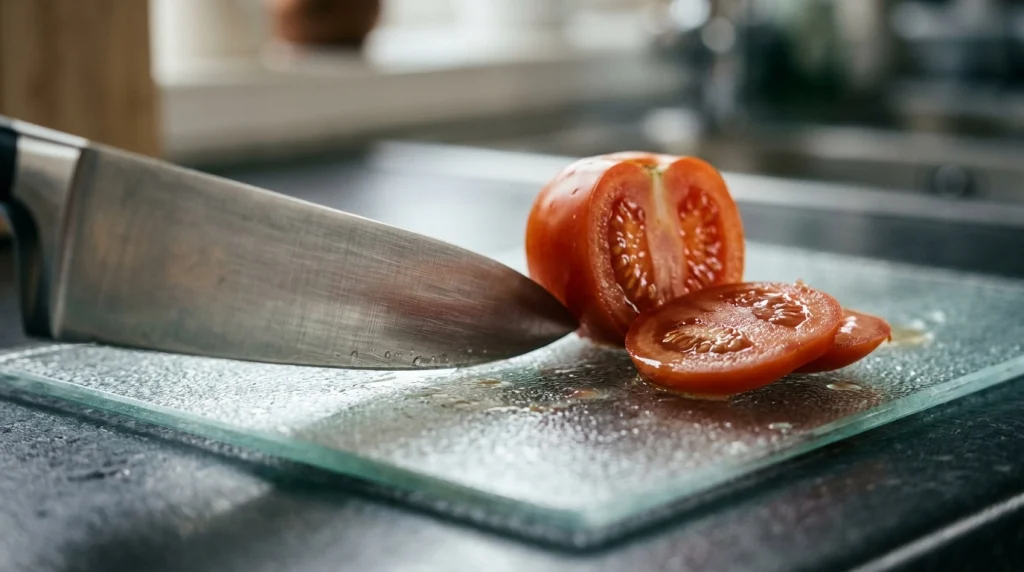
Yes, glass cutting boards can dull knives much faster than wood or suitable plastic. The problem comes from repeated contact between the knife’s cutting edge and rigid glass.
A knife blade needs a surface that offers some forgiveness during cutting. Glass doesn’t provide the same cushioning as wood or many plastic boards.
Why Does Glass Damage Knife Edges?
A sharp knife has an extremely thin cutting edge. Repeated impact against glass can deform or wear that delicate edge.
Picture slicing several tomatoes with a sharp chef’s knife. Each downward stroke brings the blade against the board, gradually increasing unnecessary edge wear.
This isn’t a controlled durability test, but it illustrates why board hardness matters. Even an expensive knife can lose performance when repeatedly used on an unsuitable surface.
Can Glass Damage Expensive Chef’s Knives?
Yes. High-quality chef’s knives aren’t immune to damage from glass surfaces.
Harder, thinner knife edges may be especially vulnerable to chipping under unfavorable cutting conditions. Using a softer board helps protect your investment.
Michigan State University Extension recommends wood or plastic over glass for preserving knife sharpness. Its guidance explains that hard glass and stone can dull knives quickly.
What Happens When a Knife Becomes Dull?
A dull knife requires more force to slice food cleanly. That extra pressure can reduce control and make certain cutting tasks more difficult.
- Reduced cutting performance: Tomatoes and other delicate foods may crush instead of slice.
- More maintenance: Blades may need sharpening more often.
- Increased effort: Users may apply extra pressure to complete simple cuts.
- Greater slipping potential: A poorly controlled dull blade may slide unexpectedly.
For everyday knife work, I would choose a stable wooden or plastic board. These materials offer a more sensible balance of cutting performance and maintenance.
What Are the Pros and Cons of Glass Cutting Boards?
Glass boards offer meaningful cleaning and appearance benefits. Their disadvantages become more noticeable when they’re used for daily chopping.
Advantages of Glass Cutting Boards
- Nonporous surface: Glass doesn’t readily absorb food liquids.
- Easy washing: Smooth surfaces allow food residue to be removed efficiently.
- Odor resistance: Garlic and onion smells are less likely to linger after proper cleaning.
- Stain resistance: Ordinary food pigments generally won’t penetrate intact glass.
- Attractive appearance: Glass can complement modern kitchen designs.
- Serving versatility: Food-safe boards can display cheese, crackers, and prepared snacks.
- Low maintenance: Glass doesn’t need routine oiling or wood conditioning.
Disadvantages of Glass Cutting Boards
- Rapid knife dulling: Glass is too rigid for frequent blade contact.
- Potential breakage: Dropping or striking the board can cause damage.
- Slippery surfaces: Some designs move during food preparation.
- Loud cutting noise: Knife contact produces sharp tapping sounds.
- Limited chopping suitability: Heavy, repetitive knife work is best avoided.
- Chipping concerns: Damaged glass creates potential physical contamination hazards.
The main trade-off is straightforward. Glass simplifies cleaning but compromises knife friendliness.
Glass vs. Wood vs. Plastic vs. Bamboo Cutting Boards
 Save
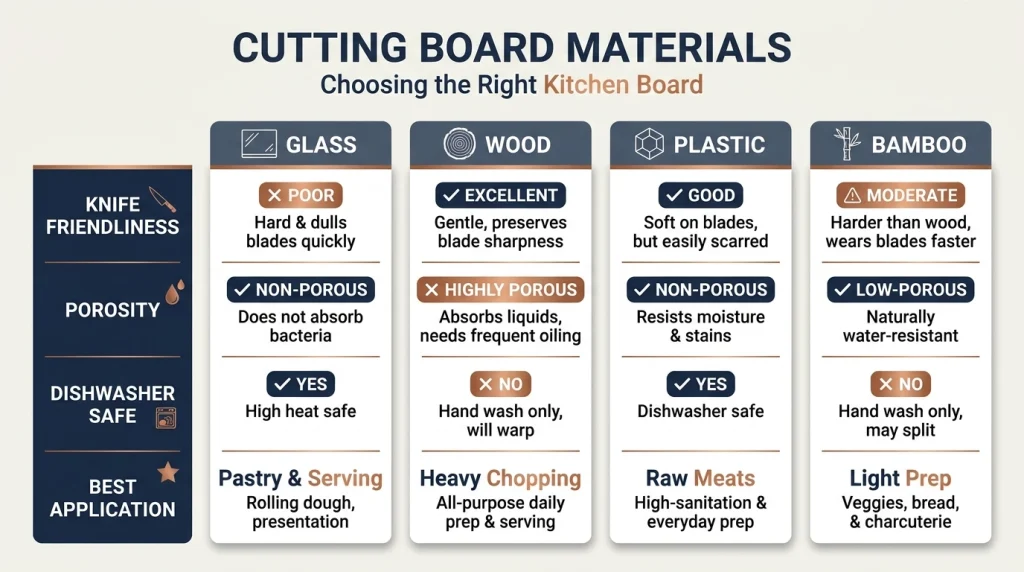
Wood, plastic, bamboo, and glass all have different strengths. The best choice depends on the foods you prepare and how you maintain your equipment.
| Feature | Glass | Wood | Plastic | Bamboo |
|---|---|---|---|---|
| Knife friendliness | Poor | Usually excellent | Generally good | Moderate |
| Porosity | Nonporous | Porous | Nonporous material | Low absorption |
| Dishwasher suitability | Model dependent | Usually hand-wash | Often dishwasher-safe | Usually hand-wash |
| Main drawback | Dulls knives | Needs careful drying | Develops knife grooves | Can be hard on edges |
| Best application | Serving | Daily chopping | Easy-clean preparation | General light prep |
These comparisons describe typical material behavior, not guaranteed performance for every model. Construction, care, and board condition can change the results.
Are Glass Cutting Boards Better Than Wood?
Glass is easier to wash without worrying about moisture absorption. Wood is generally better for chopping because it is kinder to knife edges.
For regular cooking, I prefer a well-maintained wooden board. Glass makes more sense when decorative presentation matters more than cutting performance.
Are Glass Cutting Boards Better Than Plastic?
Glass resists knife grooves but wears knife edges faster. Plastic develops cutting marks over time, yet provides a more practical surface for everyday preparation.
Many plastic boards also tolerate dishwashers, depending on manufacturer instructions. Replace them when deep grooves become difficult to clean.
Are Glass Cutting Boards Better Than Bamboo?
Bamboo generally provides a more practical cutting surface than glass, although it can be harder on knives than some traditional hardwoods. Bamboo boards also require proper drying to reduce cracking or warping.
Glass wins for nonporous cleaning and stain resistance. Bamboo is usually the more sensible choice for actual chopping.
Are Glass Cutting Boards Good for Raw Meat?
Glass can be cleaned after raw meat preparation, but it isn’t my preferred surface for cutting meat. A stable, knife-friendly board offers better control during trimming and slicing.
Raw meat preparation also requires careful separation and sanitation. Board material doesn’t eliminate the risk of cross-contamination.
Why Does Cross-Contamination Matter?
Cross-contamination occurs when harmful microorganisms transfer between foods, surfaces, or utensils. Raw poultry juices contacting ready-to-eat vegetables are a common example.
The USDA recommends maintaining clean boards and considering separate surfaces for raw animal products and fresh produce. Follow the USDA cutting board cleaning recommendations when sanitizing food-contact surfaces.
What Board Should You Use for Raw Meat?
A dishwasher-safe plastic board is a convenient option for raw meat preparation. Choose one that stays stable and offers enough room for controlled cutting.
- Keep a dedicated board for raw poultry, meat, and seafood when possible.
- Clean the board immediately after food preparation.
- Sanitize according to food safety guidance.
- Replace boards with deep, hard-to-clean grooves.
- Wash knives and countertops before preparing ready-to-eat foods.
Can You Put Glass Cutting Boards in the Dishwasher?
Some glass cutting boards are dishwasher-safe, but not every model is. Always check the manufacturer’s care instructions before placing one in the dishwasher.
Decorative coatings, adhesive feet, and other components may have separate cleaning limitations. Avoid assuming tempered glass automatically means dishwasher compatibility.
How Do You Clean a Glass Cutting Board Properly?
Cleaning removes visible food residue, while sanitizing reduces harmful microorganisms. Both matter after handling raw animal products.
- Remove food residue: Clear crumbs, scraps, and liquids from the board.
- Wash thoroughly: Use warm or hot soapy water and a nonabrasive sponge.
- Rinse: Remove detergent and remaining debris with clean water.
- Sanitize when necessary: Follow a suitable food-contact sanitizer’s instructions.
- Dry completely: Air-dry the board or use clean paper towels.
- Inspect: Check for chips, cracks, loose feet, or damaged finishes.
The American Cleaning Institute recommends washing cutting boards after each use and sanitizing after raw meat, fish, or poultry. Its cutting board cleaning advice explains these important steps.
Can You Use Bleach on Glass Cutting Boards?
For compatible food-contact surfaces, the USDA describes sanitizing with one tablespoon of unscented liquid chlorine bleach per gallon of water. Follow applicable product label instructions and rinse as directed.
Never mix bleach with vinegar, ammonia, or other cleaners. Some decorative finishes and rubber components may not tolerate certain sanitizers.
When Should You Avoid Using a Glass Cutting Board?
I would avoid glass whenever a task requires repeated knife contact, considerable pressure, or fast chopping. These situations make the material’s disadvantages more significant.
- Heavy chopping: Repetitive knife strikes accelerate edge wear.
- Fine vegetable dicing: Precision work benefits from a forgiving, stable surface.
- Meat trimming: Slippery or shifting surfaces reduce control.
- Bone-related cutting: Forceful impacts increase breakage concerns.
- Fragile knife use: Thin or hard blade edges deserve extra protection.
- Damaged boards: Cracked or chipped glass should never contact food.
What Are Glass Cutting Boards Actually Good For?
 Save
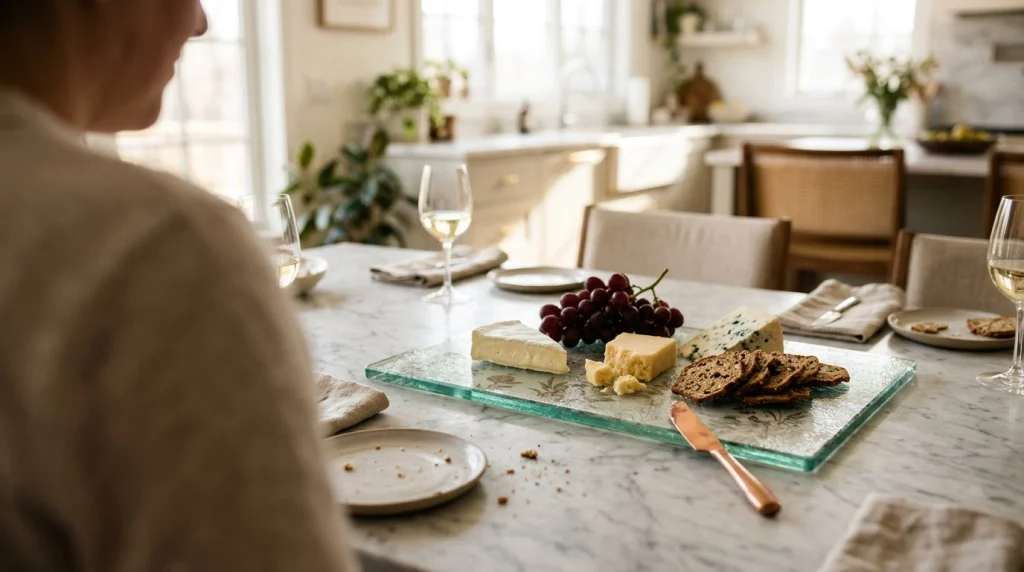
Glass boards are most useful when presentation, wipe-clean convenience, and stain resistance matter. They can serve a valuable kitchen role without becoming your primary chopping surface.
Serving Cheese, Fruit, and Snacks
A food-safe glass board can make an attractive serving surface for cheese, crackers, and prepared fruit. Arrange the food with serving utensils rather than repeatedly chopping directly on the glass.
Presenting Appetizers
Decorative glass boards can complement dinner parties and appetizer displays. Their smooth surfaces are convenient for wiping away sauces and crumbs afterward.
Occasional Light Food Preparation
If the manufacturer permits cutting, occasional gentle slicing may be possible. However, I would still move regular knife work to a wooden or plastic board.
Glass shouldn’t be treated as a heatproof trivet unless its instructions specifically allow that use. Resistance to moisture doesn’t imply resistance to every temperature change.
How Do You Choose a Safer Cutting Board?
Start by considering the foods you prepare most often. A practical board should protect your knives while offering dependable stability and manageable cleaning.
Look for a Stable Surface
A board should sit securely without rocking or sliding. Non-slip feet or other appropriate stabilization features help improve control.
Choose Enough Cutting Space
Small boards work for quick snacks, but larger surfaces provide more room for vegetables and meal preparation. Avoid overcrowding the cutting area.
Check Cleaning Requirements
Choose a material that matches your maintenance routine. Dishwasher-safe plastic or composite boards may suit busy kitchens, while wood requires more hands-on care.
Consider Knife Protection
The cutting surface affects how frequently knives require sharpening. A well-maintained wood, plastic, or suitable composite board is generally preferable to glass.
Best Alternatives to Glass Cutting Boards
If you’re replacing glass for daily cooking, I’d focus on boards designed for knife work. These two established products represent different practical priorities.
Product assessments below are editorial suitability scores, not verified customer ratings or claims of hands-on product testing.
🏆 Best for everyday preparation
OXO Good Grips Carving & Cutting Board
★★★★☆ 4.7/5
This polypropylene board measures approximately 21.1 by 14.5 inches. It features non-slip feet, double-sided construction, and a grooved side for collecting liquids.
I favor this design for everyday preparation because its stable construction and dishwasher-safe material address several common glass-board drawbacks.
✨ Best lightweight composite
Epicurean Kitchen Series Cutting Board
★★★★☆ 4.6/5
Made from paper composite material, the Kitchen Series comes in multiple sizes and has a quarter-inch profile. It is double-sided, lightweight, and dishwasher-safe.
I like its practical balance of easy cleaning, compact storage, and everyday cutting suitability. It’s a useful alternative if you dislike bulky boards.
Affiliate disclosure: As an Amazon Associate, qualifying purchases may earn a commission at no additional cost to you.
Frequently Asked Questions About Glass Cutting Boards
Are glass cutting boards bad for knives?
Yes, glass cutting boards are generally poor for knife longevity. Their rigid surface can dull sharp edges faster than suitable wood or plastic. Repeated contact may also damage delicate blades, so glass is better reserved for serving rather than frequent chopping.
Can bacteria grow on glass cutting boards?
Bacteria can remain and potentially multiply in food residue left on dirty glass. Although glass is nonporous, it isn’t automatically sanitary. Wash food-contact surfaces after use and sanitize when required, especially after handling raw meat, poultry, or seafood.
Are tempered glass cutting boards safer than regular glass?
Tempered glass generally offers improved resistance to certain impacts compared with ordinary glass. However, it can still break or chip. Tempering also doesn’t solve knife dulling, slipping, or cross-contamination concerns, so the intended use and board condition remain important.
Can you cut vegetables on a glass cutting board?
You can cut vegetables on an intact food-safe glass board if its manufacturer permits it, but it isn’t recommended for regular chopping. Glass is hard on knife edges and may be slippery. Wood or suitable plastic is a better everyday option.
Are glass cutting boards worth buying?
Glass cutting boards may be worth buying for serving food, decorative presentation, and easy cleanup. They’re usually poor value as primary cutting surfaces because they can accelerate knife wear. For daily food preparation, I would invest in a stable wooden, plastic, or suitable composite board instead.
Final Verdict: Should You Use a Glass Cutting Board?
Glass cutting boards are hygienic when cleaned properly, but they’re not the best choice for everyday knife work. Their easy-clean surfaces and decorative appeal don’t outweigh the potential for rapid knife dulling and breakage during demanding cutting tasks.
As of 2026, my recommendation remains simple: use glass for appropriate serving tasks and choose a quality wood, plastic, or composite board for regular cooking.
Before replacing your board, check its stability, cleaning instructions, and condition. A well-chosen cutting surface helps protect both your knives and your food preparation routine.

