Can You Use Cedar Wood for a Cutting Board? Safety, Pros, Cons, and Better Alternatives
Quick Answer
Can you use cedar wood for a cutting board? Technically, you can make one, but cedar is generally a poor choice for everyday food preparation. Many cedar species are soft, aromatic, and easily damaged by knives. A dense, close-grained hardwood is more practical. The Wood Database cutting board guide explains why hardness and wood characteristics matter.
Why Cedar Isn’t Ideal
- Soft surface: Some cedar species dent and develop knife grooves quickly.
- Strong aroma: Aromatic varieties may affect the smell or flavor of delicate foods.
- Surface damage: Deep cuts make a board harder to clean effectively.
- Species differences: Not every wood sold as cedar has identical properties.
- Unknown treatments: Construction lumber may contain finishes or chemicals unsuitable for food contact.
Better Choices
- Hard maple: My preferred all-around choice for a durable wooden board.
- Walnut or cherry: Attractive alternatives for regular kitchen preparation.
- Food-safe plastic: A convenient option for easy cleaning and raw-meat preparation.
Cedar has a beautiful grain, a pleasant natural scent, and excellent uses around the home. Those qualities can make it tempting to turn a spare cedar plank into a cutting board.
But a wood that works beautifully for furniture or outdoor projects isn’t necessarily suitable for repeated knife contact. I would focus on how the material performs during actual kitchen tasks rather than its appearance alone.
This guide explains cedar’s limitations, how different species compare, and which cutting board materials make more sense.
Is Cedar Wood Safe for Cutting Boards?
Cedar isn’t automatically poisonous simply because it is cedar. However, I wouldn’t recommend an ordinary cedar plank as a routine cutting surface without reliable information about its species, treatment, and food-contact suitability.
Food safety involves more than whether a wood contains naturally occurring oils. Surface condition, cleaning, finish compatibility, and possible chemical exposure all matter.
What Exactly Is Cedar Wood?
Cedar is a common name applied to several different kinds of trees and their timber. Western red cedar and eastern red cedar, for example, are not the same species.
Western red cedar is Thuja plicata, while eastern red cedar is Juniperus virginiana. Their hardness, scent, and physical characteristics differ.
- Western red cedar: Lightweight, relatively soft, and commonly used in outdoor construction.
- Eastern red cedar: Often called aromatic red cedar and known for its distinctive fragrance.
- Other cedar varieties: Can differ considerably in density, texture, and extractive compounds.
This distinction matters because a general claim about cedar may not apply equally to every species.
Does Cedar Contain Harmful Natural Compounds?
Some cedar species contain aromatic extractives that create their characteristic smell. These compounds can also cause irritation or allergic reactions in susceptible people.
That doesn’t establish that every finished cedar object is toxic to touch food. It does mean cedar deserves more careful evaluation than a familiar cutting-board hardwood.
The Wood Database’s discussion of wood allergies and toxicity explains why species-specific reactions and exposure conditions are important.
I would particularly avoid using fragrant cedar for repeated preparation of wet, acidic, or delicate foods when a well-established alternative is available.
Why Is Cedar Wood Not Recommended for Cutting Boards?
 Save
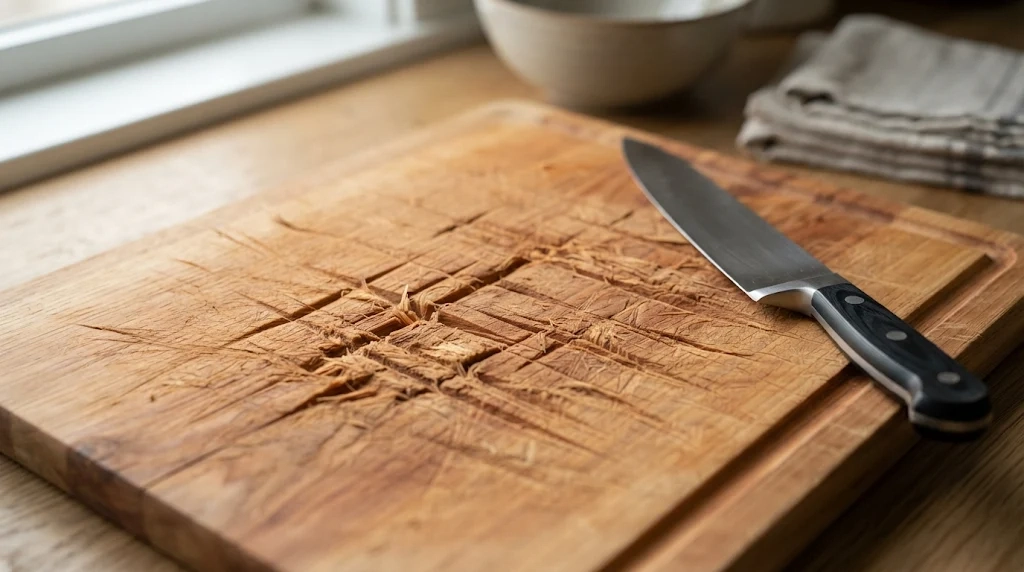
The main concerns are softness, knife damage, odor transfer, and uncertainty about the wood’s history. These problems can make cedar less suitable than common hardwoods.
1. Cedar Can Be Too Soft
A good cutting board needs enough hardness to resist excessive damage while remaining practical for knives. Western red cedar is much softer than typical hardwood cutting-board materials.
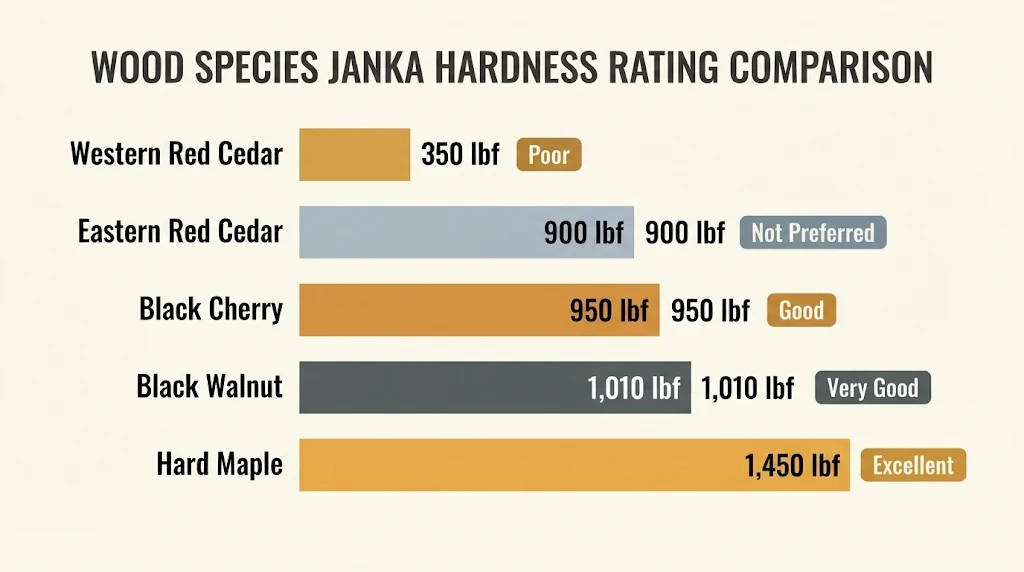
According to the Wood Database, western red cedar has a Janka hardness of approximately 350 pounds-force. Eastern red cedar measures around 900 pounds-force.
The Janka test measures resistance to indentation. Although it doesn’t directly measure knife-cut resistance, it helps explain why softer species can wear faster.
2. Knife Grooves Make Cleaning Harder
Repeated chopping can create cuts and depressions in softer wood. Once grooves become deep, removing food particles and cleaning the surface becomes more difficult.
The USDA cutting board guidance recommends replacing boards that develop excessive wear or hard-to-clean grooves.
Cedar’s softness can accelerate this maintenance problem, especially with heavy chopping.
3. Its Aroma May Affect Food
Aromatic cedar contains naturally occurring compounds responsible for its recognizable scent. Those compounds are part of its appeal in storage chests and woodworking.
In the kitchen, however, a strong woody aroma isn’t always desirable. Mild foods such as sliced apples, fresh cheese, or bread may be particularly sensitive to unwanted odors.
Not all cedar species smell equally strong. Still, a relatively neutral hardwood offers a more predictable food-preparation experience.
4. Unknown Wood Treatments Add Risk
A leftover cedar board from a deck, fence, or workshop isn’t necessarily suitable for direct food contact. It may have encountered preservatives, stains, adhesives, or other finishes.
Never assume a material is food-safe simply because it looks clean or has been sanded.
- Avoid pressure-treated or chemically preserved wood.
- Reject painted, stained, or unidentified salvaged boards.
- Check whether any glue or finish is suitable for the intended food-contact application.
- Choose clean stock from a supplier who can identify the wood species.
Cedar vs. Maple vs. Walnut vs. Cherry: Which Is Better?
 Save
Hard maple is the strongest all-around recommendation for most wooden cutting boards. Walnut and cherry also offer attractive, practical alternatives.
The following comparison focuses on common material characteristics rather than a laboratory test of finished cutting boards.
| Wood | Approx. Janka Hardness | Cutting Board Suitability |
|---|---|---|
| Western red cedar | 350 lbf | Poor for regular chopping |
| Eastern red cedar | 900 lbf | Not preferred; aromatic |
| Hard maple | 1,450 lbf | Excellent everyday option |
| Black walnut | 1,010 lbf | Very good hardwood option |
| Black cherry | 950 lbf | Good for everyday preparation |
Note: Hardness figures are approximate species values, not measurements of individual finished boards. Construction, grain orientation, and care also affect performance.
Why Hard Maple Is My First Choice
If I were selecting one wooden cutting board for a typical home kitchen, I would start with hard maple. Its density, relatively fine texture, and established use in butcher blocks make it a practical choice.
Maple also has a relatively neutral appearance and aroma. That makes it useful for preparing everything from onions to fresh fruit.
When Walnut or Cherry Makes Sense
Walnut is attractive when you want a darker board with a distinctive natural grain. It offers a good balance between appearance and routine cutting performance.
Cherry is another appealing choice, especially for cooks who prefer a warmer reddish tone. Both need proper cleaning and maintenance.
Can You Use Cedar for a Charcuterie or Serving Board?
A cedar serving board presents a different situation from a cedar chopping board. Serving doesn’t involve repeated knife impacts, so surface wear may be less significant.
However, direct food contact still requires a suitable, clean, untreated material. A decorative cedar plank shouldn’t automatically be considered safe for cheese, fruit, or other ready-to-eat foods.
When Might a Cedar Serving Piece Be Appropriate?
A manufacturer may specifically design and identify a particular cedar product for food contact. In that case, follow its intended use and care instructions.
Otherwise, I would keep ordinary cedar pieces decorative rather than allowing food to touch them directly.
- Use a verified food-contact serving product when possible.
- Keep decorative wood separate from ready-to-eat food.
- Do not use cedar boards with loose splinters, cracks, or unknown coatings.
- Avoid cutting directly on decorative cedar serving pieces.
What About Cedar Planks for Grilling?
Cedar grilling planks are specifically intended for a different cooking application. They help create aromatic smoke and may impart flavor during cooking.
A food-grade grilling plank is not interchangeable with treated construction lumber. Its suitability for grilling also doesn’t make it a good everyday cutting board.
Use only products sold for the specific cooking purpose and follow the manufacturer’s heating and handling directions.
What Is the Best Wood for a Homemade Cutting Board?
For a DIY cutting board, start with clean, untreated hardwood of a known species. Hard maple, walnut, and cherry are familiar choices.
A successful board requires more than selecting attractive lumber. Its construction and finish must also be suitable for food preparation.
What Should You Look For?
- Known species: Choose wood with predictable properties and an established food-contact use.
- Close grain: A smooth, dense cutting surface is generally easier to maintain.
- Sound lumber: Avoid loose knots, open cracks, or splintering sections.
- Suitable adhesives: Use glue rated for the intended food-contact and moisture exposure.
- Appropriate finish: Choose products explicitly intended for cutting boards.
- Stable construction: Follow proven woodworking methods to reduce splitting and warping.
Should You Choose Edge Grain or End Grain?
Edge-grain boards expose the lengthwise wood fibers on their main cutting surface. They are widely available and can offer a useful balance of weight, price, and durability.
End-grain boards expose the ends of the wood fibers. Their construction often suits frequent chopping, although they can be heavier and more expensive.
Both styles work well when made correctly from suitable hardwood. Neither construction method makes an unsuitable or contaminated wood automatically safe.
How Do You Clean and Maintain a Wooden Cutting Board?
 Save
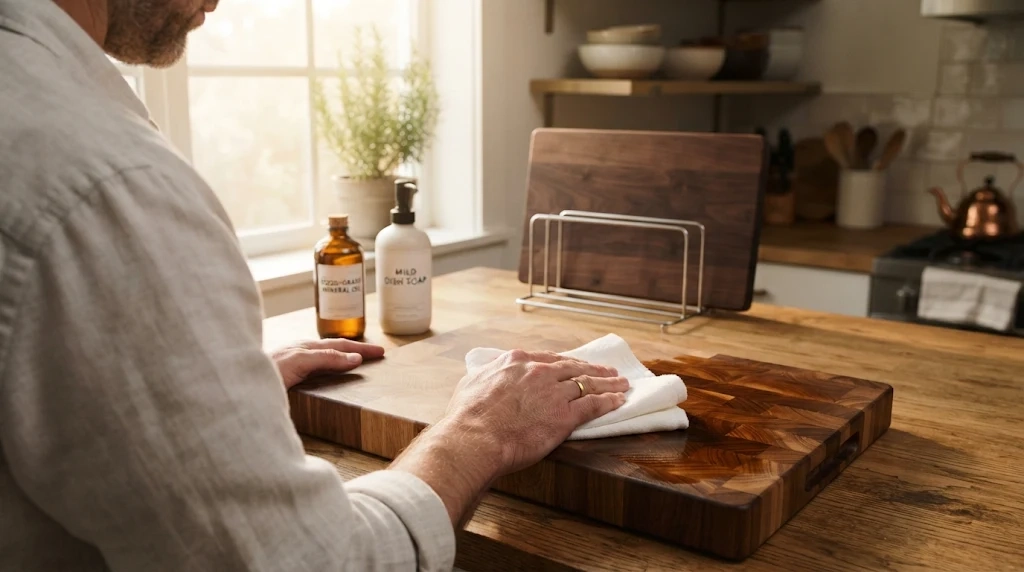
Proper cleaning matters regardless of the wood species. Even a durable maple board can become unhygienic if food debris remains in cracks or deep knife marks.
The University of Maine Cooperative Extension provides practical guidance on board materials, cleaning, conditioning, and safe storage.
Daily Cleaning Steps
- Remove food debris: Scrape away leftover particles after preparing food.
- Wash thoroughly: Use warm or hot water and dish soap.
- Rinse completely: Remove soap and loosened residue with clean water.
- Dry promptly: Wipe with a clean towel and allow airflow around the board.
- Store upright: Make sure the board is completely dry before putting it away.
Most wooden cutting boards should not be soaked in water. I would also avoid dishwashing a wood board unless its manufacturer specifically approves that cleaning method.
How Should You Sanitize a Cutting Board?
Sanitizing becomes especially important after contact with raw meat, poultry, or seafood. Always clean the board first, then use a food-contact-safe sanitizing method.
The USDA describes a sanitizing solution made with one tablespoon of unscented liquid chlorine bleach per gallon of water. Apply it as directed, allow adequate contact time, rinse with clean water, and dry.
Never mix bleach with vinegar, ammonia, or other cleaning chemicals. Follow the product label and any specific care instructions for your board.
Should You Apply Mineral Oil?
Food-grade mineral oil can help maintain unfinished or oil-finished wooden cutting boards. It reduces excessive drying and supports regular conditioning.
Apply a thin, even layer according to the board or oil manufacturer’s instructions. Remove excess oil before using the surface again.
Avoid assuming that ordinary cooking oils are suitable substitutes. Some can oxidize and develop unpleasant odors over time.
When Should You Replace a Cutting Board?
Replace a cutting board when damage prevents thorough cleaning. Deep grooves, persistent cracks, loose fragments, and significant deterioration deserve attention.
Light surface marks don’t necessarily mean a wooden board is unusable. However, a damaged board needs proper evaluation rather than continued use without cleaning access.
The University of Illinois Extension emphasizes preventing cross-contamination and replacing boards with excessive knife cuts.
Warning Signs to Check
- Deep knife grooves that trap food residue
- Open cracks or separation between glued sections
- Splinters or pieces breaking away from the surface
- Persistent moisture damage or mold
- Strong unwanted odors that remain after proper cleaning
If an ordinary cedar board already shows significant knife damage, switching to a suitable hardwood or plastic board is usually more sensible than repeatedly repairing it.
What Can You Use Instead of a Cedar Cutting Board?
You don’t need to compromise on appearance or practicality. Several established cutting-board materials are easier to recommend for everyday food preparation.
Hardwood Cutting Boards
Maple, walnut, and cherry provide attractive natural surfaces for general chopping. They work especially well when you enjoy the feel and appearance of wood.
The tradeoff is maintenance. Wooden boards typically need hand washing, careful drying, and periodic conditioning.
Plastic Cutting Boards
A well-made food-safe plastic board is convenient for busy kitchens. Many models are dishwasher-safe and have non-slip features.
Plastic still develops knife marks and eventually needs replacement. It isn’t maintenance-free simply because it is nonporous.
Teak Cutting Boards
Teak boards offer another hardwood option, often with attractive color and grain patterns. Their natural oil content contributes to moisture resistance.
Choose boards made specifically for food preparation and follow their maintenance instructions. Teak is not the same wood as cedar.
Recommended Cutting Boards Instead of Cedar
If I were replacing a cedar board, these three real products would make my shortlist. The recommendations are based on published product features and intended uses, not personal hands-on testing.
Ratings below are editorial suitability assessments, not verified customer ratings or laboratory test scores. Product specifications and availability should be checked before purchase.
🏆 Best Overall Wood Option
John Boos Chop-N-Slice Maple Cutting Board
★★★★★ Editorial fit: 4.8/5
This reversible board uses Northern hard rock maple with edge-grain construction. Its 1¼-inch thickness and finger grips make it a strong candidate for routine kitchen preparation.
I favor this design for cooks who want a traditional hardwood surface without choosing a decorative softwood.
💰 Best Easy-Care Option
OXO Good Grips Carving & Cutting Board
★★★★☆ Editorial fit: 4.6/5
This polypropylene cutting board has a reversible design, non-slip feet, and a juice-catching groove. The manufacturer identifies it as dishwasher-safe.
I would prioritize it when easy cleaning and practical handling matter more than having a natural wooden surface.
🌳 Best Lightweight Hardwood Alternative
Teakhaus Essential Cutting Board With Juice Canal 405
★★★★☆ Editorial fit: 4.5/5
Made from FSC-certified teak, this edge-grain board measures approximately 16 by 11 inches. Its slim profile and juice canal suit daily fruit and vegetable preparation.
I would consider it for smaller kitchens where lifting and storing a heavy butcher block is inconvenient.
Frequently Asked Questions
Is Cedar Wood Toxic for Food Preparation?
Not every cedar species is inherently toxic, but some contain aromatic compounds that can cause irritation or sensitivity. Food-contact suitability also depends on the exact species, finishes, treatments, and condition of the wood. For routine cutting, a known food-safe hardwood or plastic board is a more predictable option.
Can You Make a Cutting Board From Western Red Cedar?
You can physically construct one, but western red cedar is usually too soft for frequent chopping. Its approximate Janka hardness of 350 pounds-force suggests limited indentation resistance. I would use hard maple instead, particularly when preparing food with sharp knives every day.
Is Eastern Red Cedar Better for Cutting Boards?
Eastern red cedar is harder than western red cedar, but its aromatic character remains a consideration. It isn’t a common first-choice material for food-preparation boards. A verified food-contact hardwood offers fewer uncertainties concerning odors, surface wear, and suitability for repeated use.
Can You Use Cedar for a Cheese Board?
Only use a cedar product for direct food contact when its manufacturer identifies it as suitable for that purpose. An untreated decorative board isn’t automatically a food-safe serving surface. A dedicated maple, walnut, or properly manufactured serving board is generally a more dependable choice.
What Wood Should You Avoid for Cutting Boards?
Avoid unidentified wood, chemically treated lumber, damaged boards, and materials with unsuitable finishes. Very soft or strongly aromatic species are generally less desirable for everyday chopping. Select a smooth, durable, food-contact-appropriate material and replace it when deep grooves or cracks make cleaning difficult.
Final Verdict: Should You Use Cedar for a Cutting Board?
Cedar is not my recommendation for an everyday cutting board. Although different cedar species have different properties, softness, aroma, and possible treatment concerns make ordinary cedar lumber a less reliable choice.
If you want a wooden board for regular chopping, start with hard maple. Walnut, cherry, and purpose-built teak boards also deserve consideration.
For easy cleaning and dedicated raw-meat preparation, a food-safe plastic board is another practical option. Use separate surfaces for raw animal products and ready-to-eat foods whenever possible.
The key is simple: choose a material designed for food preparation, maintain it properly, and replace it when it becomes difficult to clean.

