Can You Use Butcher Block as a Cutting Board? A Complete Guide
Quick Answer
Yes, you can use butcher block as a cutting board if it has a food-contact-safe surface, suitable hardwood construction, and a finish designed for direct food preparation. A removable butcher block board works particularly well for chopping vegetables, slicing bread, and preparing ingredients. However, cutting directly on a finished butcher block countertop may damage its coating and expose the wood to moisture. Proper cleaning is essential, as explained in the USDA cutting board safety guidance.
What to Check Before Cutting
- Wood type: Choose suitable hardwood such as hard maple or walnut.
- Surface finish: Make sure the finish is approved for direct food-contact cutting use.
- Board condition: Avoid deep cracks, loose joints, and difficult-to-clean grooves.
- Food safety: Separate raw meat preparation from ready-to-eat ingredients.
- Maintenance: Wash, dry, and condition the wood according to its manufacturer’s instructions.
Important Exception
- Countertop protection: Use a separate cutting board when your butcher block countertop has a decorative or film-forming finish.
Butcher block looks beautiful in a kitchen, but can you safely use it for everyday chopping? The answer depends on the wood, its construction, and the surface finish.
I recommend treating a cutting surface differently from decorative kitchen furniture. This guide explains when butcher block works, how to protect it, and which mistakes to avoid.
What Is Butcher Block?
Butcher block is a wooden surface made by joining multiple pieces of wood into a thick, durable panel. Manufacturers commonly use hardwoods such as maple, walnut, cherry, and oak.
The name comes from traditional butcher work surfaces. Today, butcher block appears in kitchen countertops, worktables, kitchen islands, and standalone cutting boards.
How Is Butcher Block Constructed?
The direction of the wood grain helps determine how the surface looks and behaves. Two common constructions are edge grain and end grain.
- Edge-grain butcher block: Long wooden strips are joined with their edges facing upward, creating a practical cutting surface.
- End-grain butcher block: Wood fibers face upward, creating a surface that can accommodate repeated knife contact.
- Face-grain wood: The broad faces of wooden boards form the surface, often emphasizing decorative grain patterns.
End-grain boards often appeal to cooks who chop frequently. Edge-grain boards usually offer a simpler construction and a useful balance of durability and cost.
Neither construction eliminates the need for cleaning. Both require protection against excessive moisture and structural damage.
Can You Cut Directly on a Butcher Block Countertop?
Yes, but only when the countertop is specifically designed and finished for direct cutting. Many decorative butcher block countertops are not intended to serve as permanent cutting boards.
A countertop may have polyurethane, varnish, stain, or another coating. Repeated knife contact can scratch or cut through those finishes.
When Is Direct Cutting Appropriate?
Direct cutting is more reasonable when the manufacturer identifies the butcher block as a suitable food-preparation surface. The wood should be structurally sound and easy to clean.
- The manufacturer permits direct food preparation.
- The finish is suitable for repeated knife contact.
- The surface has no loose joints or deep cracks.
- The countertop can be cleaned after every food-preparation session.
- The cutting area stays away from vulnerable seams and exposed joints.
When Should You Avoid Cutting Directly?
A finished countertop deserves more protection than a dedicated cutting board. Damage can also become expensive to repair.
- Polyurethane coating: Knife marks can damage the protective film.
- Decorative stains: The finish may not be suitable for direct cutting.
- Deep cracks: Food particles and moisture can collect inside.
- Sink-area exposure: Repeated moisture can increase the risk of swelling or joint damage.
- Unknown finish: Do not assume a sealed wooden countertop is safe for knife contact.
My practical recommendation is to keep a removable cutting board on the counter. It protects the larger wooden surface and makes cleanup easier.
Butcher Block vs. Cutting Board: What Is the Difference?
 Save
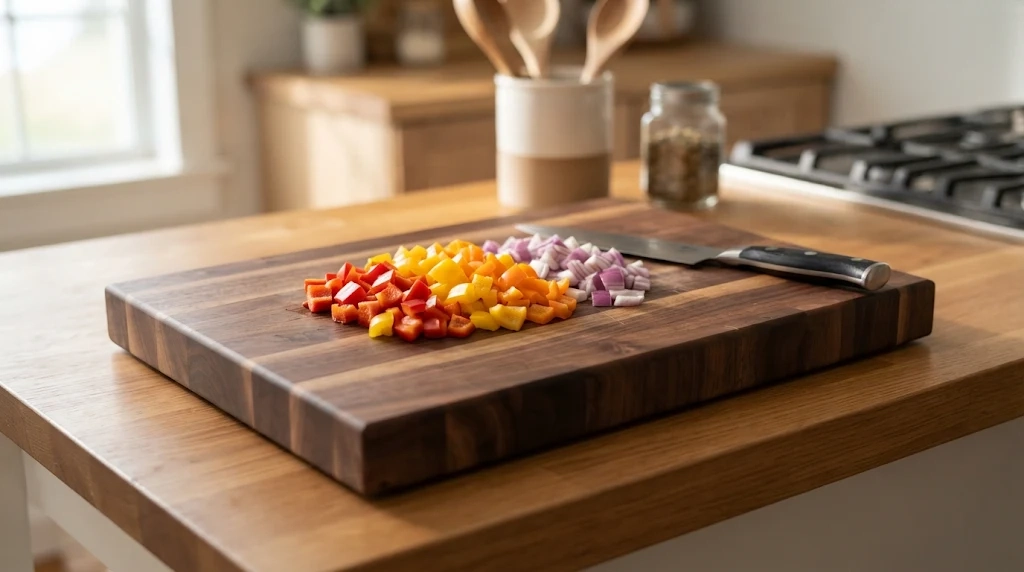
A butcher block and a cutting board may use similar hardwoods. Their main differences involve thickness, construction, portability, finish, and intended use.
A countertop can be made from butcher block without being suitable for chopping. Likewise, a standalone butcher block can function as a cutting board.
| Feature | Butcher Block Countertop | Wooden Cutting Board |
|---|---|---|
| Primary purpose | Work surface or countertop | Food cutting and preparation |
| Portability | Usually fixed | Usually removable |
| Surface finish | May be decorative or protective | Designed for food preparation |
| Cleaning | Must be cleaned in place | Can be moved to the sink |
| Replacement | Can be costly and difficult | Usually straightforward |
| Best everyday use | General kitchen workspace | Chopping, slicing, and dicing |
The important distinction is intended use. A kitchen worktop should not automatically be treated as a food-safe cutting board.
What Are the Benefits of Using Butcher Block for Cutting?
A properly maintained butcher block can make food preparation comfortable and convenient. Hardwood provides a stable surface for repeated kitchen tasks.
1. It Is Generally Gentle on Knife Edges
Suitable hardwood cutting surfaces are usually more forgiving than glass or stone. This makes them appealing for ordinary chef’s knives.
Knife sharpness still depends on blade steel, sharpening technique, and cutting habits. Learn more in our guide to whether wooden cutting boards dull knives.
2. It Offers a Stable Chopping Surface
Heavy butcher block boards can resist movement during ordinary chopping. Their thickness and weight also provide a substantial working surface.
However, a heavy board can still slide on a smooth countertop. Use a suitable non-slip mat when needed.
3. It Can Be Reconditioned
Some wooden cutting surfaces can be lightly sanded when scratches become rough. Proper sanding and conditioning may restore a usable surface.
This only applies to boards without serious structural or hygiene problems. Follow our step-by-step cutting board refinishing guide for safe restoration practices.
4. It Provides a Large Work Area
Large butcher block boards give you space to prepare vegetables, bread, and other ingredients. This can reduce crowding during meal preparation.
Choose a size that leaves enough room around your sink and stove. A manageable board is easier to wash and store.
What Are the Disadvantages of Cutting on Butcher Block?
Wood requires more attention than many dishwasher-safe plastic cutting boards. It can absorb moisture, develop knife marks, and suffer damage when poorly maintained.
- Moisture sensitivity: Extended water exposure can cause swelling, warping, or joint separation.
- Knife marks: Regular chopping gradually changes the surface.
- Maintenance: Many wooden boards require periodic conditioning.
- Weight: Thick boards can be difficult to lift and clean.
- Cross-contamination: Poor cleaning can transfer harmful microorganisms between foods.
- Finish damage: Cutting on decorative coatings can create scratches and exposed areas.
These disadvantages do not make butcher block unsuitable for kitchens. They explain why choosing the right surface matters.
Is Butcher Block Safe for Raw Meat?
A suitable wooden butcher block can be used for raw meat when proper food-safety procedures are followed. However, I recommend keeping raw meat preparation separate from foods eaten without further cooking.
Raw poultry, seafood, and meat may contain harmful microorganisms. Transfer can occur through knives, hands, cutting surfaces, and surrounding equipment.
How Do You Prevent Cross-Contamination?
The safest everyday approach is to use dedicated cutting surfaces for different food categories. Clean equipment between tasks.
- Separate boards: Reserve one cutting board for raw meat and another for ready-to-eat foods.
- Wash promptly: Clean surfaces with hot, soapy water after preparing each food item.
- Sanitize when needed: Use a food-contact-appropriate sanitizer according to its directions.
- Clean knives: Wash utensils before changing ingredients.
- Inspect surfaces: Replace boards with excessive wear or hard-to-clean grooves.
The University of Illinois Extension cutting board guidance recommends dedicated boards for raw meat. It also emphasizes thorough washing and sanitizing.
For a convenient raw-meat preparation surface, a dishwasher-safe plastic board is worth considering. It can simplify routine cleanup.
How Do You Clean a Butcher Block Cutting Surface?
 Save
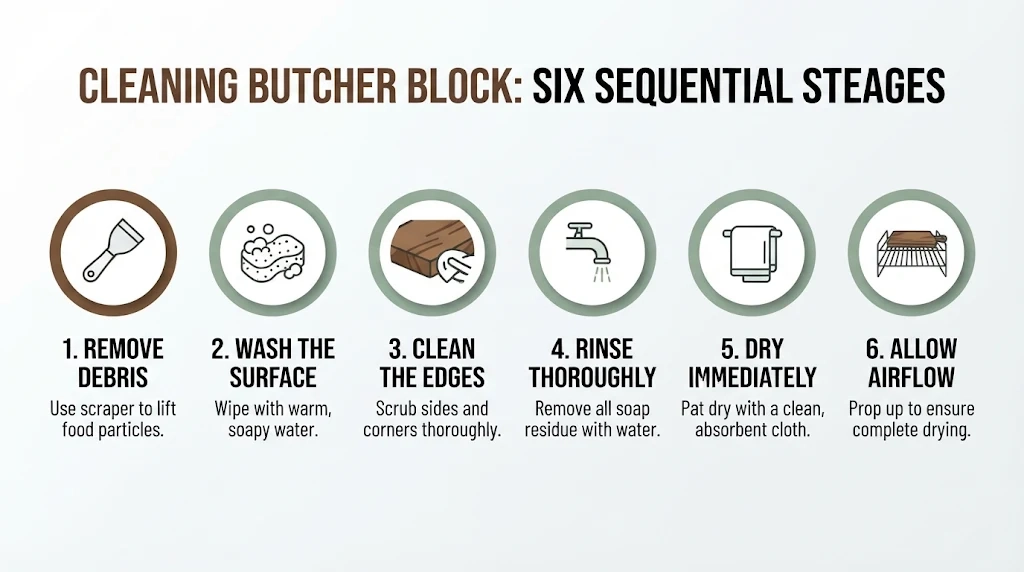
Clean butcher block promptly after every use with mild dish soap and warm water. Remove food debris, rinse thoroughly, and dry the surface.
Avoid leaving standing water on wooden joints. Follow the manufacturer’s instructions for the particular wood and finish.
Step-by-Step Cleaning Instructions
- Remove debris: Scrape away loose food particles using a suitable scraper.
- Wash the surface: Use mild dish soap, warm water, and a clean sponge or brush.
- Clean the edges: Pay attention to corners, seams, and juice grooves.
- Rinse thoroughly: Remove soap residue without soaking the wood.
- Dry immediately: Wipe the board with a clean towel.
- Allow airflow: Let removable boards dry completely before storage.
Can You Sanitize Butcher Block?
Yes, but the sanitizer must be appropriate for the wood and finish. Follow both food-safety guidance and manufacturer care instructions.
The USDA describes a sanitizing solution containing one tablespoon of unscented liquid chlorine bleach per gallon of water. Follow the applicable contact, rinsing, and drying instructions.
Never mix bleach with vinegar or ammonia. Do not assume mineral oil, lemon juice, or ordinary cleaning alone provides reliable sanitization.
Can Butcher Block Go in the Dishwasher?
Most laminated butcher block boards should not go in the dishwasher. Prolonged exposure to heat and moisture can damage adhesive joints and wood fibers.
Hand washing is the practical default unless the manufacturer explicitly allows another method. Never leave a wooden board submerged in the sink.
How Do You Maintain a Butcher Block Cutting Board?
Routine maintenance helps preserve the wood and reduces the risk of roughness and moisture-related damage. Most cutting-surface maintenance involves cleaning, drying, inspection, and conditioning.
Use a Suitable Cutting Board Oil
Food-grade mineral oil is a common choice for conditioning unfinished wooden cutting boards. Some manufacturers also recommend food-contact-suitable beeswax-based conditioners.
- Food-grade mineral oil: Helps condition exposed wood and reduce rapid moisture absorption.
- Cutting board cream: Often combines mineral oil with wax for added surface protection.
- Olive oil: Generally best avoided because it may oxidize and develop odors.
- Ordinary varnish: Not a suitable routine treatment for an active cutting surface.
Different products labeled butcher block oil may have different formulations. Always check the label before applying any treatment.
How Often Should You Oil Butcher Block?
Oil a wooden cutting surface when it appears dry or according to the manufacturer’s schedule. Frequent washing may increase the need for conditioning.
For some boards, monthly conditioning is a useful starting point. The right interval depends on the finish, wood species, and usage.
How Do You Apply the Oil?
- Wash the surface and allow it to dry completely.
- Apply a modest amount of food-grade cutting board oil.
- Spread the oil using a clean, lint-free cloth.
- Cover the top, sides, corners, and exposed underside.
- Allow absorption according to the manufacturer’s instructions.
- Wipe away excess oil before food preparation.
Remember that conditioning is not sanitizing. Oil cannot restore a board with dangerous cracks or deeply contaminated grooves.
Can You Use Butcher Block Without Oiling It?
Some finished butcher block surfaces do not require mineral oil. Their maintenance depends on the factory coating and manufacturer instructions.
Unfinished or oil-maintained cutting surfaces generally need periodic conditioning. Without care, wood can become dry, rough, or more vulnerable to moisture changes.
Do not apply mineral oil over an unknown decorative finish. Confirm the correct maintenance method before treating your countertop.
Which Wood Is Best for a Butcher Block Cutting Board?
 Save
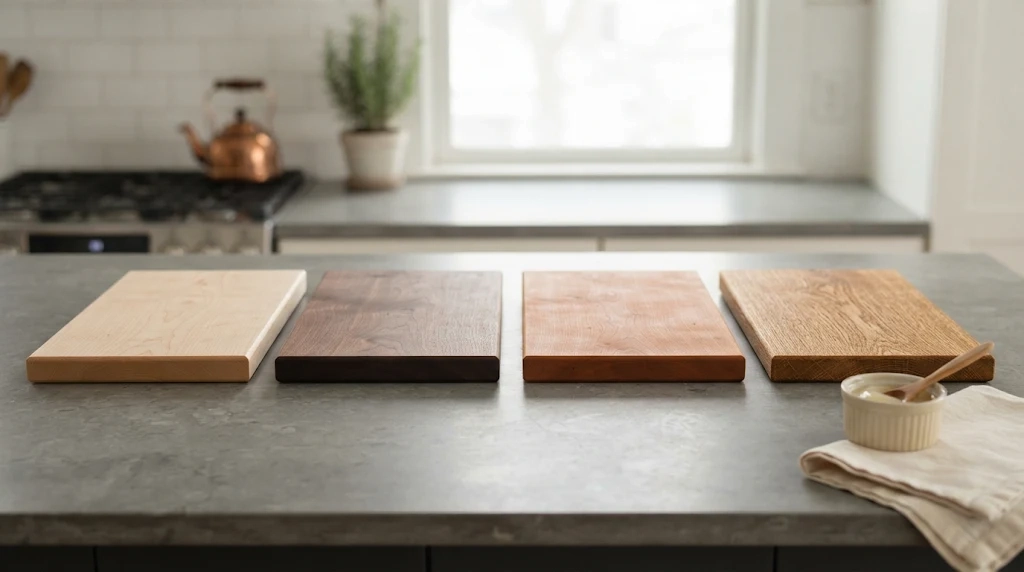
Hard maple is a popular option because it offers a durable, practical cutting surface. Walnut, cherry, and teak also appear in wooden cutting board construction.
Each wood has different grain characteristics, hardness, and maintenance considerations. Construction quality matters just as much as species.
| Wood Type | Main Advantage | Consideration |
|---|---|---|
| Hard Maple | Durable, close-grained hardwood | Requires moisture control and maintenance |
| Walnut | Attractive dark color and moderately yielding surface | May show dents more readily than harder woods |
| Cherry | Warm appearance and relatively forgiving feel | Can develop visible wear |
| Teak | Naturally oily hardwood | Mineral content and grain may affect knife wear |
For most kitchens, I would start with a well-made maple cutting board. It offers a straightforward balance of durability, availability, and practical maintenance.
Teak is another option, especially when appearance and moisture resistance matter. Explore our detailed guide on whether teak cutting boards are good for knives.
How Do You Know When Butcher Block Needs Replacing?
Replace a butcher block cutting surface when damage makes it difficult to clean or structurally unreliable. Cosmetic knife marks alone do not always require replacement.
Inspect the board under bright lighting and check both sides. Pay particular attention to glued joints and damaged corners.
- Deep cracks: Food and moisture can become trapped inside.
- Loose joints: Separated wood pieces create difficult-to-clean openings.
- Excessive knife grooves: Deep cuts can retain residue after washing.
- Severe warping: An unstable board increases cutting risks.
- Persistent unexplained odors: Investigate contamination or finish damage.
- Suspected deep mold: Replacement is generally safer than cosmetic sanding.
The FDA cleaning and food safety guidance advises replacing excessively worn boards. Deep grooves can become difficult to clean effectively.
What Mistakes Should You Avoid When Using Butcher Block?
The most common mistakes involve moisture, unsuitable finishes, and poor cleaning. Preventing these problems is easier than repairing significant wood damage.
- Cutting through decorative coatings: Use a dedicated board instead.
- Leaving the surface wet: Dry the wood promptly after washing.
- Using one dirty board for every ingredient: Separate raw meat from ready-to-eat foods.
- Applying unsuitable oil: Choose treatments specifically intended for your surface.
- Ignoring deep cracks: Replace surfaces that cannot be cleaned reliably.
- Placing hot cookware on the wood: Use a trivet to prevent heat damage.
- Using harsh abrasives routinely: Preserve the finish and remove only necessary material.
One useful habit is to inspect the board while cleaning it. Early detection of dry spots, loose joints, or rough fibers helps prevent larger problems.
What Are the Best Alternatives to Cutting Directly on Butcher Block?
If your butcher block serves as a countertop, use a separate board for daily food preparation. Several materials provide practical alternatives.
Wooden Cutting Boards
A dedicated hardwood board offers the familiar feel of butcher block without exposing the countertop to knife marks. Choose a size you can clean comfortably.
Plastic Cutting Boards
Plastic boards are often lightweight and easy to maintain. Many models are dishwasher safe, making them convenient for raw-food preparation.
They still require inspection and replacement when excessively worn. Our titanium vs. wood cutting board comparison offers additional insight into surface materials.
Rubber Cutting Boards
Cutting boards made from suitable rubber materials may provide a stable, forgiving surface. Maintenance and dishwasher compatibility vary by model.
Choose products specifically designed for food preparation. Avoid using ordinary household rubber mats as substitutes.
Recommended Cutting Boards for Everyday Kitchen Use
If you want to protect your butcher block countertop, consider these dedicated cutting surfaces. The recommendations below reflect verified product features and practical use cases, not personal hands-on testing.
The star scores are editorial suitability estimates, not verified customer review averages. Product availability and prices can change.
🏆 Best Overall Wooden Board
John Boos Maple Chop-N-Slice Cutting Board
★★★★☆ 4.7/5
The Chop-N-Slice series uses northern hard rock maple with edge-grain construction. Its reversible surface and multiple size options make it practical for everyday chopping.
I would prioritize this style when choosing a traditional wooden cutting surface for a busy kitchen. It requires regular hand washing and wood care.
🌳 Best Acacia Wood Option
OXO Good Grips Acacia Wood Utility Cutting Board
★★★★☆ 4.5/5
This acacia wood board has a double-sided design, juice groove, easy-pour corners, and cut-out handles. Its listed dimensions are approximately 14.8 by 10.65 inches.
I recommend considering it when you want a decorative yet practical wooden board. Follow OXO’s hand-washing and conditioning instructions.
💰 Best Budget-Friendly Alternative
OXO Good Grips Everyday Cutting Board
★★★★☆ 4.4/5
The OXO Everyday board has a nonporous, double-sided cutting surface with a drip catcher and non-slip feet. Unlike wooden butcher block, this board is dishwasher safe.
I would choose this option for easy everyday cleanup or as a separate raw-meat preparation board. Replace it when deep cutting grooves develop.
Frequently Asked Questions
Can You Use a Butcher Block Countertop as a Cutting Board Every Day?
You can cut directly on butcher block countertops only when the manufacturer permits it and the surface has a suitable food-contact finish. However, repeated knife contact can leave scratches and increase maintenance needs. A removable cutting board is usually more convenient and protects your countertop investment.
Is Butcher Block Better Than a Regular Cutting Board?
Not necessarily. A thick butcher block board may offer greater stability and a larger working area, while an ordinary cutting board is often easier to move, wash, and store. The better choice depends on the material, construction, cleaning requirements, and your food-preparation habits.
Can You Cut Meat on an Oiled Butcher Block?
Yes, if the wood is suitable for food preparation and maintained correctly. Food-grade mineral oil helps condition wood but does not disinfect it. Use separate surfaces for raw meat and ready-to-eat ingredients, and follow appropriate washing and sanitizing procedures after handling raw meat.
Does Cutting on Butcher Block Damage Your Knives?
Suitable hardwood butcher block surfaces are generally more forgiving than glass or stone. However, every cutting surface contributes to gradual knife wear. Wood hardness, grain structure, cutting technique, and knife quality all influence how quickly a blade loses sharpness.
Can You Put Hot Pans on a Butcher Block Cutting Board?
It’s best to avoid placing hot cookware directly on butcher block. High heat can discolor the wood, damage its finish, or cause localized drying and cracking. Use a heat-resistant trivet for hot pots and pans, even when your butcher block feels thick and sturdy.
Final Verdict: Should You Use Butcher Block as a Cutting Board?
Yes, a properly constructed and maintained butcher block can be an excellent cutting surface. The important requirements are suitable hardwood, a cutting-safe finish, proper cleaning, and regular inspection.
For a decorative butcher block countertop, I recommend using a separate cutting board. It protects the finish, simplifies cleanup, and makes replacing a worn cutting surface easier.
My final recommendation: Choose a dedicated maple butcher block cutting board for everyday chopping, and keep a separate washable board for raw meat. With sensible maintenance, both can play useful roles in a safe, practical kitchen.

