Are Teak Cutting Boards Good for Knives? Pros, Cons, and Expert Tips
Quick Answer
Yes, teak cutting boards can be good for everyday kitchen knives, but they aren’t the best choice for maximum edge retention. Teak offers moderate hardness, durability, and moisture resistance. However, its natural silica can wear cutting edges, making teak wood’s mineral content an important consideration.
What You Should Know
- Knife compatibility: Suitable for ordinary chopping, although some alternative woods may be better for delicate edges.
- Wood hardness: Genuine teak measures approximately 1,070 pounds-force on the Janka scale.
- Silica content: Natural silica is abrasive and can contribute to cutting-edge wear.
- Moisture resistance: Teak’s natural oils help it resist moisture-related damage.
- Best alternatives: Walnut and maple are worth considering when protecting knife edges is the main priority.
My Recommendation
- Choose teak if you want a durable, attractive, moisture-resistant board for everyday food preparation.
- Consider walnut or maple if knife-edge preservation matters more than moisture resistance.
Teak cutting boards look beautiful, but appearance isn’t everything when you’re using a sharp chef’s knife. The real question is whether teak protects your blade or gradually wears it down.
I’m Michael, and in this guide I’ll explain what makes teak different from other cutting board woods. We’ll examine hardness, silica, knife compatibility, maintenance, and practical alternatives.
What Makes Teak Cutting Boards Different?
A teak cutting board is a food-preparation surface made from teak wood, usually the species Tectona grandis. Teak is valued for its natural oils, distinctive golden-brown appearance, and resistance to moisture.
Unlike glass or stone, teak has some give beneath a knife’s edge. However, its physical hardness tells only part of the story.
Natural Oils and Moisture Resistance
Teak contains naturally occurring oils and extractives that contribute to its durability. These characteristics make it useful in environments where wood frequently encounters moisture.
That doesn’t mean teak is waterproof. Repeated soaking, poor drying, and dishwasher exposure can still damage a teak cutting board.
Moderate Hardness
The Wood Database lists genuine teak at approximately 1,070 pounds-force on the Janka hardness scale. This places it below hard maple and above several softer hardwoods.
Janka hardness measures resistance to indentation rather than how quickly a kitchen knife becomes dull. It’s helpful for comparing woods, but it cannot independently predict edge retention.
Natural Silica Content
Silica is a naturally occurring mineral compound that may appear in teak’s structure. Because silica is abrasive, it can increase wear on cutting tools.
Woodworking references document silica-related tool dulling in teak. However, controlled studies measuring kitchen-knife edge retention specifically on teak cutting boards remain limited.
Are Teak Cutting Boards Bad for Knife Edges?
Teak cutting boards aren’t automatically bad for knives. However, their silica content creates a reasonable concern about accelerated edge wear compared with less abrasive alternatives.
The actual effect depends on the knife, cutting technique, board construction, and frequency of use. A firm chopping motion also differs from repeatedly scraping a sharp edge sideways.
How Silica Can Affect Sharpness
Silica particles can act as microscopic abrasives when they contact cutting edges. Over repeated use, abrasive contact may contribute to gradual edge wear.
This matters because a knife’s sharpness depends on a thin, precisely formed metal edge. Even small changes can affect how easily the blade slices tomatoes or herbs.
Still, a woodworking saw blade and a kitchen knife operate under different forces. Evidence of tool dulling during wood machining doesn’t establish a specific knife-sharpening interval for teak boards.
Does Teak Damage Japanese Knives?
 Save
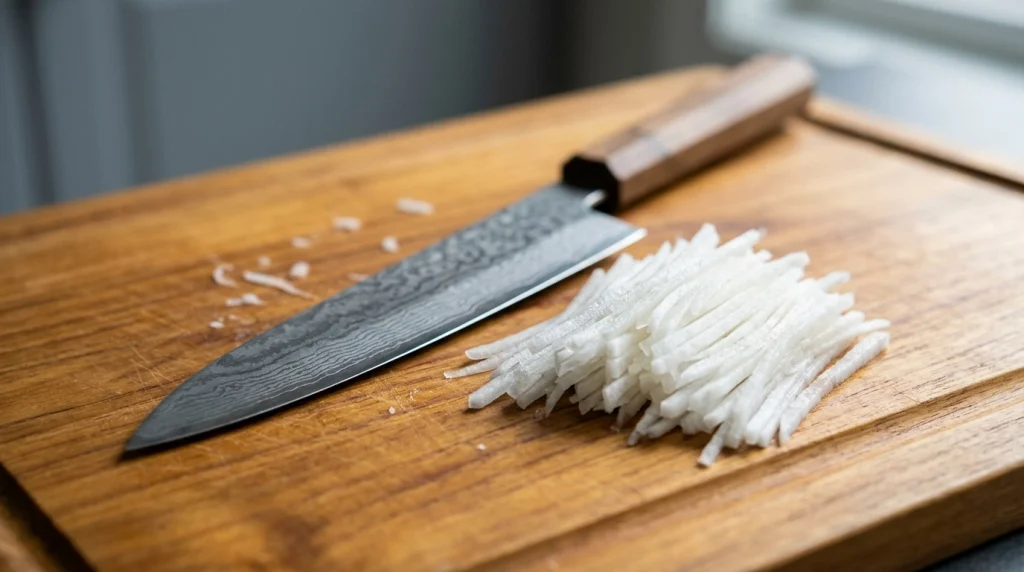
Teak may be a less desirable choice for thin, delicate Japanese knives when preserving their edges is your top priority. Such knives can have harder steel and thinner cutting geometries than many Western kitchen knives.
A softer-feeling, less abrasive board may offer greater peace of mind. Walnut or a suitable synthetic cutting surface can be worth considering.
What About Western Chef’s Knives?
Everyday Western chef’s knives can be used on properly maintained teak cutting boards. Their typically more robust edge geometry may make them more forgiving of ordinary chopping.
That doesn’t eliminate potential abrasive wear. Regular honing when appropriate and sharpening when needed remain essential.
Teak vs. Maple vs. Walnut vs. Bamboo: Which Is Better for Knives?
 Save
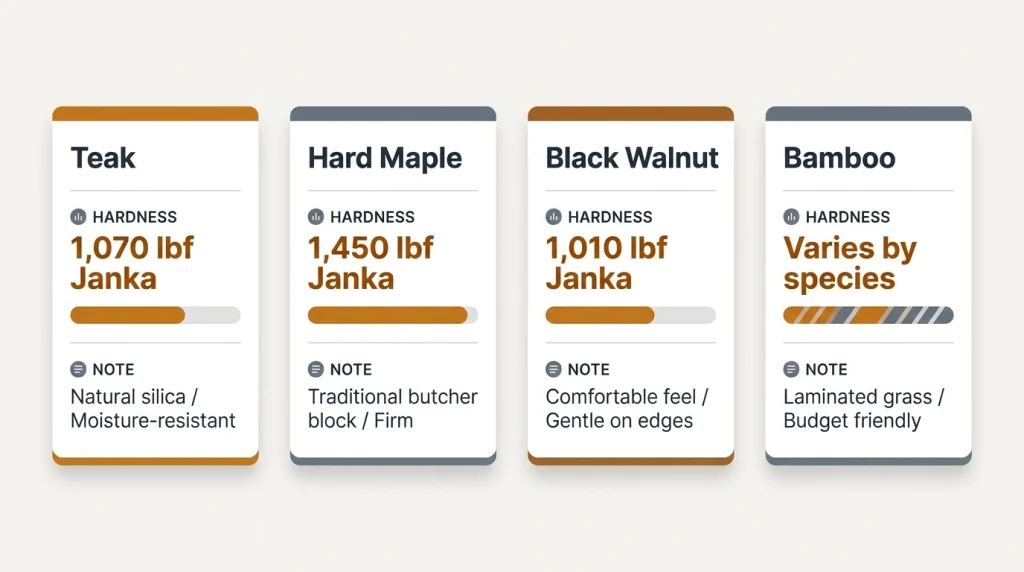
Walnut and maple are popular cutting board alternatives because they offer useful combinations of hardness, durability, and cutting comfort. Bamboo is another common option, although its construction and surface characteristics vary.
The following comparison separates measurable hardness from practical considerations. Exact knife-edge performance cannot be ranked reliably using Janka hardness alone.
| Material | Approx. Janka Hardness | Knife Considerations | Best Use |
|---|---|---|---|
| Teak | 1,070 lbf | Moderate hardness; natural silica raises abrasion concerns | Moisture-resistant everyday preparation |
| Hard Maple | 1,450 lbf | Firm traditional butcher-block material | Daily chopping and meal preparation |
| Black Walnut | 1,010 lbf | Moderate hardness and comfortable cutting feel | Fine slicing and general chopping |
| Bamboo | Varies by species and construction | Hardness and glue-line characteristics vary | Affordable general preparation |
Important: These hardness figures describe the material, not measured knife-dulling rates. Wood species, grain orientation, finish, and cutting technique influence practical performance.
Teak vs. Maple Cutting Boards
Maple is harder than teak, yet it remains a longstanding choice for wooden butcher blocks. Its relatively uniform grain and established use in food preparation are important advantages.
Teak offers stronger natural moisture resistance. Maple may be the more conventional choice for a dedicated daily chopping station.
Teak vs. Walnut Cutting Boards
Walnut is slightly softer than teak according to standard Janka measurements. It also lacks teak’s widely documented reputation for silica-related woodworking tool wear.
For someone concerned about delicate knife edges, walnut is a compelling alternative. However, there isn’t enough standardized testing to promise a precise improvement in sharpening intervals.
Teak vs. Bamboo Cutting Boards
Bamboo boards are manufactured from laminated strips of a grass rather than solid hardwood lumber. Their hardness varies by species, processing, and manufacturing method.
Some bamboo boards feel quite hard under a knife. Neither bamboo nor teak should be treated as universally superior without considering the specific product.
Does End-Grain Teak Protect Knives Better Than Edge-Grain Teak?
End-grain construction may provide a more forgiving cutting feel because the blade contacts exposed wood fiber ends. Edge-grain construction presents the longer sides of the wood fibers.
However, changing grain orientation doesn’t remove naturally occurring silica from teak. End-grain construction alone cannot guarantee better edge retention.
End-Grain Cutting Boards
End-grain boards arrange wood pieces so their fiber ends face upward. This construction is commonly associated with premium butcher blocks.
- Cutting feel: Often offers a more cushioned sensation during chopping.
- Appearance: Creates distinctive patterned surfaces.
- Construction: Usually involves more individual pieces and glue joints.
- Maintenance: Requires careful cleaning, drying, and conditioning.
Edge-Grain Cutting Boards
Edge-grain boards use strips of wood with their long fibers running along the board’s surface. They are common because their construction can be relatively straightforward.
- Stability: A well-built board can provide a sturdy preparation surface.
- Weight: Some thinner designs are easier to lift and clean.
- Cost: Often more affordable than elaborate end-grain models.
- Suitability: Practical for everyday slicing and chopping.
For ordinary home cooking, a high-quality edge-grain teak board may be perfectly sufficient. If protecting expensive knives is your primary goal, consider the wood species as well as the grain arrangement.
What Are the Advantages of Teak Cutting Boards?
Teak offers several useful qualities beyond its attractive appearance. These benefits explain why manufacturers continue making kitchen boards from genuine teak.
- Moisture resistance: Natural oils and wood extractives contribute to durability in damp conditions.
- Distinctive appearance: Warm golden and brown tones complement many kitchens.
- Moderate hardness: Teak provides a solid cutting surface without the extreme rigidity of glass or stone.
- Durability: Properly maintained teak can remain useful for years.
- Serving versatility: Its appearance makes it suitable for presenting bread, cheese, and prepared foods.
Another advantage is its range of available designs. You can find compact preparation boards, large carving boards, and reversible models with juice grooves.
What Are the Disadvantages of Teak Cutting Boards?
Teak isn’t the perfect cutting surface for every kitchen. Its biggest trade-offs involve silica, price, maintenance, and product quality.
- Potential edge abrasion: Teak’s mineral content may contribute to knife wear.
- Higher cost: Genuine teak boards may cost more than basic plastic alternatives.
- Hand-washing: Most teak board manufacturers recommend avoiding dishwashers.
- Ongoing care: Regular conditioning helps maintain the wood.
- Variable sourcing: Buyers should confirm wood identity and responsible sourcing claims.
- Surface wear: Deep knife grooves eventually make cleaning more difficult.
One overlooked disadvantage is the temptation to use a decorative serving board for every kitchen task. A dedicated chopping board should prioritize stable construction and easy cleaning over appearance alone.
How Can You Keep Knives Sharp on a Teak Cutting Board?
 Save
Good cutting habits can reduce unnecessary edge wear regardless of board material. These techniques are particularly useful when working with a teak surface.
1. Use Controlled Cutting Motions
Avoid forcefully striking the board when gentle, controlled cuts will do. Let the knife’s sharp edge and appropriate cutting motion perform the work.
2. Avoid Scraping With the Sharp Edge
Dragging the cutting edge sideways across any board can increase unwanted wear. Use the spine of the knife or a bench scraper to collect chopped ingredients.
3. Keep the Board Stable
A sliding cutting board creates unnecessary safety risks. Place a clean, damp towel or suitable non-slip mat beneath the board if it lacks stable feet.
4. Maintain Your Knife Correctly
Hone knives when appropriate for their steel and edge geometry. Sharpen them when honing no longer restores effective cutting performance.
Japanese knives and specialty steels may need different maintenance methods. Follow the knife manufacturer’s recommendations.
5. Inspect the Cutting Surface
Check for cracks, splinters, deep grooves, or damaged finishes. A smooth, properly maintained board is easier to clean and more pleasant to use.
How Do You Clean and Maintain a Teak Cutting Board?
Hand-washing and thorough drying are central to teak board maintenance. Even moisture-resistant wood can develop problems if it remains wet for extended periods.
The University of Maine Cooperative Extension provides guidance on cleaning, sanitizing, and maintaining cutting boards. Follow manufacturer instructions whenever they specify a suitable care method for your product.
Daily Cleaning Steps
- Remove loose food particles immediately after preparation.
- Wash the cutting surface using warm water and mild dish soap.
- Use a clean sponge or soft brush to remove residue.
- Rinse thoroughly with clean water.
- Dry with a clean towel.
- Stand the board upright where air can circulate until completely dry.
Don’t leave teak boards soaking in the sink. Avoid placing laminated teak boards in dishwashers unless the manufacturer explicitly approves it.
Conditioning With Food-Grade Mineral Oil
Apply food-grade mineral oil when the wood begins looking dry or according to the manufacturer’s schedule. Spread a thin, even layer across the clean, dry surface.
Allow the oil to absorb, then wipe away excess before using the board. Avoid ordinary vegetable oils that may become sticky or rancid.
Preventing Cross-Contamination
Wooden cutting boards require careful food-safety practices. The USDA recommends separate cutting boards for raw animal products and fresh produce when possible.
Wash the board after preparing each food item and sanitize when needed. Replace boards with excessive wear or grooves that cannot be cleaned effectively.
The FDA’s cleaning guidance also emphasizes washing food-contact surfaces to help prevent cross-contamination.
What Should You Look for When Buying a Teak Cutting Board?
Not all teak cutting boards offer the same construction quality or practical features. Check the following details before purchasing.
- Genuine teak: Look for clear identification of Tectona grandis rather than unrelated woods marketed with teak-like names.
- Food-safe construction: Confirm that glues, coatings, and finishes are suitable for food-contact use.
- Suitable dimensions: Choose a surface large enough for your usual ingredients and knife.
- Stable thickness: The board should resist sliding and remain comfortable to handle.
- Smooth finishing: Avoid splinters, rough surfaces, and visible construction defects.
- Responsible sourcing: Consider credible certification or documented sourcing information.
- Maintenance instructions: Prefer manufacturers that provide clear cleaning and conditioning guidance.
For a typical home kitchen, a board around 16–18 inches long can offer useful preparation space. Smaller options may suit limited counters, while larger boards help with carving and batch cooking.
Which Cutting Boards Are Worth Considering?
If you’re choosing between teak and alternative woods, these three real products represent different priorities. The recommendations reflect construction and intended use, not independent laboratory tests or verified knife-edge wear rankings.
Best Teak Option
Teakhaus Thin Lightweight Cutting Board (L) 806
★★★★★ Manufacturer-listed rating: 5.0/5
This FSC-certified teak board measures 22 × 18 × 1 inches and weighs approximately 4 pounds. Its reversible edge-grain design and juice canal make it a practical teak choice for larger preparation tasks.
Best Maple Alternative
John Boos R-Series Maple Cutting Board
Traditional hardwood alternative
The R-Series features solid North American maple construction, a 1.5-inch thickness, and reversible surfaces. It’s worth considering for a dedicated preparation station with a traditional butcher-block feel.
Best Walnut Alternative
Sonder LA Alfred End Grain Walnut Cutting Board
Premium end-grain option
This 17 × 13 × 1.5-inch end-grain walnut board features a juice groove and preparation compartments. Its construction and moderate wood hardness make it an appealing alternative for cooks focused on cutting feel.
Affiliate disclosure: As an Amazon Associate, we may earn from qualifying purchases made through eligible links, at no additional cost to you. Product availability and prices may change.
Frequently Asked Questions
Do teak cutting boards dull knives faster?
Teak contains natural silica that can wear cutting edges. Woodworking evidence supports silica-related tool dulling, but controlled kitchen-knife comparisons are limited. Teak may cause more abrasive wear than some alternative woods, although the actual difference depends on the blade, cutting habits, and specific board.
Is teak better than bamboo for knives?
Neither material is automatically better for every knife. Teak has moderate hardness and natural silica, while bamboo boards vary in hardness and manufacturing methods. A well-made board and careful cutting habits matter more than choosing either material based solely on its name.
Is teak or walnut better for cutting boards?
Teak is appealing for moisture resistance and durability, while walnut offers a slightly softer cutting surface and a different mineral profile. Walnut is a reasonable choice when knife care is the main priority. Teak suits cooks who value water resistance and a distinctive appearance.
Can you use Japanese knives on teak cutting boards?
Yes, Japanese knives can be used on teak cutting boards, but extra care is sensible. Thin, hard cutting edges may be vulnerable to poor cutting technique and abrasive contact. If preserving an expensive Japanese knife’s edge is your highest priority, consider walnut or an appropriate synthetic board.
How often should you oil a teak cutting board?
Follow the manufacturer’s instructions and examine the board regularly for dryness. Some manufacturers suggest applying food-grade mineral oil several times per month, depending on washing frequency and conditions. Apply oil to a clean, dry board and remove excess before returning it to use.
Final Verdict: Are Teak Cutting Boards Worth It?
Teak cutting boards can be a worthwhile choice for everyday food preparation. They combine attractive grain, practical durability, and useful moisture resistance.
The main drawback is natural silica, which creates a legitimate concern about knife-edge abrasion. The available evidence doesn’t establish exactly how much faster kitchen knives dull on teak compared with other woods.
My recommendation: Choose a quality teak board if you value its durability and appearance. If edge retention is your highest priority, compare well-made walnut and maple boards before deciding.
Whatever material you choose, keep the board clean, dry, and stable. Good cutting technique and proper knife maintenance will help you get the best from both your board and your blades.

