Titanium vs. Wood Cutting Boards: Which Is Better?
Quick Answer
Wood cutting boards are generally better for everyday chopping because they’re gentler on knife edges, quieter, and comfortable to use. Titanium cutting boards offer a nonporous, moisture-resistant surface that’s easy to clean, but they can dull knives faster. For most home cooks, a quality hardwood board is the better primary choice, while titanium can serve as a supplementary preparation surface. The USDA’s cutting board guidance emphasizes proper cleaning and maintenance regardless of material.
Key Differences at a Glance
- Knife Protection: Wood is gentler on sharp kitchen knives than rigid titanium.
- Cleaning: Titanium doesn’t absorb moisture, while wood requires careful washing and drying.
- Durability: Both can last for years, although their maintenance needs differ.
- Food Safety: Both can be hygienic when cleaned correctly and kept in good condition.
- Daily Comfort: Wood offers a quieter, more forgiving chopping surface.
- Best Overall: Hardwood is the stronger choice for frequent knife work.
My Recommendation
- Choose wood if you chop vegetables, herbs, and meat frequently.
- Choose titanium if easy cleanup and moisture resistance matter more than knife-edge preservation.
- Consider keeping separate boards for raw proteins and ready-to-eat foods.
Choosing between titanium and wood cutting boards isn’t as simple as deciding which material looks better. Each affects your knives, cleaning routine, and food preparation experience differently.
I’m Michael, and I approach this comparison from a practical kitchen perspective. I’ll explain where each material makes sense, what the evidence suggests, and which board offers better everyday value.
What Is the Difference Between Titanium and Wood Cutting Boards?
The main difference is how each material responds to knife pressure, moisture, and repeated cleaning. Titanium provides a rigid, nonporous metal surface, while wood offers a more forgiving cutting surface made from natural fibers.
Understanding that difference helps explain why a board can be durable without necessarily being gentle on knives.
What Is a Titanium Cutting Board?
A titanium cutting board is a kitchen preparation surface made from titanium metal or a product marketed with a titanium-containing surface. Genuine solid-titanium boards differ from coated or multi-material boards.
Commercially pure titanium resists corrosion and doesn’t absorb water like wood. However, its rigid surface provides less cushioning when a knife edge makes contact.
- Surface: Nonporous metal that resists moisture absorption.
- Cleaning: Easy to wash with soap and water.
- Maintenance: Doesn’t need wood-conditioning oil.
- Knife Contact: Less forgiving than hardwood.
- Buying Consideration: Material composition and thickness should be verified.
Not every product advertised as titanium contains a solid titanium cutting surface. Check manufacturer specifications before buying.
What Is a Wood Cutting Board?
A wood cutting board is a food preparation surface constructed from hardwood or another suitable wood product. Maple, walnut, and cherry are popular choices because they offer useful combinations of durability and cutting comfort.
Wood fibers provide some give beneath the knife edge. This makes wood especially attractive for people who frequently sharpen and maintain quality kitchen knives.
- Maple: A durable hardwood commonly used for kitchen cutting boards.
- Walnut: A somewhat softer hardwood with a darker appearance.
- Cherry: A hardwood known for its warm color and comfortable cutting surface.
- End-Grain Construction: Exposes the ends of wood fibers on the cutting surface.
- Edge-Grain Construction: Uses lengthwise wood strips for a sturdy, practical board.
Most wooden boards require handwashing, thorough drying, and periodic conditioning. Their long-term performance depends heavily on those habits.
Titanium vs. Wood Cutting Boards: Side-by-Side Comparison
 Save
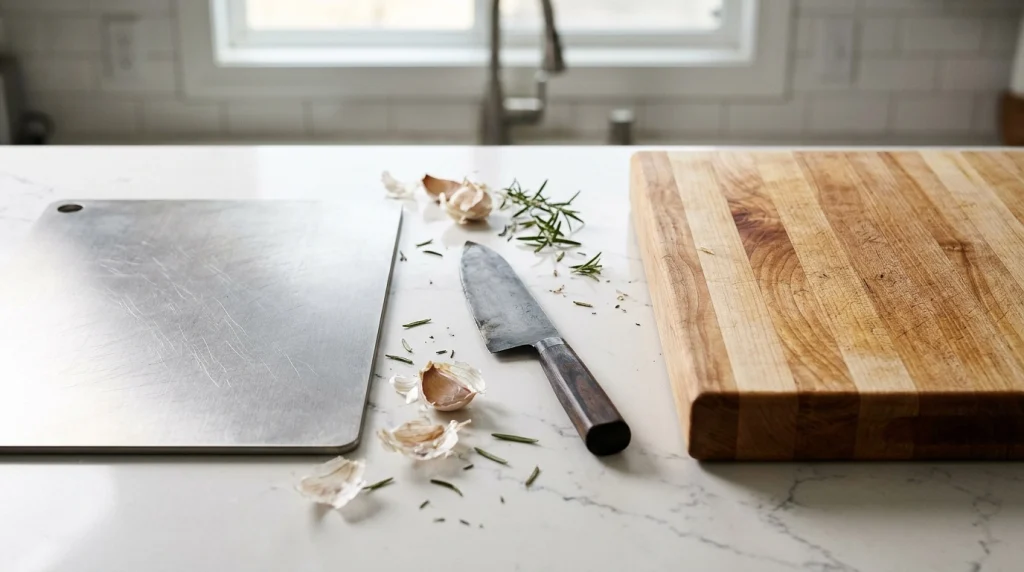
Neither material wins every category. The better choice depends on whether you prioritize knife care, simple cleaning, or long-term maintenance.
| Feature | Titanium Board | Wood Board |
|---|---|---|
| Material | Metal | Natural wood |
| Porosity | Nonporous | Porous |
| Knife Friendliness | Less forgiving | Generally excellent |
| Moisture Resistance | Excellent | Requires drying |
| Dishwasher Use | Often suitable; verify model | Handwashing recommended |
| Routine Maintenance | Cleaning and inspection | Cleaning, drying, oiling |
| Cutting Noise | Usually louder | Usually quieter |
| Surface Wear | Can scratch or dent | Can develop knife marks |
| Weight | Depends on sheet thickness | Depends on wood and size |
| Best Use | Low-maintenance prep | Frequent chopping and slicing |
For daily knife work, I’d prioritize the wood board. Titanium becomes more appealing when washing convenience matters more than cutting feel.
Do Titanium Cutting Boards Dull Knives?
Yes, titanium cutting boards can dull knives faster than quality wooden boards. Even commercially pure titanium creates a relatively rigid contact surface beneath the blade.
A knife’s cutting edge is extremely thin. Repeated contact with an unforgiving surface can gradually reduce its sharpness.
Why Is Wood Gentler on Knife Edges?
Wood fibers can yield slightly when a blade contacts the board. This reduces the harsh edge-on-surface impact associated with many rigid materials.
End-grain boards are especially appealing for frequent chopping because of their fiber orientation. However, construction quality and wood species still affect performance.
- Maple offers a practical balance between durability and knife friendliness.
- Walnut provides a relatively comfortable surface for delicate knife work.
- Well-made end-grain boards are popular for intensive chopping.
- Sharp knives and controlled cutting technique also help protect edges.
According to North Carolina Cooperative Extension’s cutting board guidance, harder materials such as metal, stone, and glass can accelerate knife-edge wear.
Does Titanium Being Softer Than Knife Steel Make It Safe for Blades?
Not necessarily. A surface can be softer than hardened knife steel while still being too rigid for comfortable, repeated cutting.
The important factor isn’t just material hardness. The way a surface responds to blade pressure also affects edge retention.
Imagine chopping several onions with a thin Japanese chef’s knife. On wood, the edge meets a surface that yields slightly, while titanium provides a firmer stop.
That difference becomes more important during repeated chopping sessions. Expensive, thin-edged knives deserve particular care.
Are Titanium Cutting Boards More Hygienic Than Wood?
Titanium is nonporous and doesn’t absorb food juices the way wood can. However, that doesn’t automatically make every titanium cutting board safer than a properly maintained wooden board.
Cleaning habits, surface condition, and cross-contamination prevention matter more than marketing claims about either material.
Can Bacteria Grow on Wooden Cutting Boards?
Bacteria can contaminate wooden cutting boards just as they can contaminate other food-contact surfaces. Proper washing and drying are essential after food preparation.
Wood is porous, but porosity alone doesn’t mean a wooden board is unsafe. Food safety depends on the board’s condition and how it’s used.
The Academy of Nutrition and Dietetics recommends cleaning cutting boards thoroughly and replacing boards with excessive wear.
Is Titanium Naturally Antibacterial?
Pure titanium is corrosion-resistant, but a typical titanium cutting board shouldn’t be considered self-sanitizing. Its nonporous surface still needs proper cleaning.
Claims about antibacterial performance should be supported by testing of the specific finished product. Don’t assume that a clean-looking metal surface is free of harmful microorganisms.
Which Board Is Better for Raw Meat?
 Save
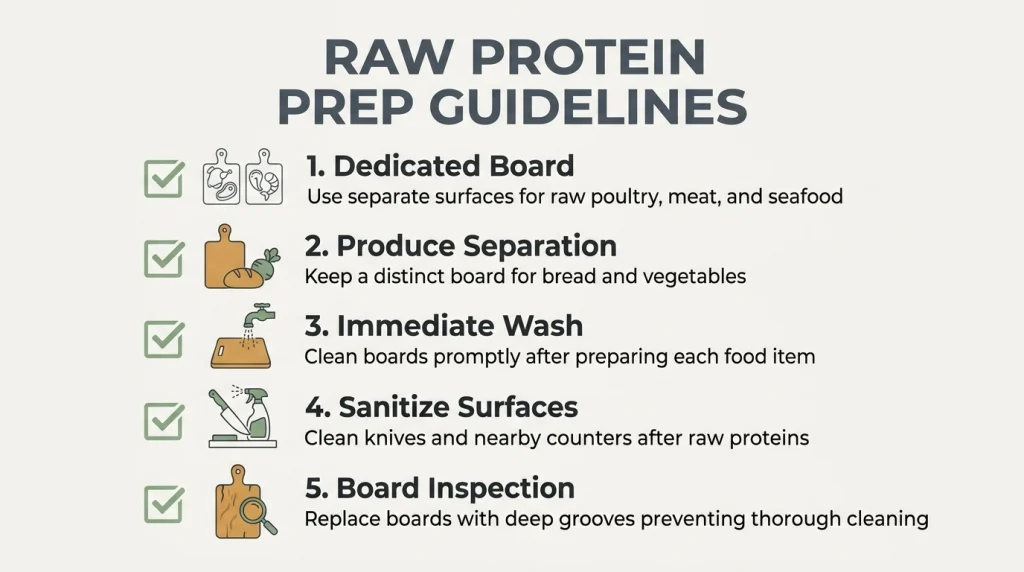
Both materials can be used for raw meat when properly cleaned and maintained. A dedicated board helps reduce the chance of transferring raw-meat juices to ready-to-eat foods.
For many kitchens, separating raw proteins from vegetables and bread is a more useful safety measure than changing board material alone.
- Use a dedicated board for raw meat, poultry, and seafood.
- Keep another board for bread, fruit, and ready-to-eat vegetables.
- Wash the board after preparing each food item.
- Clean knives and nearby surfaces after handling raw proteins.
- Replace boards with damage that prevents thorough cleaning.
The USDA’s cross-contamination recommendations support using separate cutting boards whenever possible.
Which Cutting Board Is Easier to Clean and Maintain?
Titanium generally requires less ongoing material maintenance because it doesn’t need conditioning oil. Wood requires more attention, particularly after repeated washing.
That convenience is one of titanium’s strongest practical advantages.
How to Clean a Titanium Cutting Board
A genuine solid-titanium board is generally straightforward to clean. Follow the manufacturer’s instructions, especially if the product includes coatings, adhesives, or nonmetal components.
- Remove loose food particles from the surface.
- Wash thoroughly with warm water and dish soap.
- Use a soft sponge or suitable cleaning brush.
- Rinse away detergent and food residue.
- Dry the board with a clean towel.
- Inspect the surface for damage and residue.
Some titanium boards are dishwasher-safe, but this isn’t a universal product guarantee. Check the actual manufacturer’s care instructions before using that cleaning method.
How to Clean and Maintain a Wooden Cutting Board
Wood needs a little more care because prolonged moisture exposure can lead to warping, splitting, or surface damage. Fortunately, a consistent cleaning routine is simple.
- Wash the board promptly with warm, soapy water.
- Scrub both sides to remove food residue.
- Rinse thoroughly without prolonged soaking.
- Dry immediately with a clean towel.
- Stand the board upright to allow airflow.
- Condition periodically with food-grade mineral oil when needed.
Most quality hardwood boards should stay out of the dishwasher. Always follow the board manufacturer’s specific care instructions.
Oil helps limit moisture-related drying, but it doesn’t replace cleaning or sanitizing. Never treat board conditioner as a disinfectant.
Which Lasts Longer: Titanium or Wood Cutting Boards?
Both materials can offer long service lives, but they age differently. Titanium resists water-related damage, while hardwood boards may be maintained and sometimes resurfaced.
Neither material is permanently damage-proof. Construction, cleaning, storage, and cutting technique all influence lifespan.
How Durable Are Titanium Boards?
Solid titanium resists corrosion and won’t develop traditional wood-grain cracks. However, its surface can still show scratches, dents, and other signs of wear.
Thin titanium sheets may also flex or shift during preparation. Check thickness, rigidity, stability, and edge finishing before purchasing.
How Durable Are Wooden Boards?
A properly maintained hardwood board can remain useful for many years. Thick boards offer substantial material that may allow careful resurfacing when appropriate.
Wood can still crack or warp when exposed to moisture for extended periods. Consistent drying and conditioning help reduce those risks.
- Titanium: Resists water absorption and corrosion.
- Hardwood: May offer a repairable cutting surface.
- Thin Boards: Can be more vulnerable to movement or distortion.
- Severe Damage: May require replacement regardless of material.
Are Titanium Cutting Boards Worth the Money?
Titanium cutting boards may be worthwhile for buyers who value low-maintenance materials and nonporous surfaces. However, they aren’t necessarily a better investment for people who use sharp knives every day.
Price alone doesn’t establish cutting performance. Material authenticity, manufacturing quality, and knife compatibility deserve more attention.
What Should You Check Before Buying Titanium?
Titanium product descriptions can be confusing because some boards combine different materials. Examine the specifications rather than relying on product titles.
- Confirm whether the cutting surface is solid titanium or coated metal.
- Check the stated titanium grade and material documentation.
- Review board thickness, dimensions, and overall rigidity.
- Look for rounded edges and a stable, slip-resistant design.
- Read realistic knife-wear and cleaning guidance.
- Compare the manufacturer’s warranty and return policy.
Be cautious of products promising completely scratch-proof performance or effortless knife sharpening. Such claims require credible supporting evidence.
Is a Premium Wooden Board Better Value?
For frequent cooking, a well-made maple or walnut board can provide excellent practical value. It supports comfortable cutting and avoids unnecessary contact between knife edges and metal.
I would prioritize construction quality over decorative features. A stable, properly sized board often makes food preparation easier than an expensive board with the wrong surface.
Titanium vs. Wood for Different Kitchen Tasks
 Save
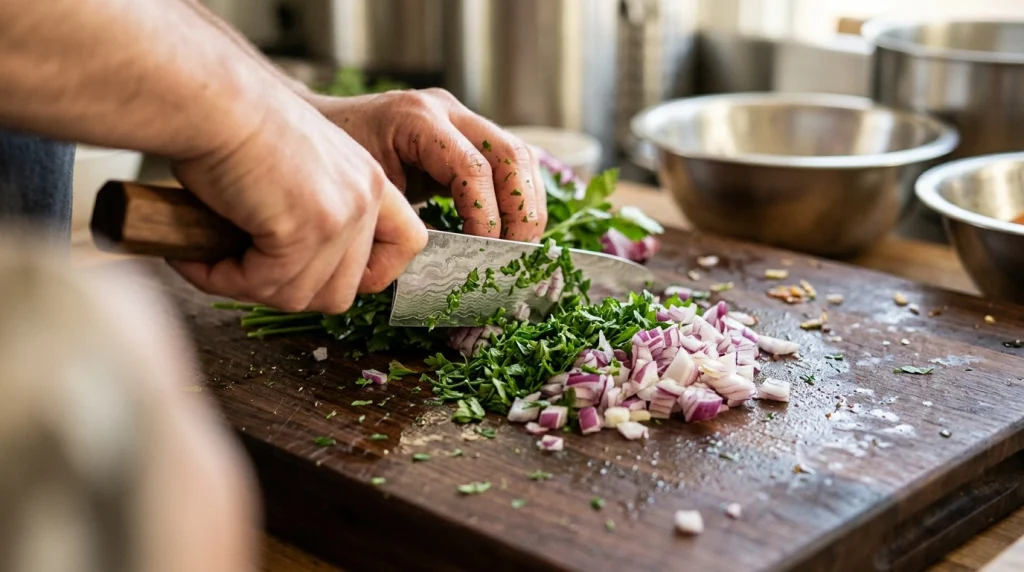
The best board can change depending on what you’re preparing. A cutting surface that works well for serving food may be less suitable for continuous knife work.
Chopping Vegetables and Fresh Herbs
Wood is my preferred option for repetitive chopping. Its forgiving surface makes it better suited to long preparation sessions.
This matters when slicing onions, mincing herbs, or dicing vegetables. These tasks involve frequent contact between the blade and board.
Preparing Raw Chicken and Fish
Titanium can be convenient because it doesn’t absorb liquids and is easy to wash. However, a clean and well-maintained wooden board is also a suitable option.
Keeping a dedicated raw-protein board helps prevent cross-contamination. Thorough cleaning remains essential with either material.
Cutting Bread and Serving Cheese
Wood is a practical choice for slicing bread and displaying cheese. Its appearance also works naturally for serving food at the table.
A stable wooden surface provides good control during ordinary slicing. It also avoids the metallic cutting sound associated with rigid boards.
Using Japanese and Other Fine-Edged Knives
Choose wood over titanium when protecting thin, sharp edges is a priority. Such knives can be especially sensitive to repeated contact with hard cutting surfaces.
For an expensive chef’s knife, I’d rather maintain a wooden board than sharpen the blade more frequently.
What Are the Main Pros and Cons of Each Material?
Every cutting board represents a tradeoff. Looking at the drawbacks alongside the advantages makes the buying decision easier.
Titanium Cutting Board Pros and Cons
Advantages:
- Nonporous surface doesn’t absorb food liquids.
- Resists corrosion and water-related deterioration.
- Doesn’t require periodic oil conditioning.
- Can be convenient for messy food preparation.
- Solid titanium avoids the need for a wood or plastic cutting surface.
Disadvantages:
- Can dull knife edges faster than wood.
- Often produces more noise during chopping.
- May scratch despite claims of extreme durability.
- Thin sheets can flex or slide without suitable support.
- Material claims can be difficult to verify.
Wood Cutting Board Pros and Cons
Advantages:
- Generally gentle on sharp knife edges.
- Offers a quieter cutting experience.
- Available in several attractive hardwood species.
- Quality boards can provide many years of service.
- Suitable for both food preparation and serving.
Disadvantages:
- Requires careful cleaning and thorough drying.
- May warp or crack with poor maintenance.
- Benefits from periodic food-safe conditioning.
- Can retain stains or odors.
- Large, thick models can be heavy to move.
Recommended Titanium and Wood Cutting Boards
If you’re ready to compare actual products, these are three relevant options. My selections are based on their published materials, construction, and intended uses rather than unverified hands-on testing.
Disclosure: As an Amazon Associate, this site may earn from qualifying purchases through eligible affiliate links, at no extra cost to you. The ratings below are editorial suitability assessments, not customer-review averages.
🏆 Best Overall Wood Choice
John Boos Maple R-Board Series
★★★★☆ 4.7/5
This hardwood board features northern hard rock maple, reversible edge-grain construction, and a 1.5-inch thickness. Its generous cutting surface and solid construction make it my preferred option for regular vegetable preparation and general kitchen chopping.
💰 Best Practical Wood Alternative
John Boos Maple Chop-N-Slice Board
★★★★☆ 4.5/5
The Chop-N-Slice series uses hard maple, a reversible edge-grain surface, and a 1.25-inch thickness. I’d consider this model when looking for a practical everyday wooden board without moving up to a heavier butcher-block design.
🧼 Best Low-Maintenance Alternative
Forneau Pure Titanium Cutting Board
★★★★☆ 4.0/5
Forneau markets this board with a Grade 1 titanium cutting surface and several size options. I’d consider it for easy-clean preparation tasks, but I wouldn’t choose it as my primary cutting surface for delicate knives.
Frequently Asked Questions
Is a titanium cutting board better than wood?
Titanium is better for moisture resistance and low-maintenance cleaning, while wood is generally better for protecting kitchen knives. Most home cooks will benefit more from a quality hardwood board because it provides a forgiving surface for frequent chopping. The ideal choice depends on how you prepare food.
Will a titanium cutting board ruin my knives?
A titanium cutting board won’t necessarily ruin a knife immediately, but regular cutting on metal can accelerate edge wear. Wood generally offers better knife-edge protection. People using delicate or expensive chef’s knives should consider a hardwood board as their main cutting surface.
Are wooden cutting boards safe for raw meat?
Yes, wooden cutting boards can be used for raw meat when properly cleaned and maintained. Wash them thoroughly after use, dry them completely, and replace boards with severe damage. Keeping a dedicated raw-meat board helps prevent cross-contamination with vegetables and other ready-to-eat foods.
Can titanium cutting boards go in the dishwasher?
Some solid-titanium cutting boards are dishwasher-safe, but you should verify the manufacturer’s instructions first. Products containing coatings, adhesives, or other materials may have different requirements. Even dishwasher-compatible boards need regular inspection to ensure their surfaces remain suitable for food preparation.
How often should I oil a wooden cutting board?
Condition a wooden cutting board when it appears dry or according to the manufacturer’s guidance. Frequency depends on washing habits, climate, and wood construction. Use a food-grade mineral oil or suitable board conditioner, and allow the wood to absorb it before removing the excess.
Final Verdict: Should You Choose Titanium or Wood?
For most kitchens, I’d choose a quality hardwood cutting board over titanium. It provides a better everyday cutting experience, especially when protecting knife sharpness matters.
Titanium has genuine advantages, particularly its nonporous surface and low-maintenance cleaning. Those benefits make it worth considering for selected preparation tasks rather than automatically replacing wood.
The most practical setup may involve a hardwood board for regular chopping and a separate, easy-clean board for raw proteins. This combines comfortable cutting with a sensible food-safety routine.
My final recommendation: Choose wood for everyday knife work, consider titanium for specialized convenience, and maintain either board carefully.
Before buying, compare the materials, check the manufacturer’s care instructions, and choose a board that matches the knives and cooking tasks you use most often.

