Can You Use a Cutting Board as a Trivet? Safety Guide
Quick Answer
Yes, you can sometimes use a cutting board as a trivet, but only when its material and manufacturer-approved heat rating make that safe. Thick wooden boards may tolerate warm serving dishes, while plastic and bamboo cutting boards can suffer heat damage. For cookware straight from the stove or oven, a dedicated heat-resistant trivet is the safer choice.
What You Need to Know
- Wooden boards: May hold moderately warm dishes, but intense heat can cause scorching, drying, or warping.
- Bamboo boards: Heat can damage adhesives, finishes, and laminated joints.
- Plastic boards: Hot cookware can soften, melt, or permanently deform the surface.
- Composite boards: Some models tolerate substantial heat, but ratings vary by manufacturer.
- Best alternative: Use a purpose-made silicone, cast-iron, ceramic, or other appropriately rated trivet.
Before Placing a Hot Pan
- Check the label: Confirm the board’s approved heat resistance.
- Consider the cookware: A skillet straight from a burner may be much hotter than a serving bowl.
- Protect the countertop: Never assume a cutting board provides sufficient insulation.
A cutting board might seem like a convenient place to set a hot pan when your kitchen counter is crowded. But can it safely replace a trivet without damaging the board or countertop?
In this guide, I’ll explain how different cutting board materials react to heat. I’ll also cover practical safety rules, common mistakes, and better alternatives for protecting your kitchen surfaces.
What Is a Trivet, and How Is It Different From a Cutting Board?
A trivet is a protective kitchen accessory designed to sit between hot cookware and a countertop or table. Its purpose is to reduce heat transfer and help prevent surface damage.
A cutting board serves a different purpose. It provides a stable, food-safe surface for chopping, slicing, and preparing ingredients.
Why Does the Difference Matter?
Manufacturers design trivets to handle heat, while cutting boards primarily handle knife contact and food preparation. A durable chopping surface isn’t automatically suitable for hot cookware.
- Cutting boards: Designed primarily for food preparation and knife contact.
- Trivets: Designed primarily to protect surfaces from hot pots, pans, and serving dishes.
- Heat-resistant boards: Suitable for hot objects only within their stated temperature limits.
- Multipurpose products: May perform both functions when the manufacturer specifically approves them.
The key distinction is the intended use. A board that handles chopping well may still be damaged by a hot skillet.
Can You Use a Wooden Cutting Board as a Trivet?
 Save
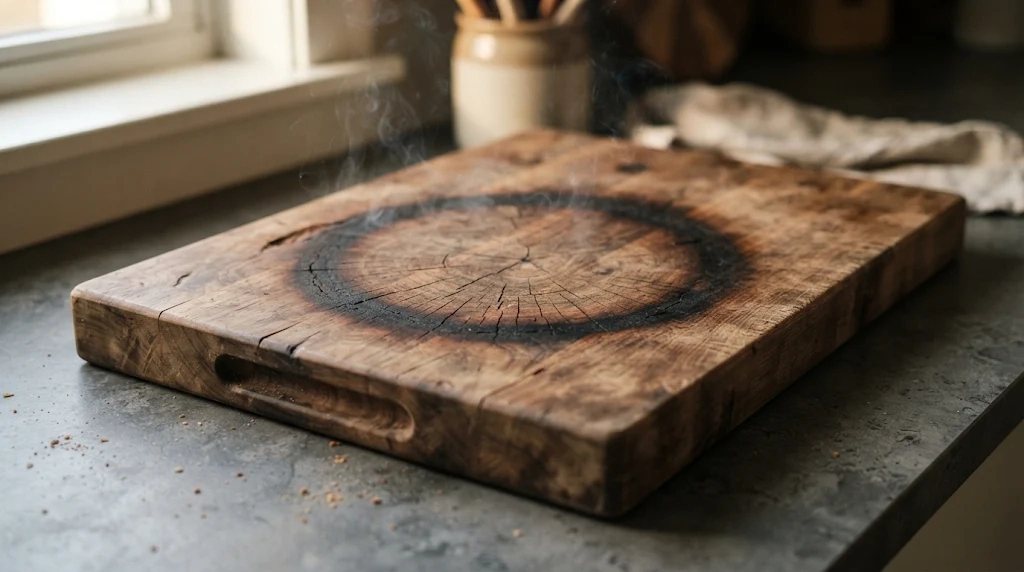
Yes, a wooden cutting board may work beneath a moderately warm serving dish. However, placing extremely hot cookware directly on wood can leave scorch marks or cause structural damage.
Solid hardwood boards generally offer more substance than thin cutting mats. Still, thickness alone doesn’t establish a safe temperature rating.
What Happens When Wood Gets Too Hot?
Wood contains moisture and responds to changes in temperature. Concentrated heat can dry one area faster than the surrounding material.
This uneven heating may affect the board’s appearance and stability.
- Scorch marks: High heat can darken or burn exposed wood fibers.
- Warping: Uneven heating and moisture changes may bend the board.
- Surface cracking: Repeated drying can contribute to splitting.
- Finish damage: Heat may affect oils, waxes, or decorative finishes.
- Glue failure: Laminated boards may develop weakened joints under unsuitable conditions.
Are Thick Wooden Cutting Boards Safer?
A thicker board may offer more insulation than a thin one, depending on its construction. However, a heavy cast-iron skillet can still scorch its upper surface.
For example, imagine removing a roasting pan from a hot oven. Setting it on an unrated wooden board risks damage even when the board feels substantial.
My practical recommendation is to reserve your favorite chopping board for food preparation. A small dedicated trivet is easier to replace than an expensive hardwood board.
Can You Use a Bamboo Cutting Board as a Trivet?
Bamboo cutting boards aren’t automatically safe for hot pots or pans. Their laminated construction, adhesives, and surface finishes can make heat exposure particularly concerning.
Many bamboo boards consist of bonded strips rather than one solid piece. Excessive heating may affect those connections.
Why Bamboo Needs Extra Care
- Adhesive joints: High temperatures may weaken bonding materials.
- Surface finishes: Protective coatings may discolor or deteriorate.
- Uneven heating: Concentrated heat can contribute to bending or cracking.
- Moisture changes: Repeated heating and cooling may stress the material.
Some brands sell bamboo trivets separately from their bamboo cutting boards. That distinction matters because the products may use different designs and construction methods.
For example, Totally Bamboo’s product guidance specifically advises against using its cutting boards as trivets.
If a bamboo board has no stated heat rating, don’t place cookware directly from a burner onto it.
Can You Put a Hot Pan on a Plastic Cutting Board?
No. A standard plastic cutting board should not be used as a trivet for hot cookware.
Many cutting boards use polyethylene or polypropylene plastics. These materials can soften or deform when exposed to sufficiently high temperatures.
What Can Go Wrong?
- Melting: Contact with a hot pan may damage the plastic surface.
- Warping: The board can lose its flat shape.
- Permanent marks: Heat may leave rings, impressions, or glossy patches.
- Food preparation problems: Damaged surfaces may become difficult to clean thoroughly.
- Countertop damage: Thin plastic may provide inadequate protection beneath hot cookware.
Dishwasher-safe plastic is not necessarily safe beneath a hot skillet. These are different conditions with different temperature demands.
Even a plastic board that survives occasional warmth shouldn’t become your regular pot stand.
Which Cutting Board Materials Handle Heat Best?
 Save
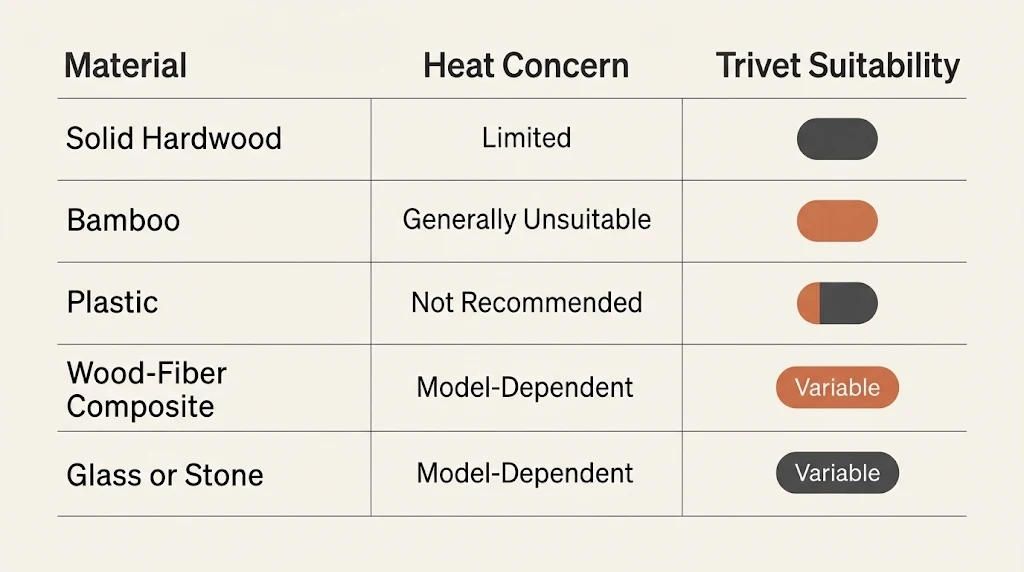
Heat tolerance depends on material, construction, thickness, and manufacturer specifications. The table below compares common cutting board materials for trivet use.
| Material | Heat Concern | Trivet Suitability | Recommendation |
|---|---|---|---|
| Solid hardwood | Scorching and cracking | Limited | Warm dishes only unless rated |
| Bamboo | Joint and finish damage | Generally unsuitable | Use a dedicated trivet |
| Plastic | Softening and melting | Not recommended | Keep away from hot pans |
| Wood-fiber composite | Varies by resin and construction | Model-dependent | Check the exact heat rating |
| Glass or stone | Thermal shock and heat transfer | Model-dependent | Use only if approved for hot cookware |
These recommendations are general material assessments, not universal heat ratings. Always follow the instructions supplied with your specific product.
How Hot Is Too Hot for a Cutting Board?
There is no universal maximum temperature that applies to every cutting board. Safe exposure depends on the board’s material, construction, finish, and contact time.
A serving dish may be warm enough to handle comfortably but still transfer heat to the surface below. Cookware directly from a stove or oven creates a much greater concern.
Why Temperature Ratings Matter
Some manufacturers publish specific heat limits for their products. Those ratings provide a better guide than appearance, weight, or material alone.
- Warm serving dishes: Often pose less risk, but still require material compatibility.
- Freshly heated cookware: Can exceed the safe working range of ordinary cutting boards.
- Cast-iron skillets: Retain substantial heat after leaving the burner.
- Oven dishes: Their bases may remain dangerously hot after cooking.
Don’t treat the temperature of the food as the temperature of the cookware. A metal pan can remain much hotter than its contents.
What Happens If You Put a Hot Pot on a Cutting Board?
A hot pot can damage the cutting board, the surface underneath, or both. The outcome depends on the contact temperature and duration.
Common Types of Heat Damage
- Dark circular marks: Concentrated heat may scorch wood.
- Raised or warped areas: Heat can distort plastic and stress wooden boards.
- Cracked joints: Repeated exposure may damage laminated construction.
- Damaged finish: High heat can affect certain oils, coatings, and adhesives.
- Countertop discoloration: The board may not sufficiently block heat transfer.
Heat damage isn’t always immediately obvious. A board may appear normal before cracks or distorted areas become noticeable.
Can a Heat-Damaged Cutting Board Still Be Used?
It depends on the extent of the damage. Light cosmetic discoloration may not make a solid wooden board unusable, but deeper damage needs closer attention.
Discard a food-preparation board if cracks, melting, delamination, or deep damaged grooves prevent thorough cleaning. Don’t continue using an unstable board for chopping.
The USDA’s cutting board guidance recommends replacing excessively worn boards with hard-to-clean grooves.
How Can You Safely Use a Cutting Board Under Warm Dishes?
You can use a suitable board beneath warm serving dishes if the manufacturer allows that use. Keep extreme heat away from ordinary chopping surfaces.
Follow These Safety Steps
- Identify the material. Check whether the board is solid wood, bamboo, plastic, or composite.
- Read the instructions. Look for an explicit heat rating or approved trivet use.
- Check the cookware. Never assume a pan removed from the stove has cooled sufficiently.
- Use stable support. Position the board on a flat, dry, heat-tolerant surface.
- Avoid prolonged exposure. Move warm dishes when practical and check for signs of damage.
- Inspect afterward. Look for cracks, warping, scorching, or changes in the finish.
Never use your hand to test whether a pan’s base is safe to touch. Follow the cookware and board manufacturers’ guidance instead.
Can You Use a Cutting Board to Protect a Quartz or Granite Countertop?
A cutting board doesn’t guarantee protection against heat damage to quartz, granite, or other countertop surfaces. Using a dedicated trivet is generally the more reliable approach.
Quartz countertops often contain resins that can be affected by high temperatures. Natural stone can also experience thermal stress under unfavorable conditions.
What About Wooden Tables?
A wooden table may be sensitive to heat, moisture, and finish damage. A thin chopping board isn’t a guaranteed insulating barrier.
- Quartz: Use a trivet to reduce heat exposure to the resin-containing surface.
- Granite: Avoid sudden, concentrated heating and follow the fabricator’s guidance.
- Laminate: Keep hot cookware off the surface to protect its finish and bonded layers.
- Wood furniture: Use appropriately rated protection against heat marks.
The safest rule is simple. Protect both the object beneath the cookware and the surface beneath that object.
What Can You Use Instead of a Cutting Board as a Trivet?
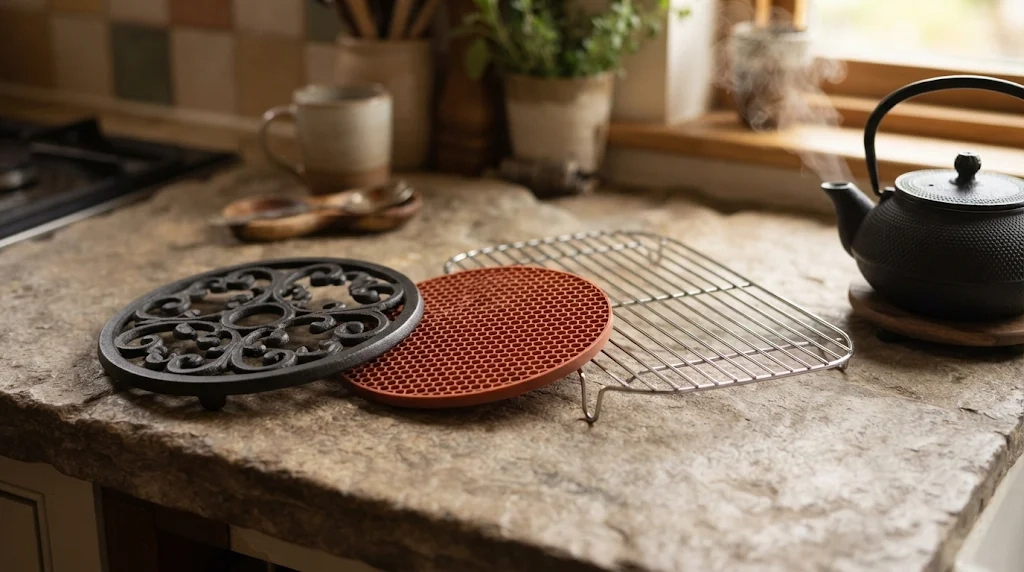
Silicone mat, cast-iron trivet, and wire rack arranged on a kitchen counter.
Several kitchen accessories provide better solutions than an ordinary cutting board. Your choice should depend on cookware size, operating temperature, and countertop material.
Reliable Alternatives
- Silicone trivets: Flexible, easy to store, and available with published heat ratings.
- Cast-iron trivets: Durable and suitable for many heavy cookware applications when used correctly.
- Ceramic trivets: Useful for serving dishes when approved for the intended temperatures.
- Wooden trivets: Designed specifically to support hot dishes and protect tables.
- Metal cooling racks: May provide elevated support when appropriately sized, stable, and heat-safe.
I generally favor a silicone trivet for everyday kitchen use. It offers practical storage, non-slip contact, and straightforward cleaning.
For large roasting pans, choose a support that accommodates the cookware securely. Avoid balancing a heavy dish on a small or unstable stand.
What Should You Look for When Buying a Trivet?
The best trivet provides adequate heat protection, stable support, and easy maintenance. Choosing the right dimensions is just as important as selecting the material.
Four Important Buying Factors
- Heat rating: Check the manufacturer’s published temperature limit and intended applications.
- Dimensions: Select a size that provides safe, stable support for your cookware.
- Grip and stability: Look for a design that resists slipping on your work surface.
- Cleaning requirements: Consider whether the product is dishwasher-safe or needs hand washing.
Also consider how often you use cast iron or heavy cookware. Frequent high-heat cooking makes a dedicated trivet especially worthwhile.
Best Trivets to Use Instead of a Cutting Board
If you regularly need somewhere to place hot cookware, these three real products are worth considering. Their suitability scores are editorial assessments based on published features, not customer review averages or personal testing.
🏆 Best Overall
Lodge 7-Inch Square Silicone Trivet
★★★★★ 4.8/5 editorial suitability
This 7-inch silicone trivet features a raised skillet pattern, non-slip construction, and dishwasher-safe material. Lodge publishes surface-protection information for high-temperature cookware, making it a practical alternative to a chopping board.
I would prioritize this model for a kitchen that frequently uses cast-iron skillets. Check the current manufacturer’s instructions for the applicable temperature limit.
💰 Best Multipurpose Option
OXO Good Grips Silicone Pot Holder
★★★★☆ 4.5/5 editorial suitability
This silicone pot holder features a non-slip diamond pattern and an insulated fabric pocket. OXO states that the product can also function as a trivet to protect sensitive surfaces.
I would consider it when storage space is limited and one accessory needs to serve multiple purposes. Its fabric construction makes correct placement and cleaning especially important.
✨ Best Premium Design
Le Creuset Silicone Trivet, 8-Inch
★★★★★ 4.7/5 editorial suitability
This flexible silicone trivet measures approximately 7.9 inches across and has a published heat resistance of 482°F. It is dishwasher-safe and designed for protecting surfaces from hot cookware.
I would choose it for a kitchen where appearance and versatility matter. Its larger surface and range of colors make it a useful serving accessory.
Product ratings above are editorial suitability estimates, not verified consumer ratings. Availability, specifications, and retailer prices may change.
Frequently Asked Questions
Can I Put a Hot Cast-Iron Skillet on a Wooden Cutting Board?
It’s not recommended unless the cutting board manufacturer explicitly approves that use. Cast-iron cookware holds substantial heat and may scorch wood, damage finishes, or affect laminated joints. Use a properly rated trivet that supports the skillet securely and protects the underlying countertop.
Can a Bamboo Cutting Board Withstand Oven Heat?
A bamboo cutting board shouldn’t be placed in an oven or exposed to oven-level temperatures unless its manufacturer specifically approves that application. Heat can damage adhesives, finishes, and bamboo fibers. A bamboo trivet and a bamboo cutting board may have different construction and usage limits.
Are Wooden Cutting Boards Heat Resistant?
Wood has some insulating properties, but ordinary wooden cutting boards aren’t automatically rated for hot cookware. High temperatures can leave scorch marks or contribute to cracking and warping. Check the manufacturer instructions rather than assuming solid wood is safe beneath a pan from the stove.
Can You Use a Glass Cutting Board as a Trivet?
 Save
Only if the manufacturer confirms that the glass is suitable for the intended hot cookware. Ordinary glass can experience thermal shock, and heat may pass through to the countertop. Tempered construction alone doesn’t guarantee safe use as a trivet.
What Is the Safest Thing to Put Under a Hot Pan?
A dedicated, appropriately rated trivet is one of the safest practical choices. Heat-resistant silicone, ceramic, or metal options can work when designed for the cookware’s temperature and weight. Choose stable support, follow the manufacturer’s instructions, and protect heat-sensitive countertops.
Final Verdict: Should You Use a Cutting Board as a Trivet?
A cutting board may occasionally support a warm serving dish, but it shouldn’t replace a proper trivet for very hot cookware. Material, heat rating, and construction determine whether occasional use is appropriate.
Wood and bamboo can suffer heat-related damage, while plastic may deform or melt. Even a sturdy board may not provide adequate protection for the countertop beneath it.
For more guidance on maintaining a safe food-preparation surface, review the University of Maine’s cutting board safety and care recommendations.
My recommendation: Keep your cutting board for chopping and use a dedicated heat-resistant trivet for hot cookware. It’s a simple way to protect both your kitchen tools and your work surfaces.
Before buying, check the trivet’s published heat rating, size, and cleaning instructions. A suitable trivet is a practical addition to almost any kitchen.

